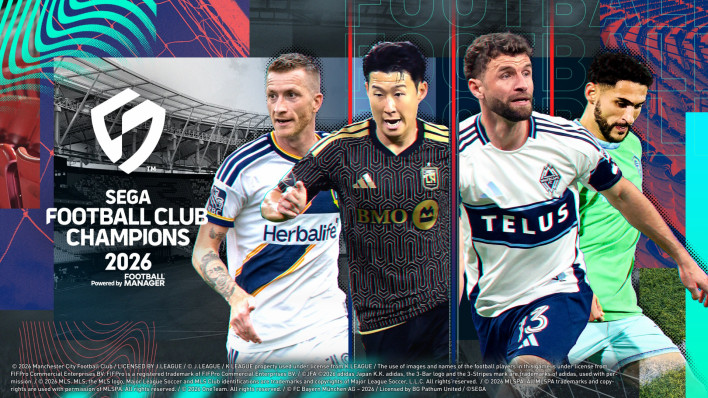
On June 5, 2026, a press conference was held in Seoul to discuss the 2 update for 'SEGA Pocket Club Manager 2026' (known in Japan as 'Pro Soccer Club o Tsukurou!', or 'Sakatsuku'). General Producer Katsuya Hisai was in attendance.
Similar to the Football Manager series, 'Sakatsuku' is a management simulator focused on running a soccer club. Players take on the roles of both owner and manager, experiencing the process of growing a club through player recruitment, training, tactical management, financial oversight, and facility investment. The series has been in development since the PS2 era, and the 2026 edition is a free-to-play mobile game.
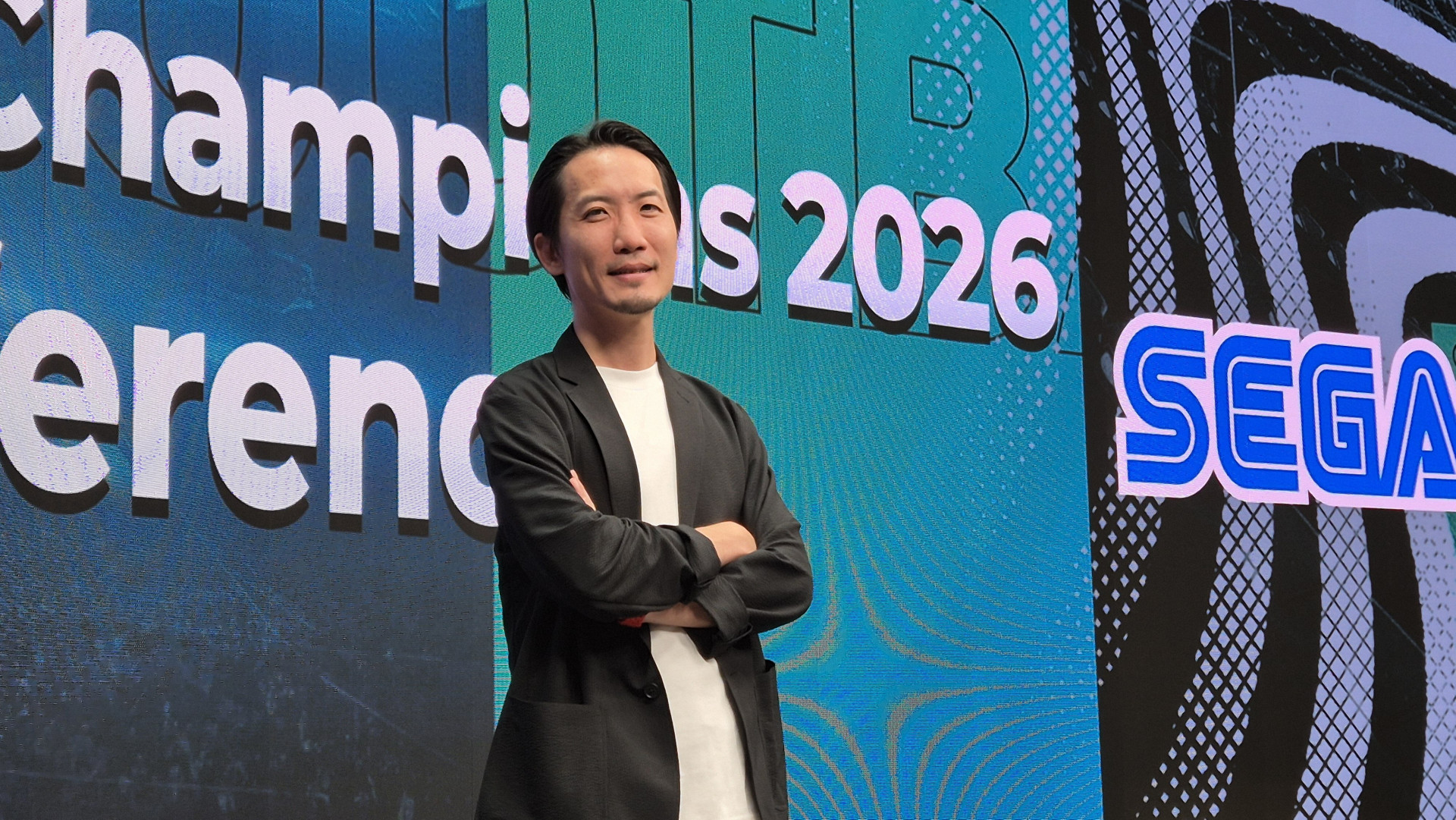
2 Update: What’s Changing?
The 2 update, scheduled for release in June, is the largest since the game's launch. Originally planned as a 1.4 update, it was expanded into a major release featuring new licenses, updated seasonal rosters, and various other improvements.
Key changes in the 2 update include the following.
1. New Licenses Added
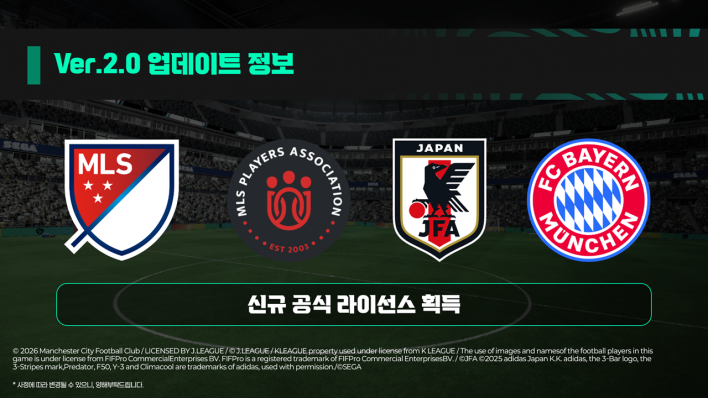
Starting with version 2, Major League Soccer (MLS), featuring teams from the U.S. and Canada, will be added. Additionally, the Japan national football team and FC Bayern Munich of the German Bundesliga will join as officially licensed clubs. Furthermore, licenses for BG Pathum United FC of the Thai League 1 and the South Korean K League 2 have been secured. These newly added licensed teams and players will be available in Career Mode following the update, and events associated with each license will be held subsequently.
2. Latest Roster Updates
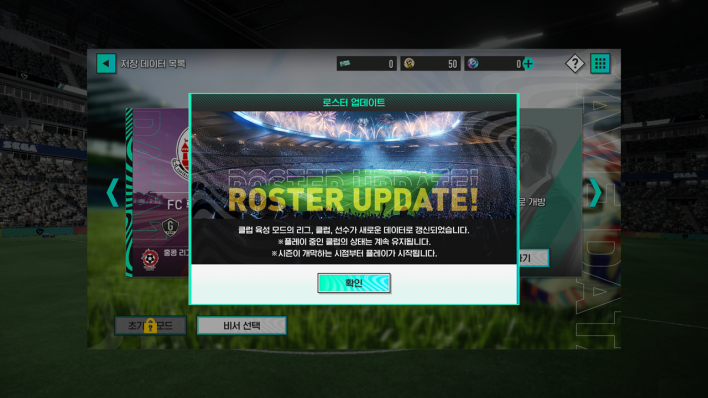
The update includes the latest transfer information. Results from the winter transfer windows in major European leagues, the K League, and the J.League are reflected, and promotion/relegation data has been updated for the current season. While existing players' club management data will be preserved, league data will be reorganized to reflect current standings.
3. Expanded Club Training Mode
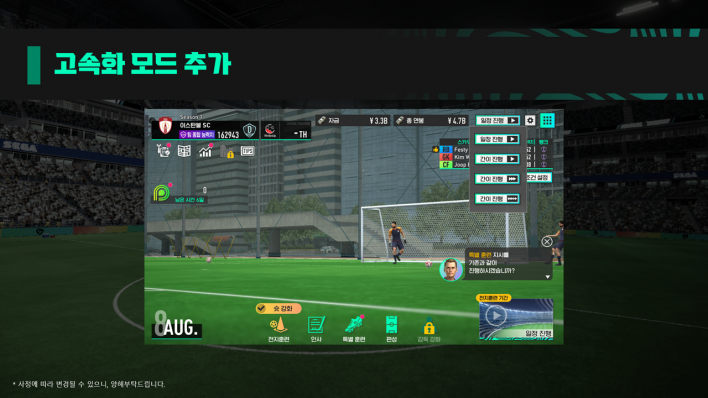
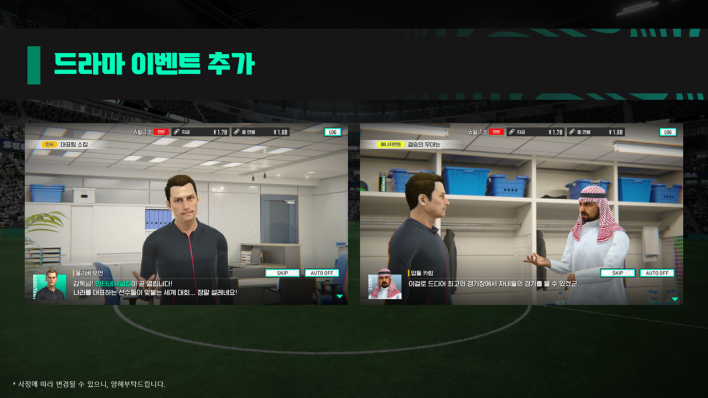
Several new systems have been added to the core 'Club Training Mode.' Save slots have been expanded from three to six, and a 'High-Speed Mode' has been added to accelerate gameplay. Additionally, story events linked to real-world soccer, such as national team call-ups and drama events featuring past series character 'Abdul Karim,' will be introduced.
4. Improved Strategy and Growth Systems
The league level system has been significantly overhauled; higher league levels now provide better bonuses for funding and player growth efficiency. Rewards have been enhanced to encourage players to challenge themselves across various leagues rather than repeating the same one. Some league rewards now include 'Formation Coins,' providing more ways to acquire resources for tactical development. The maximum level for some leagues has been increased from 9 to 10.
5. Updates for Korean Users
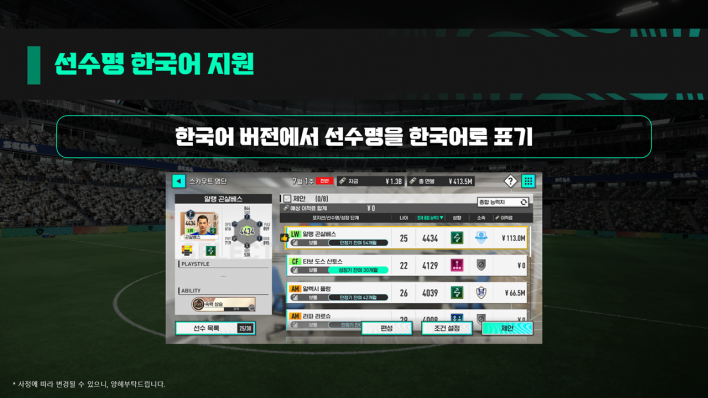
The 2 update includes various features specifically for Korean gamers. Player names are now correctly displayed in Korean, and the K League 2 has been officially added, complete with promotion/relegation playoffs between the first and second divisions. This allows fans of the K League to enjoy a more immersive club management experience.
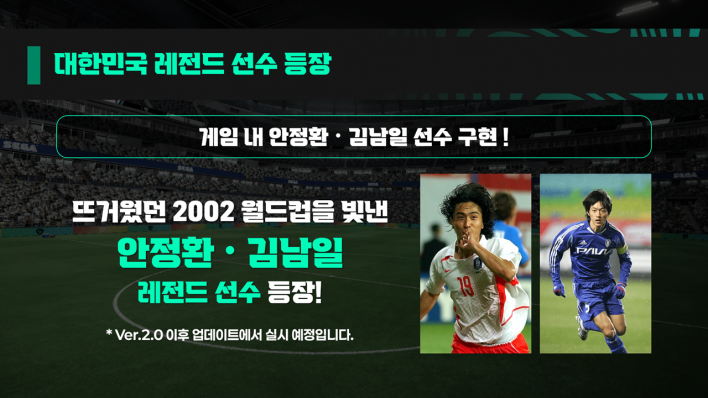
Furthermore, legendary South Korean players Ahn Jung-hwan and Kim Nam-il will be added to the game.
On-site Q&A
Following the presentation, a Q&A session was held with the media.
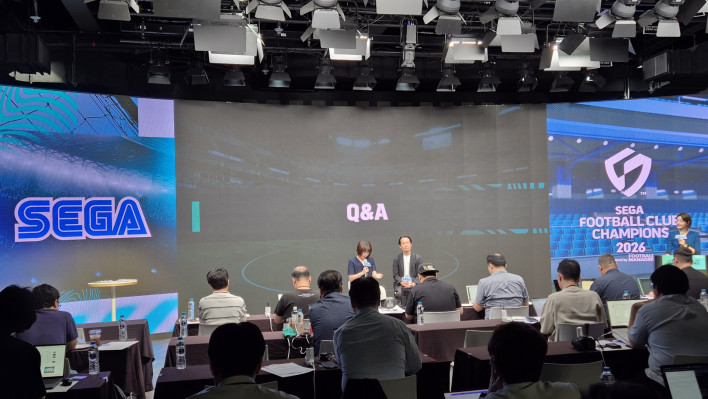
SEGA has primarily operated 'Pro Soccer Club o Tsukurou! 2026' (SFCC 2026) in the Japanese market, but this time you held a separate media showcase in Korea. Was there a special reason for refocusing on the Korean market.
"The primary reason is our desire to once again cultivate the Korean market and achieve success there.
This showcase seems to carry more weight than a simple update announcement. Has there been a change in your business strategy or direction regarding the Korean market.
"We want to promote this enhanced version to succeed in the Korean market. Our overall business strategy for Korea hasn't changed. We recognized Korea as a key market from the start, but we reflect on the fact that we were lacking in terms of localization and culturization.
With this update, by implementing the K League 2 and supporting Korean-language player names, we are prepared to approach the Korean market seriously once again.
Why did you choose to hold a separate media event for Korea among all the countries where the game is serviced globally.
"We have believed since before the launch that there were sufficient opportunities in the Korean market. Even from a foreigner's perspective, I know the Korean market is very unique, and we judged that it has the potential to grow to a larger scale.
Also, because we conducted culturization tailored to the Korean market through this update, we wanted to expand the game's awareness once again.
Securing the K League 2 license is quite unusual. Do you have plans to further expand K League content in the future.
"If we can gain the support and positive response of our users, we would like to actively consider it.
There are not many Japanese soccer games that have implemented the K League 1 and K League 2 promotion/relegation system. Was this decision made with the Korean market's reaction specifically in mind.
"Of course, it was a result of considering the Korean market's reaction. In fact, I think it was an element that should have been implemented from the time of launch, and I apologize for the delay in its application.
Are you also considering content related to the Korean national team or Korean legendary players in the future.
"We have plans. We are already in the process of several contracts, and I think we will be able to announce good news in the near future.
MLS was introduced as a key license for this update. How do you evaluate the growth potential of MLS in the global soccer market.
"I think it is growing with very good momentum as it recruits many star players. As the popularity of the league itself increases, local North American players will also grow, and I believe the popularity of MLS will become even more solid.
In particular, as the World Cup will be held in North and Central America, we expect interest in MLS to increase significantly.
Is the addition of MLS connected to your strategy for targeting the North American market in the future.
"Yes. We see it as a very big opportunity, including the upcoming North and Central American World Cup, and we intend to use this as a stepping stone to leap forward in the North American market.
You explained that this update is significant enough to change the name to version 2. What does the development team consider the most important change.
"The fact that player data has been completely revamped and a new league has been added, providing a motive to play 'Club Training Mode' once again. Also, various improvements have been made to the Club Training Mode itself, requiring different strategies than before.
For users already playing, it will be an opportunity to find new optimal solutions for player training and enjoy the game again, and for users who haven't played yet, I think now is the best time to start.
What do you think is the biggest change that users can feel.
"Increased game speed and increased rewards. In particular, the rewards are much better than before. For example, you can acquire one K League Gacha ticket per day just by completing easy daily missions, so you can get 30 to 31 tickets in a month.
Also, if you train K League players properly, you can grow them to stats comparable to those of European league players. I hope you will use this as a motive to play consistently.
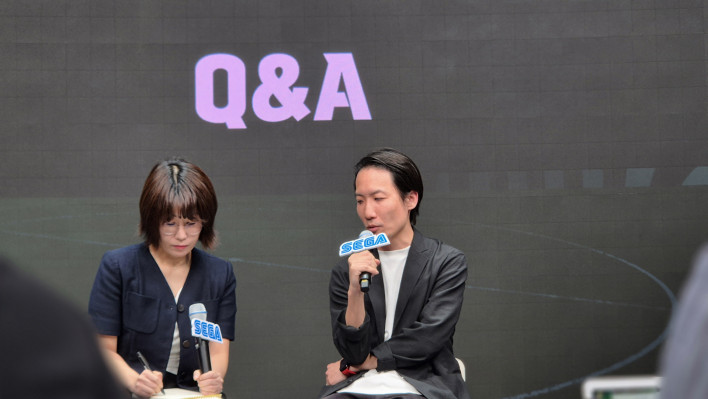
Is the target audience for SFCC 2026 currently existing fans of the series, or new soccer game users.
"It depends on the region. In Japan, existing series fans are the main target, but in Korea, since there is almost no awareness of SFCC to begin with, new soccer game users are the main target.
Which country has had the best response since the service launch, and which market is growing the fastest.
"Japan, of course, and outside of Japan, it is Hong Kong. We recently held an offline tournament for Hong Kong users. I hope we can hold such a tournament in Korea someday as well.
What is the proportion of Korean users, and what are the characteristics of the Korean market as evaluated by the development team.
"After checking the initial response, we temporarily stopped advertising and exposure, and currently, the proportion of Korean users is about 1% of the total. We have refrained from advertising and exposure until we were in a state where we could compete sufficiently, including adjustments tailored to the Korean market, and I think that preparation is finally complete.
I view the Korean market as highly unique. Given how mature the online game market is here, I feel that users tend to judge very quickly whether a game is worth their long-term investment.
Therefore, it is crucial to convey the fun of the game early on. This time, we have provided clearer guidance on the tutorial skip function, improved the early-game pathing, and increased the overall pace of gameplay.
Meanwhile, the game itself is a training-centered game with roguelike elements, different from games where paid player cards become strong immediately. We will maintain this as it is the core experience of this game, but we plan to continue adding features that make repetitive play itself more fun.
You secured MLS, the Japan national team, and Bayern Munich at the same time. Is there a change in your license expansion strategy.
"The strategy has not changed, and it is proceeding according to the original plan. Player roster updates like this are conducted about once every half year in line with the actual transfer market schedule.
We always prepare large-scale update content in line with that time, and we are also pushing for large-scale license acquisition to promote it effectively. This time it was MLS and Bayern Munich, but we have various plans prepared for future roster updates, so please look forward to them.
Recently, the soccer game market has formed a competitive structure centered on FC and eFootball. What are the differentiators that only SFCC can provide.
"The fact that it is a simulator game, not action-oriented. Also, it is not just a simple simulation, but we are pursuing a balance that is not overly complicated.
I also think of it as a kind of RPG in that it provides an experience of growing the team and the city through the player, who is the manager. This type of soccer game is rare, and I think that is the value unique to the SFCC series that has continued from the past.
How do you see the growth potential of the club management simulation genre in a situation where the soccer game market is changing to be centered on real-time battles.
"I don't think this game is going against the trend of real-time battles itself. The tradition of the series is club management simulation, but this work has a very high proportion of player training. It is a structure where you train players to build a team, and then compete with other users with that team.
Also, team-to-team battles support real-time synchronized battles, and in fact, in Japan, many streamers are enjoying it by hosting and broadcasting their own tournaments.
In the future, we plan to introduce an official real-time synchronized PVP system with a set schedule within the game. I think the simulation genre can also grow sufficiently if we reflect the latest trends like this and strengthen the fun as broadcast content.
Also, even if you look at the general soccer simulation genre as a whole, leaving SFCC aside, I think how deep an experience you provide is the key factor for success.
SFCC is an IP with a long history in Japan, but it is relatively not well-known overseas. What strategy are you preparing for global expansion.
"As you said, we have to start by raising awareness first. In the case of soccer games, I think official licenses for leagues or clubs are one of the very easy-to-understand attractive points.
While preparing large-scale content like MLS, SFCC is originally a game where you enjoy the process of growing a small local club to the top of the world. In that sense, local league implementation is a necessary element. The decision to implement up to K League 2 was also based on that philosophy. Even if we expand globally, I want to maintain this core concept.
Can this showcase be interpreted as a signal for global business expansion rather than just an update announcement.
"You can understand it that way. In particular, the markets we are looking at importantly in this update are Korea and the North American market where the World Cup is held.
K League 2 license acquisition and Korean player name display support were done at the same time. Should this be seen as the beginning of targeting the Korean market, or is it an update for strengthening existing services.
"Strengthening existing services is a premise, but at the same time, you can understand it as the first step in targeting the Korean market. Through various improvement works within the game, K League license expansion, and Korean player name display support, I wanted to convey how important we think the Korean market is.
In that sense, I attended this media showcase. We plan to continue providing content that Korean users can enjoy, such as adding Korean legendary players in the future.

Sort by:
Comments :0