
'Azur Promilia,' the new title from Manjuu Games—known for 'Azur Lane'—began its domestic CBT on the 15th. Since its surprise announcement in 2024, we have caught glimpses of the game at various 2025 trade shows, but news in the domestic market had been notably scarce. That changed last December with the surprise announcement of a publishing deal with Nexon, after which information began to trickle out. Now, with the CBT providing a full look at the in-game experience, 'Azur Promilia' has showcased how well Manjuu has translated its accumulated know-how into a 3D world, featuring structured combat and a variety of well-integrated systems.

A Blend of Isekai Lightheartedness and Fantasy-Rich Graphics

Perhaps the biggest question is how well Manjuu’s signature character design translates to 3D. Its predecessor, 'Azur Lane,' continues to showcase characters with diverse attributes and skins that draw out 120% of their charm—a key driver of the game's enduring popularity. From the early days of the destroyer trio (Ayanami, Laffey, and Javelin) to Takao and Enterprise, the game has offered a wide spectrum of characters, consistently satisfying fans with a two-track strategy of diverse lineups and skins that elevate their appeal.
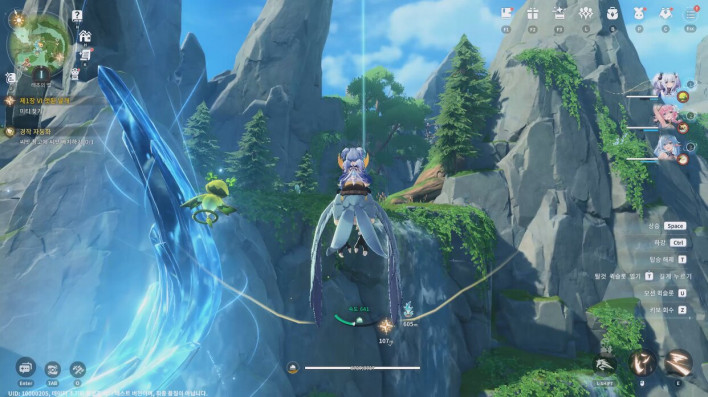
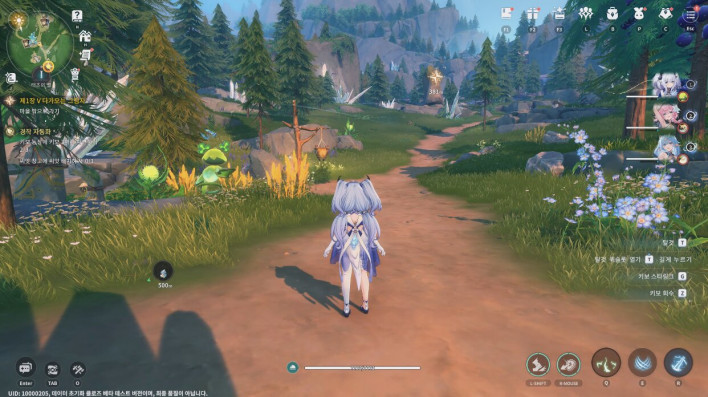
Translating that acclaimed 2D expertise into 3D is a different challenge. It is not just about modeling; it requires careful consideration of shaders and harmony with the world. While previous trailers provided some proof, seeing the characters and world of 'Azur Promilia' firsthand revealed a high level of polish even at this stage. By mixing a cel-shaded style with subtle PBR (Physically Based Rendering), the game achieves a delicate lighting effect that brings the fantasy aesthetic to life, distinct from standard cel-shading. The modeling and animation for characters of various body types were also meticulously refined, ensuring a cohesive look.

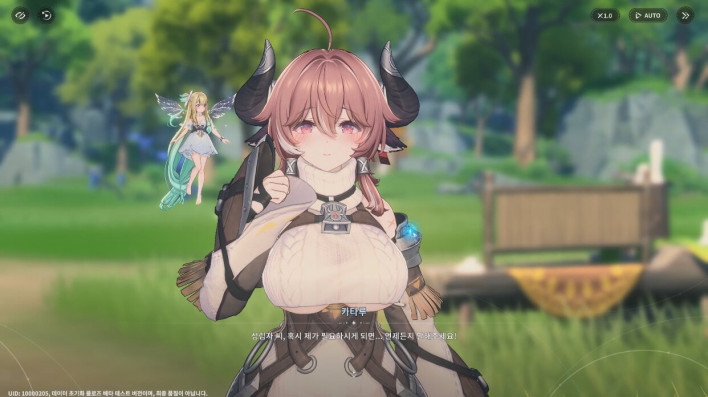

The world and story of 'Azur Promilia' follow a very familiar format. Legend has it that when chaos befalls the world of Promilia, a 'Stellaris' appears to restore stability. As you might have guessed, the player's avatar is that very 'Stellaris.
In this CBT, the story unfolds as you follow the elf Symphoria and the fairy Lumi, who are searching for the Stellaris based on a sage's prophecy. While heading to the elven city, an anomaly causes you to crash-land in the lands of the Beastkin and Wingkin, and the narrative proceeds as you help these two races in distress. In short, it is a classic 'isekai' (otherworld) story.
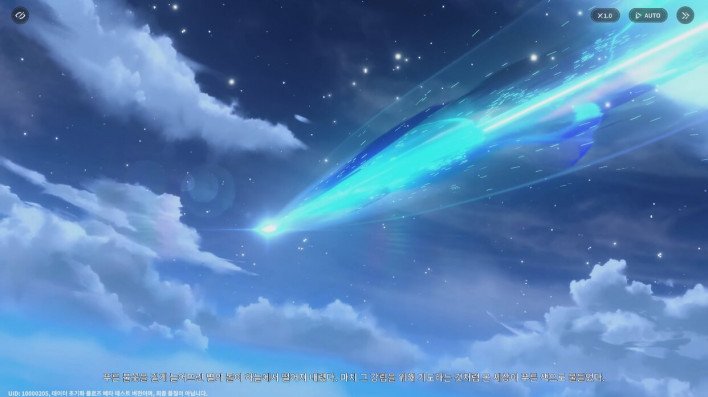
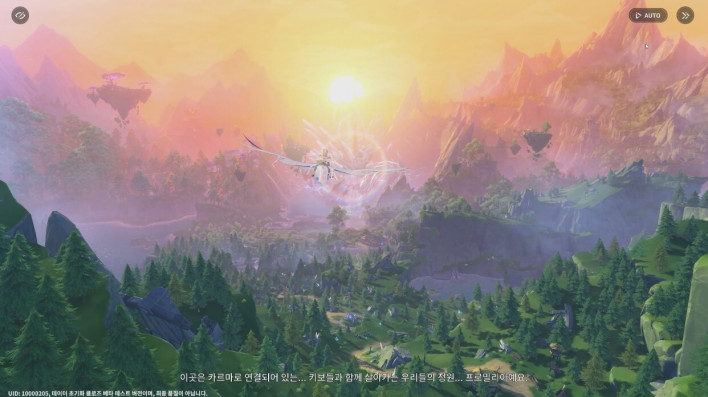
Of course, even with a well-known premise, the execution changes everything. 'Azur Promilia' balances these elements well, much like its graphics, which use warm, pastel-like tones and delicate lighting to create a unique atmosphere. The isekai-style episodes—such as the antics of the chibi characters or reclaiming land gifted by the Beastkin—offered simple, daily joys. The cuteness of the 'Kibo' also played a significant role.
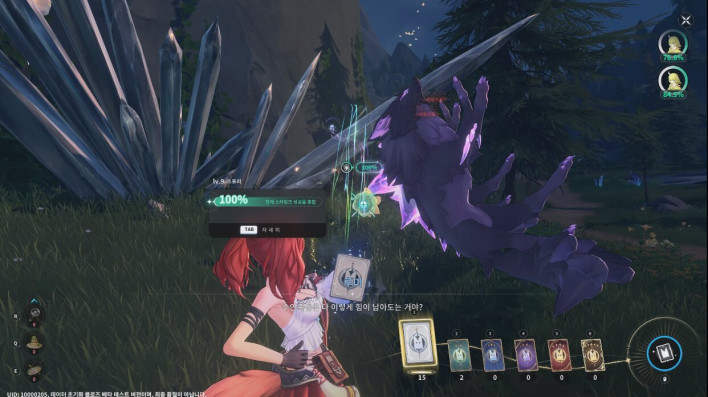
The tone shifts slightly as monsters distorted by the 'Starlink' and the mysterious 'Evolution Cult' begin to appear. The areas they occupy are marked by deep blacks and purples, providing a stark contrast to other fields. Even here, one can feel the detail in the subtle lighting placed within a broad spectrum. The game meticulously enhances its visual polish to ensure that the sense of a story unfolding within a fantasy world remains consistent in any situation.
Combat That Captures Spectacle, Agility, and Familiarity



If the world-building is one pillar, the inevitable 'combat' is another. Here, 'Azur Promilia' adopts a proven, high-quality format: a tag-based combat system for a party of three, utilizing special skills, ultimates, just-dodges, counters, and character switching to respond to enemy patterns.
'Azur Promilia' differentiates itself with nine elements, branching attacks where combos change based on the number of normal attacks before a heavy attack, combat skills utilizing 'Kibo,' and a dedicated guard key.
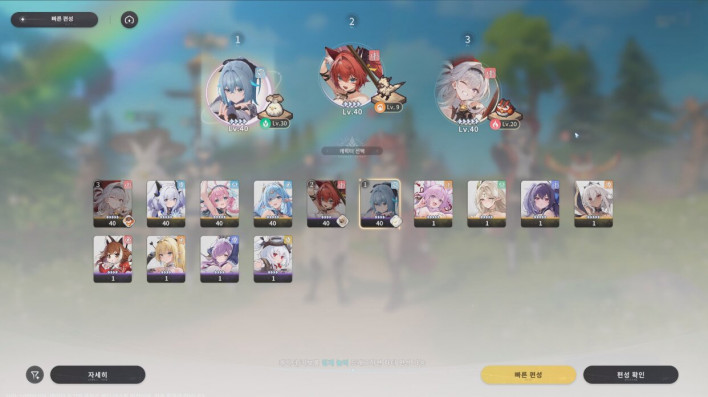
By capturing Kibo in the field with Starlink cards, you can assign them to characters to assist in combat via cooldown-based skills. Choosing a Kibo that complements a character's combat style or covers their weaknesses is a key strategic element.
Given the cute graphics and healing vibe, one might expect slow combat, but 'Azur Promilia' is as fast-paced as any open-world action RPG. While the impact feels somewhat light, the movement is quick, and enemies are frequently knocked back by character barrages, causing them to scatter if you aren't careful. This necessitates including characters with crowd-control skills or using Kibo with binding abilities to hold enemies in place for combos.
Beyond simple attacks, just-dodge counters and parries are core to combat. Timing your dodge or right-click parry when a yellow circle appears is crucial; perfect parries significantly deplete the enemy's break gauge, opening them up for massive damage. Once an enemy is broken, cooperative attacks with Kibo are activated, doubling damage and allowing for satisfying HP depletion through skill chains.
The Sandbox Fun of Gathering, Crafting, and Collecting
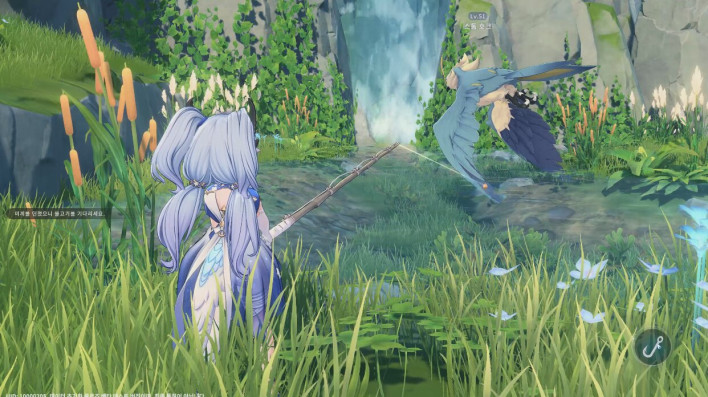
On top of these solid fundamentals, 'Azur Promilia' adds the 'Kibo' mechanic. Kibo are creatures that form a pillar of the Promilia ecosystem and can bond with humans via Starlink. In the field, most Kibo (excluding bosses) are not aggressive; some will even approach you to sing or perform tricks. These gentle creatures can usually be captured without combat, minimizing bloodshed.
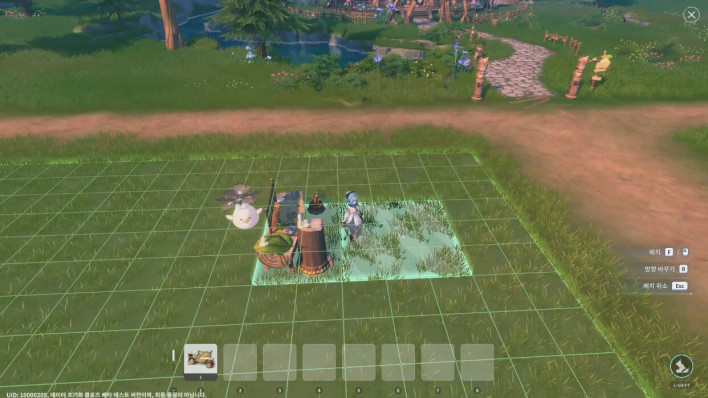
Kibo are also vital for production. While most tasks can be done without them, having the right Kibo significantly speeds up production. You can actually watch them work—breathing fire to bake bricks in a kiln or busily turning a spinning wheel. These cute animations add vitality to the housing system. When not working, they roam around, and petting them when you cross paths is another small joy.

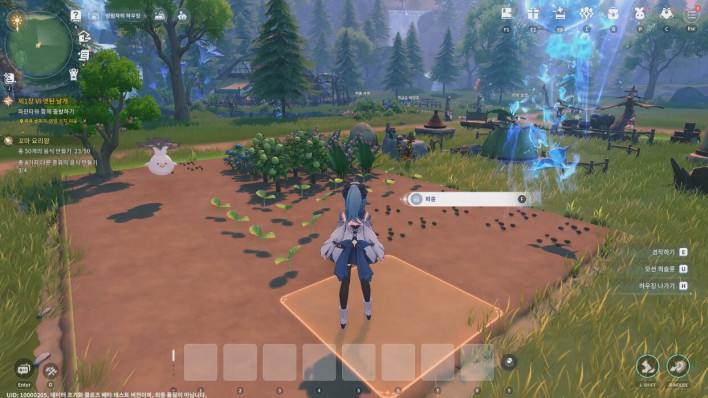
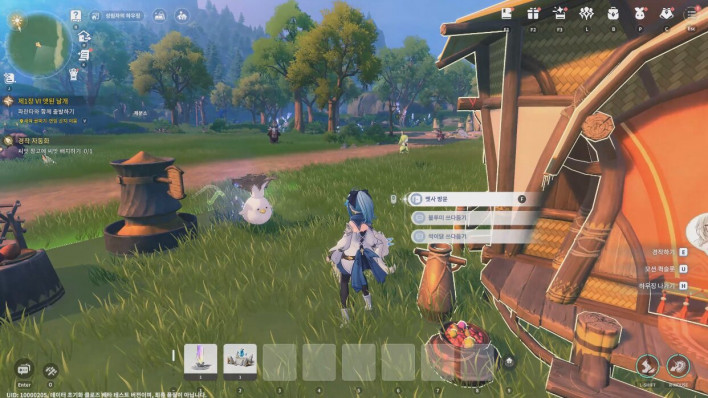


The ecosystem and gathering elements are also highlights. The Kibo interactions are organic: for example, 'Haro' eating cabbage, 'Cabbage Chick' and 'Sprout Chick' fleeing, or 'Gale Wolf' packs hunting the chicks. These natural interactions make the world feel alive.
Most trees, plants, flowers, rocks, and ores are gatherable, encouraging players to mine everything they see. For those unfamiliar with the genre, the game provides clear guidelines on where materials are needed and marks gathering points on the map. Automation, such as dispatching Kibo to gather materials, is also well-implemented.
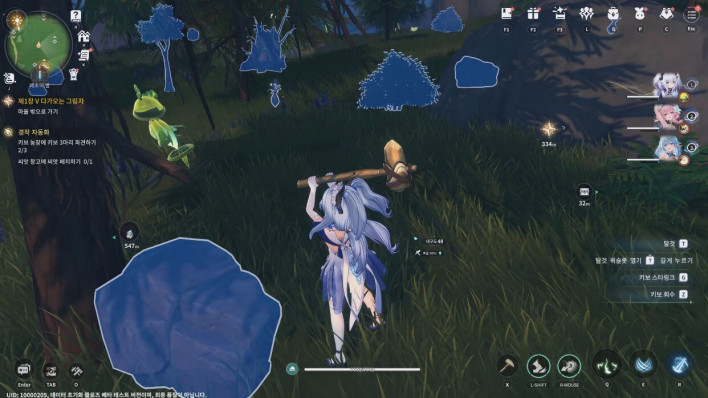
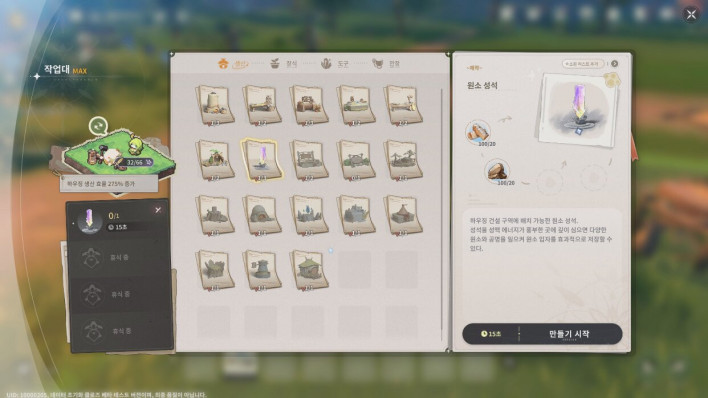
Restoring facilities throughout the field is required to unlock these features, which naturally encourages exploration, puzzle-solving with Kibo, and discovering new areas. Even if you get distracted, the loop of gathering materials, upgrading your housing tech, and playing with your Kibo remains a solid, healing experience.
Even for those uninterested in housing, the game ensures you have the essentials by tying them to the main story. The tech tree is not overly complex, but since every player's situation differs, the game uses the main story—helping the Beastkin and Wingkin—to guide you through setting up the necessary facilities without hindering gameplay.
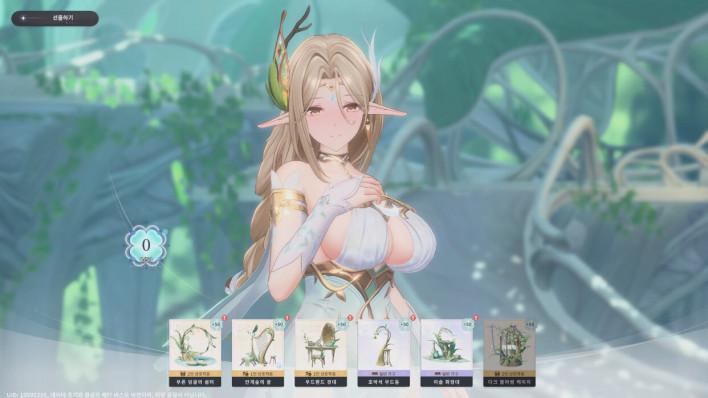
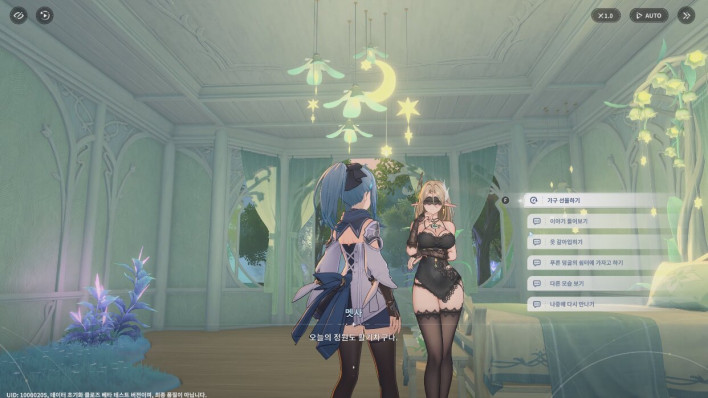
Interaction with characters in the dormitory is another must-have. While not 100% complete, the costumes and elements shown as a teaser make the official launch highly anticipated. Given Manjuu's reputation, I expect them to nail the aesthetic even in the transition from 2D to 3D.
Even with Gaps, 'Azur Promilia' Shows Promise
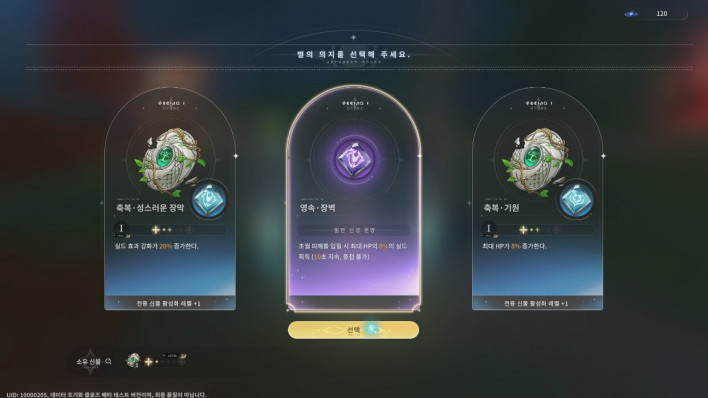
Aside from the sandbox elements like Kibo-based housing and crafting, the rest of the routine is similar to other subculture open-world RPGs. There are regional quests instead of stamina-draining dungeons, weekly roguelike content, and boss challenges—all familiar elements for veterans of the genre.
However, the game still has a way to go. The sound design felt empty; Japanese dubbing was missing after the middle of Chapter 1, and combat sounds for skills and ultimates were lackluster, diminishing the impact. The background music, perhaps intended to blend into the world, was often too faint to notice.
Regarding impact, attacks feel light, and enemies (except for some medium-sized ones) are easily knocked back. Combined with light sound effects, the combat can feel hollow. Enemies sometimes lose aggro or return to their original positions after being knocked back too far, which is frustrating.
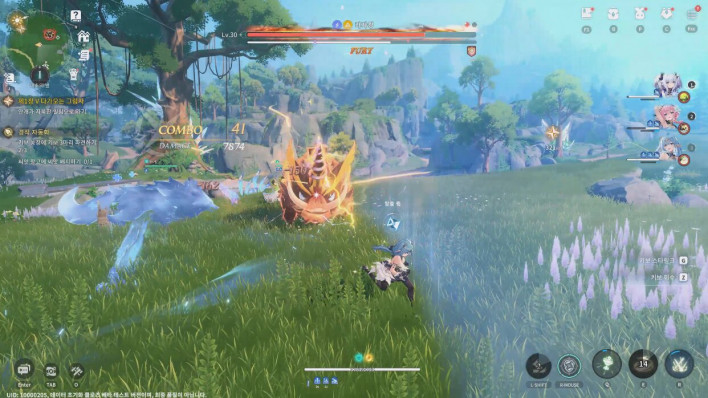
Field bosses create a transparent boundary upon aggro, which is often too small. Given the high mobility of characters and the many unparriable boss dashes, you often end up hitting invisible walls. While the combat system itself is fine, the design limitations are a drawback. Some effects and fonts also felt too similar to other games in the genre.
The slow early-game tempo is also a concern. 'Azur Promilia' is significantly slower than other open-world RPGs. After the prologue, there is a long stretch with little new system introduction, focusing solely on story. Without wall-climbing or early access to flying mounts, moving around feels stifling.
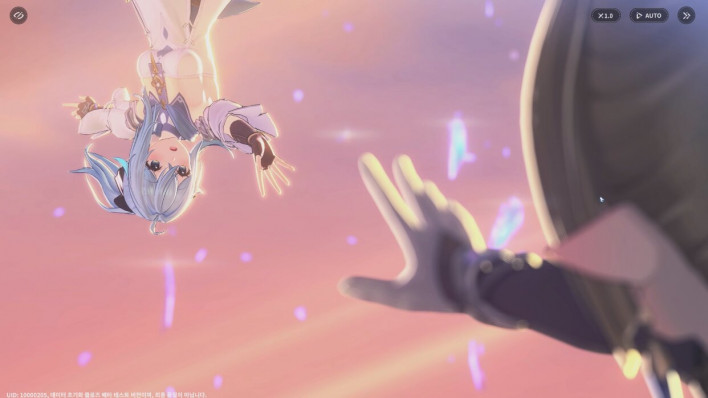
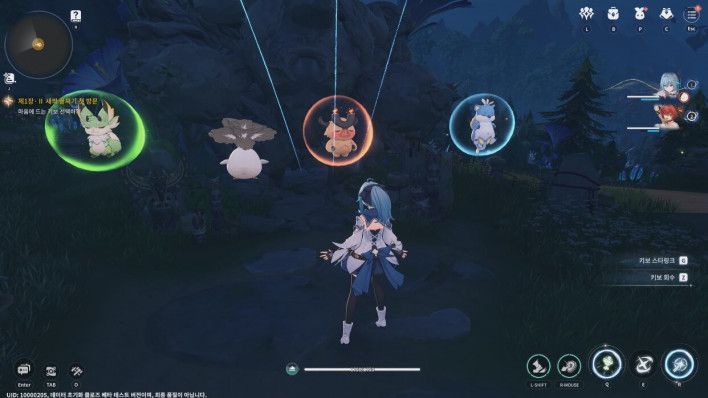
It would be one thing if the game offered a compelling narrative, but 'Azur Promilia' doesn't really establish a clear story from the start. Instead, it focuses on highlighting the various races living in its world and the process of coexisting with Kibo. Naturally, this makes players look forward to collecting Kibo, engaging in housing, and exploring side activities, but the game puts so many brakes on that progression that the pacing feels disjointed. Furthermore, the current UI presents a cluttered mix of complex information, which makes navigating Kibo-related details and other data feel even more overwhelming.
Despite these minor frustrations and the occasional feeling of emptiness, the vision 'Azur Promilia' has demonstrated is quite remarkable. It has established a solid foundation for combat and exploration, not to mention the charm of collecting Kibo and building up one's own little corner of the world. The characters, too, are diverse and well-designed, with each body type highlighting distinct, appealing features. With the announcement of Korean voice acting as the CBT draws to a close, the game is clearly gearing up for launch. I look forward to seeing how the developers refine the adventure and life-sim elements based on this round of feedback.

Sort by:
Comments :0