When people hear the term 'MMORPG,' the first words that come to mind are often time, microtransactions, and PK (Player Killing). Even when players want to start a new game, they often hesitate, wondering how much time they must invest or how much they need to spend to keep up with others.
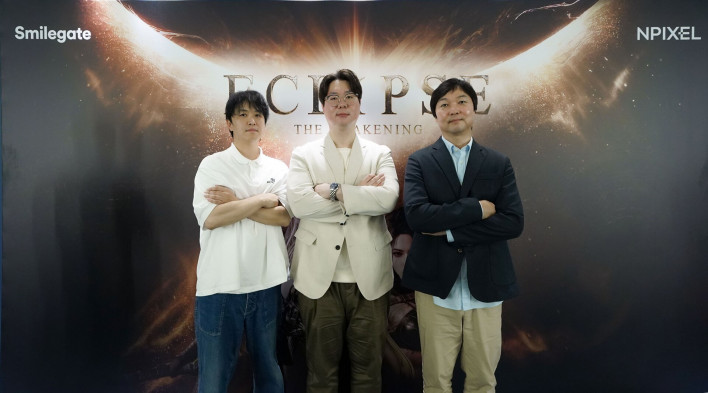
Amid these concerns, 'Eclipse: The Awakening,' published by Smilegate and developed by NPIXEL, focuses on shaving off the 'hardcore' elements of the MMORPG genre. The developers explain that they aim for 'MMOLite'—a design that maintains the depth of a MMORPG while reducing the burden on the player. We got a preview of this 'light' MMORPG at the press conference held on the 22nd.
Choosing an 'Original Story' Over Mythic Foundations.
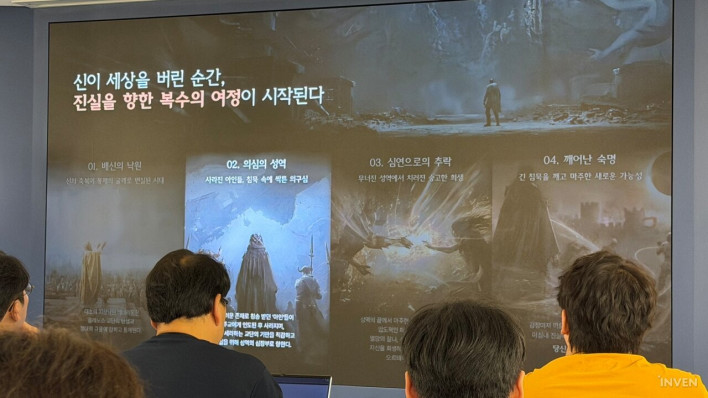
Development Director Lee Sang-moon opened the presentation by revealing that Eclipse: The Awakening uses an original story rather than the myth-based narratives common in other MMORPGs. He described a journey of revenge for the truth, unfolding through themes of a paradise of betrayal, a sanctuary of doubt, a fall into the abyss, and an awakened destiny.
Art Director Kim Dong-hyuk added, "Existing myth-based storytelling has clear limitations because the framework for events and characters is already set. We wanted to interpret the phenomenon of "Eclipse" through our own original narrative and details. To ensure players don't feel alienated, we designed the game so they can naturally experience the narrative using all in-game elements, such as sanctuaries, rather than relying solely on cutscenes."
The game is set in Ederion, a world that seemed perfect under the blessing of the gods, and follows the story of Seraha, a priest of the church. The narrative centers on Seraha’s journey as she faces the truth of the world through her own choices rather than the will of the gods.
Towards 'MMOLite
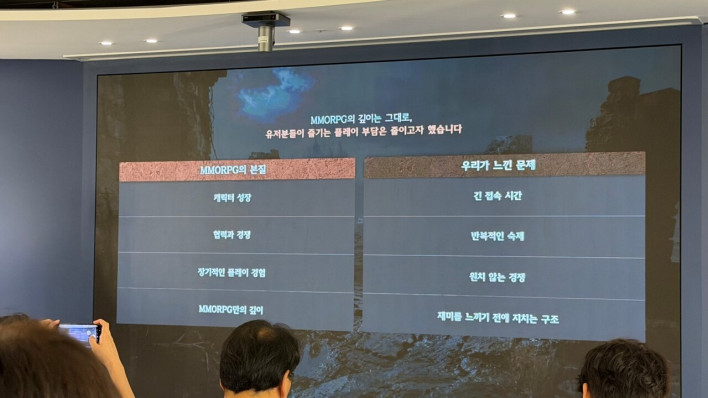
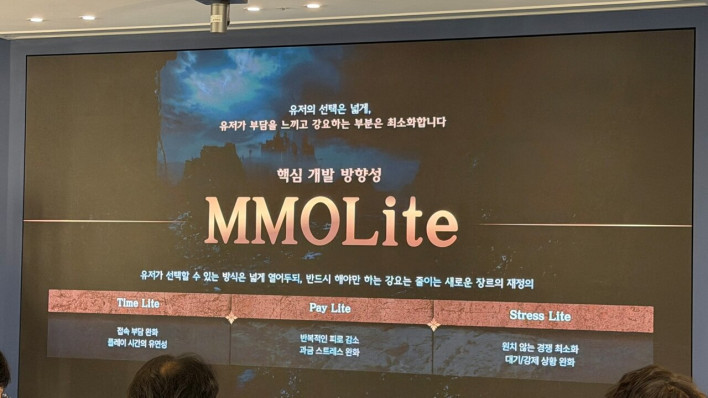
The core concept behind Eclipse: The Awakening is 'MMOLite.' The producer explained that this is a 'redefinition of the genre that keeps the player's options wide open while minimizing mandatory requirements.'
He contrasted the essence of MMORPGs with the problems his team identified: long login times for character growth, repetitive chores for cooperation and competition, unwanted competition for long-term play, and a structure that exhausts players before they can even enjoy the depth of the game.
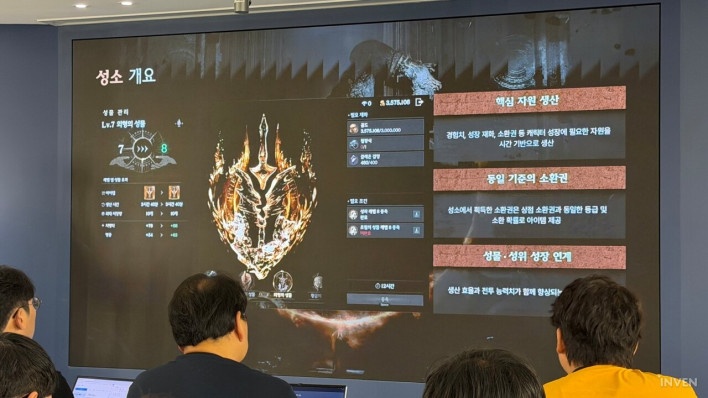
He emphasized that Eclipse will focus on being 'Time-Lite,' 'Pay-Lite,' and 'Stress-Lite.' 'Time-Lite' refers to reducing time pressure; the in-game 'Sanctuary' system provides growth resources even if players cannot log in for long periods daily. He also hinted at a 24-hour AI mode that allows growth to continue while offline.
Pay-Lite' focuses on reducing the fatigue associated with spending by minimizing uncertainty. Through the Sanctuary, even non-paying or low-spending players can steadily earn cards and rewards, ensuring consistent opportunities to summon. Additionally, Director Lee explained that the game features a unique 'Eclipse Time'—distinct from traditional 'hot times'—which allows players to toggle these bonuses on and off according to their own lifestyles.
Stress-Lite' involves separating safe zones from PK zones where players can challenge themselves. He mentioned the 'High River' battlefield, which supports up to 20 players for 10-minute sessions with a respawn system to keep the flow uninterrupted, and server-wide competitive content that allows players who dislike PVP to contribute to their guild and server through daily play and weekly missions, thereby minimizing the pressure to compete.
Diversified Classes and Combat Styles: Fighting Your Way
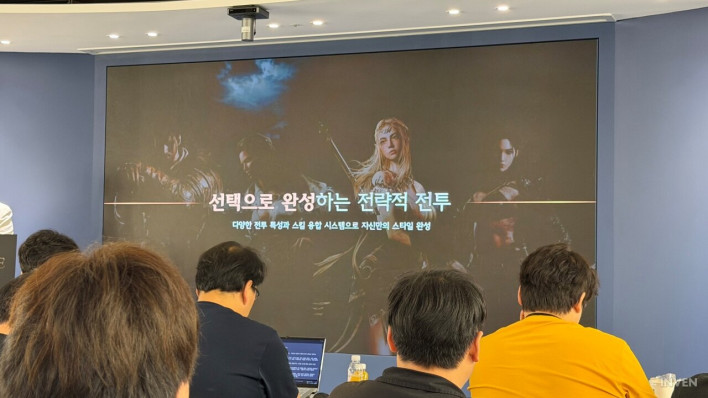
Director Lee also noted that Eclipse allows players to fight in their own style through diverse combat traits and a skill fusion system. The goal is to alleviate fatigue from grinding, spending, and PK while maintaining the depth of combat found in traditional MMORPGs.
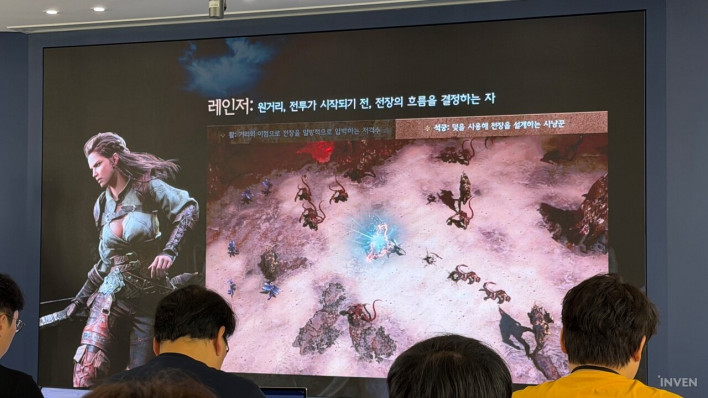
There will be four classes at launch: Fighter, Ranger, Sorceress, and Assassin. Each class can choose between two weapons to define their combat style. Furthermore, players can pursue variety through skill fusion and the combination of 'divine powers.
Skill fusion combines two skills to create a new one, changing not just numerical stats but also attack range, combo methods, and status effects. For example, an Assassin combining 'Ankle Cut' and 'Blade Throw' creates the fusion skill 'Corroded Binding,' which restricts enemy movement and disrupts their flow. 'Divine Power' is a system where players equip acquired Stigmata and relics into skill slots to complete their own detailed combat settings.
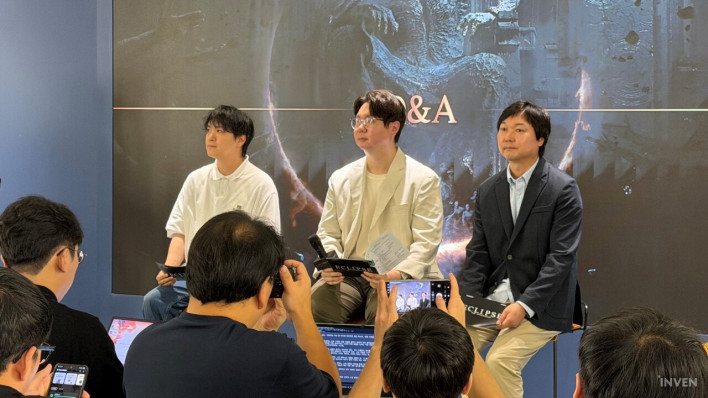
Eclipse: The Awakening Q&A
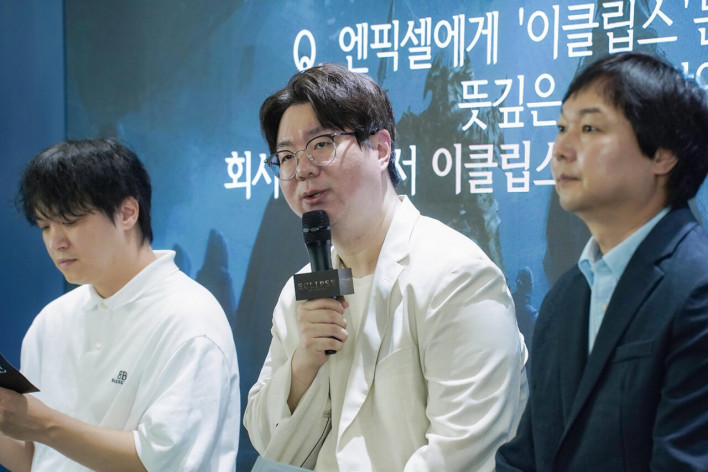
Q. What is the main differentiator of Eclipse compared to existing MMORPGs?
Director Lee Sang-moon = Eclipse started from the question of how to reduce the burdens players have felt for a long time while enjoying MMORPGs, rather than trying to differentiate from a specific game. I believe we live in an era where games compete for users' time against videos, short-form content, and various other media. In such an environment, I felt MMORPGs needed to change from a model that constantly demands the player's time to one that coexists with their daily lives while still providing the deep fun unique to the genre.
We defined this direction as 'MMOLite.' The core is to maintain the fun of growth and combat inherent to MMORPGs while lowering the burdens associated with logging in, spending, and competing.
Notably, the Sanctuary is designed to allow growth to continue even when players are not logged in, naturally easing hurdles in the growth process. I believe the biggest differentiator is the 24-hour AI mode, which reduces the burden of repetitive play and allows users to enjoy the MMORPG according to their own life patterns.
Q. Some might think that this is just a difference in the initial barrier to entry, and that it will eventually become as 'heavy' as other MMORPGs once live service continues.
Lee Sang-moon = First, I would say our direction is not necessarily to aim for 'lightness' itself, but to reduce the burdens that arise while enjoying the game. It is natural for the MMORPG genre to continuously add content for the sake of gameplay fun. However, I do not believe that more content necessarily means a greater burden on players.
We will continue to introduce new content, but the core philosophy of MMOLite is to ensure that players can enjoy growth and combat at their own pace whenever they log in, rather than designing content that becomes another chore or forces long login sessions.
Our goal throughout the service is to expand the depth of growth and combat inherent to MMORPGs without increasing the burden on players.
Q. What is the know-how behind implementing 'terrain-utilizing play' seamlessly across PC and mobile cross-platforms?
Lee Sang-moon = Since there is a performance gap between high-end PCs and mobile devices, we optimized for each platform based on Unreal Engine 5. This minimized the difference in graphic quality between devices while ensuring that the core experience of combat and content remains consistent on any platform.
The Sanctuary is essentially a concept that provides 'idle' rewards, and we prepared it so that both mobile and PC users can access it without difficulty.
Q. The development period has extended beyond the 2025 launch goal; what was the biggest reason, and what parts needed improvement?
Lee Sang-moon = The biggest reason was completeness. I believed that the 'MMOLite' direction should not just be a message, but something players could clearly feel in actual gameplay.
To achieve this, we conducted multiple tests during development, analyzed play data, and continuously refined the growth structure, combat, and operational experience based on user feedback, focusing on creating a level of quality where the value of MMOLite can be truly felt.
We also worked to improve convenience so that players don't feel a 'reverse sense of loss' compared to recent trends, and we tried to add new ideas to various systems rather than just following existing experiences.
Q. What was the most difficult element to implement while developing the game? How did the resolution process reflect in the final product?
Lee Sang-moon = The most difficult part was 'reducing the burden while maintaining the fun of a MMORPG.' We didn't want to just cut content; we wanted to lower the burden players feel while enjoying the game. The biggest challenge was creating a structure that maintains the inherent fun of growth, combat, and cooperation while reducing the pressure of logging in or grinding.
Above all, it was important that the direction intended by the development team was conveyed accurately to the actual players. That is why we repeated verification and improvements multiple times during development and prepared systems like 'Eclipse Time' so that players can enjoy content according to their own play rhythm.
I believe the process of constantly verifying and refining to ensure MMOLite is not just a concept but something felt in actual play was the biggest challenge.
Q. What has changed the most compared to the initial planning stage? Are there any examples of content that was scrapped or rebuilt from scratch.
Lee Sang-moon = Rather than scrapping some content, we redefined its role. We focused terrain-utilizing combat on strategic content like the High River battlefield and reconstructed the core experience of the game around the Sanctuary to make the MMOLite direction clearer.
Q. MMORPGs cause burdens not only in play time but also in growth resources and equipment enhancement. How does Eclipse's growth structure differ from existing titles?
Lee Sang-moon = Rather than making it easy to get growth resources, we focused on reducing the burden of having to invest time repeatedly to obtain them. Notably, we designed the Sanctuary so that growth resources, EXP, and cards accumulate steadily even when not logged in. This allows the flow of growth to continue naturally without needing to log in for long hours every day or repeat the same content.
Q. How is the 24-hour AI mode implemented technically? I am also curious about server load or balance management plans.
Lee Sang-moon = The AI mode is a system that supports the character's hunting and growth even after the game is closed. When users set the AI mode according to their usual play style, the character operates stably in the in-game environment regardless of whether they are logged in. We plan to continuously manage server load and growth balance that may occur during operation according to the service environment.
We thought it was important to provide an experience where the game naturally adapts to the user's life pattern, rather than users having to adjust their lives to the game's schedule.
Q. Unlike recent blockbuster MMORPGs, 'Eclipse' chose an original story. What are the points that can appeal to fans in terms of story and narrative?
Lee Sang-moon = Of course, there are countless well-made, high-quality stories already in the world. However, we wanted to present a new experience to users through the unique narrative of 'Eclipse.'
If a typical creation myth starts with the justification that 'in the beginning, there was a god, and good and evil were divided, and the world was created,' we threw a question from that very point: "Why was the god born in the Eclipse worldview, and what does it exist for?" and "What is the real message we want to convey in our story?"
As we built the framework of the worldview by finding answers to these fundamental questions one by one, I think the ambition as a developer to create a new world of our own grew.
Q. For NPIXEL, 'Eclipse' is a meaningful comeback after 'Gran Saga.' What does the company expect from Eclipse?
Lee Sang-moon = I think Eclipse is a work that unfolds the development experience NPIXEL has accumulated so far in a new direction. The most important goal is to create a MMORPG that can be loved for a long time by combining Smilegate's live service operation capabilities with NPIXEL's development power.
Q. What is the target age group for Eclipse?
Lee Sang-moon = Rather than targeting a specific age group, we hope that a wide range of users who like MMORPGs will enjoy it.
Q. How did you balance the rewards given regardless of play and the rewards obtained through direct play, and what are the alternatives for the impact on the game economy due to the increase in resource supply?
Lee Sang-moon = The rewards continuously obtained from the Sanctuary are more for personal growth than for trading between users, so they were not designed to have a major impact on the overall economy. However, it is difficult to say that there is no gap at all between users who play directly and those who do not log in, and I think users who put in more effort and immersion should have corresponding advantages. However, the biggest purpose of introducing 'idle rewards' is to relieve the psychological burden of 'falling behind because I couldn't log in.
Q. What are the merits for hardcore users who invest a lot of time and money?
Lee Sang-moon = There are definitely parts where hardcore users can gain advantages in boss battles or high-level dungeons. The advantages between casual users and hardcore users are clearly distinguished, and we focused on an environment where they can steadily follow along while having a reduced burden compared to other games, rather than making it impossible to narrow the gap.
Q. What is the communication cycle and update cycle, such as developer notes and live broadcasts, after launch?
Lee Sang-moon = It is difficult to say the exact schedule, but we are preparing more communication than before and are preparing many ways to meet users closer and more often.
Shin Jae-ik, Business Director = To add, we plan to conduct live broadcasts starting from the game showcase and prepare channels where we can communicate directly with users. In the future update and content development process, we plan to reflect user opinions as much as possible and expand the parts where we can communicate directly with users more than other games.
Q. I am curious about the reason for designing it as a weapon-swapping customization method without separating classes. Also, how much resource is needed for weapon and equipment replacement, and can it be covered by resources obtained from the Sanctuary?
Lee Sang-moon = Increasing classes is one way, but since it is an experience already familiar in many games, I wanted to try a more unique and differentiated challenge. We judged that it could provide new fun in that users can customize various combat styles within the same class as they want. It is difficult to quantitatively state the scope of growth resource supply through the Sanctuary, but it is designed so that it can be obtained steadily, virtually without limits, rather than being limited according to a specific spending level.
Q. What are the computing resources and technical architecture for implementing 24-hour AI mode?
Lee Sang-moon = We prepared by incorporating existing convenience features like AI mode and support mode to fit our game style, focusing on lowering the burden on users, and I will discuss with the development team to deliver quantitative figures later. I think I can deliver more accurate information through the development team regarding technical details.
Q. Is there a plan to prepare a separate communication channel for sharing 'tips' in a growth system with high freedom?
Lee Sang-moon = I think there will be a communication process that naturally forms among users. Disclosing the correct answer first is something that should be handled carefully, as I think it could be a spoiler. We will provide the fun of users finding it themselves, but we plan to prepare and deliver necessary information separately.
Q. Is there any indicator supporting the increase in user burden that led to the introduction of MMOLite, and what is the difference from idle games?
Lee Sang-moon = It is difficult to present specific indicators here, but as a user myself, I referred to the parts I felt directly and the opinions and trends of various user groups. As we can check users' thoughts through various media, we prepared 'MMOLite' by reflecting these demands for burden relief. It started from a point similar to the convenience felt by idle game users, but the difference from existing idle games is that we grafted the reward method from idle games onto a MMORPG to reduce the burden.
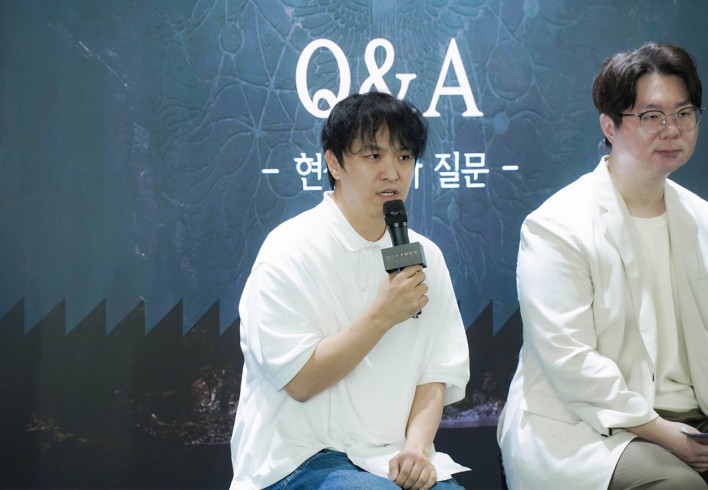
Q. What are the scenes or directing that you want users to pay attention to, and what parts did you put effort into?
Kim Dong-hyuk, Art Director = While building the original worldview, I want to mention the Sanctuary as a representative space that we put the most effort into completing, along with the hidden world. We wanted to express an unfamiliar and mysterious space like a 'third realm' that exists on a completely different level, not a place built from a human perspective or common sense, and it was never an easy process to visually implement the camera, lighting, and mood by containing the mood of Eclipse here.
As it is a space completed after the art team's constant contemplation and trial and error, I sincerely hope that the worldview and concept we wanted to contain can be deeply conveyed to the saviors.
Q. The direction of 'MMO Lite' and the visuals of the somewhat dark worldview seem like a mismatch; why did you choose this look?
Kim Dong-hyuk = In the beginning, the visual code was darker and more hardcore than it is now, but it has been refined in a light direction since then. Although it is realistic, it is different from the realistic visualizing that other games aim for, and we aimed for a direction that alleviates the weight of the visuals themselves even if the narrative is heavy by bringing out the tone and color suitable for the characteristics of a quarter-view game.
We focused on visual codes that narratively weave classes, characters, and the Eclipse IP rather than graphic performance competition, and you can see 'MMO Lite' as the overall weight of enjoying the game, and dark fantasy as the narrative and atmosphere.
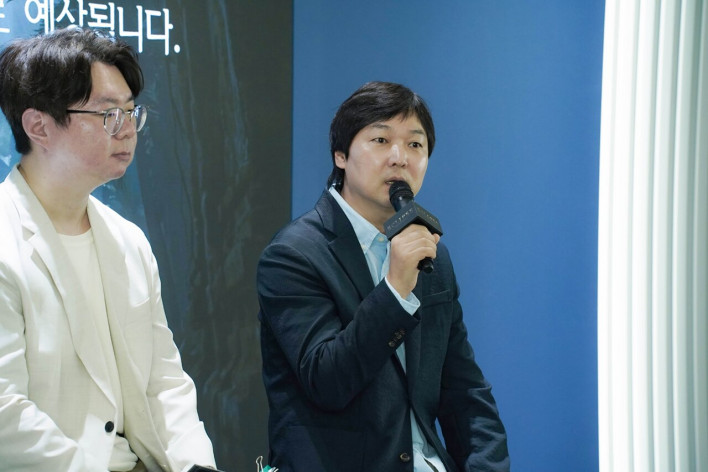
Q. It is expected to be a structure that is difficult to make a profit without probability-based products. Is there a practical plan for the statement that the burden of spending has been lowered?
Shin Jae-ik = Eclipse also includes probability-based products. However, what we thought was important is to provide an experience where users can sufficiently feel the value and satisfaction when they purchase, rather than the presence or absence of probability-based products. Therefore, we designed the BM in a direction that reduces the fatigue and uncertainty of having to repeat the same purchase to get the desired result, and allows users to feel the value and satisfaction as much as they purchased. I think spending should be an element that users can choose according to their play style, not a necessity for growth.

Sort by:
Comments :0