When you first start FC Online (FCO), it’s natural to focus on high-quality players, team colors, training coaches, and tactical settings. While these are important, actual matches are often decided by your manual controls. Even with the same squad, the outcome depends on who moves more steadily, passes at better moments, and defends with more composure.
Today, we’ll discuss common mistakes beginner managers make in 1vs1 official matches. Since a single mistake can lead to conceding a goal or missing a golden scoring opportunity, reducing errors is key to managing your win rate. Use these practical tips to evaluate your own gameplay.
Sprint Only When Necessary
One hallmark of a beginner manager is overusing the sprint button. It’s so common that many players treat sprinting as the default state, making it a difficult habit to break because they don't realize the problems it causes.
In FCO, constant sprinting leads to longer dribble touches and sluggish turns, often resulting in turnovers. In attack, sprinting toward defenders makes it easy for them to dispossess you. Unless you have clear space on the wing to break away, it’s better to hold back. Sprinting can also negatively affect the accuracy of your crosses, passes, and shots.
The same applies to defense. If you hold sprint while chasing an opponent, your defender may overcommit or fail to track a change in direction. You might feel your defender getting 'left behind' when the opponent cuts inside. In defense, rather than just chasing, it is more important to release the sprint button and focus on blocking the opponent's path.
Furthermore, making sprinting your default speed makes the game tempo too fast, limiting your ability to control the flow and find open spaces. Remember, the 'football masters' we admire are the ones who excel at tempo control.
Defend the Path, Don't Just Chase

The most dangerous defensive habit is reckless pressing. Charging at the ball carrier might look like you're about to win the ball, but if you fail, you leave a massive gap behind you. A common pattern for beginners is pulling their center-back out of position to press, only to leave a striker running into the space they just vacated.
The fundamental rule of defense is not to blindly follow the ball, but to block the path the opponent wants to take. If an attacker is moving toward the center, block the passing lane; if they are looking for a cutback from the wing, block the path into the box. Often, blocking dangerous space is more important than trying to steal the ball.
The same goes for team pressing or aggressive pressure. While helpful in specific moments, constant use will disrupt your defensive line. If one player rushes out and others fail to cover the space, you’ll easily concede through-balls or cutbacks.
Start by practicing not pulling your defenders too far forward. Treat your center-backs as the last line of defense and use your defensive midfielders to disrupt the opponent's buildup. Keep your back four in line to deny space. If the ball is meant to be won, the auto-defense will handle it. Getting comfortable with Shift + S for cursor switching will also help.
Tackle Only When Certain
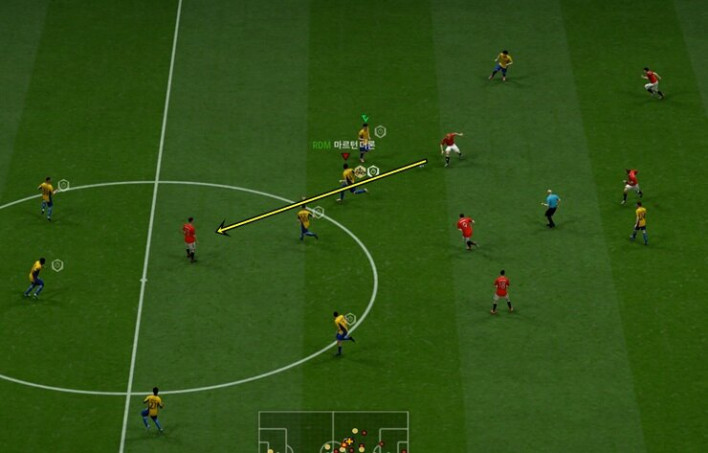
Along with pressing, another common mistake is excessive tackling. Many players hit the tackle button as soon as the opponent has the ball, but tackling is high-risk. Your defender stops moving while extending their leg, and if you miss, you leave a wide-open space. This is how you get caught in the dreaded 'reverse motion' trap.
Be especially careful near the box. Reckless tackles can lead to free kicks or penalties, and if your defender falls or loses balance, you'll be slow to react to second balls. Only attempt a tackle when the timing is certain—such as when the opponent has their back to you, has taken a heavy touch, or the ball has just left their foot during a pass.
For beginners, positioning comes before tackling. Simply standing in front of the opponent, narrowing the shooting angle, and cutting off passing lanes is effective defense. It’s more important to make the opponent uncomfortable than to force a steal.
If you find defense difficult, try reducing your tackle count. If you’re still getting beaten despite frequent tackling, your defensive style might be too impatient. Keep tackling as a last resort and practice tracking and blocking lanes instead. Specifically, practice the sense of intercepting through-balls aimed at your backline.
Don't Overuse the First Touch

Moving immediately after a first touch is a great training coach trait that allows you to change direction and create space upon receiving the ball. Used well, it can beat pressure, create shooting angles, or help you break away on the wing. However, a common beginner mistake is attempting a first touch on every single pass.
I personally enjoy the first touch mechanic—it’s thrilling to beat an opponent and create space in one move. But once you get hooked on that, you start trying it even when there’s no space, leading to lost possession. If an opponent is close or there is heavy pressure, a forced first touch can cause the ball to run too far, leading to an immediate turnover.
Be especially careful during midfield battles. Losing the ball carelessly while building up play makes you vulnerable to counterattacks. Since many consider the 'move after first touch' trait less powerful than it used to be, practice using it only when necessary.
Use it when you have a clear purpose: when an opponent is rushing you and there is space behind them, when moving along the sideline, or when creating a shooting angle near the box. Conversely, if you need to keep the ball safe in the center, a short pass or a simple turn using the directional keys is a better choice.

Don't Obsess Over Forward Passes
Beginners often try to move the ball forward the moment they get it. While attacking is the goal, forcing a forward pass when the center is blocked usually leads to an interception. You’ll often see players repeatedly attempting through-balls only to have them blocked by the opponent's defense.
We all know the dopamine rush of a successful through-ball. However, since most managers prioritize blocking through-balls, they aren't easy to pull off. If the center is blocked, use the wings; if the wings are blocked, attack the center again. Variation is key.
Forced forward passes in your own defensive third can lead directly to goals. When your center-backs or defensive midfielders have the ball, it’s safer to connect with a nearby teammate to relieve pressure rather than rushing it forward. Think of how real-life teams build up from the back.
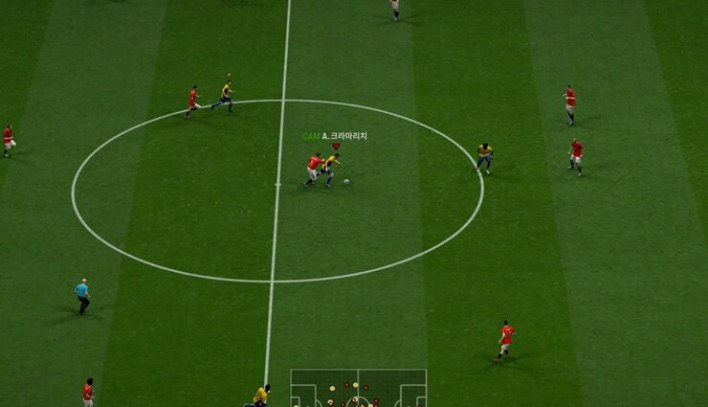
Timing is Crucial for Shots and Crosses
Taking shots too hastily is another common beginner mistake. Shooting the moment you reach the box often results in blocked shots or poor accuracy due to bad posture. Shooting is influenced not just by player stats, but by posture, angle, and defensive pressure.
To get a good shot, you need to take a moment to find a better position. If a defender is in front, shift to the side to create an angle; if the near post is blocked, aim for the far post. Inside the box, staying calm and looking for the angle is often more important than hitting a powerful shot.
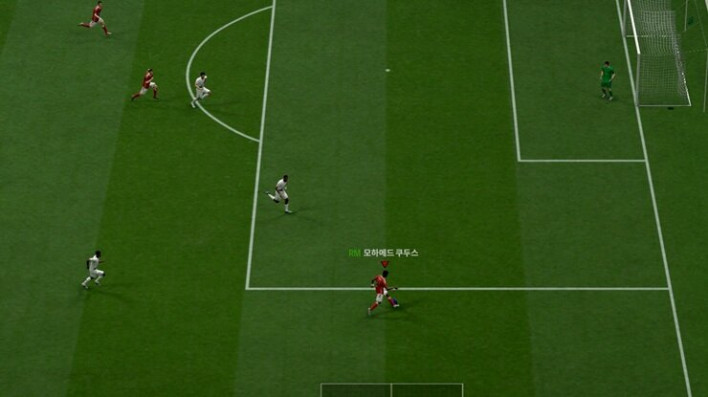
The same applies to crosses. Just because you're on the wing doesn't mean you should cross immediately. If there are no attackers in the box or the opponent is already set, the cross will be easily cleared. Before crossing, check how many teammates are in the box and if they have a positional advantage. Also, while running crosses are fine, try taking your finger off the sprint key to cross with more composure.
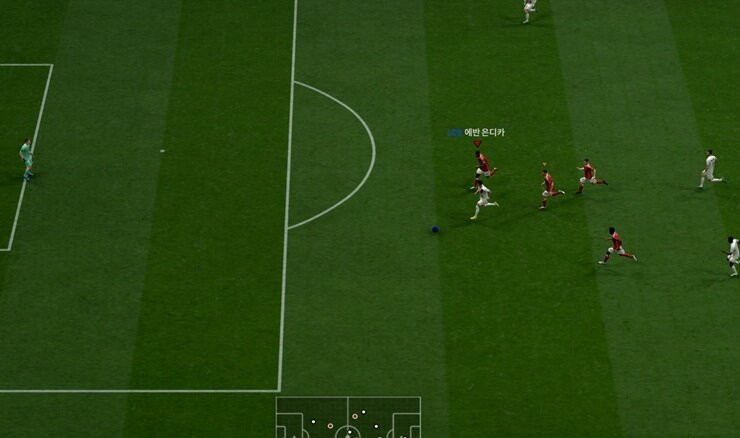
Use Goalkeeper Movements Carefully
If you fail to block a through-ball or get dribbled past, your last line of defense is the goalkeeper. In FC Online, you can manually control the keeper to make these saves. When successful, it’s even more thrilling than scoring a goal.
Manually moving or rushing the keeper can definitely help in a crisis. You can use it to narrow the angle in 1vs1 situations or block the direction the opponent is preparing to shoot. But overdoing it is a problem. If you move too early, the opponent can see the empty net and finish easily; if you guess the wrong direction, you might concede an easy goal.
Only use manual keeper control in clear situations. It’s safest to use it to narrow the angle when the opponent is in a clear 1vs1. Wait until the very last second. You can even try just feinting a rush.
※ INVEN is gifting FC Online coupons to our managers! You can redeem these coupons by entering them in the 'Coupon Box' at the top right or the 'Register Coupon' menu at the bottom of the official website.
Coupon: 신규정착가이드인벤공략8
This coupon can be used once per account until Wednesday, July 29. Stay tuned for more surprise coupon gifts from FC Online INVEN!
⚽ FC Online Beginner Guide Collection
[Beginner Guide ①] Let's Play! From Settings to League Matches
[Beginner Guide ②] Mastering Content! FCO Game Modes & Menu Intro
[Beginner Guide ③] F2P Friendly! FCO BP Earning Routes
[Beginner Guide ④] Settling In: Advice for Returning Managers
[Beginner Guide ⑤] Completing Your Team: Player Recruitment & Squad Building
[Beginner Guide ⑥] Player Recruitment: What Criteria Should You Look For?
[Beginner Guide ⑦] eight Years of FC Online Through Classes
[Beginner Guide ⑧] Squad Strengthening for Real Matches: Recruiting Training Coaches
[Beginner Guide ⑨] From Condition to Stats: Intensive & Tactical Training
[Beginner Guide ⑩] Supporter System: How to Approach It?
[Beginner Guide ⑪] What Kind of Football? Designing Your Own Tactics
[Beginner Guide ⑫] From Loans to High-End: National Team Squad Guide
[Beginner Guide ⑬] Starting with Value: Intro to Single Teams for Beginners
[Beginner Guide ⑭] Boost Your Win Rate with a Click! Manager Mode Tactics
[Beginner Guide ⑮] From Budget to High-Budget: Single Team Color Squads
[Beginner Guide ⑮] Defense: Just Remember These - 'Volante Control' & 'C-Defense'

Sort by:
Comments :0