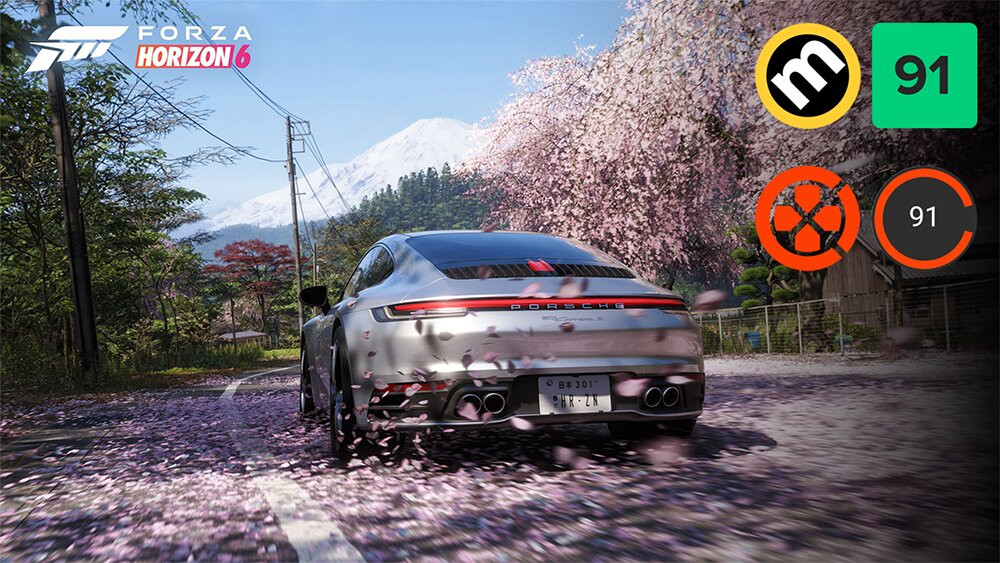
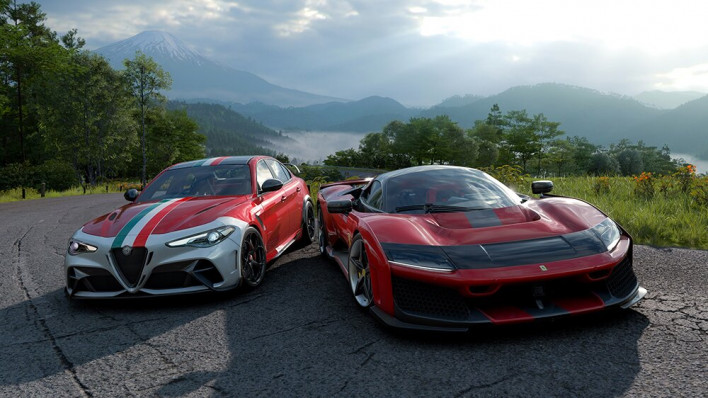


'Forza Horizon 6' was officially released on May 19. Launched simultaneously on Xbox Series X|S and PC, the latest installment has earned a score of 91 on both Metacritic and OpenCritic, making it one of the highest-rated titles of 2026. Set across Japan—a setting fans have clamored for for years—the game is seeing exceptionally high user recommendation rates and critical acclaim.
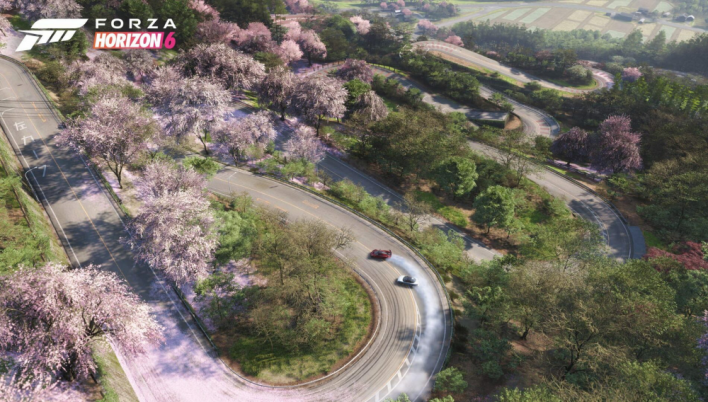
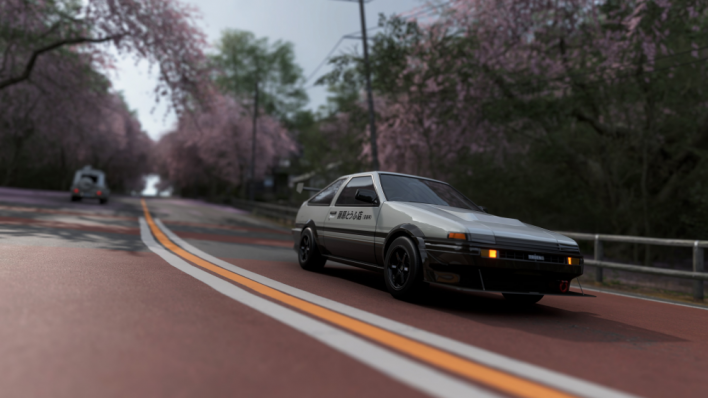
The core of this installment lies in two things: a lineup of 618 vehicles, the largest in the series' history, and an open world in Japan that is both wider and more densely packed than in Forza Horizon 5. From JDM hypercars to Kei trucks, and from the heart of Tokyo to the mountain passes of Mount Fuji, the Japan captured in Forza Horizon 6 is a journey in itself.
So, exactly which cars can you drive and where can you race in Forza Horizon 6? And what if you could experience all of this with just a Xbox Game Pass—or for a mere ₩4900 if you are a Naver Plus member? Let’s take a look.
Forza Horizon 6: Opening the Garage
The vehicle lineup in Forza Horizon 6 isn't just about quantity. From movie time machines to circuit-only hypercars with only 30 units produced worldwide, the garage is filled with cars you might never see in real life. And once you know the actual price of these vehicles, the fact that you can play with all of them for just ₩4900 feels even more remarkable.

Born with gull-wing doors and a stainless steel body, the DeLorean DMC-12 didn't actually sell very well when it was first released. Its power was mediocre, and the company went bankrupt just three years into production. Yet, the only reason this car is still talked about today is its appearance as a time machine in the 1985 film 'Back to the Future.' In the movie, the DeLorean began its time travel the moment it hit about 141 km/h, a scene that became one of the most famous in automotive history.
In reality, the market price for a DeLorean ranges between 60 million and ₩100 million, depending on its condition. The actual car used in the filming of 'Back to the Future' was even officially recognized for its cultural value in 2021 by being added to the U.S. National Historic Vehicle Register. It is a car valued for its story, not its performance.
Forza Horizon 6 features the 1982 model. While driving an American time machine in a game set in Japan is a surreal combination, it is a car that left a mark on automotive history, making it well worth getting behind the wheel at least once.
The Supra was originally born as a high-performance JDM sports car, but it became a different kind of icon after Paul Walker’s orange Supra was seen racing in the 2001 film 'The Fast and the Furious.' The MkIV Supra, housing the legendary '2JZ' 3L twin-turbo inline-six engine, boasted overwhelming performance even by the standards of its time, and its immense tuning potential has made it one of the most sought-after tuner cars among enthusiasts to this day.
The orange Supra actually used in the filming of 'The Fast and the Furious' was auctioned off for approximately ₩760 million ($550k) in 2021. Even standard production models carry hefty price tags; in January 2026, an unmodified 1998 model with 9800 km on the odometer sold at auction for about ₩330 million ($242k). A car that cost about ₩55 million when it launched in 1998 has seen its value jump more than sixfold in 30 years.
Forza Horizon 6 includes both the 1998 Supra RZ and the Formula Drift spec MkIV. Driving a Supra in a game set in Japan, the spiritual home of JDM, is one of the most iconic experiences the game has to offer.

The nickname 'Godzilla' didn't come out of nowhere. It was coined by the Australian automotive magazine 'Wheels' after the Nissan Skyline GT-R R32 dominated the local touring car races in the early 1990s. Since then, the nickname has become a symbol for the entire Skyline GT-R lineage and, by extension, the current R35 GT-R.
The R32 Skyline GT-R (BNR32), the original 'Godzilla,' currently trades for between 70 million and ₩130 million ($50k–$90k) for a well-maintained unit. When the current R35 generation (2007–present) launched, it shocked the world by offering performance on par with Porsche 911s and Ferraris for about ₩96 million ($70k)—half the price. After continuous improvements, the latest NISMO models have entered the ranks of supercars, easily fetching over ₩300 million ($220k).
Since Forza Horizon 6 is set in Japan, the GT-R lineup is particularly robust. With over 10 models included, from the 1971 Skyline 2000GT-R to the 2024 GT-R NISMO, it is a rare opportunity to experience the entire history of Godzilla in one place.

The F40 was the last Ferrari personally approved by founder Enzo Ferrari before his death. Announced in 1987 to commemorate Ferrari's 40th anniversary, it was the first production car of its time to officially break the 322 km/h top speed barrier. It is a purely analog driving machine with no power steering or traction control, and it is still called 'the last Ferrari where the driver and car become one.'
The price at launch was about ₩540 million ($400k), but it is worth many times that today. In 2025, a 1992 F40 sold at an RM Sotheby's auction for about ₩4.2 billion ($2.75 million), and a 1990 model went for about ₩5.3 billion ($3.9 million). It is a living antique that only grows more valuable with time.
Forza Horizon 6 includes both the 1987 model and the 1989 F40 Competizione. As a car that requires the driver's skill alone without the help of electronic aids, you can feel its sharp, unforgiving nature in the game.
As the flagship hypercar commemorating Ferrari's 80th anniversary, it is the most expensive production Ferrari ever made. Its hybrid V6, which incorporates technology from the Le Mans-winning 499P race car, combined with three electric motors, produces a total of 1200 horsepower. It hits 0–100 km/h in 2.15 seconds and reaches a top speed of 350 km/h. If the F40 was 'Enzo's last Ferrari,' the F80 is 'a car into which Ferrari poured everything it could create with current technology.'
Limited to 799 units worldwide, it sold out immediately upon announcement. The price is about ₩5.4 billion ($3.9 million). Purchase eligibility is granted only to VIP customers selected by Ferrari, and resale is prohibited for 18 months after delivery. Some predict the secondary market price will already exceed ₩8 billion.
Forza Horizon 6 will include the F80 via the upcoming Italian Fashion Car Pack DLC. While only 799 people in the world will see the real thing, anyone can get behind the wheel in the game.
From Tokyo to the Alps: The Japan of Forza Horizon 6
As much as the cars, the setting makes Forza Horizon 6 special. This is the first time the series has been set in Japan, and it goes far beyond simply recreating the terrain. From night drives in downtown Tokyo to "touge" battles on the slopes of Mount Fuji and even part-time food delivery jobs in a Kei truck, the game captures the essence of Japanese car culture. After playing for just a short time, you will understand why the developer, Playground Games, confidently calls it the "densest and most vertical map in the series' history."

Forza Horizon 6 features a fictional food delivery mission called 'Raku-Raku Express.' In a game filled with multi-billion won hypercars, the vehicle the player drives is none other than a Kei truck. The goal is to navigate through Tokyo's heavy traffic and deliver food within the time limit. It is content that captures the unique vibe of Japanese urban life, where a fast car isn't always the answer.
The mission consists of 9 levels, and each delivery is rated from 1 to 3 stars. You must consistently earn 3-star deliveries to level up, and reaching the maximum level of 9 unlocks a special achievement. While it seems simple, you need to learn every corner of Tokyo's alleys to clear it efficiently, naturally helping you master the city's geography.
This is the first time a food delivery mission has appeared in the Forza series. The fact that both multi-billion won supercars and humble Kei trucks share the same streets of Tokyo is the charm of the Japan created in Forza Horizon 6.

Day Trips are story missions where you travel across various regions of Japan with the character Mei. The missions take you through six areas in sequence—Shimanoyama, Nangan, Hokubu, Ito, Soto-yama, and Tokyo City—and are designed to let you naturally experience the landmarks and culture of each location. The developer stated, "We have integrated the routes actually enjoyed by travelers visiting Japan into the game."
Each Day Trip combines various driving elements, such as Speed Zone challenges, sprint races, and skill chains. Rather than just admiring the scenery, you experience the region while driving, capturing the unique open world exploration feel of the Forza Horizon series. Upon completing a mission, you can earn Discover Japan points along with exclusive reward vehicles.
From the heavy snow of Shirakawa-go to the sunset at the foot of Mount Fuji and the night view of downtown Tokyo, Day Trips are more than just missions—they are the best way to see how delicately the Japan of Forza Horizon 6 has been realized.
Bigger, Denser, Better - Forza Horizon 6 JapanA Wider and Richer Map Than Its Predecessor

The Japan map in Forza Horizon 6 is about 25% larger than the Mexico map in the previous game, Horizon 5. While the numerical difference might not seem huge, the actual experience is much greater. If the previous Mexico map was focused on vast deserts and plains, this Japan map is densely packed with mountain passes, urban overpasses, and coastal national roads, making it feel much richer and more detailed despite the similar area.
In particular, the Tokyo city center area is five times the size of Guanajuato from Forza Horizon 5. The developer, Playground Games, has officially introduced this map as "the densest and most vertical map in the series' history," and Art Director Don Arceta emphasized that "it is not just large, but structured so that you discover something new the more you drive."
Since the most common criticism of the previous title was that it had "too much empty space," this focus on density is one of the most positively received aspects within the community. It is significant in that they have created not just a larger map, but a more engaging one.
Drive It. Hear It. Feel It.Feeling Japan Through Sight and Sound
Forza Horizon 6 has introduced a new spatial audio system called 'Triton Acoustics.' Engine and exhaust sounds change realistically when passing through tunnels, driving on urban overpasses, or climbing mountain passes, providing an immersive experience that feels like actual driving. One of the differentiators of this game is that it is designed not just to look good, but to let you feel Japan through your ears as well.
The seasonal system has also become more sophisticated. Spring, summer, autumn, and winter rotate on a weekly basis; when heavy snow piles up in Shirakawa-go, the tires feel the weight, and when it rains, puddles on the asphalt create realistic reflections. Since the car's actual handling changes depending on snowy, rainy, or dry road surfaces, seasonal changes are not just visual effects but impact the driving experience itself.
A point that gamers have universally praised is driving in Tokyo at night. The reflection of neon signs on wet road surfaces and the light and shadow created by headlights when driving through alleys under overpasses—these scenes are all rendered in real-time. This visual and auditory perfection played a major role in Forza Horizon 6 receiving a score of 91, just as much as the cars and the map.
As we have seen, Forza Horizon 6 is top-tier in all three aspects: cars, map, and content. From a ₩5.4 billion Ferrari to a Kei truck, 618 vehicles, a wider and denser open world, and content that captures the essence of Japanese car culture—from food delivery jobs to touge battles—the 91-point Metacritic score is well-deserved.
While some cars require DLC purchases, most of the content is available with just a Xbox Game Pass subscription. For domestic users, the ability to use Xbox Game Pass through a Naver Plus membership (₩4900 per month) is a significant benefit. I personally use Xbox Game Pass through my Naver membership as well.
The admission fee for all the experiences introduced above is just ₩4900. If you are already using a Naver Plus membership, apply your Xbox Game Pass benefits now and head off on a trip to Japan.
This article was originally written in Korean and translated with the help of NC AI. It was then edited by a native English-speaking editor. All AI-assisted translations are reviewed and refined by our newsroom.
[Read Original]