There is nothing more enjoyable for fans than turning a popular IP into a game, and doing so 'splendidly' at that. However, this can simultaneously feel like a wall for subsequent developers who need to utilize that IP again. Batman was exactly like that.
Rocksteady's Arkham Trilogy—Arkham Asylum, Arkham City, and Arkham Knight—was acclaimed as the best superhero games of all time upon their release. Arkham Origins, which covers the origins of the series, received high praise for carrying on the spirit of the Arkham series, even though it was developed by WB Montreal, a studio under Warner Bros. Games, rather than Rocksteady. At the same time, it was difficult for other games to surpass the achievements built by the Arkhamverse. Even Rocksteady's new Arkhamverse title, 'Suicide Squad: Kill the Justice League,' and WB Montreal's 'Gotham Knights,' released outside the Arkhamverse, both suffered severe criticism and commercial failure. Therefore, when evaluating 'LEGO Batman: Legacy of the Dark Knight' (hereinafter 'LEGO Dark Knight'), one cannot help but mention Arkhamverse titles again. However, while the previous games attempted to escape the shadow of the Arkhamverse, LEGO Dark Knight fully incorporated the legacy of the Arkhamverse into its own style. It also depicted a clever use of IP outside the Arkhamverse that only LEGO could achieve. It means that the Arkhamverse can be discussed not merely as a yardstick to gauge 'how much Lego Dark Knight falls short,' but as a 'predecessor' that demonstrates how its strengths were absorbed and evolved. TT Games has created a game that is arguably the most Batman-esque of all, utilizing Lego-style humor and a relatively simple game system. LEGO Batman: Legacy of the Dark Knight 🏭 Developers TT Games 🏭 Publisher Warner Bros. Games 🏭 Platform PS5, XSX|S, PC, NSW2 🎮 Play PS5 🎮 Release Date May 23, 2026 📅 Release Date data-nid="31">🏷️ Keywords#OpenWorld #Batman #DC #LEGO
- A Batman saga newly woven away from Arkham
- The best through countless homages Fan Service
- An Open World Completed to the Highest Level in the Series
- Lego-style Humor That Naturally Brings Out the Tonal Transitions
- Utilization of Gimmicks and Action That Highlight Character Personalities
- Arkham That Didn't Break Away Much Expansion of the series
- Reduced number of characters while preserving each character's unique characteristics
- System simplification resulting from relatively low difficulty
Review Platform: PS5 (Launch Version)
A new Batman
Homage to The Dark Knight written outside the Arkhamverse
If you think of the gameplay of LEGO The Dark Knight as virtually a direct port of the Arkhamverse games to LEGO, that is about 50% accurate. This is especially true considering that WB aimed early on to create a game that "those who enjoyed the Arkham series could enjoy while maintaining their familiar sensibilities." The combat is implemented using the Free Flow system, which has delivered simple yet spectacular combat sequences throughout the Arkham series, and it also includes puzzle-solving as a detective where Batman utilizes various gadgets to solve problems. It has even created an open field with a higher level of polish than 'LEGO Star Wars: Skywalker Saga,' which depicted a planet-centric open world through adjustments to map size and density. If this represents 50% of the Arkham series, the remaining 50% is filled with a Batman unique to LEGO. Simply put, it offers the freedom of dealing with a title that breaks away from the already established universe known as the Arkhamverse. It also possesses all the authenticity provided by the basic framework of TT Games' action-adventure games. Suit-up scene reminiscent of the Joel Schumacher Batman Anthology ©INVEN What sets this apart from the Arkhamverse is precisely the story. The Batman of the Arkhamverse is a figure who has already been active as a protector of Gotham for a long time. He is a character who can skillfully utilize in-game combat and gadgets from the very first game. This is necessary so that a vigilante without any special superpowers can demonstrate his presence as a superhero subduing various supervillains. So, even in Arkham Origins, which was created as a prequel to the series, Batman was portrayed as an incomplete figure who had already been active for some time. The Arkham series all cover events that take place within a span of about one or two days. However, Lego: The Dark Knight does not cover such a short period. Much like the Lego Harry Potter or Lego Star Wars series, it separates individual stories and captures the flow of quite a long time within them. That is why it is possible to depict various content, such as the growth of an incomplete character, the joining of new characters, and the team-up of the Batman Family. In the game, this was divided into chapters. Each chapter contains stories covering a similar time period. Chapter 1 covers the origins of Batman, starting from Bruce Wayne's childhood; Chapter 2 depicts the early days of his activities as Batman in earnest; and Chapter 3 portrays the expansion of the Batman Family. Under these clear themes, each chapter draws on a basic narrative framework from other works. For example, the Batman origin section follows Christopher Nolan's Batman Begins and covers his training under Ra's al Ghul. Looking at it this way, you might be reminded of various Lego games that follow movie narratives, but here, the story unfolds beyond a mere imitation. Like Batman Begins, Bruce wavers between Gotham's justice and revenge before establishing his own sense of justice and returning to the city. However, at the same time, it depicts the appearance of Red Hood and his fall into a vat of chemicals, marking the beginning of his ill-fated relationship with the Joker. By addressing his starting point as Batman, it captures the beginning of his persistent antagonistic relationship within the same chapter. Furthermore, it portrays the Joker's origins as "Red Hood One," a criminal leading the Red Hood gang, and the falling scene evokes "Under the Red Hood," newly weaving together and paying homage to various works including comics and movies. Moreover, this chapter division and homage serve as the core elements that establish the game's identity. Oswald Cobblepot, also known as the Penguin, is depicted as a henchman of Carmine Falcone and a despicable villain. This aspect is further emphasized in the movie *The Batman* and the TV series *Gotham*. In particular, the scene where Batman drives the Batmobile to overturn Cobblepot's car and walks out of the flames is a direct take from *The Batman*. In Chapter 2, this atmosphere changes completely. He reveals his pale skin and sharp teeth while tearing apart raw fish, and threatens Batman by leading a squad of bomb-laden Penguins. This pays a perfect homage to Tim Burton's Batman II (Batman Returns). While it faithfully captures the atmosphere of the original work—completely different from Chapter 1—it is actually difficult to clearly accept the changes within a single piece. However, the lighthearted atmosphere and humor unique to the Lego series create a situation where such changes do not feel awkward. The usually serious Batman immediately pretends to be a detective holding a rubber duck, and childish toilet humor appears quite unhesitatingly. It is an environment where the homages and changes from various works can be accepted as a form of humor. The freedom unique to the Lego series is the element that allows for the inclusion of character interpretations from different works—which would be difficult to connect within a single piece—into one unified whole. Broadly speaking, one can witness the gradual evolution of superheroes and villains, from their origins to the deepening of good and evil and the escalation of conflict. Batman, the most actively consumed character among solo superhero IPs, recently vying for the top spots on comic sales charts alongside Spider-Man. The fact that one can encounter character settings from numerous works, each with its own unique interpretation, within a single piece leads to a sense of depth for fans, where the more they know, the more they see. Connects characters from different series and interpretations into a single work through chapter divisions ©INVEN It even pays homage to the yuppie business card scene from American Psycho, a film starring Christian Bale, the protagonist of Nolan's Batman series ©INVEN While a significant portion of the game controls and mechanics were carried over from the Arkham series, the goal was to break away from the Arkhamverse in terms of the worldbuilding and create a completely new story. This made it possible to blend countless iconic scenes from Batman into one cohesive narrative. And that was possible precisely because it was the Lego series. At the very least, if you consider yourself a fan of the Batman series, Lego: The Dark Knight is the first game where you can play through scenes from such a diverse array of masterpieces, and it will be difficult to find another one easily in the future. Arkham's Free Flow Revived in Lego Simplicity and Diversity That Take Everything If the expansion of the story symbolizes the freedom of Lego, the combat and tool usage are the parts that inherited the DNA of the Arkham series. The free-flow action, which allows for various maneuvers through fighting, counter-attacks, and evasion with simple button inputs, has perfectly inherited that of the Arkham series. And this became the key to instantly resolving the lack of action, which was the biggest drawback of the Lego Action Adventure series. After all, one of the main reasons combat in Lego games had remained a side element to story exploration was precisely the lack of combat animations. In addition, the "Free Flow" combat system, which has now moved away from mainstream action, provides a unique kind of fun. This is because many recent action games have adopted combat systems derived from Soulslike genres, which focus on stamina management and anticipating opponent movements. True to its name, "Free Flow" allows you to maintain the flow of combo counters while elegantly subduing enemies, providing a distinct sense of pleasure and reward that is different from recent action games.

Of course, if Free Flow combat were to remain limited to basic fighting, there would inevitably be a downside: it would become boring as one gets used to it. Something is needed to add variation, and the game fills that variety through the use of gadgets and skills. Each character's unique weapon is designed to be freely used during Free Flow combat to maintain the flow. And as you master skills, you can input gadgets while dodging or learn ultimate-level actions that use the Focus Meter to subdue multiple enemies at once. While filling the variety of actions in various ways like this is what free-flow combat is all about, Lego Dark Knight also sought to preserve the simplicity characteristic of Lego. For starters, each character can only utilize two types of gadgets. In Batman's case, compared to Arkham Knight, he can only use the Batarang and Batclaw instead of a variety of gadgets such as explosive spray, smoke grenades, freezers, and explosive gel. Unlike the Arkham series, where you essentially control only Batman during the main story, this appears to be a choice made to reduce complexity, as you must control various characters throughout the main story. Also, since the game itself targets a wider age range of users, it would have been difficult to widely introduce complex controls. In fact, in a game where you control only Batman, you naturally have no choice but to increase the variety of combat through various gimmicks and gadgets. Nevertheless, to progress quickly to the ending, you are bound to repeat the gadgets you use frequently. Utilizing various gadgets was only necessary for special missions, challenges, or increasing combo counts. In fact, in Lego, where you switch between controlling multiple characters, having just two types of gadgets is sufficient to fully realize the diversity of free-flow combat.

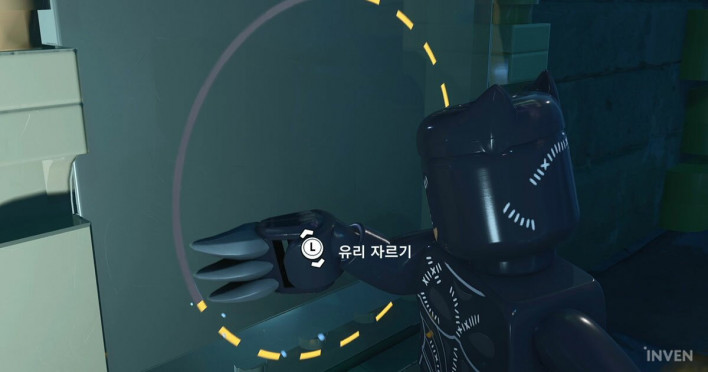
Regarding easier controls, the weakening of the stealth mechanic can also be cited. Since there is no crouch button at all, you can attempt a takedown simply by getting behind an enemy. While this can be a disadvantage in high-difficulty situations where you cannot clearly confirm your stealth status, it is not a major issue because the game itself is easy. On the contrary, it can be an advantage as it reduces frustration, as you can move quickly as long as you get behind the enemy. The fact that bricks shatter and disappear in true Lego fashion after a takedown, ensuring your location isn't revealed by fallen enemies, also contributed to making the difficulty easier. Tools also offer convenience by automatically switching to the appropriate target when you aim, even if they aren't currently selected. Essentially, the overall characteristic of not being very difficult has been translated into improved convenience. Patroling Batman + Bat Family A Lego-style open world completed by Arkham To ensure all characters possess an appropriate level of combat diversity, attention naturally had to be paid to the utilization and depth of each individual character, which led to a limitation on the number of playable characters. The characters you use during the story are limited to the Batman Family, Jim Gordon, and Catwoman. The very characteristic of the Lego series of making every character playable, regardless of whether they are friend or foe, has faded. Instead of meaningless cosmetic changes, the unique traits of each character have been properly enhanced. In previous Lego games, the various characters were essentially nothing more than characters with different appearances who shared a few core abilities. However, this time, each character wields different tools and performs distinctly different actions. Catwoman pierces glass with her claws, and Nightwing shoots electric cables that change the direction of current. Young Robin, with his stronger characteristics as an acrobat, can set up ropes to expand his range of movement.
Now, specific characters have been made essential for unlocking special gimmicks. This goes beyond Batman simply solving all problems alone; it reinforces his identity as a leader protecting the city alongside the Bat Family and his colleagues. This also connects to the vast and diverse landscape of Gotham City.
The city depicted in the Arkham series is a world filled only with villains. Action can only be freely enjoyed when enemies are swarming, and the actual atmosphere of the work was dark to match. And in Arkham Knight, where the Batmobile is emphasized, you cannot hit passing pedestrians, so it was even more impossible to include civilians. This is especially true when you look at how they tried to maintain the no-kill policy by compromising with a setting where you simply push enemies away with a taser. However, Lego Dark Knight is a bit different. Cars roam freely in the city, and there are plenty of people. And there is no problem with driving the Batmobile and smashing everything. In fact, it is a gameplay style that fits the Lego series, where you earn studs by destroying things, even better. Therefore, you can experience a new side of Gotham filled with people in the game. Thanks to this, Batman uses the term 'patrol,' which is unthinkable in the Arkham series, and his image as a guardian protecting the city rather than a villain slayer is emphasized. The 'togetherness' of the Bat Family is emphasized more than Batman wandering alone, tailored to the gameplay. This also gave greater justification to clearing various side content. It didn't fit well with the short running time of the Arkham series to leisurely solve the Riddler's puzzles while villains were being released, the city was being locked down, and fear gas was on the verge of spreading. However, for Batman in Lego: The Dark Knight, who patrols Gotham City on a daily basis rather than as a one-off event, solving problems involving villains like the Riddler and following clues also becomes an important task. In fact, the game implements open-world content on a different level compared to such Lego series. Lego series prior to Lego: Star Wars: Skywalker Saga essentially stopped at building open fields that were merely hubs. While this title did implement an open world by depicting various planets, it lacked depth. Lego: The Dark Knight implements major missions that continue the chapters by moving to separate locations, while creating Gotham City itself as a vast, seamless open field. The scale itself is large, and it adopts a design that increases gameplay density by connecting various villain side quests and collectibles throughout the area. It is essentially a direct take of the core model from the Arkham series.
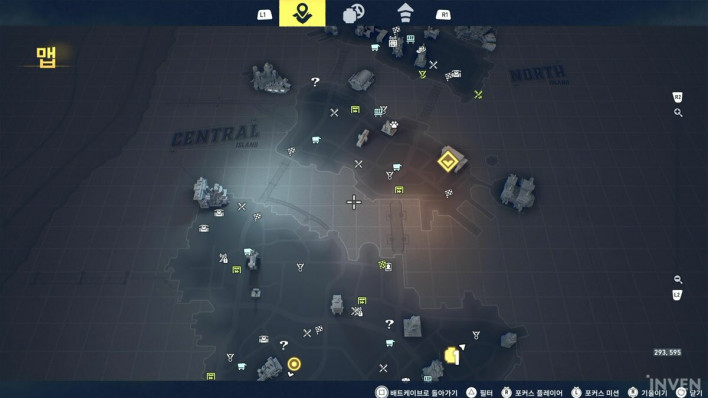
And the process of acquiring collectibles in this world is depicted by utilizing the individual abilities of the main characters. Unlike previous LEGO series, these are characters with much more specialized abilities. Replayability has been enhanced by collecting each character's costumes, vehicles, and the like, instead of collecting characters.
LEGO Dark Knight resembles Arkham even more than WB and TT Games clearly stated they would carry on the Arkham series. And they have improved upon it. While the boss battles clearly feature distinct mechanics, they are designed to encourage the use of standard combat action as much as possible. Additionally, despite the availability of various vehicles, there are no sections that force you to use the Batmobile. Instead, even with a much simpler gliding system, the game employs a clever strategy that encourages players to deliberate over their vehicle usage by highlighting the fact that using a vehicle allows for faster movement. It can be seen as improving upon the weaknesses of the Arkham series while taking its strengths to the next level. Consequently, it is a game that inevitably draws frequent mentions of the Arkham series. At the same time, it represents a significant growth for the Lego series from TT Games, a studio that has handled a wide range of IPs. With appropriate difficulty, it is a game that anyone can easily enjoy, while offering impressive homages and remixes to hardcore Batman fans and allowing users who prefer a lighter atmosphere to approach it without pressure through LEGO's signature comic tone. LEGO Dark Knight has the limitation of expanding within the gameplay framework of the Arkham series, but at the same time, it has raised the level of the LEGO series itself. 8.8

Sort by:
Comments :0