On the 17th (local time), Epic Games unveiled its vision for the next-generation game engine, 'Unreal Engine 6.' Unlike previous announcements that focused primarily on features to enhance graphics or development efficiency, the core of this presentation was the integration of the Unreal Editor for Fortnite (UEFN) into Unreal Engine's existing technological capabilities.
Unreal Engine is quite familiar to Korean gamers, as domestic developers have long been releasing various new titles using it. However, because Fortnite has not enjoyed the same level of popularity in Korea, UEFN—which originated from Fortnite's creative mode—has remained relatively unfamiliar. Even when news of Fortnite and UEFN's global success reaches Korea, it is common for most people, with the exception of a few creators, to feel disconnected from it.
However, with Unreal Engine 6—currently in development with an early access target of late 2027—prioritizing its integration with UEFN, attention is naturally shifting toward this ecosystem. We spoke with developers from Zogo Studios and Future Trash, two studios that have achieved success in UEFN, to learn about the nature of the UEFN ecosystem, which has become a pillar for Epic Games creators since its 2023 launch, and to hear their outlook on its future vision.
Please introduce yourselves.
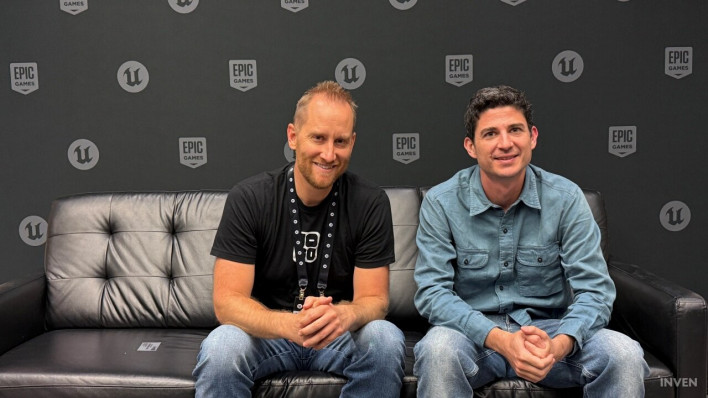
Chad Mustard = I am Chad Mustard, COO of Zogo Studios. I have been involved in this field since UEFN was released, and I have created various maps with my partner, 'Typical Gamer,' who is one of the best YouTubers and streamers in the Fortnite community.
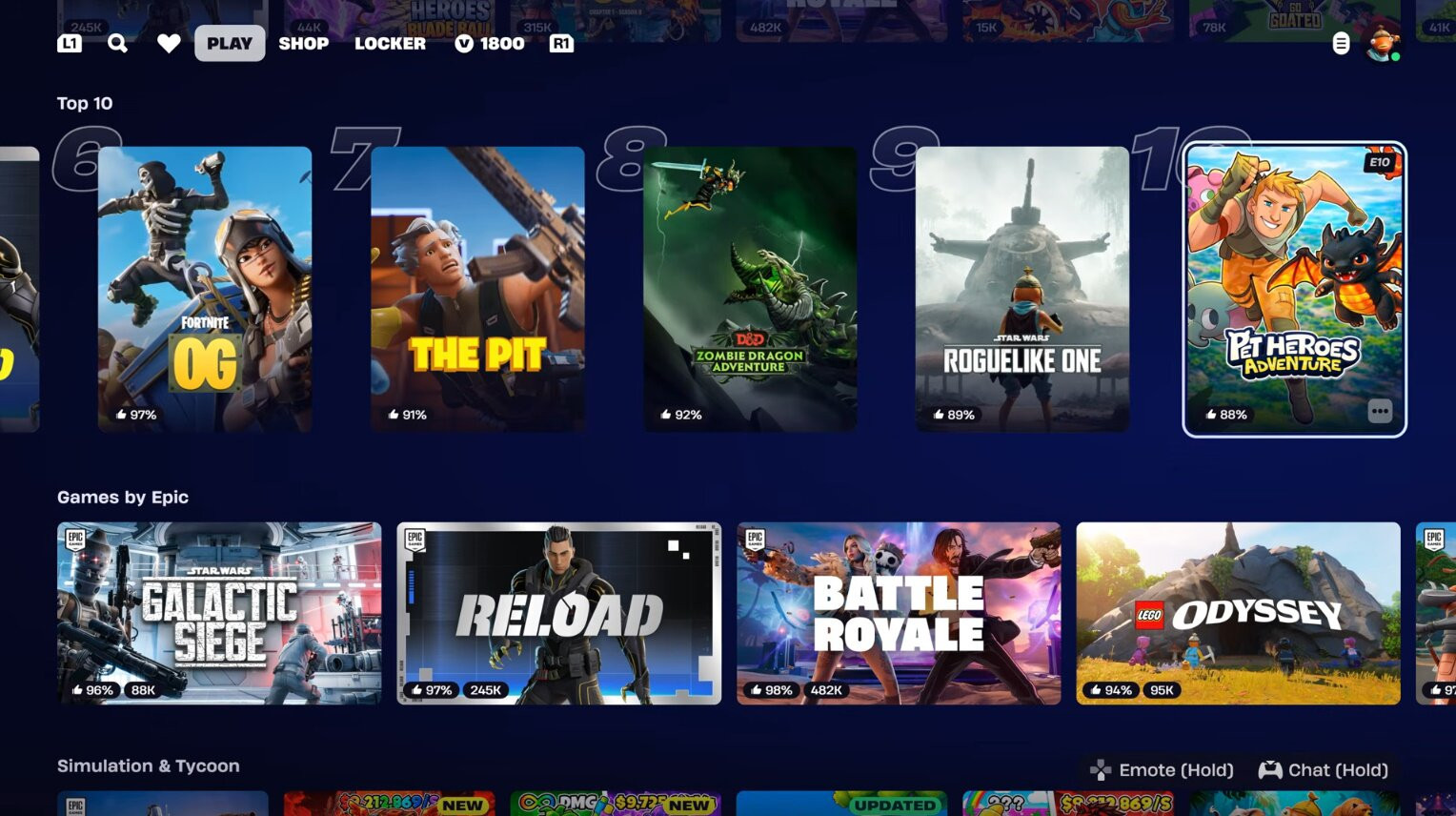
Recently, we created 'Galactic Siege,' an island utilizing the Star Wars IP. It is a more combat-oriented map that enhances the fun factor while allowing players to experience various planets in the Star Wars universe. Working with Epic Games and Disney was a truly enjoyable experience, and that is what we are currently focused on.
Kevin Marciano = I am Kevin Marciano, co-founder and CEO of Future Trash. In Fortnite, our creator identity is often referred to as 'Fod.' We were originally developing indie games with Unreal Engine 5, but we pivoted immediately after UEFN was released in 2023. We have primarily released islands in the tycoon genre, and recently, in collaboration with Lucasfilm and Epic Games, we launched 'Droid Tycoon,' which is currently one of our top-performing islands.
In Korea, Fortnite and UEFN are not exactly mainstream, and there are few developers showing interest, making it a very unfamiliar environment. I am curious about what led overseas developers to take an interest in UEFN.
Kevin Marciano = We have always focused on making great games, but as a small indie developer, it was incredibly difficult to reach players and make them aware of our games. The distribution aspect was what interested us most about UEFN. Once you create a game, you simply press the publish button, and your game is exposed to Fortnite's 80 million monthly active users.
Furthermore, UEFN comes with powerful tools that allow you to build high-quality games very quickly. I believe the combination of tools that enable rapid, high-quality development and the ability to reach such a massive player base is a rare opportunity in the entire gaming industry.
Chad Mustard = It is a similar reason for us. When we actually started our business, my partner Typical Gamer and I were already YouTubers. We had an existing audience that played Fortnite, and we wanted to leverage that to promote and market our games.
At the same time, we saw the potential of UEFN. I know Roblox is more popular in Korea, and we are keeping a close eye on that as well. Even looking at that, I believe Fortnite and UEFN have plenty of room to grow in that market.
In my personal opinion, I understand that tycoon-style games or 'brain rot' type games are gaining popularity in Asian countries. I see a lot of growth potential for Fortnite in that area because Epic Games is heavily focused on growing the Fortnite platform.
Furthermore, they are even talking about integrating that vision into Unreal Engine 6. I see this as an opportunity for creators to step into a much larger gaming world, and I think it would be wise to learn UEFN now to seize bigger opportunities in the future.
Given the revenue Epic Games generates through Fortnite and UEFN and their distribution policies, it is certainly an attractive proposition for creators. However, there are concerns that the unfamiliar environment in Korea—especially the new language 'Verse'—might be a barrier. From your perspective as early adopters, what are the advantages of 'Verse' and UEFN?
Chad Mustard = Although I am not personally in charge of the technical side, I can share my experience working with six engineers from diverse backgrounds. Some had no game development experience at all, some only knew how to build apps, some were fresh out of college, and others were beginners just learning to program. Yet, all of them learned 'Verse' very quickly.
I think Epic Games is trying to create a language that is more accessible than existing ones like C++ or JavaScript, allowing people to learn quickly and apply it to actual game development. 'Verse' is very easy for people to pick up. In fact, a staff member who joined us just a few months ago started studying 'Verse' then, and now they are leading the work on one of our main games. Of course, they are now fluent in 'Verse.' I think it is a language that both beginners and experts can easily master and use effectively.
As for an expert example, the first programmer to join us after the founding members was a veteran with about 15 years of experience as a game engineer. Not long after they first encountered 'Verse,' they were able to utilize all their knowledge to become one of the best 'Verse' experts.
So, I hope Korean developers don't feel too stressed. It might be intimidating because it is new, but I believe it will be very useful when you start building in UEFN and, eventually, in Unreal Engine 6. Personally, I would recommend that developers jump into UEFN right now, play around with it, and learn things like UEFN and scene graphs. You will be surprised at how simple and useful it is once you try it yourself.
One thing that surprised me in the Unreal Engine 6 announcement was the 'Smart Asset Economy.' This concept extends beyond UEFN to Unreal Engine 6. What opportunities do you think this will provide for UEFN creators, and how do you plan to ride this wave of change?
Chad Mustard = At this stage, we are looking at how our relationship with Epic Games will function. Since that situation hasn't arrived yet, I can only speak to the current stage: Epic Games sells various cosmetic items and skins in the Fortnite Item Shop and shares the revenue with us because players come to our maps and help maintain the user base of the Fortnite platform. We are making inferences based on that reality and theory, but since we are not yet in the era of Unreal Engine 6, it is just speculation.
However, if we let our imaginations run wild, let's assume we make games with UEFN and also with Unreal Engine. In Unreal Engine 6, I think we might be able to connect the two. That is what I am thinking. Items purchased in our other work, the 'Red vs. Blue' map, could be used as-is in our games based on Unreal Engine 6. This would allow users to enjoy the worlds we create in a continuous manner.
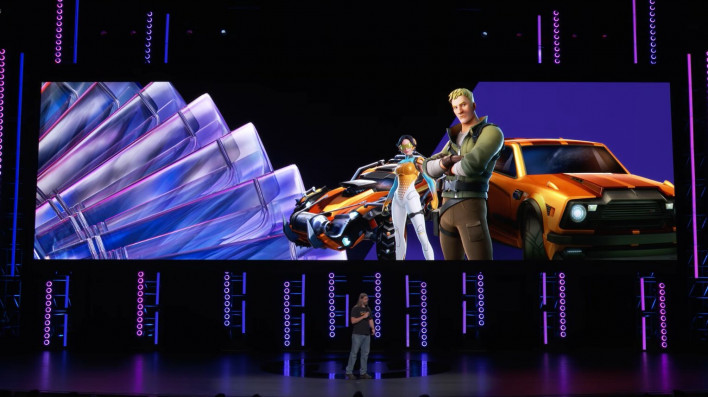
And since Epic Games says they will allow us access to all the skins they own, users would be able to play with items they bought in Fortnite in our games as well. From a user's perspective, being able to use items bought in one game in another would be a fascinating experience, and in a way, a true experience of ownership. This might lead users who carry their Fortnite items around to visit our games more often, or conversely, our users might go elsewhere, leading to a virtuous cycle and expansion of the ecosystem itself.
In this sense, the Smart Asset Economy of Unreal Engine 6 is a very interesting and promising concept. I don't know exactly how the revenue sharing will work, but it seems they are crafting a solid marketing strategy that brings true value and genuine ownership as we begin to integrate into a true metaverse.
Kevin Marciano = I think it is a strategy that clearly demonstrates the vision and ambition to build a game universe where people have true ownership of their digital assets. We are also very excited about it.
Chad Mustard = Furthermore, I think this approach adds more value to in-game purchases. As mentioned in the State of Unreal yesterday, in non-combat genres like tycoon games, in-island purchases account for about 75% of revenue. Even now, players feel value in purchasing things within those games, and if that were connected to all islands—so that items from our game could be used in Future Trash's games and vice versa—wouldn't that value increase even more.
If that happens, I think the probability of purchasing more things during the gameplay process will increase because the value has risen since they can be used elsewhere. In fact, looking at the industry recently, the trend is moving toward spending $50 within a game rather than buying a game for $50. In that situation, I think Unreal Engine 6 will be the point where a shared economy is formed as value increases.
Kevin Marciano = On the other hand, it is true that questions about interoperability and functionality are inevitable. There are problems that are difficult to answer right now, such as whether items will have equal value across different genres and styles of games, or whether they will function well elsewhere. There are also concerns about how much coordination between games will be required. However, it is certainly a very ambitious vision for the future.
You have also released games on traditional platforms besides UEFN. What was the biggest difference you felt when releasing games on those two types of platforms?
Kevin Marciano = Because of the nature of UEFN, there are many users who play Fortnite, so the types of games they are accustomed to and enjoy are somewhat established. Therefore, when releasing a game on UEFN, it is important to create content that appeals to them, and this required a lot of research.
Providing games that users like on that platform is an easy path, but that alone is not enough. They are always looking for something that is both familiar and new. So, to what extent should that innovation go? That is the important part. If it is too different or detached, it is hard for users to approach it easily. In other words, the key is understanding the psychology of the Fortnite user base and designing content for them. On the other hand, Steam or other types of platforms are a bit more flexible in genre selection because the range of the user base's gaming background is diverse.
Chad Mustard = To put it another way, Fortnite already has a massive built-in user base, as I mentioned earlier. Millions of people enter Fortnite every day, and they might not just enjoy Battle Royale, but see 'Droid Tycoon' or another game and think, 'Oh, should I try this?' In other words, marketing is essentially built-in.
Once you finish and publish content in UEFN, it becomes immediately available on the Fortnite platform. In fact, when we press the publish button, thousands of users often come in to try the new island. I haven't experienced this on Steam. On Steam, just pressing publish doesn't mean hundreds of players will just enter the game. Marketing is required, and that process costs money.
However, as Kevin said, Steam has a very diverse user background, so it has the strength of being able to dig into niche markets and firmly grow and build your own IP. Since UEFN is based on Fortnite, there is a strong tendency for players to expect certain types of games. On the other hand, as mentioned, it has the strength of being able to induce thousands of players to visit at least once. If you just release a game on Steam, how often can you enjoy such a luxury? I think it would be difficult unless you are a very popular developer or have a major IP or highly anticipated title. I think this is why young developers who want to develop new games are paying attention to UEFN.
Kevin Marciano = To add a little, UGC platforms like Fortnite and Roblox utilize algorithm-based discovery features, just like social media such as YouTube or TikTok. In other words, since it is delivered to users in the same way that things go viral on social media, it provides a very powerful opportunity for game developers. As someone who has experienced this firsthand, I think this is one of the major innovations that has occurred in the game industry over the last 10 years.
Recently, an in-island purchase feature was newly added to UEFN. How much is revenue increasing because of that? Also, how much do you expect this feature to expand in the future to help creators become more active and build a deeper economy?
Kevin Marciano = I think this is actually one of the most important changes introduced to this ecosystem so far. We haven't experienced in-island purchases yet, but we plan to introduce them soon, and we expect a significant increase in revenue. I know it had a big impact on other creators during the keynote presentation. It is said that a significant portion of in-island purchases occurred in non-combat, non-PVP games, mainly in genres like tycoon and simulator games. This means that more diverse games are succeeding through in-island purchases and will be produced more actively. So, I have high expectations.
Chad Mustard = We confirmed that change firsthand in 'Red vs. Blue,' one of our main maps. It is difficult to share specific numbers, but while revenue used to depend on how many players came to our map, overall revenue has now increased significantly.
Now, our core user base comes in every week and spends V-Bucks, Fortnite's paid currency, within our map, which has led to stable revenue. In the future, even if the number of concurrent users is small, if there are some users who make purchases within the game, I hope the algorithm will promote it to more people. So, it will be delivered directly to users of similar genres or styles, and by securing that user base, I think even more diverse games will become active in the UEFN ecosystem.
If that happens, I think we would also be willing to spend marketing money or invest in sponsored areas within Fortnite. This is because we have the expectation that a user base that can spend money on our map will be secured. I went a bit far, but I think in-island purchases definitely act as a motivation to develop stably on the platform by generating other revenue besides just hoping for a high algorithm ranking.
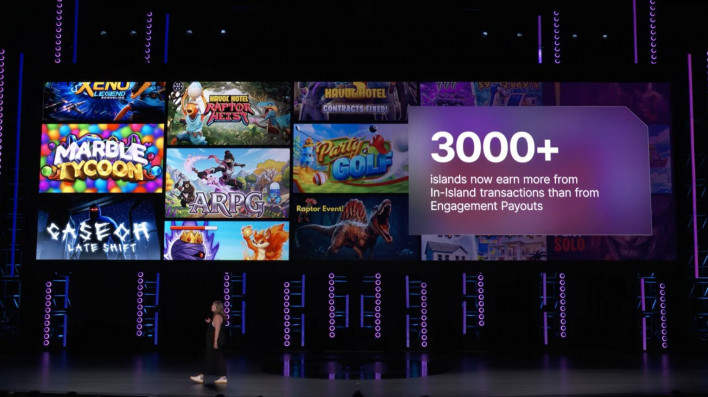
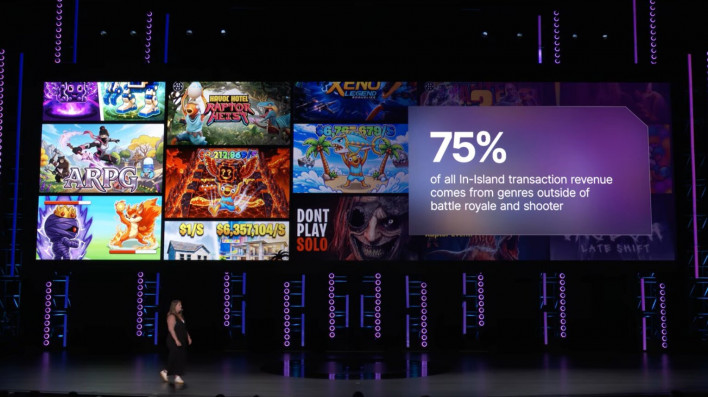
While we are on the subject, the lobby of Fortnite might change into a discovery feature where you can immediately access various UEFN games. How do you think this change will affect players and UEFN creators?
Chad Mustard = It hasn't switched to discovery yet, but looking at the materials released so far, it seems there is a kind of marketing banner. If a banner is hung there for an event for certain genres of maps, wouldn't it be a huge boost for those types of maps?
Or it could be featured, and if it gets featured there, I think it will secure a huge amount of traffic. From a user's perspective, I think there are many cases where they just press the play button and try the first thing they see. Or it is hard to be sure yet whether they will scroll more and look for this and that, but I definitely think there will be interesting changes.
Of course, I hope this change will provide opportunities for higher-quality maps and content. I think it is hard to say for sure right now how that will turn out.
However, one thing is certain: if a negative situation occurs, Epic Games will definitely fix it. So, I am not too worried. I believe the Epic Games developers in charge of the discovery section will carefully analyze the data to make positive changes and create good results based on that. I have been watching the efforts Epic Games has made while building the UEFN ecosystem, and I think they will continue to sincerely fix things and expand the ecosystem.
In a way, I thought that the unique experience of being able to make your own game using a mega IP, like 'Droid Tycoon' which used the Star Wars IP, would be a motivation to use UEFN. As someone who has experienced this, how did it feel?
Kevin Marciano = Honestly, I never thought we would be able to make a game using the Star Wars brand or characters. Because the existing licensing market was a closed space open only through a network of a few publishers and developers.
However, it became possible through UEFN, and I think this is a strong signal that entertainment is moving in a direction that embraces the creator community rather than the closed environment of the past. Rather, it is moving in a direction of open-sourcing content development to the creator community.
I think this is a good opportunity for us and other creators to unleash their creativity. In fact, fan fiction is a quite traditional and large area, isn't it? It is proof that the flow of people wanting to tell their own stories while belonging to those stories has been there for a long time. There have also been cases where people made things privately and then they became widely known as they went viral.
However, that was something that existed in a gray area, so it didn't perfectly fulfill the wish of becoming part of the story and telling one's own story. In that sense, I think it was a great stroke of luck that we were able to collaborate directly with Lucasfilm and Epic Games on 'Droid Tycoon.' How many opportunities would there be to use the Star Wars brand like that.
And now, going further, a situation has come where any creator or developer who has the desire to make a great game and wants to use the Star Wars brand can download the toolkit and have fun making it. I think this is definitely a good thing that gives inspiration that didn't exist before to many developers.
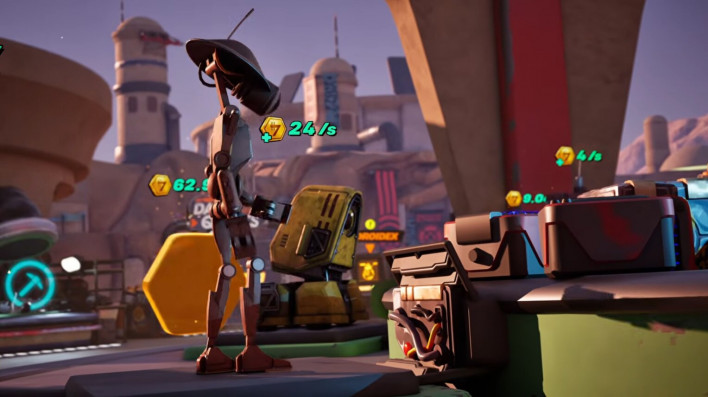
With the vision of Unreal Engine 6 also revealed, it seems the number of UEFN creators will increase in the future. Do you have a word for future UEFN developers?
Chad Mustard = Since they mentioned the future vision of integration with UEFN in Unreal Engine 6, I would say there is no better time to enter UEFN than this moment. As you already know well, Unreal Engine is one of the most powerful forces in the game industry. Many of the games you are already playing are based on Unreal Engine 5, aren't they.
And I think its influence will become even greater when the Unreal Engine 6 era comes in the future. Furthermore, UEFN is also being combined. If you learn 'Verse' and scene graphs while utilizing UEFN now, you are essentially learning the tools that will be introduced in Unreal Engine 6 in advance. Wouldn't such people become truly valuable talent in the future? Because you can take a step forward into the Unreal Engine 6 era with an advantage over others.
I think games in the Unreal Engine 6 era will be the process of changing into the true 'metaverse' that we have all dreamed of. Ahead of that new revolution, I think now is a good time to learn to prepare for it. It doesn't matter if you are a student, a new developer, or an existing developer. Even if you don't make and release a game yourself, I think just learning the tools to prepare for the future will bring great opportunities.
Kevin Marciano = That is a great point, and I agree. So, to say something a little different, 'Don't give up.' Although I said UEFN is definitely a land of opportunity, it is really difficult to make a hit game on your first try. It goes without saying, but we couldn't do it either. However, we accepted failure and are moving forward, using it as a driving force to keep going. I hope all of you learn from those failures and mistakes, enjoy the process, and prepare for the changes to come so you can be one step ahead.

Sort by:
Comments :0