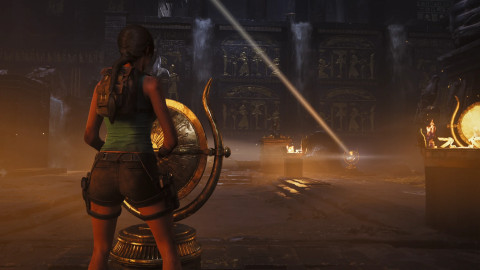
Lara Croft’s new title started with something I didn't expect from a demo station: mist hanging low across the floor, the walls washed in green flora, the faint sound of running water out of view. I took my seat in a row of fellow media, controller in hand, and within minutes I was lacing up her boots at the edge of The Lost Valley in Peru.
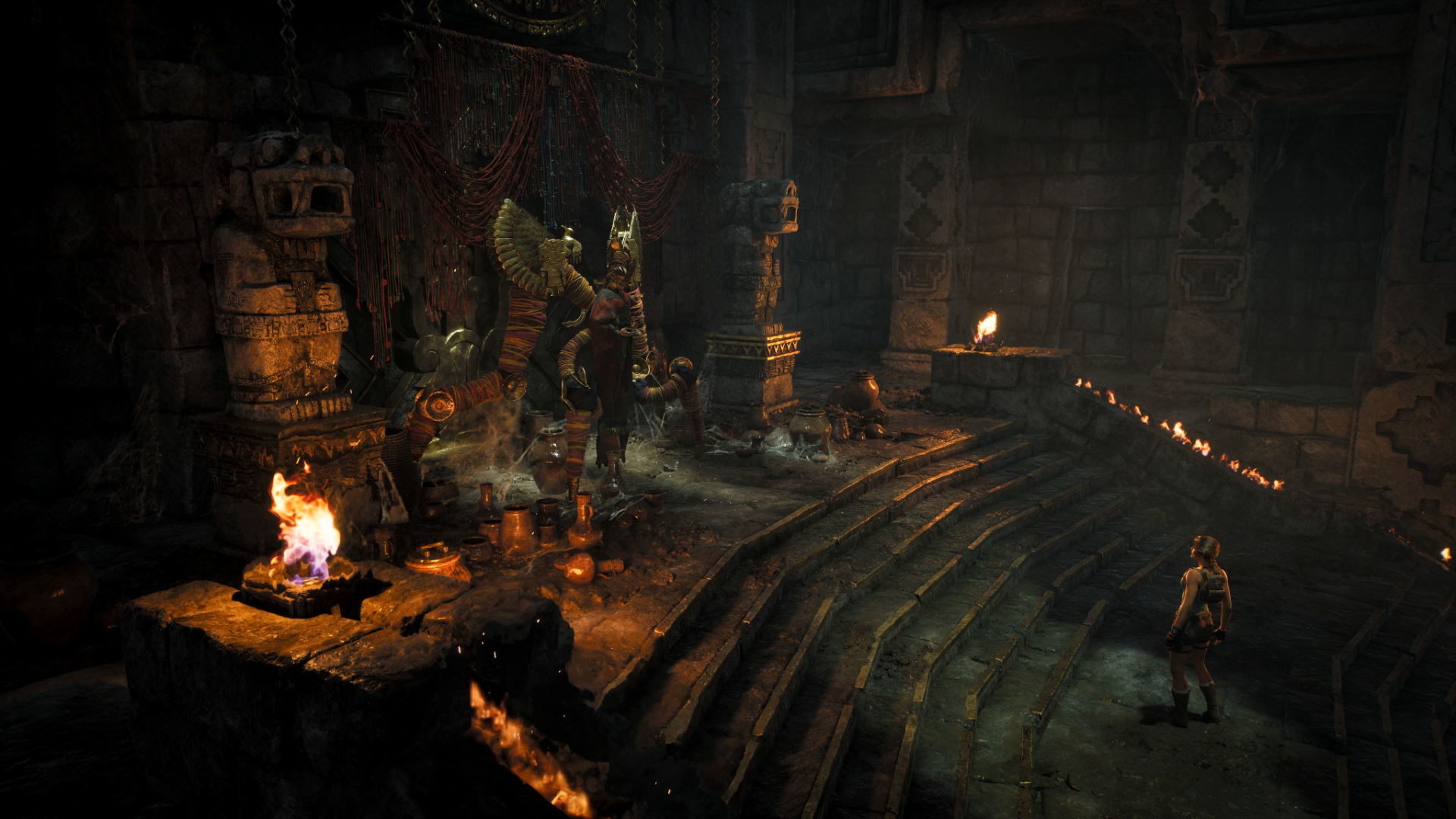
This is Tomb Raider: Legacy of Atlantis, Crystal Dynamics and Flying Wild Hog's ground-up reimagining of the 1996 original that started it all. The setup will feel familiar to longtime fans: collector Jacqueline Natla has hired Lara to recover the Scion, an artifact from the lost civilization of Atlantis, split into three pieces and scattered across the globe. The demo dropped me near the tomb of Qualopec, one of Atlantis' ancient rulers, as a teaching ground for the game's core systems. It's worth stressing this was a pre-alpha build, so plenty can still change between now and release.
If there's one thing the demo sells without hesitation, it's the visuals. The Lost Valley is genuinely beautiful to move through: dramatic elevation changes, flowing rivers, and cascading waterfalls that give the space a real sense of scale. The lighting does an enormous amount of heavy lifting, with sunlight cutting through the jungle canopy. There were moments where I simply stopped to take in a vista, which is exactly the reaction the studio is clearly going for.
This also came in the form of Lara's scanner, a neat touch that pulls historical and contextual details out of objects and architecture as you explore. It's a small system, but it rewards curiosity, and discovering hidden collectibles and tucked-away areas gave the level a sense of depth beyond its critical path, a good sign for a game built around exploration.
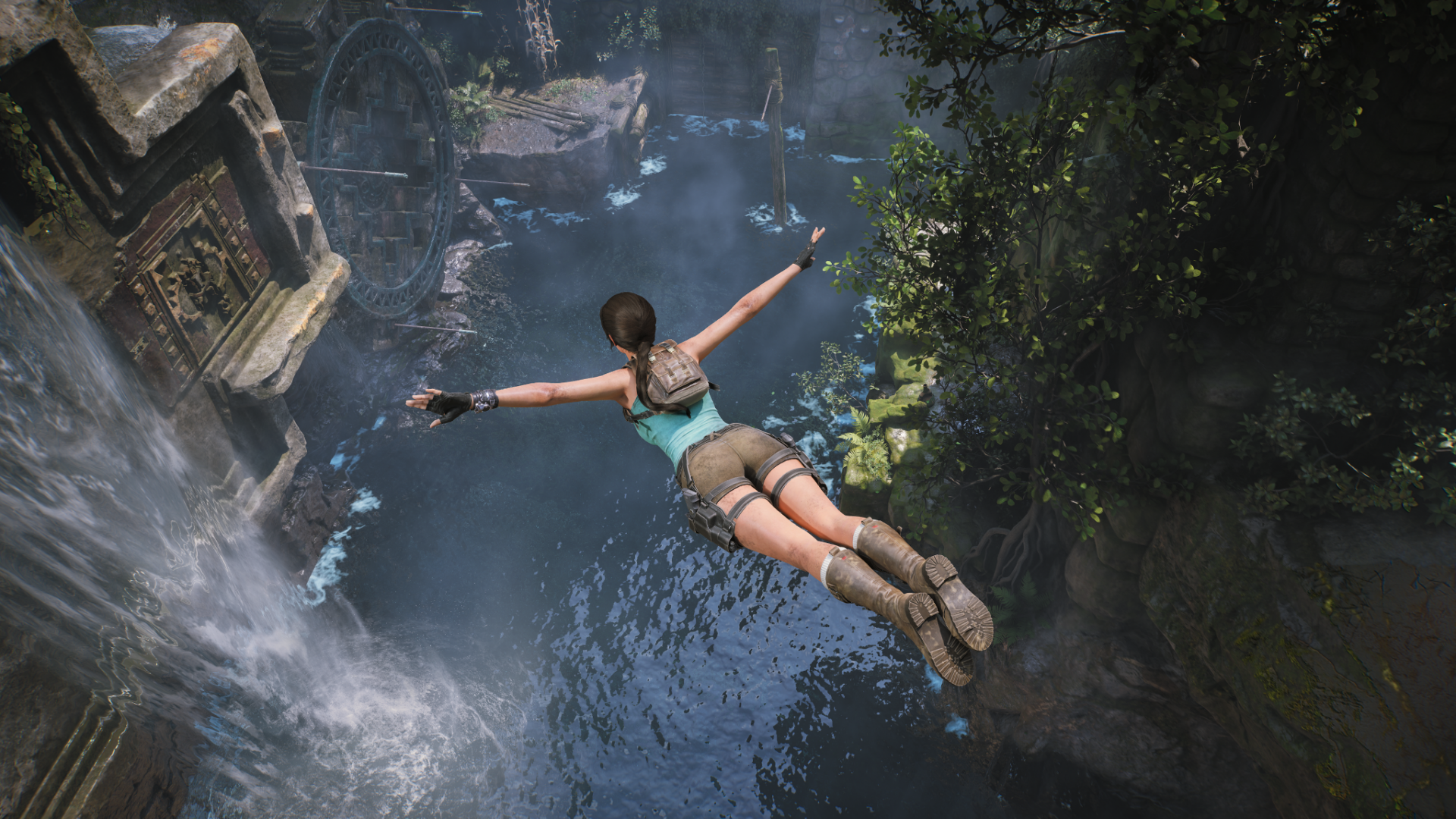
Lara's movement is built to impress on the eye. Swan dives and acrobatic flourishes sell her as a confident, seasoned adventurer, and the new grappling hook opens up flexible options for crossing gaps and reaching ledges. Every climb and leap is presented with weight and intention.
And yet, this is where the comparison I couldn't shake kept surfacing. I kept thinking about the Uncharted series: a franchise that grew out of what Tomb Raider started, and has since refined cinematic action into a remarkable polish. The gap I felt wasn't really in the controls, which do their job; it was in the scenarios themselves and the moment-to-moment feel of combat. Set-piece encounters in modern AAA action games tend to escalate and shift the ground under you in ways that keep tension high, and by that standard the demo's fights felt a touch more conventional and predictable: solid, but rarely thrilling. It's not a dealbreaker, and a pre-alpha build is the wrong place for a final verdict. But it's the area where the game most clearly has room to grow before launch.
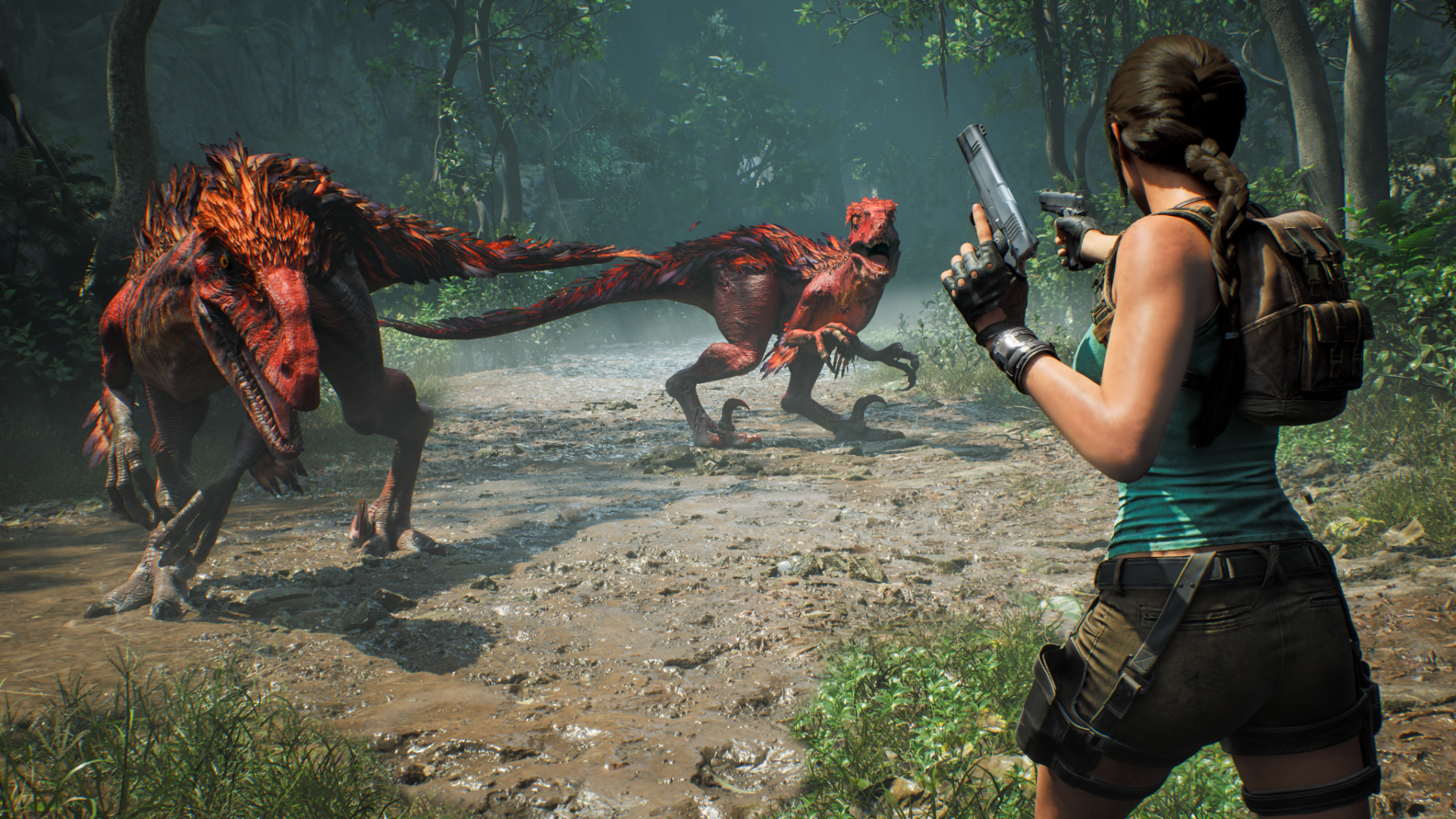
Combat is pitched as fluid and aggressive: the design mantra is that "Lara doesn't stand still, she hunts." In practice, the raptor encounters in Peru did ask for tactical thinking and use of the environment, and the Focus system, which slows time to let you line up a shot under pressure, is a satisfying tool when it triggers at the right moment.
The demo's centerpiece was the franchise's iconic T-Rex encounter, rebuilt as a full-blown chase that blends combat, platforming, and reactive moments on a cinematic scale. The model has been redesigned to fit its tropical surroundings while still nodding to the classic versions, and seeing that silhouette come thundering into view is exactly the fan-service jolt it should be. The sequence was enjoyable, and the ambition behind it is obvious. My one real reservation is pacing: it felt too slow. A chase against a T-Rex lives and dies on tension and momentum, and here it never quite reached the breathless intensity it was reaching for. The pieces are all in place; they just need to move faster.
So where does that leave Legacy of Atlantis? For the goal of resurrecting this classic franchise, there's little doubt this will become the definitive way to experience it. It’s visually stunning, reverent toward the original, and clearly made with care. The honest tension is that the genre Tomb Raider helped invent has, in the years since, been pushed forward by other titles that have simply surpassed it in moment-to-moment polish. Legacy of Atlantis is playing catch-up in places where it once led.
That said, this is a demo I walked away from glad I'd played, and a game I'm looking forward to. There's a real foundation here, and a year of polish could close much of the gap. Tomb Raider: Legacy of Atlantis launches February 12, 2027 on PlayStation 5, Xbox Series X|S, Steam, and Nintendo Switch 2.