In under a month, 'Meccha Chameleon' went from an unknown indie experiment to one of 2026's defining games, selling more than 15 million copies and pulling over 300,000 players at once on Steam. Built by a two-person team and priced at a few dollars, it spread through streamers and clip channels faster than studios twenty times its size can manage. What it left behind is bigger than the sales chart: a whole meccha chameleon genre of hide-and-seek games built around a single idea, painting yourself to disappear into the scenery.
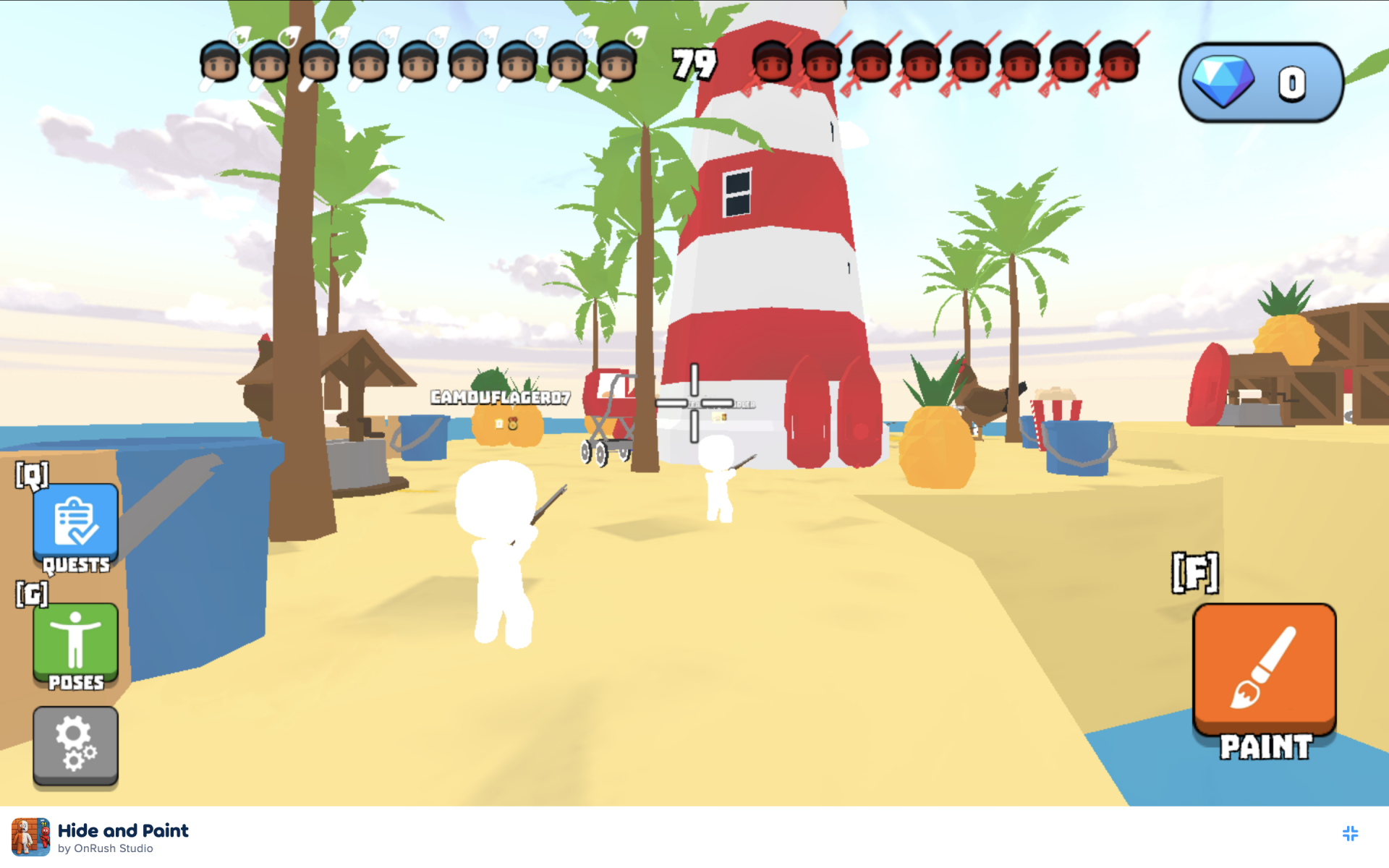
Hide-and-seek games are old, and prop-based versions, where you disguise yourself as an object, have been popular for years. 'Meccha Chameleon' changed the core move. Instead of morphing into a barrel or a chair, players start as blank white figures and use a color wheel to paint their bodies to match a wall or a shadow, hiding in plain sight rather than behind an object. That small shift, camouflage over disguise, is what set the template others now follow.
The clearest sign that a genre had formed was how quickly others moved into it. Within weeks a near-identical paid rival, 'Scribble Hunt', reached Steam, and reporting on the release noted that it reproduced the paint-and-blend mechanic and, on the Korean store, listed itself under the exact name of the original. Where a one-off hit draws a single clone, a genre draws a whole field of them.
That field now spans every kind of storefront, including the browser, where these games run free. Poki, for instance, hosts 'Hide and Paint' from OnRush Studio and groups the format under a listing of Meccha Chameleon style games, pointing players toward more of the same while the paid original stays on Steam.
The user-made platforms show the same pull. On Roblox, titles such as 'Paint and Hide' openly credit 'Meccha Chameleon' as their inspiration and rack up millions of plays, while mobile stores carry their own paint-and-hide party games built for phone lobbies. Each keeps the same loop of a timed hiding phase and a shared hunt that ends with the last painted player standing, then adds its own wrinkles, from voice chat to new maps. Search either store for a hiding game now and the results fill with variations on the same idea.
Whether the meccha chameleon genre outlasts the moment is the open question. Casual formats can fade as fast as they spread, but they can also settle in as a lasting category, the way battle royales and auto-battlers did. For now, the paint-and-hide game is its own corner of the market, and 'Meccha Chameleon' is the title that drew the lines.
-
 Guest Reporter
Sort by:
Comments :0