The National Library of Korea is hosting a special exhibition titled 'Discontinued Korean Games, Turning Back On' from July 14 to December 31 at the small exhibition hall on the third basement floor of the Digital Library. The exhibition highlights the cultural value of Korean games and the importance of preserving them as digital heritage, marking the first time a national institution has held a game-focused exhibition.

Ahead of the opening, a ceremony was held on the morning of the 13rd, attended by game industry professionals and academics to share the exhibition's purpose and conduct a donation ceremony for game materials.
The exhibition focuses on materials collected by the National Library of Korea, showcasing records of discontinued and unreleased games that were once developed and distributed but are now difficult to access. Items on display include four types of game magazines, six manuals, and three floppy disk games that the library has been collecting and preserving since the early 1980s.
The exhibition is divided into five zones: Zone 1, 'The Library Collects Games'; Zone 2, 'Games Beyond the Bookshelf'; Zone 3, 'A Time Travel Through Korean Games'; Zone 4, 'Those Who Protect Games'; and Zone 5, 'Turning Korean Games Back On.
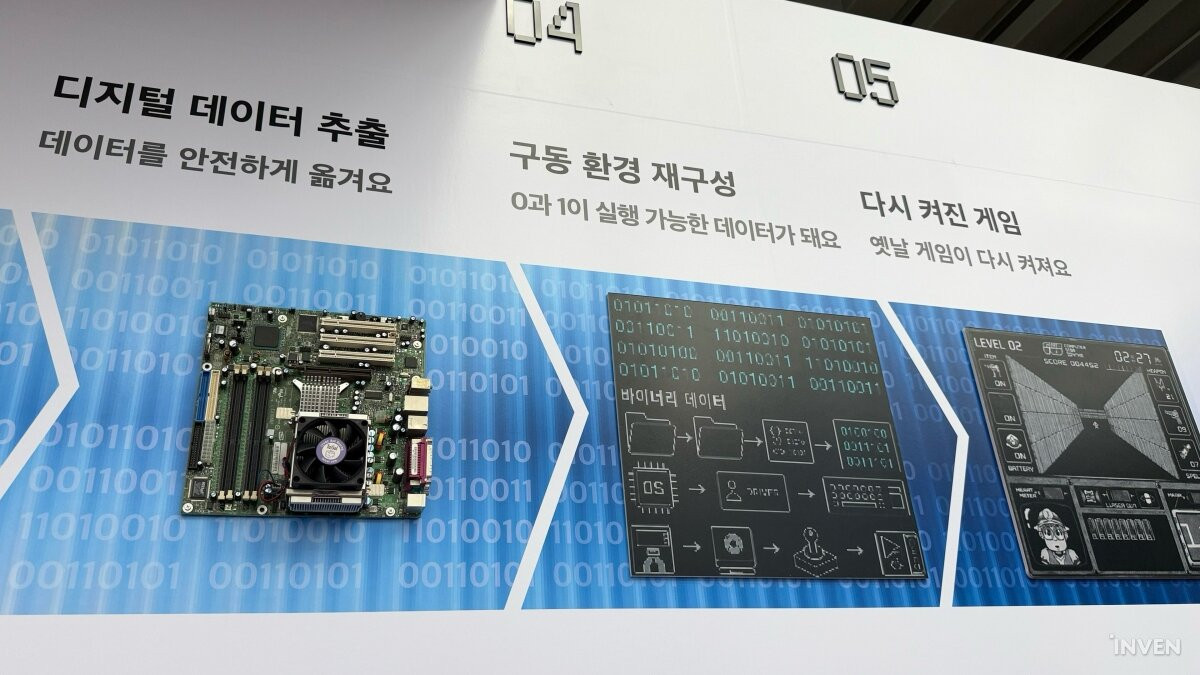
Notably, the unreleased shooting game 'The Day' (Geunal-i Omyeon), which previously existed only as a trace in 1990s magazine advertisements, has been recreated using AI technology and unveiled for the first time. This case demonstrates that even games that have vanished, leaving behind only magazine articles, advertisements, and interviews, can be revived as new cultural content using the latest technology.
Zone 5 features an AI game experience zone for visitors. Featuring library characters 'Booky' and 'Tumi,' the zone allows visitors to experience the process of searching for, recovering, and restoring lost game data in a game-like format. Visitors can actually play the restored version of 'The Day,' and the library stated it is considering introducing a ranking system that offers small prizes based on high scores.
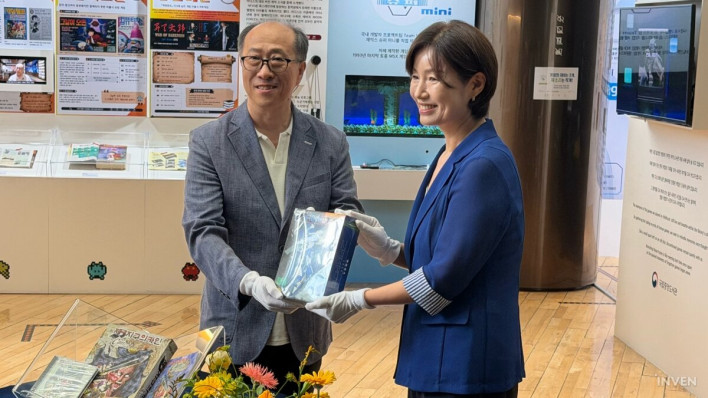
The opening ceremony included a donation ceremony for materials from Hong Dong-hee, former CEO of Makgoya. A first-generation developer who majored in computer engineering in the U.S. and began developing games in 1992, Hong founded 'Makgoya,' Korea's first game venture company, and gained popularity with the PC game 'Bacteria War.' He later released various titles such as the shooting game 'Jeollyungibyeong Jakato,' served as a policy advisor for the Ministry of Culture, Sports and Tourism and a director at the Game Comprehensive Support Center, and currently serves as an adjunct professor at Kaywon University of Art & Design.
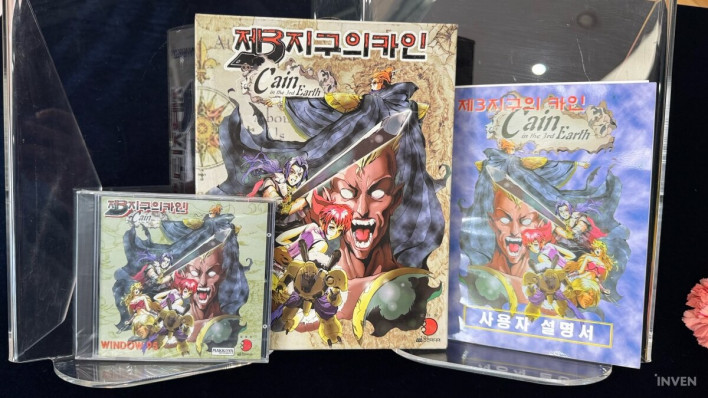
The materials donated by Hong include the game packages for 'Jeollyungibyeong Jakato' (1994) and 'Cain of the Third District' (1997). The source code for 'Bacteria War' and Korean fonts developed by Makgoya were also donated. The National Library of Korea presented Hong with a plaque of appreciation.
In her opening remarks, Park Ju-ok, Director of the Knowledge and Information Management Department at the National Library of Korea, introduced the event as "a special exhibition that, while modest in scale, allows visitors to encounter discontinued Korean games and see the results of their restoration." She acknowledged the significant contributions of CEO Hong Dong-hee and Game Culture Foundation Director Cho Su-hyun during the preparation process. She added, "Korean games are a precious cultural heritage," noting that "the process of digitizing games once stored on floppy disks or CD-ROMs to make them playable again highlights the importance of digital restoration and preservation."
Director Park also emphasized the significance of these games as documentary heritage, noting that the restoration was only possible because the library had diligently maintained records related to gaming.
In his congratulatory speech, Hong Dong-hee noted, "The game industry has developed significantly over the past 30 years, and many successful self-made individuals have their roots in the game industry." He pointed out that despite its industrial impact, the industry has been relatively neglected in historical records. He added, "On behalf of the industry, I thank the National Library of Korea for organizing this meaningful event," and suggested that it would be meaningful to proactively seek out materials to donate and discover in collaboration with the industry.
While acknowledging the recent difficulties faced by the game industry, he stated that by leveraging the status and potential of games within K-content and consolidating capabilities, Korea could once again export its culture to overseas markets.
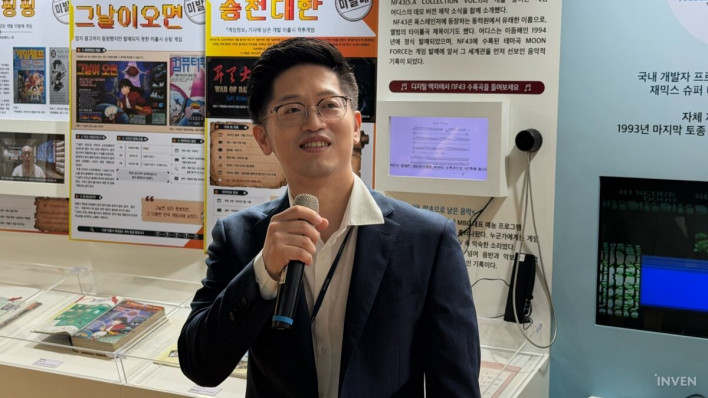
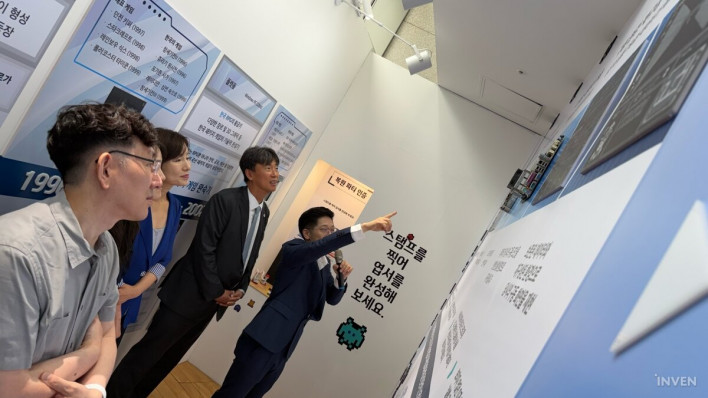
Following the opening ceremony, a tour was conducted by curator Lee Yeon-soo of the Preservation Research Center, who prepared the exhibition. Lee noted that she began researching discontinued Korean games last year.
Zone 1 displays game media held by the library, including media containing the source code for an early domestic FPS game, a Daewoo 'IQ2000' PC, a shareware game pack with 26 games, fighting game manuals, manuals for games developed by Sonnori, and 'The War of Genesis' game packages. Curator Lee explained that unlike game CDs, accessories such as cards included in packages require separate management like paper records, making them difficult to preserve.
Zone 2 covers unreleased or pending games. While 'The Day' had sequels (parts 2 and 3) that were released and gained public recognition, the first part only left traces in magazine ads and was restored for this exhibition. The zone also introduces a case of a fighting game that was canceled despite the developer's confidence in its development. Additionally, it features cases where game music albums and scores were donated together, as well as 10 new games that were exclusive to specific consoles.
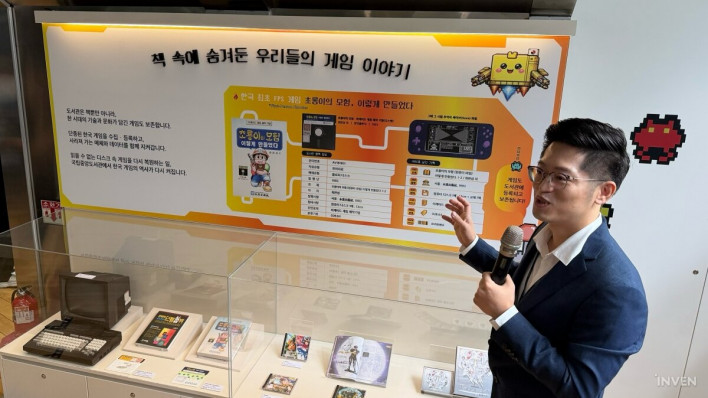
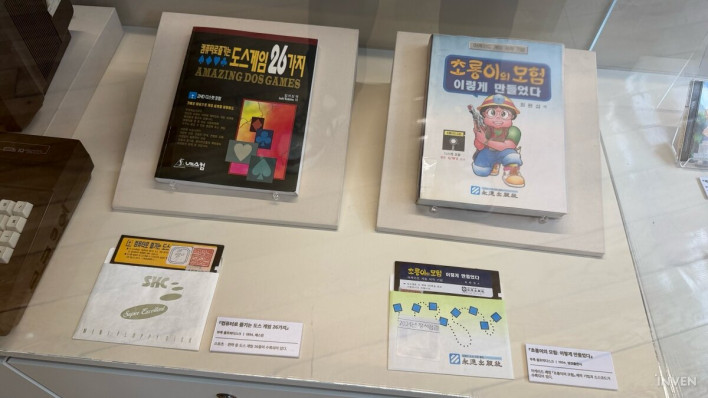
Zone 3, 'A Time Travel Through Korean Games,' introduces domestic game history by generation. The period from 1983 to 1989 was a nascent stage led by individual developers, seeing the release of titles like 'Legend of the New Sword,' 'Daemaseong,' and 'Space Warrior' on platforms like MSX and Apple. Following the formative period where PC games took root, RPGs began to increase in earnest around 1994–1996.
From 1996, the industry entered the golden age of package games, with various attempts such as 'The War of Genesis' series. Curator Lee assessed that the quality of Korean games during this period improved noticeably. The period around 2002–2006 was introduced as a time when the industry challenged the console game market, led by titles like 'Kingdom Under Fire.
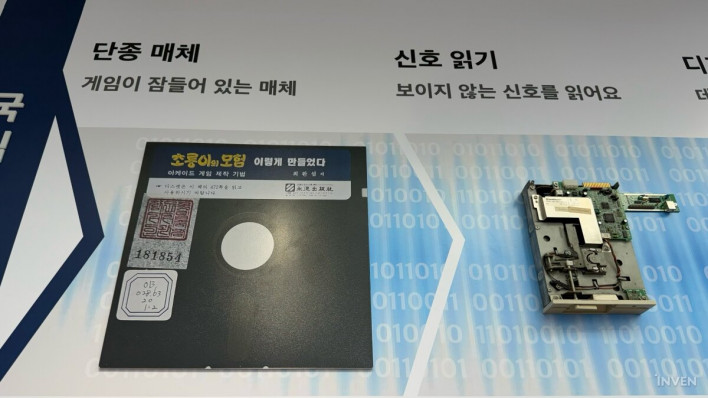
Zone 4 covers the library's game preservation technology. It introduces the preservation process of reading media that is difficult to run on current hardware—such as 5.25-inch floppy disks—using dedicated devices, converting them into digital images, and then reimplementing them in a virtual environment. Curator Lee mentioned that the National Diet Library of Japan also holds old game media, introducing examples of game archiving in overseas libraries.
Kim Gyeong-cheol, Director of the Preservation Research Center at the National Library of Korea, stated, "Games are a form of play and culture for a generation, and they serve as important documentary heritage that captures the technology and imagination of their time." He added, "This is a meaningful attempt to revive lost Korean games and share them with future generations by utilizing the latest technology for their preservation and restoration." He concluded by saying, "We will continue to strive for the preservation and utilization of discontinued media and digital cultural heritage."
Meanwhile, a seminar linked to the exhibition is also scheduled. A session titled 'Preservation and Utilization of Discontinued Games' will be held on Wednesday the 22nd at 2:00 PM.

Sort by:
Comments :0