
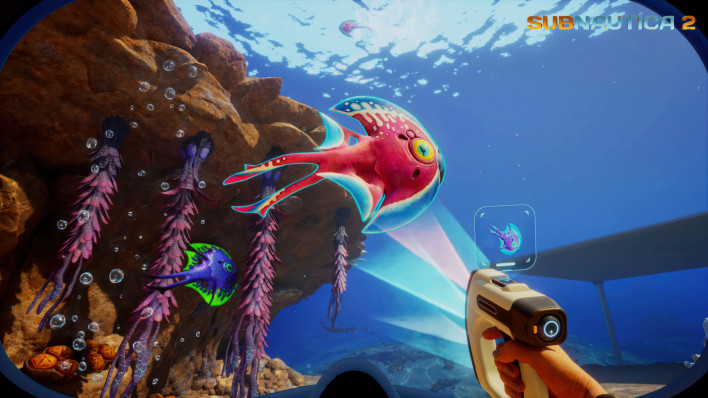
- Game Title : Subnautica 2
- Developer: Unknown Worlds Entertainment
- Platforms: PC (Steam/Epic/MS), Xbox Series X|S, Game Pass
- Keywords: #DeepSeaExploration #AlienPlanet #BioMod #Coop
- Genre: Open-World Survival Craft (OWSC)
'Subnautica,' which left a significant mark on the Open-World Survival Craft (OWSC) genre with over 18.5 million copies sold worldwide, has returned with its official numbered sequel, 'Subnautica 2.'
Arriving about 12 years after the original's early access debut, 'Subnautica 2' brings a wealth of changes. The most striking improvement is the evolved visuals. While the predecessor was built on the Unity engine, this title utilizes Unreal Engine 5 to create a more realistic and overwhelming deep-sea landscape. Furthermore, the long-awaited multiplayer feature has finally been added. Now, you can explore the silent depths alone or pioneer the unknown ocean with up to four friends.
The survival and crafting systems have also been deepened. With new equipment and technology to enhance exploration, expanded storytelling, and a more dangerous deep-sea ecosystem, 'Subnautica 2' offers a more evolved survival experience than its predecessor.
These changes have led to immediate success. The game recorded a peak of 467582 concurrent players on Steam shortly after launch and surpassed 2 million units in global sales within just 12 hours, receiving an explosive response.
So, why are players diving back into the ocean? Set on a completely new alien planet, 'Subnautica 2' draws players in with a survival experience that feels both familiar and strange. While many are still enjoying the original, a significant number of players have returned to the deep sea after a long hiatus.
That is why we prepared this: a 'Subnautica 2' survival primer, summarizing the core tips and basic knowledge needed for novice divers taking their first steps into these strange alien waters.

In 'Subnautica 2,' players are immigrants contracted by the mega-corporation Alterra. While heading to the desert planet 'Gjeura,' they suffer an accident and crash-land on an unknown aquatic planet. While this might be a common trope for immigrants or pioneers in games and movies, the problem is this planet: it is truly, unimaginably harsh.
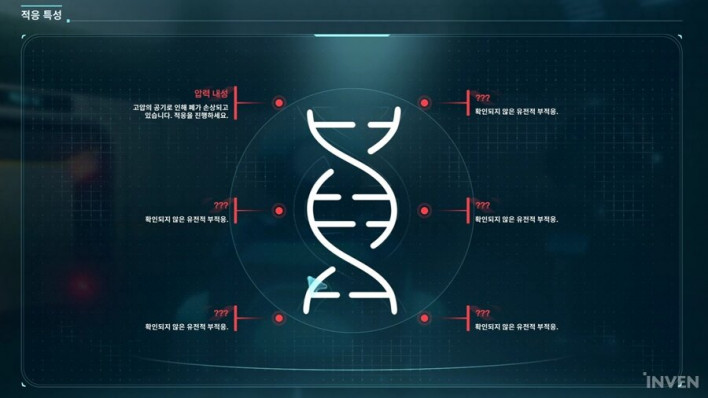
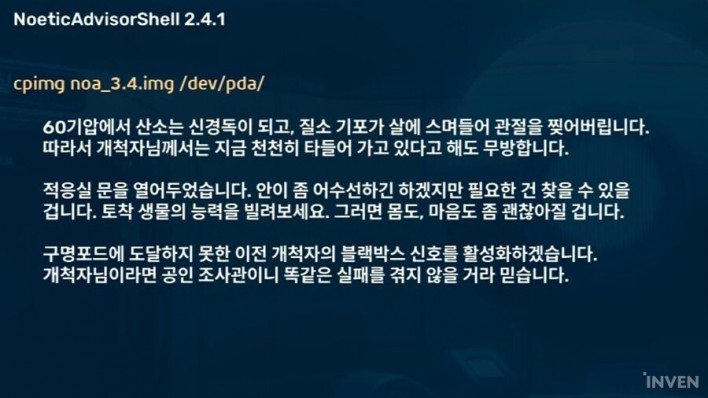
Even before you enter the water, the 60-atmosphere oxygen becomes a neurotoxin, and nitrogen seeps into your flesh, tearing at your joints. To survive in this environment, you must first upgrade your own body. This upgrade system, which was originally planned for the predecessor but cut due to scheduling, has finally been perfected in 'Subnautica 2' under the name 'BioMod.'
Even after securing pressure resistance and managing to breathe, the situation remains desperate. The ship you arrived on is destroyed, and no other survivors are in sight. Following the guidance of your PDA and the AI 'NOA,' you must escape the ship as quickly as possible. The moment you find a life pod and surface from the sinking ship, your true journey in 'Subnautica 2' begins.
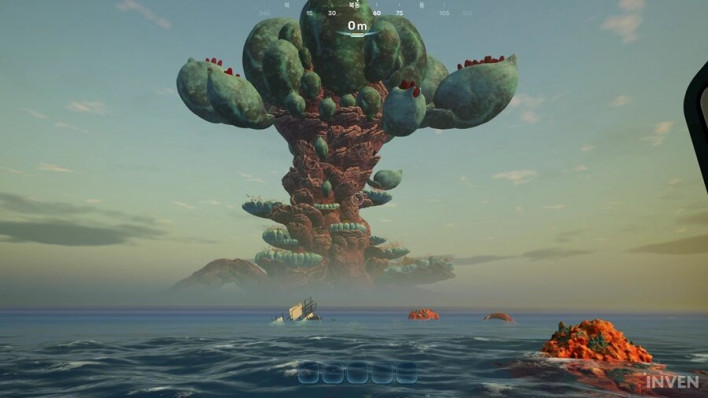
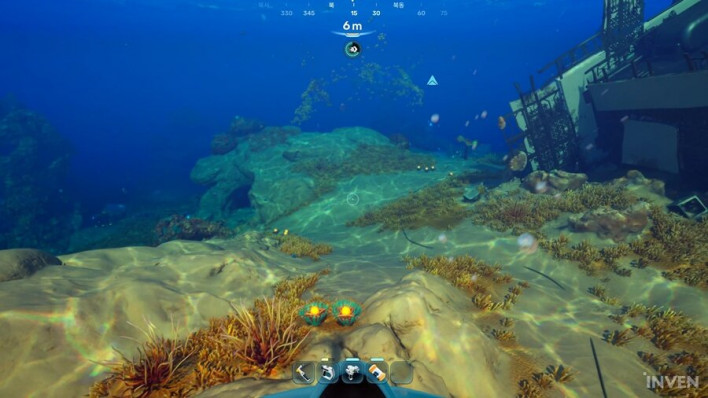
However, the first thing to solve before exploration is survival. As the saying goes, 'a hungry man has no conscience'—you must secure food and water to take any further action. Fortunately, as an oceanic planet, the sea is teeming with life. Some are threatening, but many can be caught by hand. Small fish are valuable sources of protein, and water snails crawling on the floor can be used as a water resource.

However, there was one thing I overlooked: the pressure is one thing, but the ocean itself is even more toxic. According to records left by the advance team that arrived before the player, the ocean is full of heavy metals, so it is impossible to eat the local creatures raw. To consume them safely, you must use the life pod's fabricator to purify water snails and cook the fish.
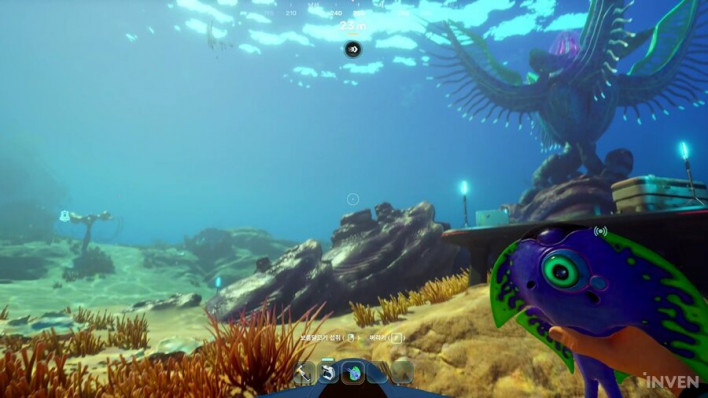
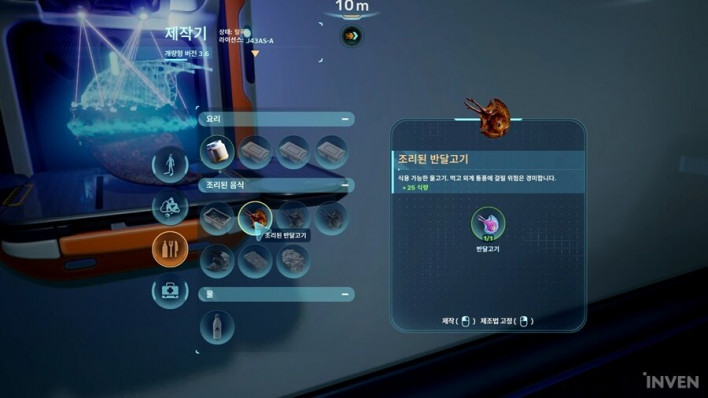
There is no major issue with the basic survival process of gathering food, cooking it, and eating it. However, there is one cumbersome aspect: you have to carry ingredients one by one in your already limited inventory, move them to the fabricator, and carry them around again. It seems simple, but as exploration time increases, this process inevitably becomes a source of fatigue.


This is where the aforementioned BioMod becomes useful. By acquiring specific biological traits, you can satisfy your hunger stably without needing to cook food. Just as you gained pressure adaptation, there are alien creatures called 'Feather Jellies' throughout the seabed that grant various traits. If you find them during exploration, you can unlock new traits; the ones found near the starting life pod allow you to acquire a digestive system upgrade.
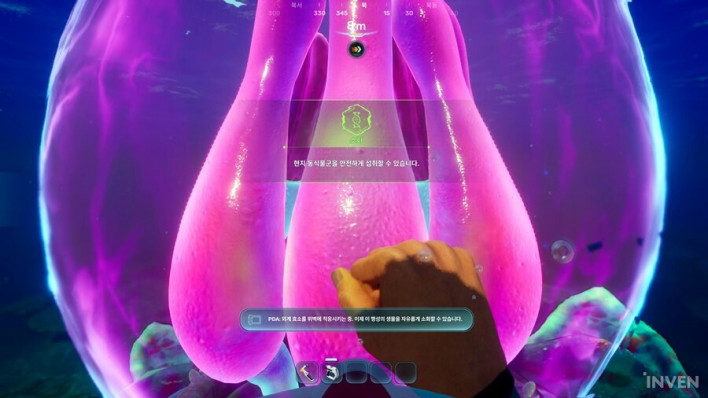
Once your digestive system is reinforced, you can consume water snails and various fish that previously caused stomachaches when eaten raw. Of course, in terms of efficiency, cooked food is still better. However, being able to consume fish or creatures on the spot without returning to the fabricator is a significant advantage for exploration efficiency and convenience.


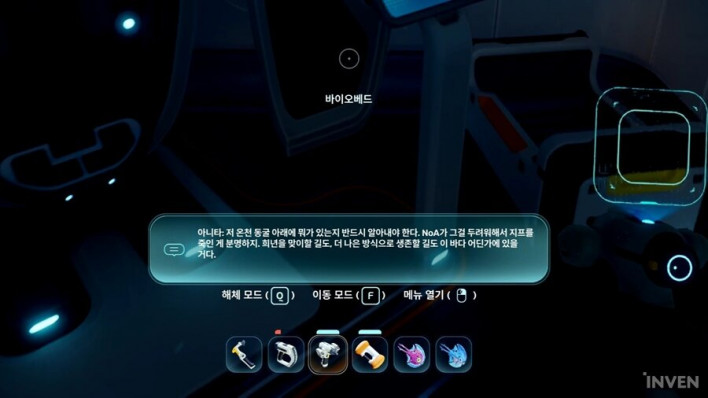
The 'BioBed' is also not to be missed. BioBeds can be found in the advance team's research facilities or ruined bases. If you find an operational one, it is best to use it immediately, as it increases your inventory capacity by enhancing your physical strength.
The increase is not very noticeable at first, but it is impressive that the game is designed for the player to grow gradually while exploring the facilities left by the advance team. Exploration is not just about mapping terrain or gathering materials; it naturally leads to character growth, which encourages players to venture deeper into the seabed.
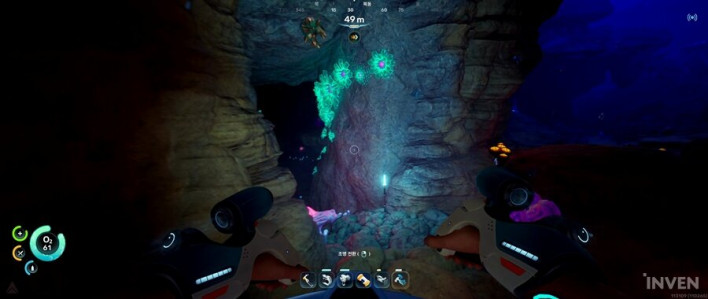
Perhaps there is no other game where the element of 'survival' fits so well. The moment you open the life pod and face the unknown deep sea for the first time, the first emotion you feel is helplessness. There is no friendly guideline, and to obtain food or resources, you must hold your breath and swim around. For an inexperienced player, a mental breakdown is inevitable.
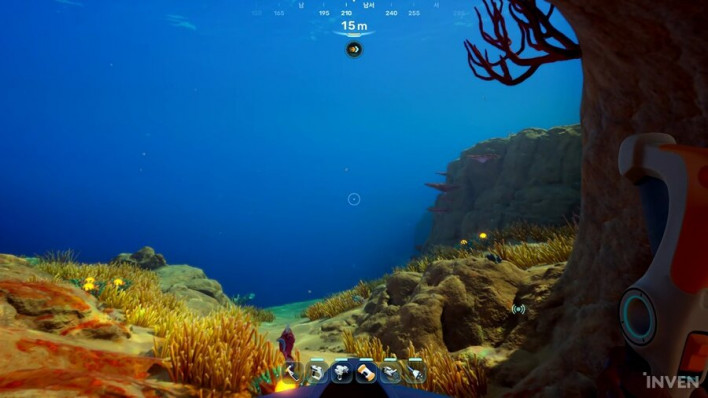
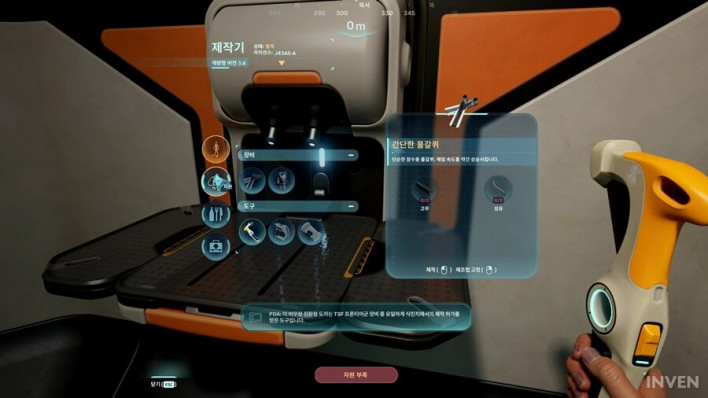
The good news is that you are not entirely alone. The reliable AI NOA provides some guidance. First, NOA recommends crafting a multi-purpose survival tool. Fortunately, the necessary material, titanium, is easily found near the life pod and can be gathered by hand.
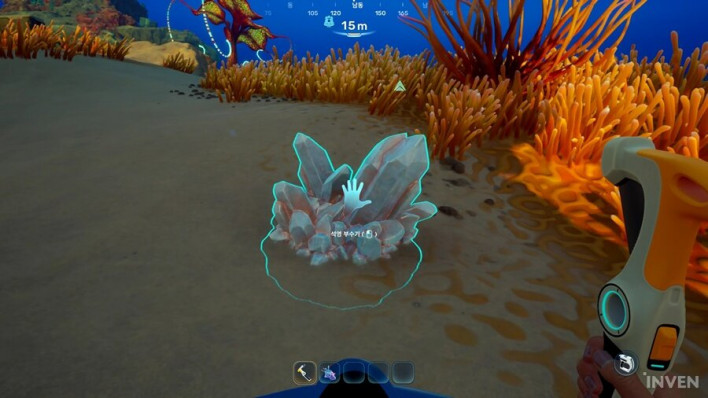
There is a difference from the previous game regarding mineral gathering. In 'Subnautica 2,' minerals do not appear randomly. Certain minerals appear in specific environments, so once you learn the characteristics, you can secure necessary resources relatively quickly. It feels more like searching for underwater veins or mines.
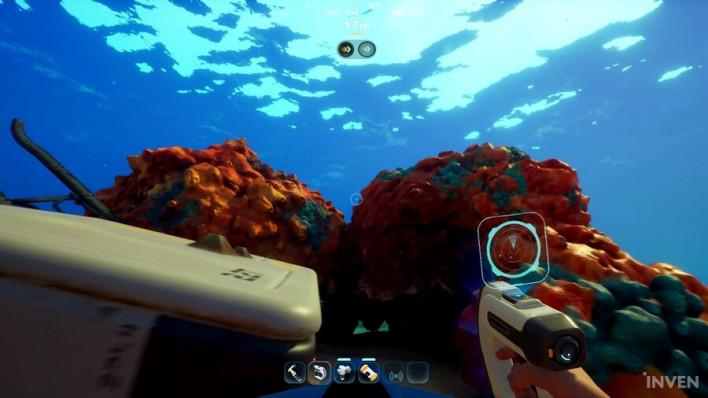
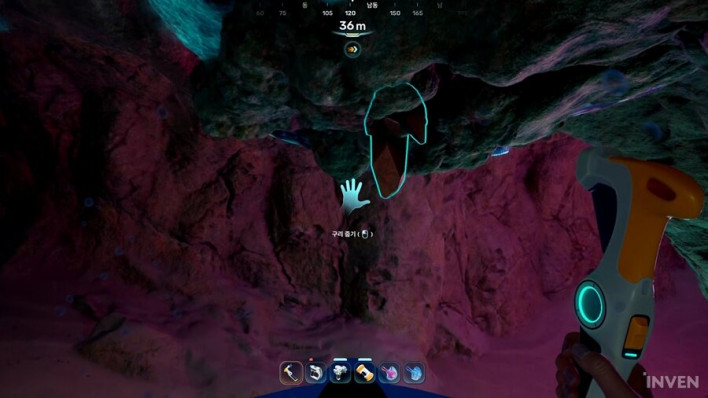

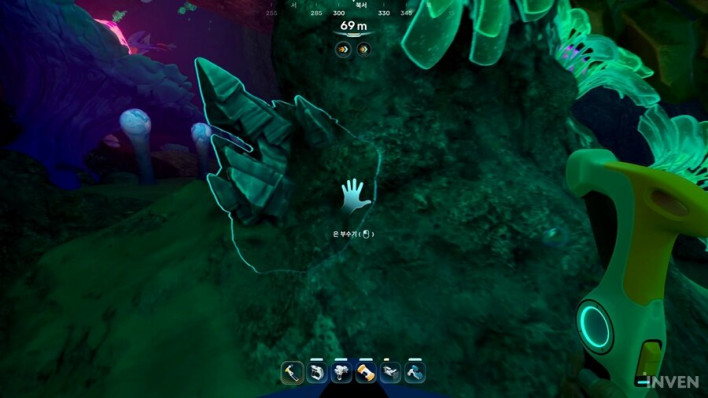
Once you understand the basic resource gathering structure, it is time to explore the unknown ocean and collect information. The core tool for this journey is the scanner. The saying 'knowledge is power' holds true on an alien planet as well. You must scan everything—from various creatures to records left by the advance team and their equipment—to collect information.
Of course, the reason for using the scanner is not just for information. There is a practical reason: you must scan various equipment to obtain blueprints, which is the only way to craft them yourself. Literally, knowledge leads to survival.
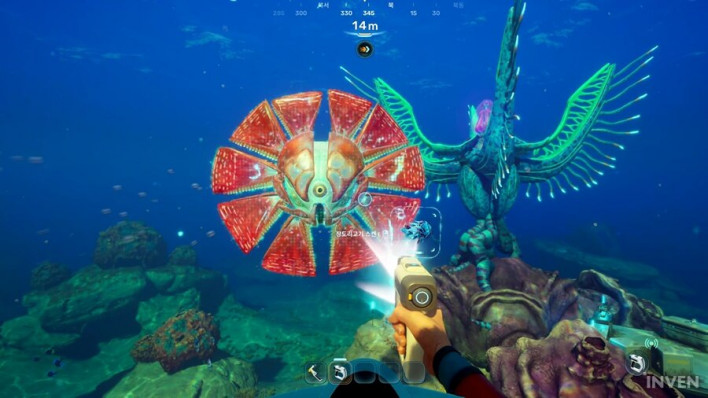
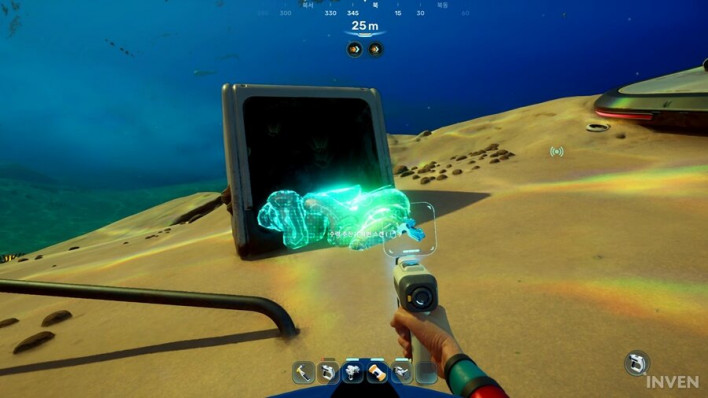
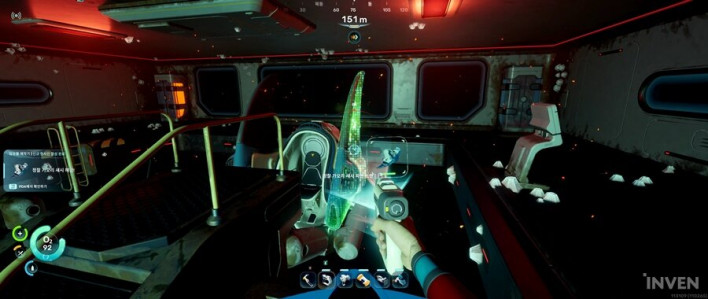
Equipment crafted with these blueprints significantly boosts your survival rate and exploration efficiency. A flashlight helps you explore the deep sea that turns pitch black at night, and a propulsion cannon not only increases movement speed but also acts as a light source, expanding the areas you can explore.

Once you have explored a bit and gathered materials, it is time to build your own base, your 'sweet home.' While you can craft some equipment at the life pod, its limitations are clear. Since most functions are locked, building a base is essential for crafting proper equipment. The importance of the base is even greater because the aforementioned propulsion cannon cannot be crafted just by having the blueprint.
Bases can be easily built anywhere on the seabed as long as you have a habitat builder and materials. A difference from the previous game is that 'Subnautica 2' allows for much freer base design. While the predecessor used connected modular pieces, this title allows you to design space layouts freely. You can create curved hallways, asymmetrical rooms, multi-story vertical structures, and even customize window shapes as you wish.
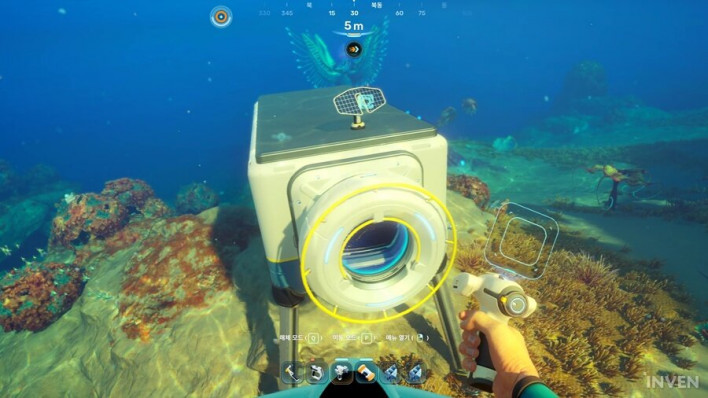
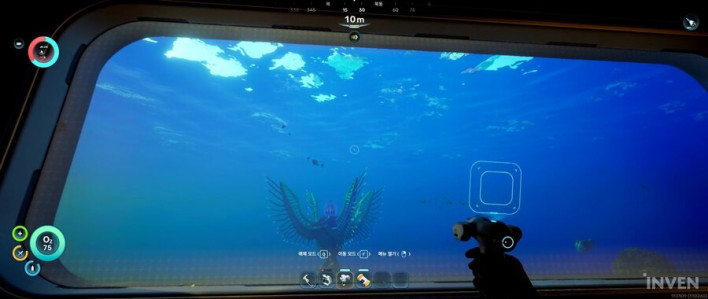
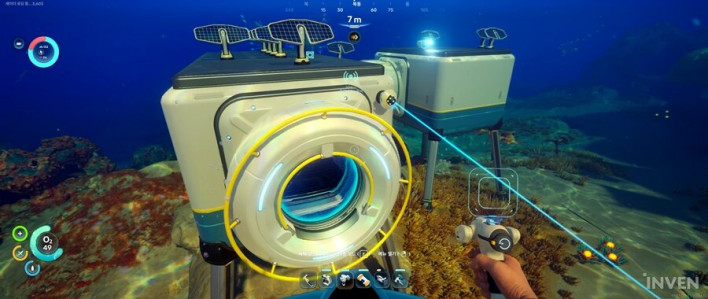
Once the base is built, it is time to craft equipment. It is no exaggeration to say that true exploration and pioneering begin at this point. However, there is one element you must pay attention to: power. You can install various facilities, including fabricators, using the habitat builder, but as the number of internal facilities increases, the power demand of the base also rises rapidly.
The easiest power source to use is solar panels. They are cost-effective, requiring only titanium and quartz, making them easy to install in large quantities from the start. However, solar panels have a clear weakness: like in reality, power generation efficiency drops significantly at night.
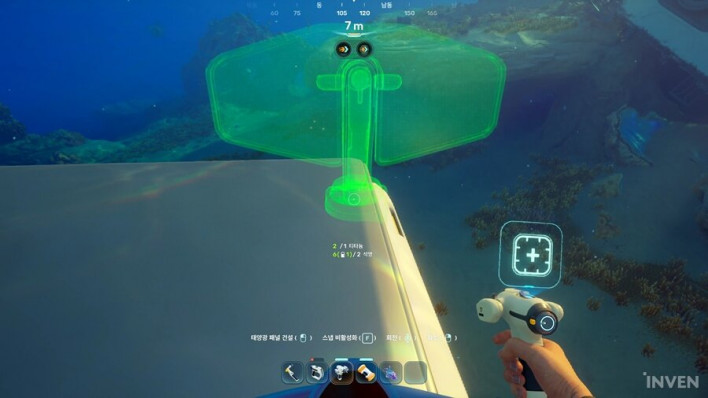
The problem is that this power shortage does not end with just lighting issues. If you barely meet the base's power production, all facilities may stop the moment night falls. In severe cases, oxygen supply may be cut off, putting the player in a dangerous situation in an instant.
The early solution is surprisingly simple: install as many solar panels as possible. Since they produce at least minimal power even at night, placing enough panels to cover the base in the early stages can largely prevent sudden power shortages.
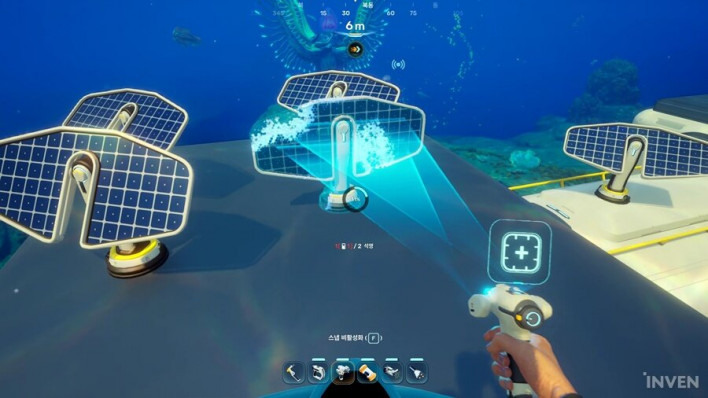
If you have reached this point, you have learned most of the basic survival processes. From now on, you can naturally explore the surroundings and pioneer this unknown planet. At the same time, this is the point where the core gameplay loop of 'Subnautica 2' is fully realized.
The process of roaming the seabed for food, gathering resources for better equipment, and exploring deeper areas with new tools repeats. Along the way, you will discover traces left by the advance team and other immigrants one by one.
Most impressive is that this flow never feels forced. The game naturally connects survival, exploration, and growth elements, leading the player into the deeper sea. As you explore, the equipment and tools available increase, and the base grows in scale. Simultaneously, the explorable area expands, leading the player into deeper and more dangerous waters.
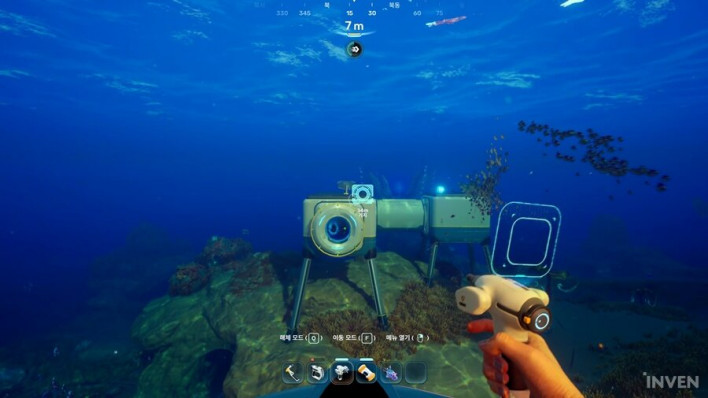
Thanks to this, even without consciously trying, your once-humble base transforms into a respectable underwater facility. Seeing it equipped with various gear, you realize that you have fully adapted to this strange alien planet.
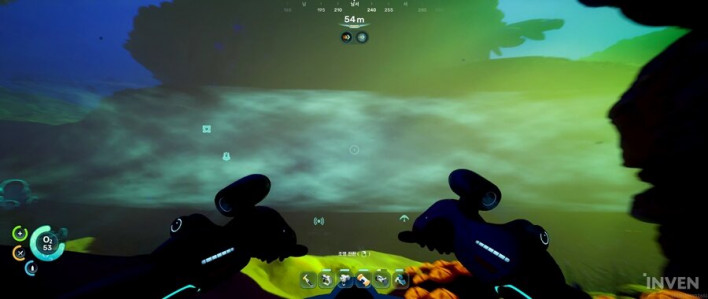
In the OWSC genre, diverse environmental elements do more than just increase immersion; they create variables and changes in the gameplay, providing a fresh experience every time. In 'Subnautica 2,' ocean currents are exactly that. A new environmental element not present in the predecessor, they can be used as a means of transportation or to generate power by installing generators.

However, their utility as a means of transportation is somewhat limited. Basically, the speed of the current itself is not that fast. It is slightly faster than normal swimming speed, but it does not provide an overwhelming speed that you can really feel. As a result, it feels somewhat ambiguous for travel.
Rather, ocean currents are an element to be more careful about in multiplayer environments. Just like in reality, if you are swept away by a current while off guard, you can quickly become separated from your friends or colleagues. While getting out of a current is not difficult, it is best to always be aware of the location and direction of currents, as you could easily lose your sense of direction and get scattered.
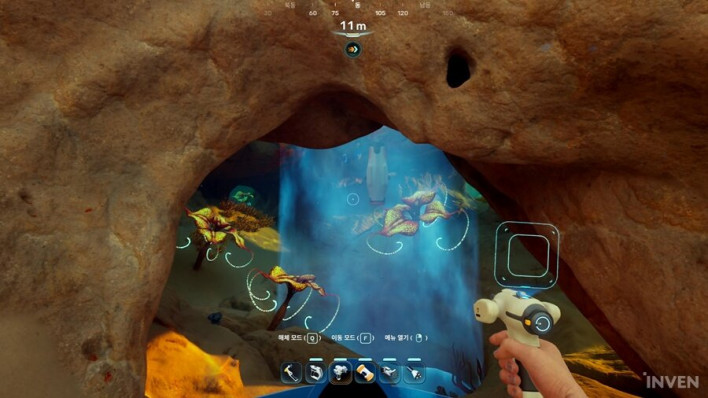
The true value of these currents is revealed when you install a generator. As mentioned earlier, while solar panels can supply power to the base, they have the disadvantage of significantly reduced power generation at night. However, using a current generator can largely compensate for this weakness.
Because ocean currents flow continuously 24 hours a day, they are effectively an always-available energy source. Furthermore, their power generation efficiency is far superior to that of solar panels. Therefore, if there is an area near your base where a current flows, installing a generator there is the easiest way to solve your power problems
Ultimately, ocean currents are a double-edged sword. Whether used for travel or power generation, they are a great help to exploration and survival if used well, but conversely, if you are swept away, they become a threat to your exploration and survival.
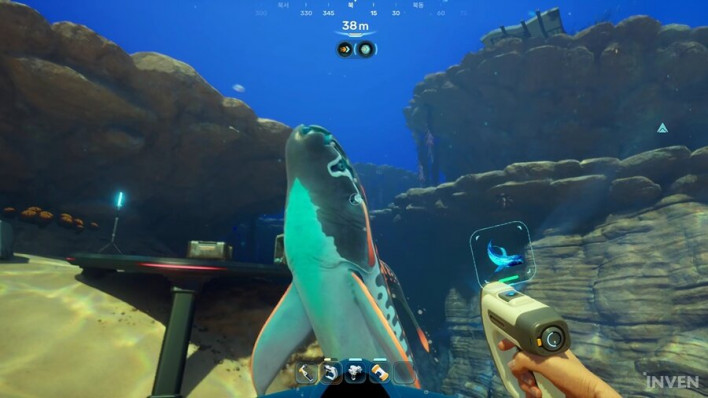
While 'Subnautica 2' has upgraded almost every aspect compared to its predecessor and includes many new changes, the biggest difference is the approach to the planet's apex predator, the 'Leviathan.' However, before discussing Leviathans, we need to address general threatening creatures.
In the current early access version of 'Subnautica 2,' there are effectively no lethal weapons. Even though the game constantly threatens the player with everything from the environment to various creatures, the fact that you cannot craft a single proper weapon might feel frustrating. However, that is the survival style 'Subnautica 2' pursues. Ultimately, the most basic way for a player to survive against threatening creatures is avoidance, not combat.

Of course, you are not completely helpless against all hostile creatures. You can directly attack and kill virus spores and infected entities, which seem deeply related to the main story of 'Subnautica 2.' They are much more aggressive than typical predatory creatures and are entities you must face during the story. As such, it seems combat elements were allowed as an exception.
But even if these general threats are difficult to handle, Leviathans are on a completely different level. In the previous game, it was possible to hunt Leviathans directly using electric field rifles or lethal gas torpedoes. With enough preparation, the player could take the place of the planet's apex predator. However, in 'Subnautica 2,' this method is fundamentally blocked. Leviathans are designed so that they cannot be killed by attacks alone.
This change seems to have been heavily influenced by the player experience of the previous game. Originally, Leviathans were symbols of the terror of the unknown deep sea and alien planets, but once the strategies were known, they were reduced to mere hunting targets. 'Subnautica 2' seems to have chosen to return to the roots, keeping Leviathans as terrifying entities until the end.

Since they cannot be killed, the way to deal with Leviathans has changed completely. Instead of arming yourself and fighting back like in the previous game, this time you must somehow avoid their eyes and survive. The problem is that Leviathans are effectively the masters of the sea. Simply swimming away is not enough to survive. Ultimately, players must actively use equipment and surrounding terrain to desperately find an escape route.
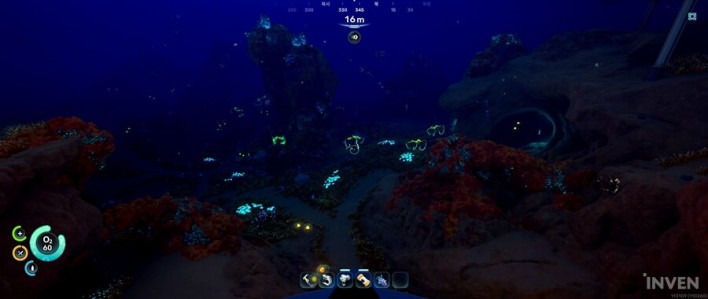
'Subnautica,' which first appeared in early access in 2014, underwent steady updates and improvements over four years, finally launching in its complete form in 2018. During that time, the game went beyond a simple survival game, completing its own unique color by showing deeper and newer experiences each time. Therefore, the future of 'Subnautica 2,' which has just begun its early access, is even more anticipated.
The current 'Subnautica 2' is already attractive enough. With its evolved survival system and exploration structure, deeper deep-sea atmosphere, and the unknown terror that keeps players constantly tense, a short play session was enough to fall into this dangerous yet beautiful sea.
In particular, 'Subnautica 2' is scheduled to continue expanding and changing during its early access period of at least two years. Unrevealed regions, creatures, and hidden stories are also likely to appear one by one.
What secrets will this sea hold in the future? What equipment and technology will players use to challenge the deeper sea? And what entities will they encounter at the end? While the current 'Subnautica 2' is impressive enough, what I am truly looking forward to might be the process of change itself that is about to begin.

Sort by:
Comments :0