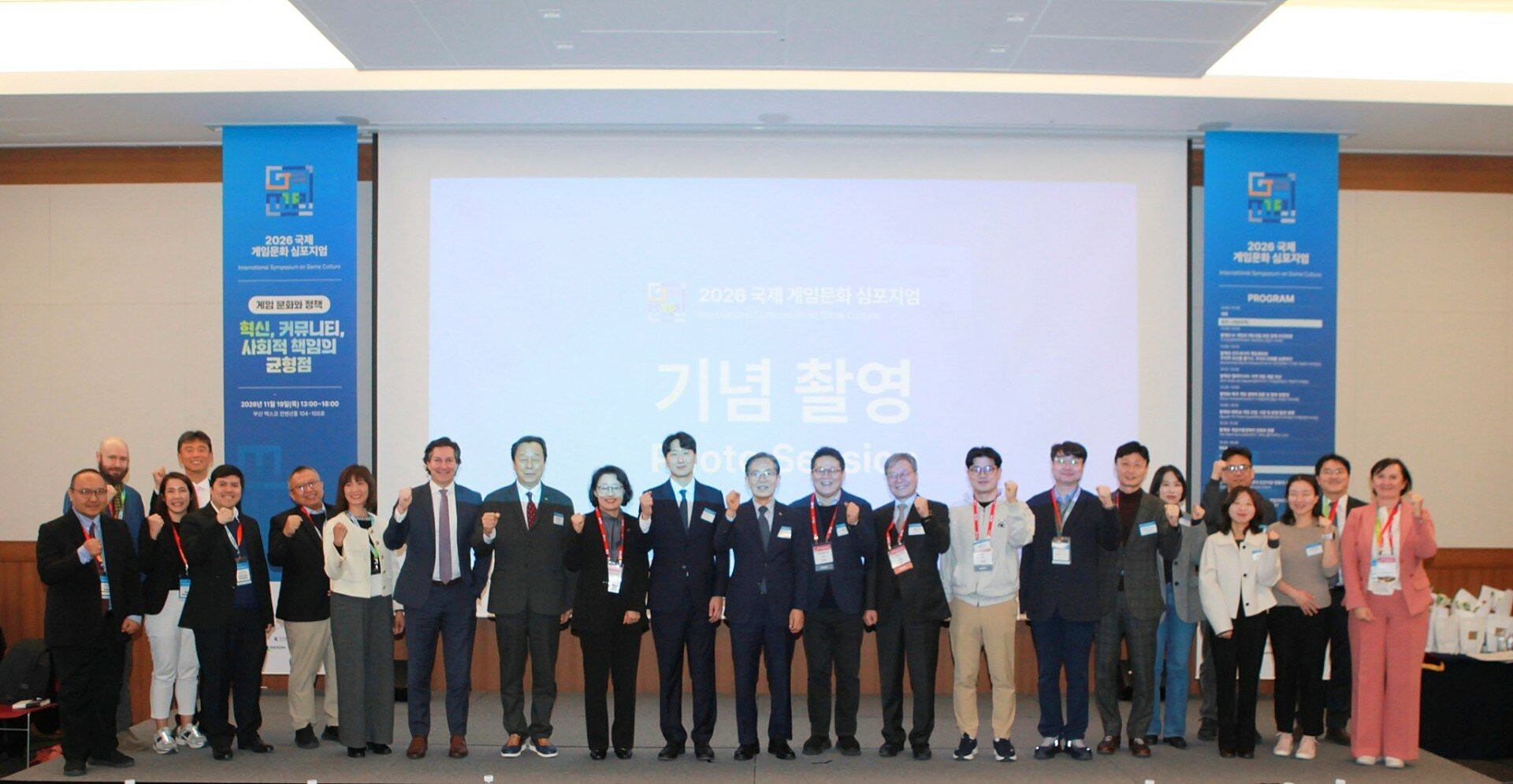
Tencent participated as a key partner in the 2026 International Symposium on Game Culture. Stakeholders from six countries, including South Korea, discussed cooperative measures for original intellectual property (IP) development, talent cultivation, and the sustainable growth of the gaming industry.
Hosted by the Game Culture Foundation (GCF), the symposium took place in Busan on November 19 alongside G-STAR 2026. Representatives from South Korea, Indonesia, Malaysia, Thailand, Vietnam, and Finland attended, under the theme "Game Culture and Policy: Balancing Innovation, Community and Social Responsibility."
Participating countries presented fostering strategies and policy directions tailored to their respective industrial environments. South Korea addressed policies and support measures to bolster domestic development capabilities and the global competitiveness of game content, as well as expanding overseas publishing. Vietnam shared regulatory and policy improvements aimed at nurturing video games as a core cultural industry.
Original game and proprietary IP development were also discussed. Indonesia presented game development leveraging cultural heritage alongside opportunities for international co-development, while Thailand highlighted proprietary IP creation and talent cultivation as key priorities. Malaysia focused on strengthening its development ecosystem and attracting global investment.
Attendees agreed on the need to share experiences and strengths through continuous exchange, despite varying market maturity levels and industry priorities across countries. Addressing content competitiveness, creative talent development, and a culture of responsible game use as shared tasks, they explored opportunities for collaboration in game development, IP creation, and global market expansion.
Tencent participated in the discussions leveraging its experience and global network across game development, publishing, live service operations, esports, and live streaming. It connected exchanges among industry stakeholders from each country and jointly discussed ways to strengthen local gaming ecosystems and expand international cooperation.
Yoo Byung-han, Chairman of the Game Culture Foundation, stated, "Games are cultural content that connect people beyond differences in language and culture, allowing them to enjoy, learn, and understand one another." He added, "While the approach to finding a balance between innovation in the gaming industry and a healthy gaming culture varies by country, we can seek better paths for development through the process of sharing each nation's experiences and policy approaches. We hope this symposium serves as an opportunity to share diverse perspectives and experiences, while expanding international exchange and cooperation for the sustainable growth of the game industry and culture."
Danny Marti, Head of Public Affairs & Global Policy at Tencent, said, "Games are a technology-based industry while simultaneously being a content industry built on culture and creativity. While each country possesses unique strengths and experiences, all share common challenges in supporting creators, nurturing talent, and developing the industry." He added, "Tencent is pleased to contribute to this exchange, and we look forward to using this opportunity for industry stakeholders to share knowledge and experience and expand collaborative opportunities to foster a more vibrant and sustainable global gaming ecosystem."