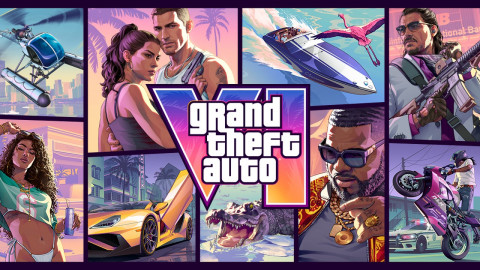
GTA 6 returns with a brand-new setting after 13 years. What went through the minds of the Rockstar Games developers as they brought modern Vice City and the state of Leonida to life?
The developer notes provided by Rockstar Games to press reviewing the game in advance detail the creation process straight from the leads across various departments—from world design to mission design, UI, characters, vehicles, music, and sound. Here is a curated selection of notable quotes broken down by category.
In the foreword, Rockstar Games founder Sam Houser stated, "We strived to create an experience that exceeds your expectations, showing just how much the medium of gaming can express and what makes this game special." He added that the player is ultimately the one who decides how the story feels and concludes.
01. World Design | Imagining the Residents Behind Every Single Building
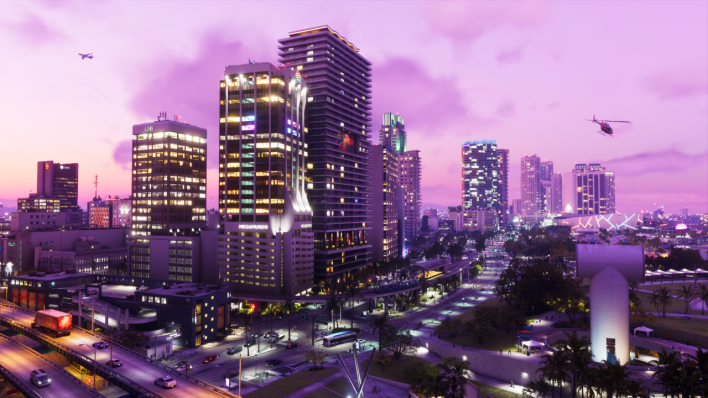
Vice President of Art: Visual Development Miriam Bellard explained that when designing a space, she first imagines the kind of person who would live there. This includes considering whether they hired an architect, decorated the home themselves, tried to show off their social status through the exterior, or prioritized comfort and practicality. Bellard added that she enjoyed designing industrial facilities, run-down spots, luxurious buildings, and dangerous locations, each with its own distinct identity.
Vice President of Design Stephen Donkin shared the challenges of building a world where the environment, characters, vehicles, NPC dialogue, missions, soundtrack, and in-game media all influence one another. For instance, if police are searching for one criminal and a new crime occurs right in front of them, they had to consider what the police should prioritize and whether the original suspect would try to flee. Donkin recalled that at a certain point while tuning these systems, "it felt less like we were creating the game and more like we had entered a collaborative partnership with it."
Vice President of Art: Environment Adam Cochrane highlighted minor details like flags swaying in the wind, a puddle of bin juice around a dumpster, or an overgrown garden at an abandoned house. He explained that each home and business was given a unique personality to avoid repetition, with some locations offering rewards and others containing subtle stories. Lead Director of World and Population Design John Macpherson revealed that the team went on location scouting trips to Florida and spent time with residents, observing everything from their clothing and gait to their conversations and the music they played in their cars.
02. Mission Design | Seamlessly Connecting Missions and Exploration
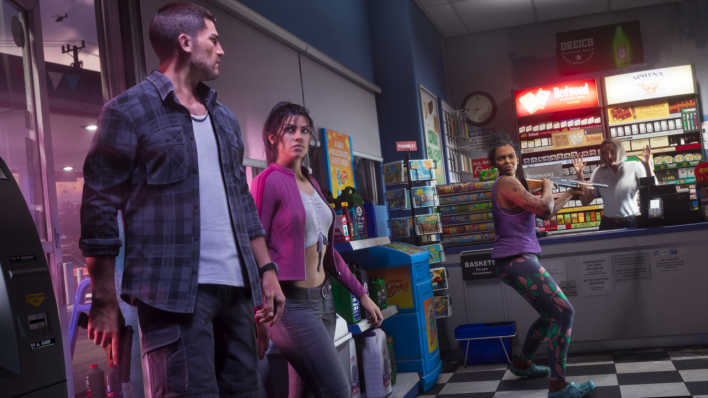
Donkin stated that their goal was to blur the line between being "on-mission" and "off-mission" as much as possible. Even when multiple types of content unfold simultaneously, they wanted players to experience them as natural occurrences throughout the world rather than sharply distinct activities. He added that roaming the open world alongside a partner presented a fresh opportunity to connect dialogue, narrative, and free exploration seamlessly.
Lead Design Director of Mission and Visualization Luke Howard explained that while building upon the mission entry and exit techniques used in previous titles, the team took care to ensure that player agency did not clash with the characters' motivations.
Vice President of Technology David Hynd stated, "We wanted to minimize situations where a player fails a mission simply because they tried something new or played in an unconventional way." To achieve this, the core game systems and AI were designed to operate broadly even during missions, ensuring that system rules feel consistent whether on a mission or freely exploring.
03. UI/UX | A Distinctly GTA Interface, Showing Information Only When Needed
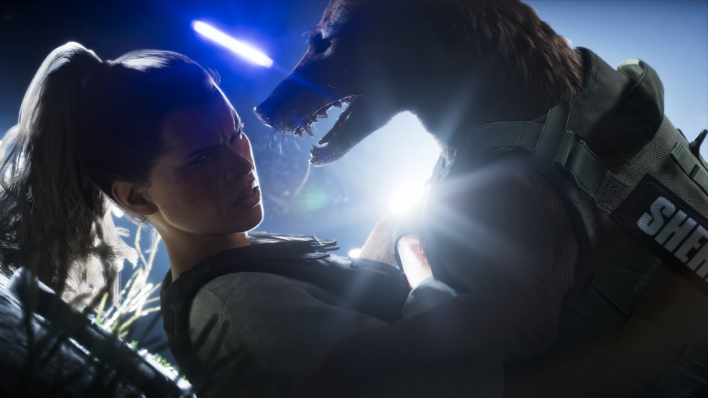
Vice President of Art: 2D/UI Design Stuart Petri explained that with roughly 25 years passing since Vice City's debut, the screen design had to evolve. However, he noted that the team strove to preserve iconic visual elements trademark to GTA, such as the signature "Pricedown" font, the minimap, wanted stars, and the "Wasted" screen.
Speaking on the UI and HUD, Petri remarked, "It needs to be there when you need it, but it shouldn't be a distraction." He explained that while players can pull up necessary information with a button press, the goal was to have it recede from the screen when focusing back on gameplay.
Associate Director of UI/UX Design Sam Grosset shared that accessibility was integrated from the early planning stages. Players can tailor settings to their preferences, such as increasing font size, simplifying HUD displays, or changing sprint controls. He also noted that revamping the in-game phone interface into an in-hand device was a deliberate choice to enhance Jason and Lucia's perspectives.
04. Narrative Writing | The Essential Bond of a Criminal Couple
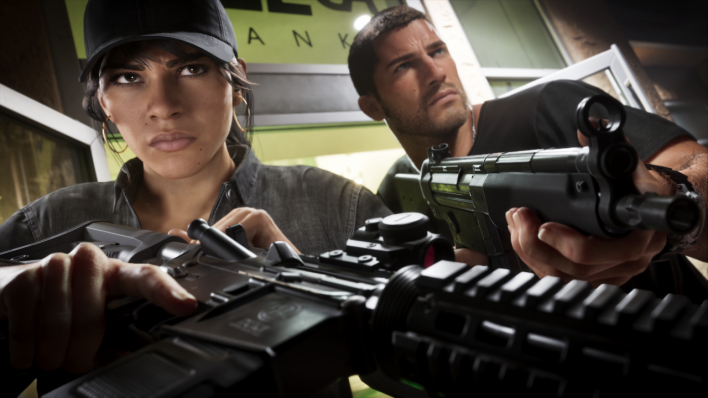
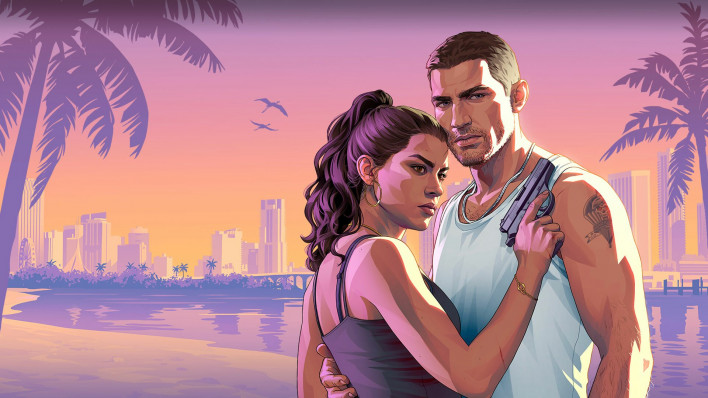
Senior Vice President of Narrative Rupert Humphries cited the emotional bond between Jason and Lucia as the central feeling he hopes players connect with in GTA 6. He explained that the team captured the lives of modern people living under the pressures of politics, the environment, media, and social media through the residents of Vice City and Leonida, weaving various forms of chaos—such as conspiracy theories, cults, scams, and substance abuse—into the narrative.
Regarding why these two protagonists were placed at the heart of such a world, Humphries stated, "We wanted to convey the message that even for flawed people, it's better to face things together than alone."
Game writer Elizabeth Gauvey-Kern noted that the quiet moments of daily life were just as crucial as the dramatic weight of the story. She explained that the team highlighted intimate moments that resonate emotionally—such as sharing a morning coffee, taking long drives, or lounging side-by-side in bed.
Game writer Michael Wiafe shared that the writing team started by researching decades of Florida crime cases. However, they refrained from tying characters strictly to real-world events, focusing instead on portraying them as distinct criminals who nevertheless possess relatable human qualities. Game writer Alex D’Agostino noted that because it is impossible to predict how long a player will interact with a supporting character, even brief lines of dialogue had to convey personality, motivation, and individuality.
05. Vehicle Design & Physics | A Physics System Born from Real Racing Experience

Director of Physics Technology Ben Lyons revealed that after completing GTA 5, several team members built their own cars and competed in racing, even taking a class win at the 24 Hours of Nürburgring. By modifying and driving real vehicles, they gained firsthand insight into the dynamics of tire blowouts and collisions—an approach they also applied to rally racing and dirt bikes.
Lyons stated, "We completely rewrote the simulations for every vehicle type in this game." For aircraft, the physics model simulates elements such as wing airfoils, propellers, control surfaces, and engines, while also accounting for turbulence caused by clouds and weather. He added that aircraft component damage is implemented with far greater variety, forcing players to actively wrestle with the controls to avoid crashing.
06. Animation | The Philosophy Behind Lucia Nudging a Door Open with Her Hip
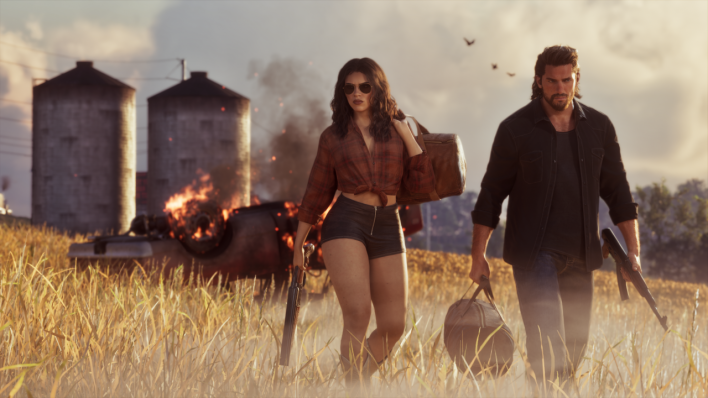
Gameplay Animation Director Mike Jones explained that the team focused on combining responsive movement with a realistic sense of physical weight. While Red Dead Redemption 2 featured a deliberate, slower pace suited to its era, Jason and Lucia's world demanded faster movement and quicker interactions.
Substantial development time was poured into even minor motions. Jones cited an example of Lucia pushing open a door with her hip while holding a drink, remarking, "That took months to develop, but it's that important." He added that a wide range of jumping and landing animations were created to maintain momentum while vaulting over obstacles, clearing fences, and sprinting across rooftops.
Vice President of Animation Mark Tennant shared that the team established a new workflow allowing characters of different body types to share animations naturally. Physical interactions between Jason and Lucia were iteratively refined to align with their evolving relationship, while nearly 1,000 activity animation sets were created just to portray the daily routines of background NPCs.
07. NPC Design | Bringing Background Characters Up to Main Character Visual Fidelity
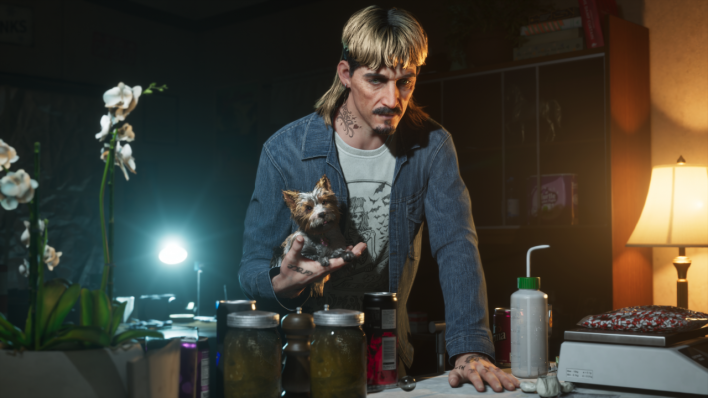
Lead Technical Art Director for Dynamic Art Valmor Garcia explained that the team strived to prevent NPCs from looking like mere background scenery. Each NPC is distinguished by personality, mood, body type, face, and dialogue, with visual quality designed to approach the standard set by protagonists Jason and Lucia.
Garcia noted, "We feel we've consistently elevated the visual fidelity across the entire cast, including every world NPC." Proprietary technologies used for hair and cloth simulation, as well as face and body customization, were applied across the entire world rather than being restricted to key characters.
08. Music | Spanning from the 1980s to Modern-Day Leonida

Vice President of Music Ivan Pavlovich revealed that the game's score drew inspiration from GTA: Vice City and 1980s Miami music culture, expanding that musical backdrop across the diverse regions of modern-day Leonida.
Pavlovich shared that the soundtrack incorporates a broad spectrum of genres, ranging from Latin music, Miami hip-hop, and club tracks to blues and country in the rural outer areas. He also noted a collaboration with French electronic duo Justice to fuse the nostalgic 1980s aesthetic of Vice City with contemporary electronic soundscapes.
09. Sound Design | Even Convenience Store Fridges Sound Different Between Old and Upscale Shops
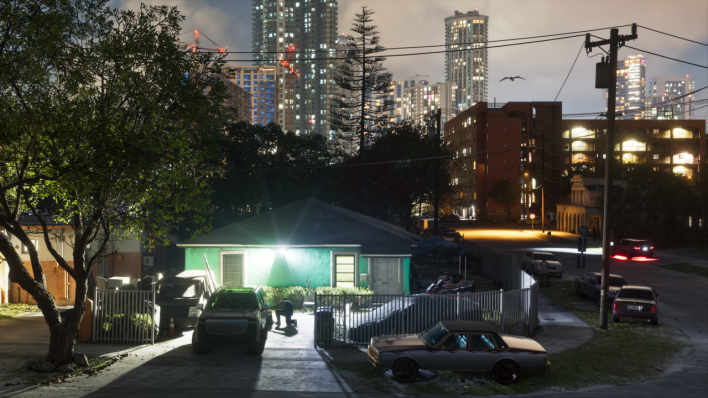
Vice President of Audio Alastair MacGregor stated that to make music sound different depending on the playback device and environment, the team recorded dozens of speakers inside an anechoic chamber. He explained that they even accounted for how reverberation changes when stepping out of an elevator and into a hotel lobby.
Regarding ambient audio, MacGregor pointed to an example: "Every convenience store refrigerator has its own distinct sound signature." In older shops, players might hear the rough hum of a poorly maintained compressor and the clinking of bottles inside, whereas upscale stores feature a much quieter, subtle hum.
He added that a dedicated system was built for street dialogue. The team spent years refining reverb technology to model how sounds from pedestrians propagate through space and to differentiate the urban acoustics of Vice City—where sound bounces off high-rises—from other regions.
10. Customization & Styling | From Clothing to Muscle Definition and Weight Shifts
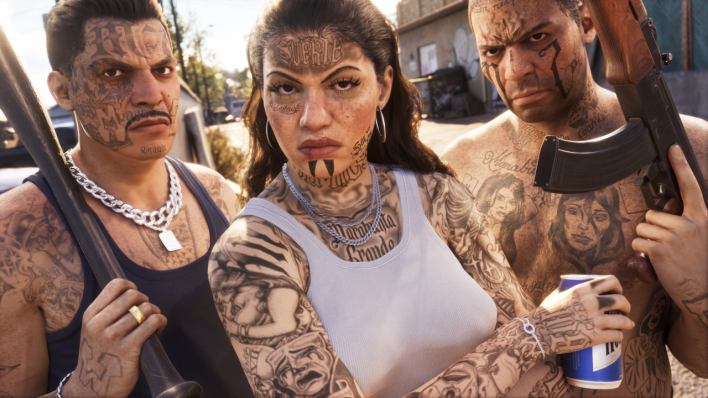
Lead Costume and Inventory Artist David Vallance shared that merchandise in shops across different regions was meticulously curated to allow players to customize Jason and Lucia in their own style. Each shop reflects a distinct aesthetic, from vintage stores in Port Gellhorn to high-end boutiques in Vice City.
Vallance noted, "Beyond outfits, there are hairstyles, facial piercings, and hundreds of unique tattoos." Options for Lucia's makeup and nail art are also included, while physical shifts like muscle development and weight gain or loss are dynamically reflected in character appearance.
Stylist Jillian Carr explained that the team focused on allowing players to express their preferences while preserving the core identity of both protagonists. Carr stated, "In many ways, customization serves as a bridge for emotional immersion and a way for players to explore their own agency."