Released in 1997, 'Final Fantasy VII' is a title that can never be omitted when discussing the history of Japanese RPGs. Its 3D graphics and cinematic presentation, which were revolutionary at the time, alongside distinct characters like Cloud and Aerith, left an indelible mark on countless players. Over the roughly 30 years since, gaming technology has advanced dramatically, and the players who enjoyed the original game back then have also grown older. The challenge now facing developers goes beyond simply remaking an old game with modern graphics; it lies in how to re-complete a single work remembered by players across different eras.
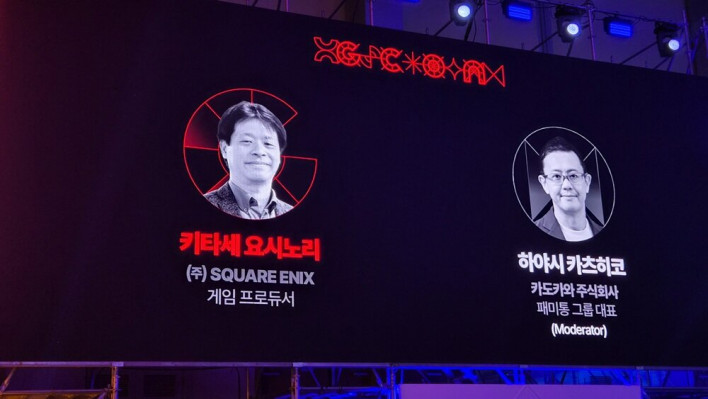
On the afternoon of November 20, during Day 2 of G-CON 2026 at BEXCO in Busan, attendees had the opportunity to hear about these considerations directly from Yoshinori Kitase, the original director of 'Final Fantasy VII' and producer of the remake project. Moderated by Kazuhiko Hayashi, CEO of Japanese gaming outlet Famitsu, the session revisited the approximately 30-year journey of the series, from the creation of the 1997 original to the remake trilogy.
Producer Kitase explained what had to be kept and what had to be changed between the original and the remake, as well as how advancing technology has changed how character emotions are conveyed. In particular, he shared several examples illustrating the gap between a creator's perspective on their own work and the memories held by fans.
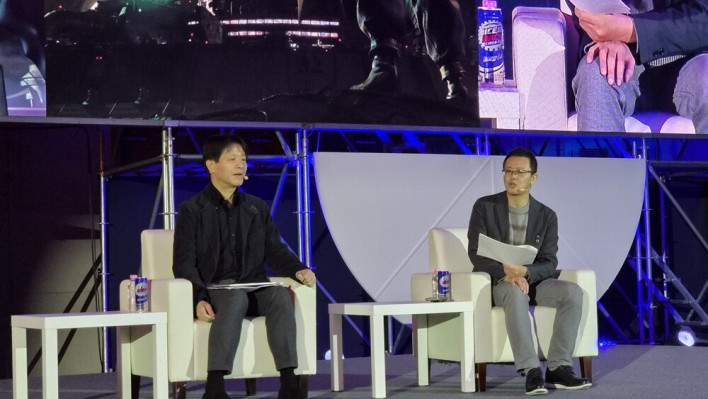
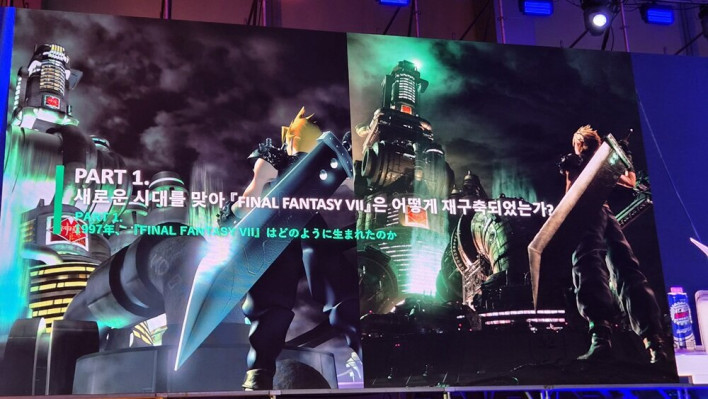
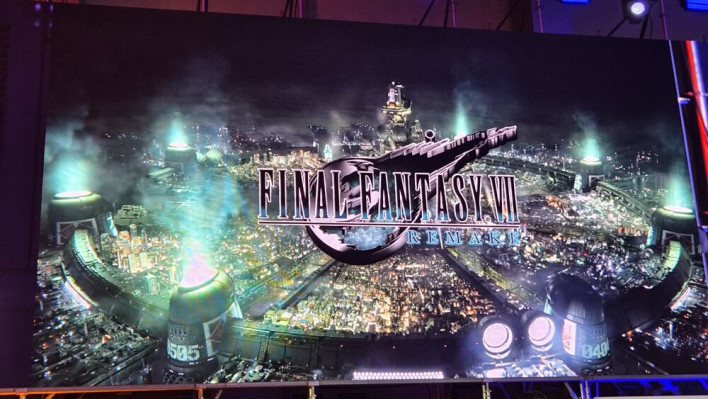
The scene Producer Kitase picked as the most memorable from the original was the opening sequence showing Midgar. The camera sweeps across a panoramic view of the massive city before gradually descending to ground level, seamlessly transitioning into gameplay directly controlled by the player. Back then, 3D technology itself was an unfamiliar and experimental domain, but the development team aimed to connect the experience of viewing a giant metropolis to actually walking inside it. Kitase recalled that creating a space where players could move around themselves—unlike in a film—was what he considered most important at the time.
This direction was maintained in the remake project as well. While the original Midgar conveyed the presence of a massive city through limited polygons and background art, the remake evolved to let players feel the scale and structure of the city through an actual 3D space. However, Kitase emphasized that changes in expressive technology do not mean the work's fundamental theme needs to change. Though technology and player experiences have evolved, the ultimate message the game seeks to deliver remains valid.
One of the key features of 'Final Fantasy VII' he highlighted was a narrative structure where the identity of both the protagonist and the player is shaken. In a typical RPG, players project themselves onto the protagonist as they follow the story, but Cloud experiences the collapse of the identity he believed in during the narrative. Players also experience confusion as they discover that the character they identified with has an unexpected past. Kitase explained that this dual structure—where Cloud's personal identity and the identity players projected onto him are simultaneously unsettled—was a major draw of the game.
Reconstructing the original for modern audiences also presented unexpected difficulties. Because the 1997 game was developed during a transition period from paper documentation to digital files, a significant amount of material was not preserved intact. Some documents were even discarded during company relocations, forcing the team to re-examine past records just to confirm basic settings like the scale and height of Midgar. It was a unique headache for developers remaking an old title—one that technological advancement alone could not solve.
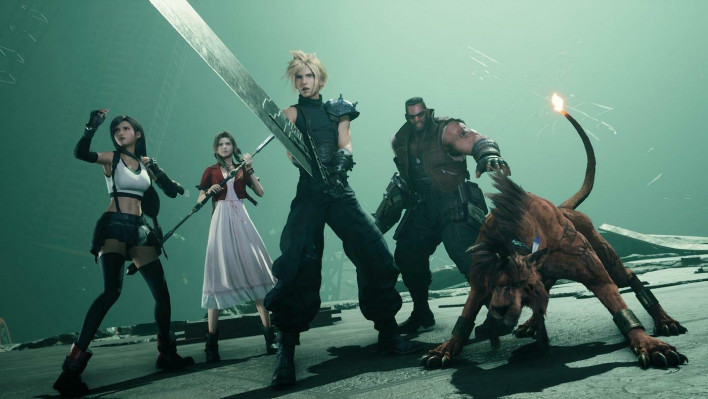
The hardest question in the remake project was deciding what to change and what to leave intact. Kitase explained that over the roughly 30 years since the original launch, fans have built their own memories and interpretations of characters like Cloud, Tifa, Aerith, and Barret. Even among those who played the same game, the scenes that left an impression and the ways characters were understood differ from person to person. Meaning that even if creators feel they have the freedom to modify the original content, they cannot simply alter a work that has taken root in fans' hearts for so many years.
"As a creator, I thought I could change anything. But once a work is out in the world, half of it belongs to the fans."
He explained that they needed to convey the emotion felt by past fans to new players who never experienced the original, while also delivering a fresh experience to existing fans who already know the ending. While preserving the core story and themes of the original, they chose an approach that enriches character personalities and relationships to match the expanded scale of expressive technology and content. Though each entry in the trilogy was given its own sub-theme—'Reunion,' 'Bonds,' and 'Resolve'—the most important theme running through the entire series remains 'Life.' The core of the world's lore—that life circulates through the Planet and the Lifestream—was treated as an unalterable principle.
Interestingly, it was Kitase—the original director—who wanted more drastic changes. When creating the remake, he felt they could make bold changes even if it meant disregarding the original to some extent, but Director Naoki Hamaguchi, who leads actual development, favored preserving the strengths of the original as much as possible. This created a reversed dynamic where the generation that built the original argued for change, while the new generation of developers who grew up playing the original emphasized preservation.
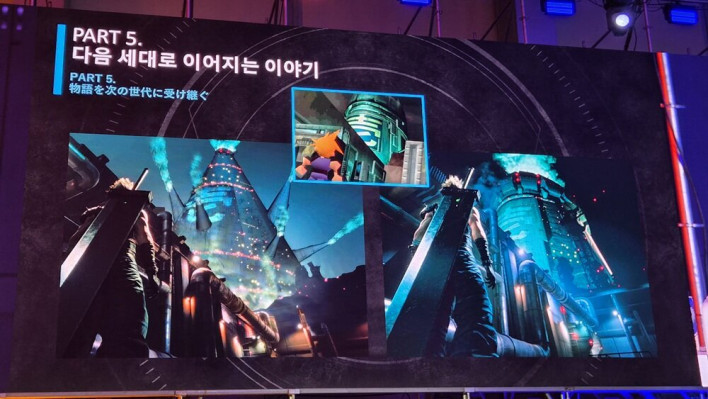
The presentation also showcased materials comparing early concept art of the Mako Reactor with its final design. While the early design diverged significantly from the original, the final choice preserved the original silhouette while modernizing its detailed depictions. Kitase explained that through this process, he realized creators must respect not only the image they remember, but also the visual impressions players have carried for years.
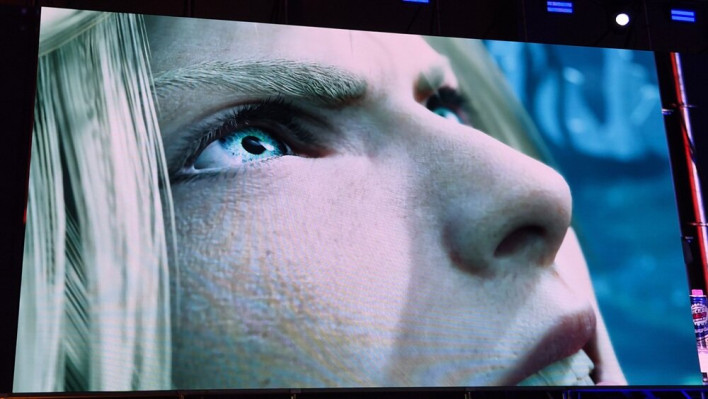
Advancements in technology brought significant changes to how character emotions are conveyed. Kitase explained that because original characters consisted of roughly 400 polygons with no voice acting, conveying emotion required exaggerated full-body movements. In the remake, however, far more complex emotions can be expressed through facial expressions, eye movement, and subtle voice shifts alone. As technical expressiveness expanded, the need to explicitly explain every emotion actually decreased.
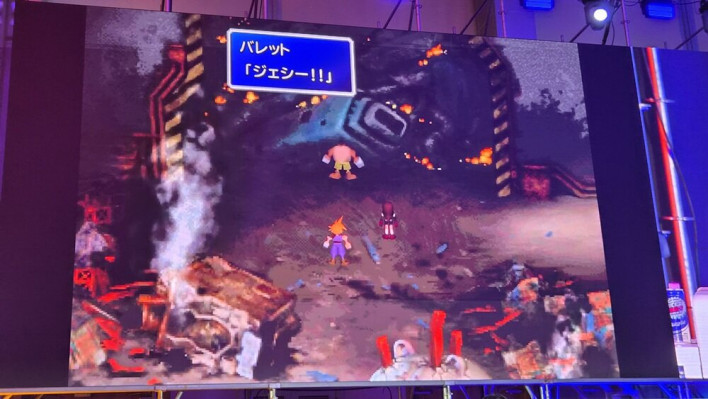
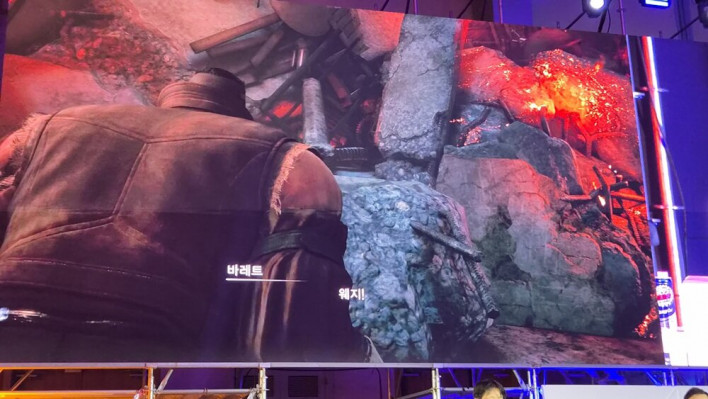
A prime example is the scene where Barret cries out after the collapse of the Midgar Sector 7 Plate. In the original, despair was conveyed by dropping his shoulders dramatically or pounding on a wall. In the remake, while keeping those actions, focus was shifted toward him bowing his head afterward and subtle changes in expression. The story of Barret and Dyne was reconstructed in a similar manner. Where the original centered on Barret's regret over failing to save Dyne, 'Rebirth' chose to portray Dyne's own grief and emotions in greater detail. As a result, emphasizing Dyne's tragedy served to deepen the regret Barret carries.
The way Aerith's fate was depicted at the conclusion of 'Final Fantasy VII Rebirth' served as an even more significant example. While the original clearly showed the outcome of that event, Rebirth intentionally left room for interpretation. Kitase revealed that while the original focused on portraying Cloud's sense of loss after losing someone dear, Rebirth aimed to convey the feeling of being unable to believe what just happened before one's eyes and refusing to accept reality. At the same time, it sought to show Cloud moving forward by carrying on the feelings Aerith left behind.
The method for depicting Cloud's inner thoughts also changed. Where the original used large gestures like clutching his head to convey mental distress, the remake focused on the swaying gaze of Cloud's eyes under Sephiroth's influence and subtle facial shifts. Kitase cited the ability to communicate emotion through brief silences, gaze, and vocal tone—rather than explaining everything via dialogue—as a key evolution. While the original had to convey identical feelings to many players through limited expressive tools, it is now possible to leave margin for players to interpret situations themselves.
These changes also affected how relationships between characters are built. In 'Rebirth' in particular, time spent exploring the world or enjoying minigames alongside party members expanded significantly. Even activities seemingly unrelated to the main plot carry important meaning, as they allow characters to converse naturally and build relationships. The attachment forged through these moments ultimately heightens the emotional impact felt by players during later dramatic events.
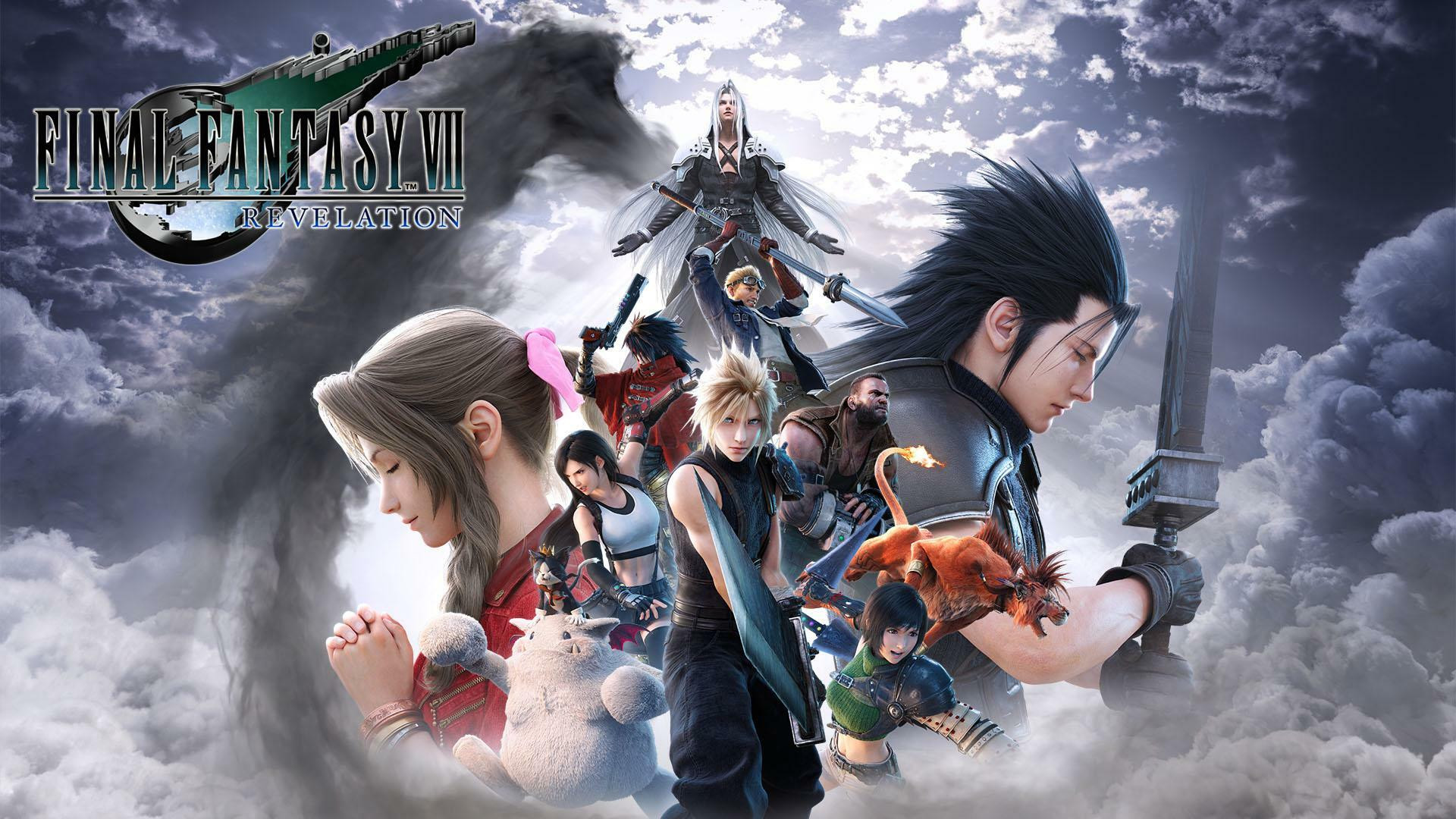
In the latter part of the presentation, new gameplay footage was revealed for 'Final Fantasy VII Revelation,' the final entry in the remake trilogy. Kitase explained that the video showed scenes debuted for the first time at G-CON. The footage featured a side quest to search for a white chocobo named 'Cocona,' structured so that the problem-solving process itself branches depending on which character the player selects.
Selecting Red XIII leads to discovering that Cocona is lovesick, resulting in a collection-focused branch where players gather a chocobo's favorite vegetables to resolve the issue. On the other hand, selecting Cid leads to a path where he boisterously encourages Cocona to convey its feelings properly, followed by resolving the situation through combat. Even for a quest with the same objective, the approach and gameplay differ according to the chosen character's personality.
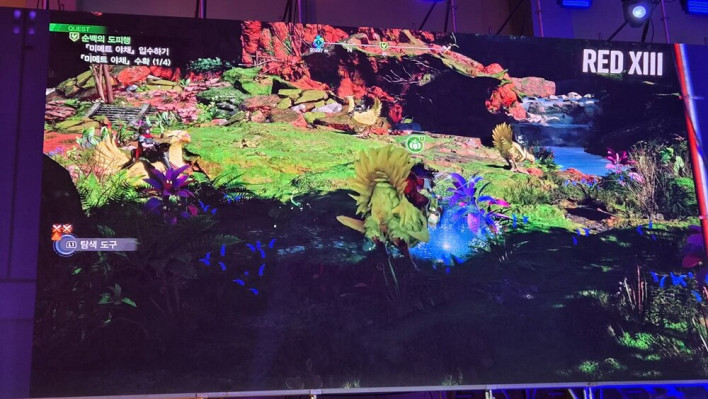
Kitase explained that this structure was designed to let players discover new sides of characters in side quests as well as the main story. Experiencing different dialogue and actions based on the selected companion deepens understanding of the characters, naturally weaving story and gameplay interactivity together. This aligns with the rationale behind expanding time spent with companions in Rebirth.
'Final Fantasy VII Revelation' is scheduled for a simultaneous worldwide release across multiple platforms on April 8, 2027, with a Trilogy Edition containing all three entries in the remake trilogy also being prepared. Pre-ordering the Trilogy Edition allows players to play the previously released 'Remake' and 'Rebirth' ahead of time. This brings the journey spanning roughly 12 years since the remake project was announced in 2015 close to its final conclusion.
Kitase expressed his hope that whenever a new 'Final Fantasy' is released to the world, players will look at a different landscape before and after encountering the work. Meaning he hopes players do not merely experience an entertaining game, but also gain new perspectives and values through it.
Looking back, the journey of the 'Final Fantasy VII' remake project has not been very different from this mindset. The aim was to offer the generation that played the original an opportunity to revisit familiar memories, while giving a new generation the chance to experience the story for the first time. As the story that began 30 years ago in the scenery of Midgar nears completion once more through changes in technology and generations, what Kitase emphasized in the end was the enduring value of a story and the hearts of the players who receive it.