It has been more than 10 years since 'The Witcher 3: Wild Hunt' was released. Countless games have come and gone since, but the story and characters left behind by The Witcher 3 remain firmly etched in the memories of many gamers. Starting with The Witcher 3 Remastered this year, followed by the new expansion Songs of the Past and The Witcher 4, the franchise is preparing for another journey.
CD Projekt Red has created long-remembered stories not only through The Witcher series, but also through Cyberpunk 2077. Compelling characters, choices with consequences, and stories that linger in the mind long after the credits roll are among CDPR's greatest strengths.
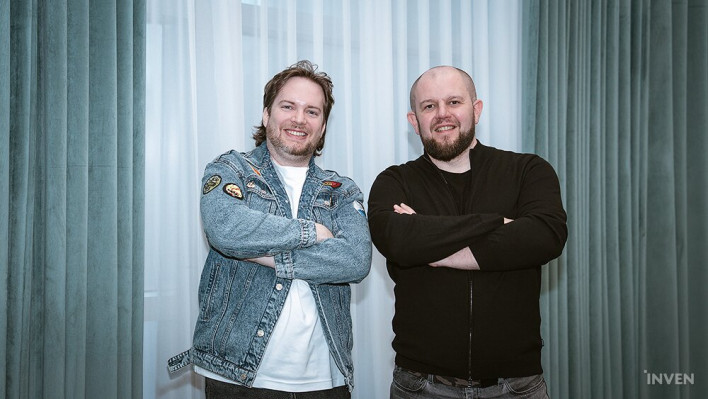
At G-STAR 2026, we met with Marcin Blacha, Vice President of Story, and Philipp Weber, Narrative Director at CDPR. We spoke on a wide range of topics—from Ciri's new narrative unfolding in The Witcher 4 to how to create memorable quests, and what a uniquely CDPR-style story means to them.
From Geralt to Ciri The Witcher Enters a New Era
The Witcher 3 Remastered was released recently, and the franchise will continue with the expansion Songs of the Past next year, leading up to The Witcher 4. As time passes and the series enters a new era, what is the core identity of The Witcher that you feel must never change?
Philipp Weber = There is a reason we call the new project The Witcher 4. We wanted to make it clear that this is the official next chapter of The Witcher series. What matters most is what kind of story constitutes a true Witcher story, and what feels genuinely Witcher-like.
Above all, we want to create a game that explores the various facets of human nature—a game for adults. That doesn't simply mean adding violent or sexual depictions. It means treating the player as a mature adult, asking difficult questions without offering easy answers. We are applying those same core principles from The Witcher 3 to The Witcher 4. The fundamental philosophy hasn't changed.
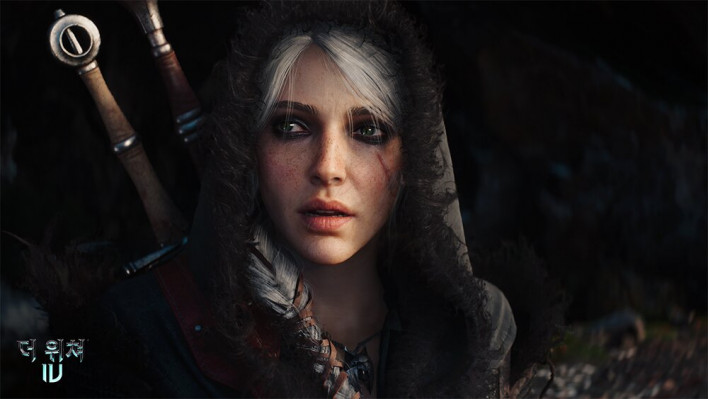
Of course, having Ciri as our new protagonist allows for many fresh approaches. Ciri is a completely different person from Geralt, making this an exciting challenge for us. In the past, we knew precisely how Geralt would react in a given situation. Now, we find ourselves thinking about what choices Ciri would make. In certain situations, she might make choices that are somewhat harsher than Geralt's, while in others, she might step up to help someone much more actively. Looking at The Witcher world through this new perspective is a fascinating process.
Marcin Blacha = To add to that, every entry in The Witcher series has been a revolution in its own right. The Witcher 2 was vastly different from The Witcher 1, and The Witcher 3 was another revolution. There was a major leap with each title, and we want to repeat that with The Witcher 4. We believe our role is to set the benchmark for RPGs, and that is what we intend to do this time as well.
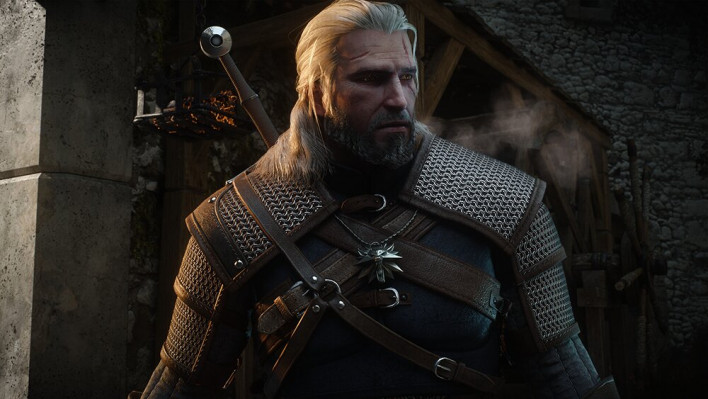
You must know everything about Geralt by now, but as the years went by, did your perspective on Geralt change at all?
Marcin Blacha = It has been nearly 20 years since we made The Witcher 1. In that time, I had two sons, and Philipp had a child as well. We grew older alongside Geralt.
Making The Witcher 3 was different from before. Geralt had become a father, and I was already a father too. Growing older with Geralt allowed us to understand him even better. Now, instead of a middle-aged man, we have to walk that same path alongside a young woman.
Philipp Weber = That's right. We've all become middle-aged men. Now it's time for us to be young again (laughs).
In The Witcher 4, players will experience the world through Ciri's eyes rather than Geralt's. With a change in protagonist, how players perceive and understand the world will likely change as well. What are your thoughts on this?
Philipp Weber = One of the biggest changes is that 11 years have passed since The Witcher 3 was released. That means there will be many new players experiencing The Witcher for the first time. This presents an exciting challenge for us, as we faced a similar hurdle when creating The Witcher 3.
At that time, we wanted to preserve the elements that existing fans loved about The Witcher, while creating a game that new players who hadn't played earlier games or read the original novels could fully enjoy. The same applies to The Witcher 4. It must serve as a new entry point while remaining faithful to everything built by previous titles. Striking a balance between the two is key.
As Marcin mentioned earlier, we want to achieve a revolution with every title. We believe fans also expect a meaningful evolution worthy of the name The Witcher 4, not just a simple sequel. That is precisely our task. It's not about making just another sequel, but crafting a work worthy of following in the footsteps of The Witcher 3: Wild Hunt, which received so much love from so many people.
In that sense, we find ourselves in a position very similar to Ciri's. Just as Ciri must succeed Geralt, we must create a game that lives up to The Witcher 3. I feel we share that parallel with Ciri.
Marcin Blacha = When we were developing The Witcher 3, our primary audience was RPG players, and only a subset of them had played the earlier titles. Today, however, things are different. The Witcher has grown into a massive franchise. People encounter The Witcher through various avenues—whether it's the Netflix series, board games, or comic books.
Now, we have to consider not only those who played The Witcher 3, but also players who entered the world through these diverse channels. That said, we have no intention of watering down the content or lowering our standards. We want to—and must—create a genuine RPG that both hardcore and casual players can immerse themselves in.
Philipp Weber = If we were to strip away The Witcher's distinct edge just to reach a broader audience, it would end up appealing to no one. That is why staying true to The Witcher's core identity is so crucial.
Uniqueness and Harmony Criteria for Creating Memorable Quests
The side quests in The Witcher 3 are still highly praised in many respects. When designing quests for The Witcher 4, what areas are you hoping to improve upon compared to previous titles?
Philipp Weber = Every time we make a game, we learn something new. With The Witcher 3, we had to learn how to realize quests of the quality seen in The Witcher 1 and The Witcher 2 within an open world. We went through various changes and learned new lessons along the way, many of which we applied to Cyberpunk 2077.
In Cyberpunk 2077, players can build and play their characters in much more varied ways. You could be a netrunner or a cyber ninja air-dashing into a scene with a double jump. We had to account for all those possibilities available to the player. Beyond simply selecting choices in dialogue, how you play the game also opens up new solutions and non-linear paths.
We want to make a similar leap in The Witcher 4. We plan to apply everything we learned from previous projects to the new game. However, the core principles of crafting a great quest aren't much different from The Witcher 3. Rather than strict rules, the baseline is that every quest, big or small, must offer a meaningful experience to the player.
We don't create quests that merely waste the player's time. I believe so many people loved the side quests in The Witcher 3 because we strived to offer something fresh every single time. That principle remains unchanged today.
Marcin Blacha = From a writer's perspective, changing the protagonist is a huge factor. Ciri isn't calm and composed like Geralt, nor does she hide her emotions easily. She is far more hot-headed and tends to be emotional when making decisions. That difference changes a lot of things.
When playing as Geralt, players acted more like an arbiter judging how to resolve a situation. When playing as Ciri, you are much more deeply involved in the story through her personal perspective. It's no longer just about deciding which choice is morally right; how emotionally invested you are in the character will also shape your decisions. Because Ciri is a different person from Geralt, the quests in The Witcher 4 will take on a different shape compared to The Witcher 3.
There are scenes that convey powerful emotions without any dialogue. When designing quests, are there moments when you feel player actions or character non-verbal cues are more effective than spoken dialogue?
Marcin Blacha = That is a really interesting question. Most of our writers have experience writing novels. However, writing a book or short story is very different from crafting a video game narrative.
Cutscenes in The Witcher rely heavily on cinematic expressions. Emotions can be conveyed through gestures or facial expressions, and even the posture of characters standing together can reflect their relationship. Writers coming from a literary background have to learn this method of storytelling anew.
Conveying emotion without dialogue is possible, but it isn't easy. You have to get used to this style of storytelling. Once you master it, however, it becomes an extraordinarily powerful tool.
Philipp Weber = That's why we often refer to our narrative team as a "trifecta" combining three disciplines: writers, quest designers or open-world designers, and cinematic designers. Depending on the nature of the quest, either a quest designer or an open-world designer participates, but fundamentally these three disciplines work side by side.
That's where cinematic designers really shine in moments like these. Sometimes a single facial expression can communicate far more than spoken lines. Back during The Witcher 1 or The Witcher 2, it was much harder to pull off those subtle expressions. But in The Witcher 3 and Cyberpunk 2077, we reached a point where performance alone can convey so much.
While crafting countless stories over the years, you must have had moments where an idea felt great on paper during planning or design, but fell short of expectations once implemented in the actual game. What did you learn from those experiences?
Marcin Blacha = Frankly, that's how we work every day. We start by brainstorming a list of ideas, designing them on paper, and then implementing some into the actual game. But even after reaching the implementation stage, there are times when it doesn't turn out as good as expected. Sometimes you only realize it's not working once you see it in the game.
We accept that as a natural part of the process, because our development relies heavily on iteration. If the quality isn't up to par, we aren't afraid to scrap it or cut the quest altogether. Sometimes we replace it with a better quest, and sometimes we just remove it. That's simply how games are made.
When playing CDPR games, even short side quests often leave a lasting impression. What do you focus on most to create an impactful story and quest within a short timeframe?
Philipp Weber = Among side quests, there are minor ones that take only about 15 minutes to finish. Even when crafting these short quests, we adhere to a fundamental principle: we must be able to answer the question of what this quest offers that no other quest can.
Some quests might be remembered for great gameplay, while others might be remembered for rewarding loot. However, simply repeating what was done elsewhere is never enough. There must be something unique that can't be experienced in any other quest. That is the first condition.
Beyond that comes deeper elements. A quest might explore an intriguing or challenging theme, or introduce a uniquely memorable character. Even if a character appears for just 10 minutes, tying them to a difficult choice can make them unforgettable. Sometimes a character sticks with you simply for being funny or foolish. The key is that signature uniqueness.
Finally, everything must come together seamlessly. A great quest can stem from a compelling story, an engaging character, or fantastic gameplay alone, but overall, there must be harmony. Most importantly, it has to fit the atmosphere of The Witcher.
A side quest could be comedic or horrific. But regardless of the genre, it must maintain that distinct Witcher tone. This requires countless iterations. No matter how great a horror story might be, if it feels like a standalone horror tale rather than horror set within the Witcher universe, it fails as a good Witcher quest.
CDPR's Narrative Philosophy Stories Grounded in Reality
You just mentioned the unique atmosphere of The Witcher, and the term 'Witcher-like' came up often. What specifically defines that 'Witcher-like' quality?
Marcin Blacha = That is a really tough question to answer. You could say it's a kind of magical secret sauce. I'll try to explain, though I don't know if I can do it justice (laughs).
First off, our stories are grounded in reality. We don't build artificial narratives driven by purely imaginary characters. We craft stories about people who feel like real human beings with real-world problems. That is always our starting point.
Take the Bloody Baron, for example. What matters isn't the fact that he's a warlord; what matters is that he has family issues. That forms the foundation of the story. From there, we ground the narrative in a historical backdrop or infuse it with the flavor of folklore and fairy tales, setting it apart from ordinary stories in modern society. In The Witcher, fantasy and historical elements serve as metaphors to address real-life issues.
Furthermore, our stories are character-driven. We explore the relationships between characters. Choices and consequences mostly revolve around how you feel about a character and how you want your relationship with them to unfold. These elements combine to define a Witcher story.
Philipp Weber = There is another key element here. We constantly challenge ourselves, and we aim to challenge the players as well. We don't want to write stories that talk down to players or try to lecture them.
We treat players as adults who have certain expectations when consuming cultural works. We want to deliver stories that provoke thought and stir emotions. Our goal isn't to provide easy answers. We explore questions that we ourselves want to wrestle with. In that sense, we want to embed an intellectual challenge. We don't want to make something players simply play and forget.
Marcin Blacha = What Philipp said is extremely important. It's not just intellectual challenges, but emotional ones too. If players feel heavy-hearted or distressed while experiencing a story, we think that's okay. It means they were genuinely immersed in the narrative.
Of course, sometimes you just want pure fun. But other times, you want to play a game that makes you ponder about yourself, the world, or other people's lives. We want to offer both—delivering entertainment alongside an experience that invites deeper reflection.
Philipp Weber = Getting the Witcher atmosphere right is always difficult. Conversely, it's relatively easy to tell when something doesn't fit the Witcher tone. That goes for us as well as the fans. Preserving that distinct Witcher atmosphere remains a vital challenge for us.
As a series expands and its world grows vast, conflicts can arise between established lore and new stories you want to tell. In those situations, how flexible do you feel you can be when tweaking existing lore?
Marcin Blacha = Let me share an approach I use. I call it the 'Romeo and Juliet' method. Shakespeare wrote the story of Romeo and Juliet, and that narrative has been adapted in countless ways since. A prime example is West Side Story. Sometimes it's remade as a musical, or shifted from Elizabethan England to a story about rival gangs.
The stories we tackle are largely universal, and similar narrative arcs recur. However, how we construct and deliver those stories can always be original. The crucial secret is never losing enthusiasm for the story itself. If I still feel excited while retelling a story in a new way, chances are players will feel that same excitement.
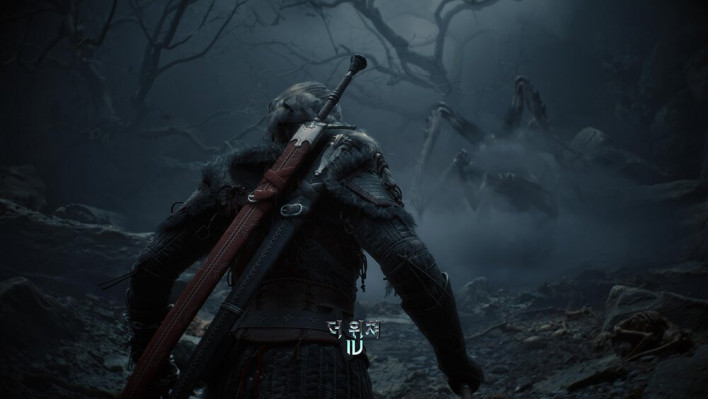
In open-world games, players often wander off to do side quests even while the main storyline is building urgency. What is your secret to granting ample freedom of exploration while maintaining the pacing, tension, and emotional weight of the main story?
Philipp Weber = There are several techniques, but one is designing the narrative flow like a rollercoaster. In a story, there are moments where events escalate and character emotions peak. At those moments, players are far less likely to stray from the main storyline because they are so deeply invested in the situation.
But what makes a rollercoaster thrilling isn't just the constant drops—it's also the slow climbs back up. The same applies to storytelling. After the most emotionally intense climaxes, you need breathing room to gradually build up tension again.
We often encourage players to take a break and engage with side content during those lulls. Sometimes another character in the main quest line lets you know they need assistance later. After experiencing a major event, taking time to process it while wandering into the woods for other activities feels natural.
And when players return to the main storyline, we gently remind them of what happened before, then gradually dial up the tension again. That is one technique we use. If you constantly throw massive events and dramatic moments at players, they start feeling pressured like they can't step away, which can ultimately cause them to lose connection with the narrative.
Marcin Blacha = The person who knows best how to entertain the player is the player themselves. We try never to forget that. We provide the tools for players to enjoy themselves, and then we step back and leave it in their hands.
Philipp Weber = Another advantage in The Witcher and Cyberpunk is that our protagonists have day jobs. Geralt and Ciri are witchers; traveling the world and hunting monsters is their job. V in Cyberpunk is a mercenary working in Night City.
Therefore, engaging in side content doesn't feel like putting important matters on hold—it's literally them doing their job. While you might follow emotional arcs and personal stories, there are times when you simply have professional duties to attend to. Having side content tied directly to a character's identity is immensely helpful.
Marcin Blacha = One of our greatest achievements is convincing people to finish their workday, buy our game, and then clock into another job as a character inside the game.
Philipp Weber = And we get paid for it (laughs).
CDPR games have a dedicated fanbase that dissects even the smallest narrative details. Have any fan interpretations or reactions stood out to you in particular?
Marcin Blacha = That often happens before a game is released rather than after. Sometimes we share only small snippets of information. It never ceases to amaze me how fans assemble those fragments to deduce our creative direction with remarkable accuracy.
Reconstructing our thought process like that is no small feat. That's why I love reading analytical posts by fans on social media—they display incredible insight.
Philipp Weber = There are truly funny moments too. For instance, people on YouTube do literary analyses of our games. Sometimes they hit the nail on the head regarding our intentions—capturing exactly what I thought or wanted to express.
On the flip side, there are times when they attribute grand intentions far beyond what we actually planned. Fans will praise it as a stroke of genius, leaving me chuckling thinking, 'I actually didn't overthink it that much.'
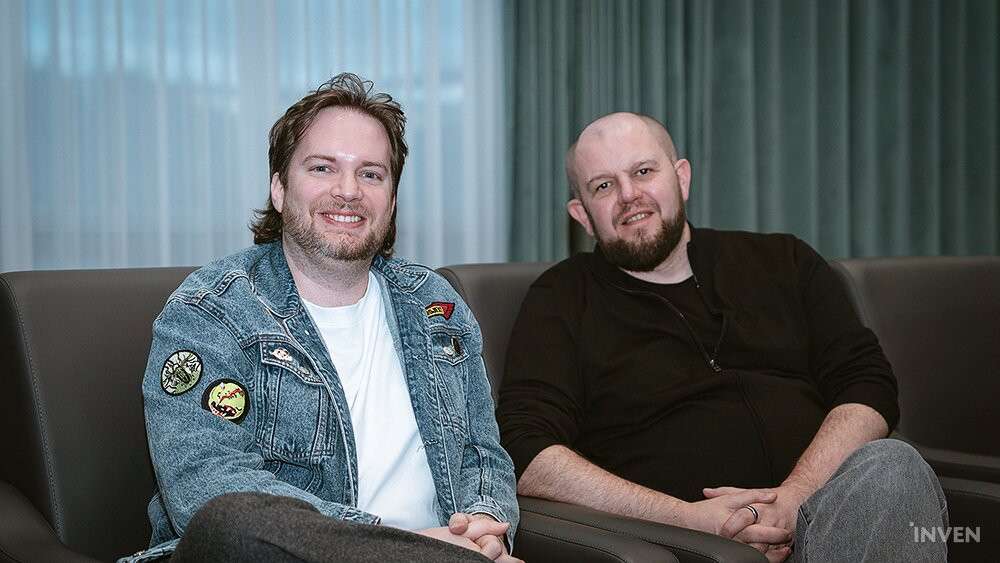
What defines a CDPR-style story? Conversely, what criteria would make you decide that even a great story doesn't fit a CDPR game?
Philipp Weber = I believe one of CD Projekt Red's core virtues is ambition. Whatever game we make—whether it's The Witcher or Cyberpunk—we always aim for the most ambitious title possible. We apply that same attitude to our storytelling.
We are never satisfied with "good enough." Everything can always be better—we can heighten emotional impact or craft a more challenging story. That is a foundational principle across all our projects, including The Witcher and Cyberpunk.
Another factor, as mentioned earlier, is treating the player as an adult. We believe players have expectations for cultural works. We don't want our storytelling to be treated merely as pop culture; we approach it as a genuine cultural work.
Thus, we want to deliver something beyond simple entertainment. While it is an entertainment product purchased by millions, we want it to simultaneously be a work of art. Balancing entertainment and art is the direction we pursue.
Marcin Blacha = Another defining trait of CDPR is that we are not a data-driven company. This is both a blessing and a curse.
We are driven more by subjective taste than objective metrics. Even if a story is objectively great, if we don't personally love it, it won't make the cut. You have to truly love what you're creating for it to be accepted and become part of the game.
Philipp Weber = We want to make our absolute favorite video games—games we want to play ourselves.
You met many Korean fans at G-STAR and during your G-CON lecture. What are your impressions, and is there anything you would like to say to Korean fans?
Marcin Blacha = This is my first visit to Korea, and I was blown away by the warm reception and touched by the kindness of the fans. I was also amazed to see how many fans we have here.
I had the chance to speak with attendees after the lecture, and I received incredibly insightful feedback on our presentation. Being in Korea makes me truly happy. Oh, and the food is fantastic—especially the seafood.
Philipp Weber = It's wonderful to see the passion Korean gamers have, and we are deeply grateful for their interest in our games.
CDPR takes players seriously and wants to respect them. We approach localization for each country, including Korea, with the same mindset. We don't view it as 'we localized it, so please accept it.' We always strive to deliver the absolute best version possible. Seeing firsthand how Korean players receive our work brings us tremendous joy.
Experiencing Korean games at G-STAR has also been fascinating. Over the past few years, I played Korean titles like Stellar Blade and Crimson Desert. I think Korean developers have every reason to take immense pride in the games they are creating.
Marcin Blacha = I see Korean developers as colleagues who share a similar drive. We share that passion to continuously push forward, explore uncharted territory, and discover new ways to make games.