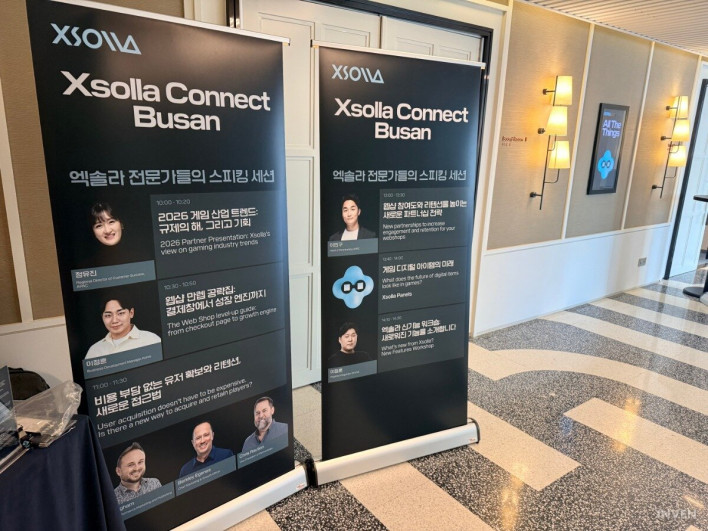
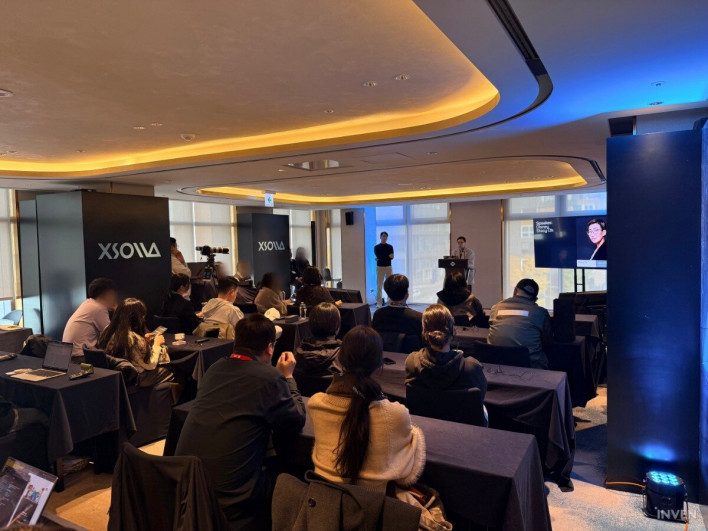
During G-STAR 2026, Xsolla opened its business lounge, 'Xsolla Clubhouse,' at Grand Josun Busan in Haeundae instead of hosting a traditional exhibition booth at BEXCO. At the mini-conference 'Xsolla Connect Busan 2026' held concurrently on November 20, sessions spanning from morning to afternoon addressed mobile payment regulations, web shop operations, global partnerships, and new features, followed by an evening networking session featuring domestic and international creators such as Ddotty.
Having attended G-STAR every year without fail, Xsolla changed its format this year to consolidate its messaging into a single space. By putting an open environment front and center where anyone can drop in to discuss ideas, the company aims to expand its scope beyond a B2B payment solution provider into a platform that connects developers directly with players.
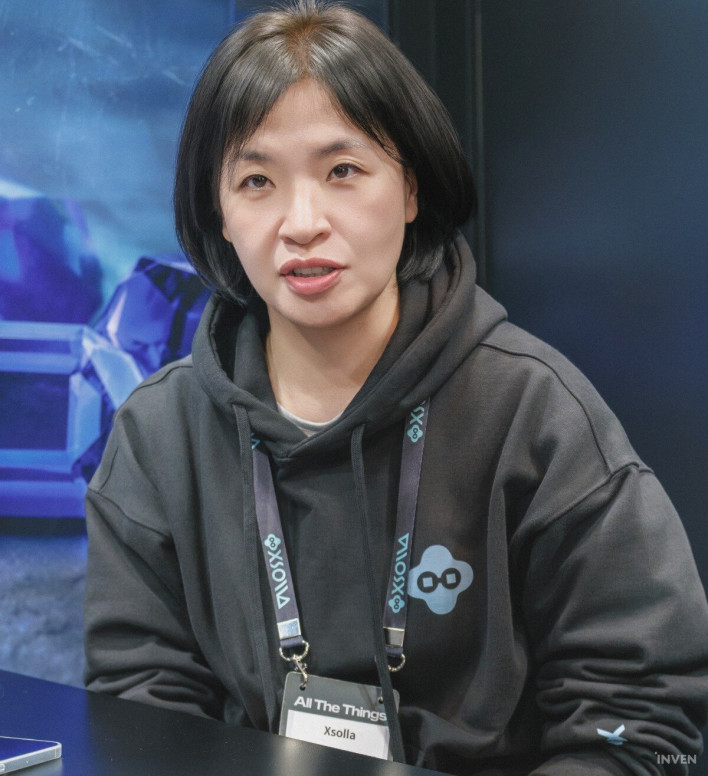
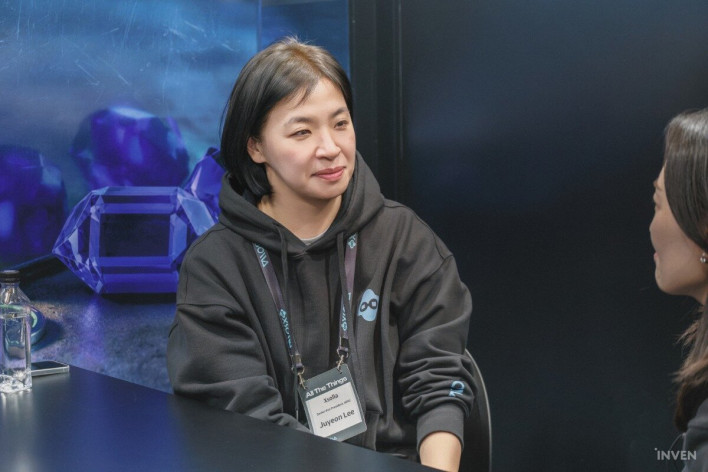
Speaking at the venue, Juyeon Lee, Head of Xsolla APAC, emphasized that companies should leverage rapidly changing mobile regulations as an opportunity to secure player data—the true value of web shops. We spoke with her about the varying attitudes among Korean game developers regarding web shops, the strengths of revenue-sharing creator collaboration tools, and Xsolla's upcoming plans for the Korean market next year.
This Year's Keywords: 'Regulation' and 'Opportunity' Consolidating the Message into the Clubhouse Amid Changing Mobile Regulations
The first session of Connect Busan was titled 'Regulation, Year, and Opportunity.' Could you briefly explain why Xsolla chose 'regulation' and 'opportunity' as its key themes for this year?
Juyeon Lee = This is actually one of the questions I get asked most often. Mobile games represent one of the most widely developed sectors in the industry, and with mobile regulations changing significantly, many people are curious. We also wanted to see how developers take the information we provide to make decisions and review what has transpired so far, which is why we kicked things off this way.
Even while preparing for this event, regulations shifted dramatically. We wanted to address those changes while showing that coming to Xsolla gives access to this kind of intelligence, which is why we formatted the program this way.
Most of the examples mentioned in today's presentations were overseas cases, but Korean game companies are also actively expanding globally. What changes are Korean developers experiencing directly in this environment?
= When Korean developers expand globally, they give a lot of thought to IP—especially with strong existing IPs and legacy IPs making major comebacks. Major publishers are generally preparing their own global platforms, aiming to unify their existing titles under one umbrella.
You often emphasize that Xsolla is not just a payment solution provider, but a strategic partner. How are you feeling this directional shift internally and externally?
= In the past, partners using our services didn't need to communicate with us very often because our tools were well automated. Nowadays, the workload has grown, and launching a game on a major platform is no longer the end of the story, so we receive many more inquiries. We meet with clients in person to explain overall industry trends and how other studios are navigating the market.
Starting next year, we plan to actively roll out quarterly sessions with major partners—if not monthly—proposing new features and strategic recommendations tailored to their games. We already do this to some extent, but as we expand these consultation efforts, partners are increasingly reaching out with questions and building their strategies alongside us.
Are quarterly consultations something game developers frequently request?
= Yes, very frequently. In fact, some of the largest publishers proactively request monthly check-ins. Since we can't discuss technical details on a daily basis, they prefer to schedule regular consultations.
Today's program included affiliate programs, partnerships, a mini-conference, and a creator event. Was there a specific goal or reason behind featuring the Clubhouse front and center instead of an exhibition booth?
= I believe we have attended G-STAR every single year without fail. While business meetings and side events are both crucial for us, we had so many side events planned this year that we wanted to consolidate our message into a single location. So we prepared early to set up one central space, display our messaging throughout, and invite as many attendees as possible.
Additionally, a formal "Xsolla Booth" can sometimes feel intimidating to visitors, so we adopted an open-door concept where anyone can walk in and use the space whenever they like. This isn't unique to Korea; we've been hosting similar Clubhouse events at Gamescom and GDC for the past two years. Seeing their success gave us the confidence to launch the format in Korea this year.
Since this is the first time doing it here, evaluating the performance and metrics afterward will be key.
= We intend to evaluate how it went once we get back. We might return to a traditional booth next time, or we might conclude that this format is far superior. We'll collect and analyze the data. Given how limited premium venues can be, we'll need to make a decision early.
The daytime sessions focused heavily on regulations and web shops, while the afternoon introduced new features. How did you structure the order of sessions, and what was your objective?
= We gathered various topic proposals across multiple internal teams. Events can easily devolve into self-promotional, surface-level content, so we deliberately curated topics that our partners genuinely care about and that we are exceptionally qualified to explain.
As a result, we scheduled high-interest, slightly technical topics in the morning, while structuring the later sessions around actionable recommendations and strategic advice for the coming year.
A Network Connecting Studios Directly to Players From Disney and Game8 Partnerships to Revenue-Sharing Creator Tools
In the previous session, you highlighted partnerships, including Disney and Game8. Brief use cases were presented, but what can developers expecting to utilize these partnerships anticipate, and how can they leverage them?
= As mentioned in the presentation, this is just the beginning. Fortunately, we were able to launch with one or two major regional partners per territory. IP integrations involve complex requirements tool-wise, so we are starting with smaller collaborative initiatives while exploring future directions. From a platform perspective, it comes down to effectively engaging user bases—connecting those users with gamers or optimizing the engagement of existing players.
You can view the current phase as a beta, but our business direction for next year leans heavily into this area. Whereas we previously offered services strictly on a business-to-business level, moving forward, we want to build direct-to-player channels for studios. It's early days, but that is our focus moving forward.
So while maintaining B2B operations, you're shifting focus closer to the player side?
= Yes. Business-to-business is our core model, so we will maintain it steadily. Without losing that foundation, we want to expand into areas where we haven't previously been as active. Working with so many partners, while some publish titles in Korea directly, consumer-facing engagement hasn't traditionally been our domain, but we are working to expand into it. We hope to showcase much more on this front next year.
The creator session featured Ddotty alongside several international creators. What was the motivation behind bringing creators from different markets together?
= We actually haven't brought them together in this format before. Creators tend to be highly focused on specific languages and regions, so it's rare for two distinct cultures or language groups to sit down and discuss things together. Top creators in Korea focus on the domestic market, while top international creators focus on theirs. However, Xsolla operates across both, and attendees arrive with different priorities and target regions in mind.
This is an experiment for us as well, but bringing both sides together reveals how differently they might react to the exact same question. When asked about a specific strategy, Korean creators and global creators might hold completely contrasting perspectives. We wanted participants to experience those differences firsthand, which is why we invited creators from both sides.
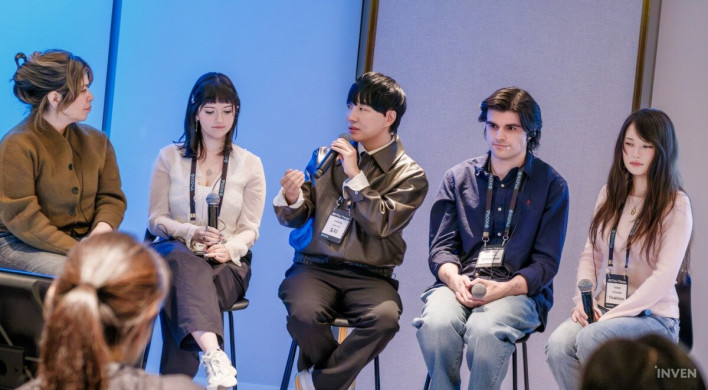
Is this the first time you've hosted an event like this?
= Yes. We've hosted creator events at international shows like TwitchCon, but this is a first for Korea. Given that the Korean market is so massive yet linguistically distinct, this is our first attempt to bring both domestic and international markets onto the same stage here.
Creator collaborations can drive results, but performance isn't always easily quantifiable. How do you measure success and support these initiatives?
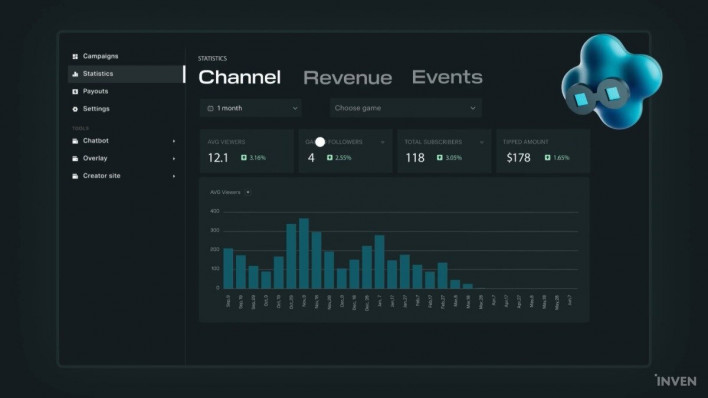
= The team managing this event actually operates our performance tracking technology. We have a tool called XPN (Xsolla Partner Network), which is fully integrated into our platform. It directly connects our developer partners with influencers. Working closely with both sides, we built tools to address common friction points in creator partnerships, enabling complete performance tracking within the system.
It operates on a revenue-share model based on actual sales or promotional impact driven by the influencer. Instead of flat-fee contracts—like paying 50 million won for 10 pieces of content—the system splits revenue between influencers and developers based on real sales generated by the content. Since this event also serves to highlight this tool, developers can track all performance metrics directly through our platform.
With performance so clear, indie developers unsure of ROI could also adopt it with ease.
= Exactly. It lowers the barrier to entry. While top creators like Ddotty have hundreds of thousands or millions of subscribers, there are also micro-influencers. Some creators focus niche-wise on specific genres or regions where they command significant authority. Reaching out to each micro-influencer individually can be difficult, but our platform connects developers with them seamlessly without financial strain.
Of course, as with all influencer marketing, having a strong IP and established game makes things easier. Even so, we designed the tool so developers can run campaigns affordably without needing massive budgets.
Indie-Friendly Tools and Perspectives on Web Shops Advent Calendars, Platform Expansion Support, and Korea's Hesitant Stance
Do you also provide incentives to encourage creator participation?
= Yes. We continuously promote opportunities to creators in our network, and in some cases, we provide credits to support co-promotions once developers reach certain usage levels. We actively look for ways to assist developers in that regard.
For instance, we are running co-promotions for our Christmas campaign tool targeting indie games. Advent calendars are very popular right now—players open a door each day to receive in-game items. We help promote features like these to explore as many avenues as possible.
This primarily applies to indie developers, but we heard Xsolla helps studios expand onto platforms like Steam or Nintendo eShop. How does Xsolla's network play a role there?
= It depends, as some platforms can work directly with us while others cannot. For platforms where collaboration is possible, we offer all the support we can. We consistently ensure indie developers can access our tools with ease. In fact, features built at the request of AAA publishers are integrated into our toolset, meaning indie developers get access to the exact same robust service.
While major publishers may receive additional bespoke customization, the core features in the tool apply in real-time for everyone. Beyond financial or material assistance, we provide substantial ecosystem support. For indies, we co-promote their games across emerging platforms or our own showcase channels and connect them with regional marketing avenues.
You mentioned features requested by major publishers. While you can't disclose everything, could you share an example of a requested feature that yielded great results?
= A classic example we often share involves Twitch. When Twitch first introduced subscriptions, recurring payment processing was actually quite complex. We developed the customized payment system requested by Twitch, and that subscription framework is now standard across our platform for all partners to use.
Whenever major developers ask for custom features or request specific engineering, those additions are funneled back into our main product. Now, any developer accessing our Publisher Account receives access to those same live ops and item catalog management tools.
You've consistently emphasized that web shops aren't in conflict with platform app stores. However, as discussed in earlier sessions, the in-app purchase ecosystem is shifting rapidly. How do you view these changes, how are Korean game companies responding, and what shifts are you noticing?
= Surprisingly, Korean game studios tend to be somewhat conservative on web shops. While adoption is growing, they are still hesitant compared to overseas peers. On the other hand, major Korean publishers are moving fast to build proprietary platforms, aiming to handle everything from game distribution and marketing to item sales in-house.
Broadly speaking, web shops are an evolution during a transitional period. Navigating varied regional regulations or modifying game builds directly can be challenging, so studios use web shops as a flexible way to navigate regulatory constraints smoothly. That's why many currently see web shops as the easiest, safest, and most convenient solution.
However, it's uncertain how the landscape will shift with evolving trends and regulations. While web shops are a hot topic and Korean developers express intense interest, execution can be complex. While studios hesitate, the market sometimes moves to the next phase. As a result, we receive countless inquiries, and many companies are gradually tweaking their strategies.
The Real Value of Web Shops Is Player Data, Not Lower Fees Lowering Barriers to Entry and Navigating Regional Differences Together
For developers taking a more conservative approach, how does Xsolla support them?
= We provide tools and services that allow developers to try out web shops without heavy resource investment. Building a custom web shop from scratch takes substantial engineering. We offer turn-key tools where developers simply input a platform URL to spin up a web shop instantly. While some large companies build custom platforms from scratch, most major global publishers start with just one title. Because our tools are so simple, they set up a shop for one game, see positive results, and then expand to other titles.
Instead of endless deliberation and market research, actually running a test shop quickly demonstrates its value. Getting to that first test can be daunting, so we assist as a service provider. Almost every studio that tests it finds it worthwhile. Once that step is taken, adding more titles or expanding into new regions is trivial—it takes a single click, something even I can do. By providing accessible tools, we help developers experience the benefits firsthand.
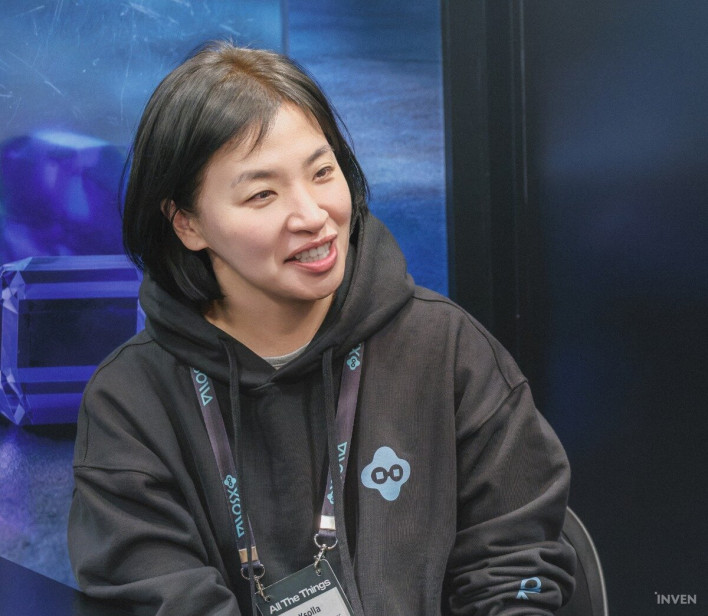
Though based in Korea, you also oversee Southeast Asia, India, and Australia as Head of APAC. What are the key differences between those markets and Korea, and are there unique regional traits?
= Southeast Asia has utilized web shops for a very long time. Local payment methods are essential there, whereas major platforms historically offered only credit cards or PayPal. With bank account penetration sitting at single-digit percentages in parts of Southeast Asia, credit cards weren't viable, so players have relied on web shops since the early days of mobile gaming. Back then, studios operated them discreetly out of regulatory caution, though they were actually compliant even then.
As a result, web shops are widely accepted, and players expect extra rewards when buying through web channels. In Southeast Asia, web shop revenue often accounts for a major share of total earnings, and developers view them as mandatory for entering the market. India is somewhat different. Because of these distinct regional traits, Korean developers expanding overseas often encounter friction or misunderstandings. Having navigated these markets alongside our partners, we are well-positioned to guide them.
So Korean developers can leverage Xsolla's regional insights when expanding into those markets.
= Absolutely.
Japan is undergoing legal changes, and Europe enforces strict regulations. Which region within your portfolio is changing fastest, and what should developers keep in mind when expanding there?
= Korea and Japan have been shifting most rapidly. Regulations are continuously evolving, and both represent massive individual markets. Because of their huge player bases and revenue scale, changes in Korea and Japan attract the highest level of attention from Korean game companies.
Other regions seem to be taking a wait-and-see approach to observe how major markets adjust. We track regulatory changes daily and keep our partners updated, though Korea and Japan naturally remain top priorities.
If app store commission fees drop due to these regulatory changes, developers currently not using web shops might feel even less incentive to adopt them. How do you address this, and what core advantages do you emphasize?
= Many view web shops primarily as a tool for fee reduction, but their greatest value lies in acquiring direct player data. Major publishers continuously launch new titles; owning player data lets them cross-promote upcoming games and build dedicated communities. Back in the PC online era, developers hosted games on proprietary launchers and naturally owned player data. In mobile, platform gatekeepers held that data exclusively. Web shops allow studios to reclaim user data and craft far more sophisticated marketing strategies.
Therefore, commission fee differences are secondary. While an extreme drop in app store fees might alter calculations, any publisher planning a long-term roadmap across multiple games will find web shops vastly more advantageous. Independence from single-platform reliance is the biggest draw for major publishers, which has been the primary growth driver for web shops industry-wide.
Making the Brand Known to Players Next Year Expanding Channels to Gather Data and Reaching into Webtoons and IPs
Beyond web shops, what other strategic directions do you advise for major publishers?
= Publishers usually arrive with their own core strategy, so we advise them to secure as many distribution and sales channels as possible alongside web shops. No company excels in every region. A publisher might dominate North America but struggle in Europe, yet hiring local staff and opening branch offices in every country isn't feasible.
We recommend launching with broad global coverage first, then assessing regional needs once traction is established. To build that dataset, publishers shouldn't rely on a single solution—they should set up web shops, enable direct payments, run affiliate programs like the ones we demonstrated, and deploy services across diverse channels before making data-driven expansion decisions.
When Xsolla returns to G-STAR next year to share results, what accomplishments in Korea do you hope to highlight?
= Next year, I hope Xsolla builds greater brand awareness among consumers (B2C). Within the industry, Xsolla has been operating in Korea for 12 to 13 years and globally for 22 years, so industry professionals know us well. To everyday gamers, however, Xsolla remains an unfamiliar name.
We want to expand direct touchpoints between players and our partners while raising brand recognition. We might not become Disney, but we hope to become a household name that any gamer recognizes.
On the flip side, what remains a tough challenge that you aim to tackle next year?
= Industry challenges are always complex, but currently, gaming platforms across the board are experiencing a slowdown. Many game developers are pondering their next moves. We want to showcase real success stories demonstrating how new growth avenues are opening up for the industry.
The question I get asked most often lately is, "What are your plans for next year? What will you need?" While trends evolve rapidly, defining the "next level" isn't simple. We want to co-create solutions that allow developers to take the next leap seamlessly while reducing vulnerability to market volatility.
We plan to pursue new challenges next year that will directly resonate with INVEN readers and gamers alike. Although I cannot reveal specific details yet, I hope to share good news with you soon.
It definitely feels like Xsolla is expanding across multiple platforms and genres.
= We have been steadily broadening our scope, but we intend to expand even further next year. It will naturally increase our workload, as we plan to venture into uncharted territory. Even if we encounter failures, we want to take aggressive initiatives and learn through experience what it takes to engage players directly.