“It makes absolutely no sense to claim that we survived 30 years on creativity alone.”
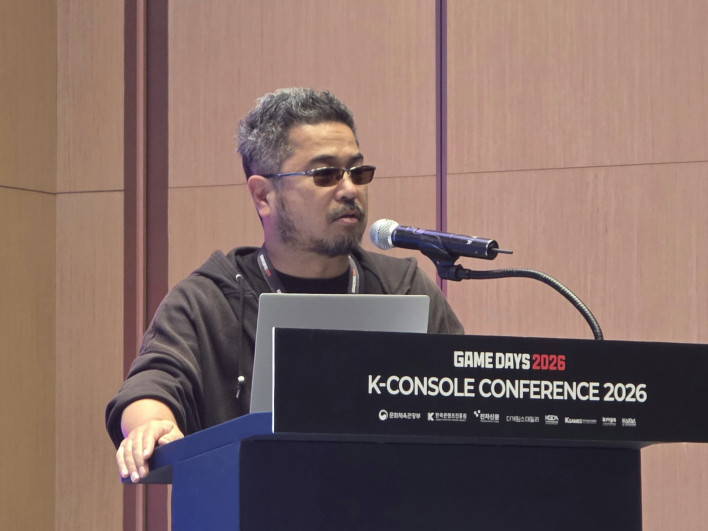
Katsuhiro Harada, CEO and Game Director of VS Studio, who spearheaded the development and global branding of 'Tekken', asked what people miss when trying to explain why a game remains beloved for a long time. While gameplay mechanics and creativity are essential, he questioned whether those two factors alone could fully explain why an IP sells and grows into a global brand. He emphasized that even the difference between 'Tekken' and 'Soulcalibur' cannot be explained by pure gameplay alone, urging developers to understand what their creation truly represents in the market.
On November 9, Harada delivered the closing lecture of the global track at the Console Game Developers Conference 2026, held at the SKY31 Convention in Lotte World Tower, Seoul. The session was titled "How Global IPs Loved for Over 30 Years Are Created." The history of 'Tekken' he presented was the record of a development team that went far beyond making games—they determined arcade board prices, analyzed overseas distribution channels and regional targets, and directly supported grassroots fan tournaments.
He shared that whenever young developers seek his advice, he asks them: “Do you actually know what your product is in the context of the market?” Rather than attributing success solely to gameplay and creativity after achieving it, he urged creators to analyze why a game started selling and under what conditions it reached a broader audience. The presentation and Q&A session also touched upon the competitive fighting game he is currently preparing.
Placing Sales and Marketing Inside the Development Team The Tekken team examined everything from arcade board prices to Sony's distribution network
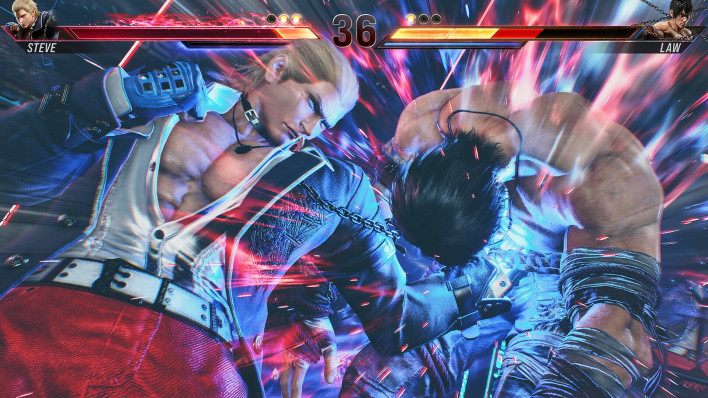
“The Tekken project team was a unique team that, while being a development team of game creators, also possessed the functions and attributes of a modern 'publisher,'” Harada noted, highlighting the team's structure before discussing what they built. Ever since the old Namco era, sales and marketing units were embedded directly within the project team. The team directly handled community outreach across various countries and conducted its own market analysis starting back in the arcade era of the 1990s.
The early competitive edge he highlighted involved both technology and market conditions. During the dawn of polygon graphics, the team partnered with Sony to integrate the PlayStation chipset into arcade boards even before the console launched, creating a 3D fighting game in a market where Sega's 'Virtua Fighter' had first captured public attention. Securing new technology went hand in hand with reading the exact moment public interest converged on that technology.
Arcade board pricing was critical for overseas distribution. Harada explained that developers were deeply involved in pricing strategy meetings to establish a structure where, even if sold at full price in Japan, boards could be distributed affordably overseas. They also pursued regional differentiation, such as creating a dedicated original Korean character slot for the Korean version. Unlike the conventional approach of handing off a finished game to a separate sales organization, the team evaluated the terms and conditions for entering each market right from the development stage.
His analysis of their success in Europe followed a similar logic. He noted that while one could glamorize it as creativity tailored to European sensibilities, the reality was largely driven by Sony taking charge of European distribution. Sony’s brand trust, built through TVs and camcorders, translated into an image of 'Tekken' as 'Sony's fighting game.' Recognizing this advantage, the development team expanded its roster with European characters and broadened its reach into Northern Europe and Poland.
The data Harada presented on cumulative home console sales showed over 64 million units sold across the series, with Europe accounting for 40% of those sales. He noted that while Japan was listed at 3% on the slide, it actually accounted for only about 2%, meaning that over 98% of sales came from overseas. Identifying where the actual buyers were located served as the foundation of their strategy, rather than focusing on its origins as a Japanese-made game.
The Difference Between Coins and Packaged Games Transitioning from short arcade matches to long-lasting home console play

Harada explained that when the business model shifts, game content and structure must adapt accordingly. In arcades, game design was defined by a structure where a single coin decided a match within about 3 to 5 minutes. In contrast, he noted, “Home consoles offer unlimited play once purchased, making the value system completely different.”
He shared that even when the Japanese arcade market was booming, he foresaw its decline early on by visiting overseas sites. His presentation designated 2000 to 2010—a period when arcades shrank and console online capabilities remained limited—as the dark age of fighting games. Since the decline of physical arcades could not be immediately offset by online play, the team had to figure out what additional value to offer on home consoles.
The value the development team chose to focus on was giving players a reason to play solo. At the time, pre-rendered CG ending cutscenes themselves were seen as major rewards, and the team added side modes such as 'Tekken Ball' and 'Tekken Force.' Harada also cited allowing players to play 'Starblade' or 'Galaga' on loading screens as examples of filling the home console experience with features distinct from arcades.
The transition he emphasized went beyond simply porting the same fighting game onto different hardware. It was a process of understanding what rewards were needed for a quick match played in an arcade versus a game owned and played over a long time at home, adapting content to match changes in platforms and revenue structures.
Asking Who to Sell to Before Choosing Nationality Designing characters by balancing target audience demographics and geography
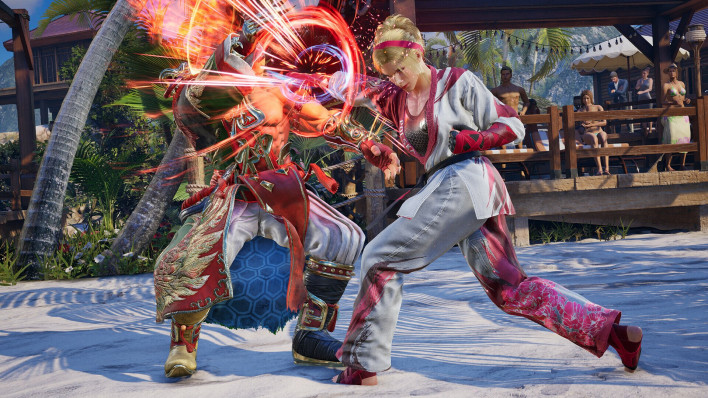
Character design was also not explained as simply creating a desired character concept and fitting a market to it afterwards. The presentation slides showed that candidates were first shortlisted by analyzing potential expansion in both new and existing markets, then determining whether the targeting criteria should focus on demographics, geography, or a hybrid of both.
In the presentation, target demographics referred to shared tastes and values that transcend borders. For instance, anime fans can form a single target audience regardless of nationality, whereas a geographic approach is heavily influenced by country, language, and cultural factors. Even when considering both criteria, how a character was promoted varied depending on which side carried more weight.
For example, the Spanish character 'Miguel' could appeal to players who prefer rugged fighting styles or distinct facial features, but the presentation explained that from a marketing standpoint, targeting the Iberian Peninsula as a regional audience carried greater weight. Rather than stopping at diversifying character nationalities, the design process connected each character to the specific markets and players they intended to reach.
Building Trust Through Small Tournaments From grassroots support to Tekken World Tour and transparent communication
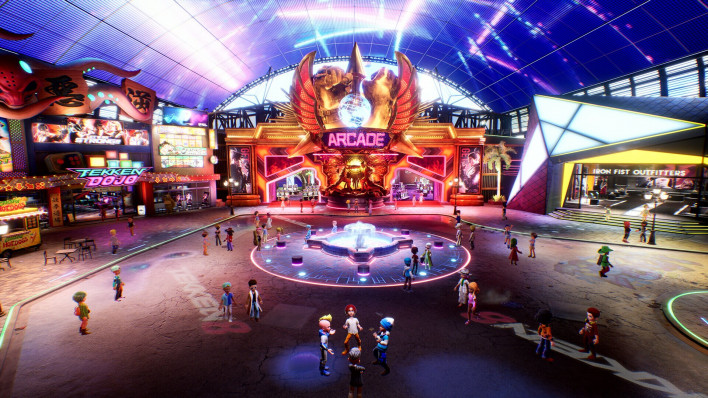
Harada noted that he had been mindful of differences between community structures in Japan and North America since the 1990s. In Japan, publishers, rights holders, and media held strong influence, whereas in North America, players held significant power—to the point where fan dissatisfaction could lead to retail refunds and demands for price cuts. This was why the development team needed to directly engage with the community rather than passively wait for good reviews.
He looked back on how developers would personally haul heavy arcade cabinets and circuit boards to support LAN parties or small gymnasium tournaments with just 20 to 30 attendees. Long before the term "esports" became commonplace, they rented hotel venues to interact with fans, play games together, and announce new titles in person. Harada explained that these grassroots events grew into major tournaments, eventually leading to the 'Tekken World Tour', which ties regional competitions together through a point system.
The presentation also argued that engaging with the community requires a face for the game. The slides summarized that a spokesperson conveying the title's direction and tone doesn't necessarily have to be a person; an influential official social media account can serve that role just as well. Alongside who delivers the message, transparency—sharing both good news and bad news as a matter of principle—was highlighted as a vital condition for trust.
Communication was also presented as a matter of cost and scheduling. The slides emphasized the need to pre-plan the costs of media and community management, time the generation of hype, balance the marketing budget, and prepare contingency scenarios. If a team only responds after fans react, they will always be a step behind; thus, a delivery plan must be developed alongside game development itself.
Harada offered a comparison, noting that even if there is great content on Netflix or Steam, if it fails to reach users, it might as well not exist. “Today, far more than the 'creativity' of making a good game, 'how to promote and deliver it to users' is vastly more important,” he said, summarizing why the development team managed pricing, distribution, and community engagement all together.
The Next Game from a Team Averaging Over 50 Years Old Expectations for Korean themes and goals for the new competitive game
His candid demeanor continued during off-the-cuff remarks while waiting for questions. Harada recounted pre-ordering 'Cyberpunk 2077' on PC, only to spend two weeks stuck in a tutorial bug that he mistook for an escape gimmick. After a marketing staff member at his company explained it was a bug, he revisited the game six months later, joking in front of the CD Projekt Red speakers that he has since made it a habit to wait about half a year before playing big AAA releases even after pre-ordering them.
He also mentioned games he would like to see from Korean developers. Citing titles set in Asia made by Western studios, such as 'Ghost of Tsushima', he praised the tension found in Korean films like 'Joint Security Area (JSA)' and 'Silmido', as well as police procedurals and revenge thrillers. Re-sharing thoughts from a previous interview, he noted it would be intriguing if Korean developers expressed through games the tension of national division that Koreans experience so deeply.
When an audience member asked what his next new game was, Harada shot back, “If I could answer that here today, I wouldn't be giving a lecture—I'd be announcing a new game!” However, he clarified that it is not a puzzle game, revealing, “We are making a game where you compete against other people.” When the audience followed up with questions about the concept and time period, he countered by saying he would talk if they told him CD Projekt Red's next title first.
When asked about the new goals he wants to achieve, he brought up his current development project team. According to his explanation, the team consists of over 30 people with an average age exceeding 50. He remarked that while 20-somethings might have an advantage over 50-somethings in football, experienced 50-somethings can be stronger in game development, expressing his desire to prove what a veteran team can accomplish.
He added jokingly that team members walk slowly when getting coffee, their medical checkups show elevated uric acid levels, and they even installed an AED at the office. He concluded his answer by saying, “It's a team made up of old folks like this, but I want to prove to the world just how far we can go.”
From opening ceremony to five sessions, panels, and game demos
Q&A sharing criteria for platforms, optimization, and porting experience
Early English/gamepad support and the roles of AI and creativity
Quest design starting from emotion and intent
Walls, autonomous colonist life, and tactical combat inherited from failed attempts
The verification process of fixing ammo shortages and combat telegraphing
Understanding long-lasting IPs through pricing, distribution, and community