“Game design isn't about building something. It's about inventing something.”
Tynan Sylvester, founder and game designer at Ludeon Studios—the creator of 'RimWorld'—pointed to the common habit of comparing game development to building a house. While a house can be completed by deciding what to build and gathering the materials, with a new game, you have to discover the blueprint first. He explained that a developer's true challenge is not how quickly they can implement the vision in their head, but figuring out which parts of that vision actually work.
Speaking on November 9 at the global track of the Console Game Developer Conference 2026 (held at the SKY31 Convention in Lotte World Tower, Seoul), Sylvester gave a presentation titled 'Design and Development Principles Behind RimWorld's Success: Focus and Selection for Small Teams.' He shared that 'RimWorld' has sold 5 million copies of the base game and 6 million copies of expansion packs. However, the weight of the talk rested less on the success of the finished game and more on an eight-month period in 2012 when he had no idea what he was making. By walking through the process of discarding six prototypes before reaching the seventh attempt, he offered insights into small-team experimentation and managing emotions during development.
What Poverty Takes Off Your Plate A Starting Point Focused on Experimentation Instead of Managing Money and People
The reason Sylvester counted 'poverty' as an advantage stems from his own severely resource-strapped situation at the start. After leaving Irrational Games in 2012 following his work on 'BioShock Infinite,' he returned to Ottawa, Canada. At 26 years old, sharing an old apartment with two roommates, his rent was 650 Canadian dollars—roughly 730,000 won based on average 2012 exchange rates.
Such a production environment was not entirely unfamiliar to him. Having started tinkering with the 'Unreal Tournament' level editor in 1999 at age 13, he taught himself by combing through text tutorials scattered across the internet in an era before YouTube or Wikipedia. He often hit walls for days just trying to locate a single button in the editor, with no support system to rely on for help. Those hours spent holed up in his bedroom solving problems on his own matured into 13 total years of development experience, including four years at major studios.
He recalled having no experience seeking investors or pitching games. Instead, he believed that the real constraint determining game development success or failure is not the presence of capital, but development capability and the craft of polishing a game. His references during the talk to 'Stardew Valley,' 'PUBG: BATTLEGROUNDS,' 'Mount & Blade' (which began in the hands of a husband-and-wife duo), and 'The Sims' (which started as a small internal project at a major corporation) aligned with this mindset. What caught his attention was not the massive final outcome, but the modest scale of the production units when those new ideas first began to sprout.
To those asking if his starting line was purely a weakness, he countered with five reasons. With little money on hand, he didn't waste precious time on complex financial issues. Without advisors nearby, there was no one to talk him out of eccentric ideas by calling them 'strange.' Without teammates to collaborate with, he could skip lengthy explanations and persuasion to immediately make decisions and test them out. Unlike today, when he runs a studio, he could fully immerse himself strictly in the act of creation itself.
The absence of investors also decisively influenced the speed and direction of experimentation. Sylvester stated flatly that if he had to prove predictable revenue and a five-year plan, he would never have created 'RimWorld' the way he did. His view is that true innovation cannot sprout the moment tight deadlines and excessive certainty are demanded of an exploratory process where no one knows what might emerge. Lastly, because there was no team to speak of, he didn't have to waste energy hiring, training, or letting people go.
The true power of poverty that he emphasized ultimately lay in 'the sense of liberation from things you don't have to do.' With less pressure to tightly align funding, headcount, and schedules before even starting real experimentation, he was able to move far more nimbly in unfamiliar directions that others didn't take. He viewed innovation as the starting point of any great success, emphasizing that developers hungry for new answers must turn their focus toward cultivating soil where innovation can thrive.
Pick Your Questions and Find 'Your Own Answers' How to Reduce the Cost of Answering Questions Rather Than Boosting Production Speed
The reason Sylvester was wary of the 'house building' metaphor was the sense of comfort it imparts. Deluding yourself into thinking you already know exactly what you're making makes you busy drawing up schedules and budgets, hiring people, and planning for the future. Bragging to friends about the cool game you're going to make and building up expectations is also sweet. However, he warned that such comfort does not guarantee the true potential of a game that has not yet been validated.
The starting point he championed was none other than 'choosing the right questions.' It means breaking down questions into granular detail: Does my design hypothesis actually work? What tools must be given to players for them to find genuine fun? Can players fully comprehend the intuitiveness of this system? After running repeated experiments to obtain answers, the results guide the direction of the next question. In other words, he views game design not as an assembly line fitting parts together toward a finished product, but as an exploratory process of unearthing information hidden in the fog.
This approach also comes with the premise of finding 'answers that only I can provide.' If you merely try to cheat off the answer sheets already validated by other games on the market, the new value your game brings to the world shrinks. Sylvester sought to forge possibilities that set his work apart from existing titles through unique information and perspectives that only he secured. Even if you aren't certain what you are building at this very moment, he explained that you can still pinpoint exactly what question you need to answer right now.
The next crucial criterion was how 'cheaply' those questions could be answered. After getting a project grandly greenlit with polished GDDs and pitch decks, putting hundreds of developers to work for years cranking out art, animation, and systems will eventually reveal whether the idea succeeds or fails—but the problem lies in what follows. The tuition for failure becomes far too harsh. He emphasized that by stripping away everything except the core hypothesis you want to test, you can get sufficient answers through much smaller, lighter experiments before manufacturing a full game.
This aligns with why Sylvester prioritized making validation '100 times cheaper' over simply trying to double production speed. Rather than an exhausting race to increase development typing speed, he argued that the judgment to discern what experiment you actually need right now completely changes the game. The seven prototypes he crafted over eight months were not showcases to flaunt finished blueprints to others, but merely tools he held to answer raw questions by playing them himself.
Six Answers Found in Six Failures Lessons Learned from Six Failures Became the Foundation for the Seventh Work
The obstacle faced in the first prototype, a 'Zombie Survival' game, was the massive gap between the idea's appeal and the actual implementation cost. Scavenging supplies in run-down houses while hunted by zombies seemed fun on paper, but implementing direct action control for a single character required great animation, responsive controls, and impactful visual effects. Bringing that tactile feel to life with his meager resources was beyond his reach. Setting aside whether the zombie survival concept itself had potential, he had to dispassionately check: 'Can I actually achieve the experience I want under my production constraints?'
The second attempt, 'Animus,' put the tight relationship between music and gameplay to the test. It was conceived as a hybrid of a rhythm game and tower-defense arena combat, where enemies poured out to the music beat and players fought back with magic. Once built, however, the music served merely as a clock indicating enemy spawn timings, while player inputs and sense of rhythm were completely detached. Even with background music in place, no rhythmic immersion was generated. On top of that, the heavy resource burden of creating flashy action reared its head again. Sylvester concluded that this prototype severely lacked the potential to expand into deep mechanics or rich narratives.
In the third prototype, 'Mercenary Manager,' he envisioned a 'Football Manager for mercenaries'—instead of wielding weapons directly in fight, players managed hiring, training, and dismissing mercenaries. Inspired by worker-placement systems in intricate board games like 'Agricola,' he targeted the satisfaction of tightly interlocking resource values even in choices between a handful of wheat or a piece of wood. However, he struggled immensely to translate the balanced choices designed for a contained framework into a large-scale economic and narrative simulation. Design logic that balanced resource and action values perfectly within a finite session collapsed helplessly when scale and time expanded exponentially. This attempt had to be boldly scrapped as well.
The fourth prototype, 'Wizard Academy,' harbored the fantasy of all sorts of quirky drama unfolding inside a historic school akin to Hogwarts from 'Harry Potter.' After building sturdy walls and placing kitchens, classrooms, and dormitories, he ran the simulation, only for students to mechanically repeat monotonous routines—sleeping in dorms, moving to classrooms, eating, and going back to bed. Although the basic rules running the school operated stably, the 'unpredictable events' he had longed for rarely materialized.
Sylvester diagnosed that the school framework he designed over-controlled safety and order, stifling the dynamism needed to give stories room to breathe. He recalled management games like 'Theme Hospital' that harmonized set procedures, charming spaces, and cute animations, but he had to acknowledge that he lacked the resources to support such visual charm. Although the wizard school concept stepped aside, he gained one valuable takeaway: at the very least, the act of 'building walls and partitioning spaces' harbored genuine fun.
In the fifth prototype, 'Revolutionaries,' he blended short-burst engagements with real-time tactical pause. Characters were designed to take cover behind corners, exploit blind spots, and execute special missions like assassinations or demolitions. What held it back was the tempo of combat. While aiming for tight, edge-of-your-seat encounters, requiring detailed commands for every character to move fragmented and dragged out the gameplay pace.
Explaining this limitation, he cited masterpieces like 'FTL' and 'Slay the Spire' as points of comparison for how they pack tightly compressed inputs and heavy choices into short encounters. He realized that a player's perceived sense of pace does not automatically come from keeping battle durations short; it is only achieved when the intensity of required controls within that brief window is meticulously tuned. The legacy salvaged from this attempt was the foundational system of trading cover fire using obstacles and corners. Even if the overall game was scrapped, a single fragment of its combat remained valid for the future.
The sixth prototype, 'Starship Architect,' brought the 'wall building' salvaged from the wizard academy into spaceship interior construction and added an 'autonomous behavior' algorithm where crew members acted on their own once given high-level directions. He hoped players would experience space survival thrills like 'FTL' inside a custom-built ship, but this time, the cramped space meant to foster living and drama blocked progress in every direction. Trapped in a few small rooms aboard the narrow vessel, crew members had nowhere to go and terribly little to do, and even if they looked outside, there was nothing to interact with.
“Space is terribly boring”—Sylvester's poignant reflection hit the exact physical constraint this experiment ran into. For the dynamic daily life and clashing narratives he wanted to create, the empty expanse of space offered no help. These six attempts were not meaningless trial-and-error repeated under different names and skins. They were a noble journey of honestly answering distinct questions at the heart of game design—the cost of controls, the alignment of music and inputs, economic balance, the spatial scale needed to spark events, and the required density of player commands.
Bad Ideas Are Just as Exciting The Courage to Accept That You Were Wrong Is What Matters
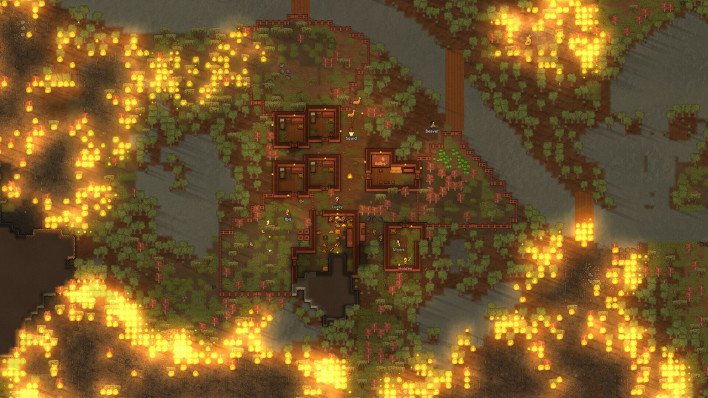
As the sixth experiment ran its course, his bank balance was also depleting rapidly. Looking at prototype gray boxes stripped to bare skeletons, it was a moment of crisis perfect for self-rationalization: 'If I just tweak it a bit more, maybe it has a chance,' or 'Have I simply not realized the true value of this idea yet?' What Sylvester emphasized just as much as various development methodologies was how developers manage their own volatile emotions during such harsh phases.
He confessed that even now, with years of experience and published books on game design under his belt, roughly 85% of the ambitious ideas he conceives ultimately end in failure. Looking back, he estimated that his failure rate reached 99% during his first five years in the industry. It was an admission that even a seasoned veteran who spent a lifetime in game development cannot guarantee success before an idea has even sprouted.
Sylvester posed a weighty question to the audience: “When we come up with a bad idea, what signal does our brain send us?” Unfortunately, terrible ideas don't set off loud alarm bells in your head. Because everything works together perfectly as imagined inside your head, he noted that even when a bizarre and flawed idea comes up, “your heart races just as much as when you encounter a great idea.” It was a warning that the initial excitement of a newly sprouted concept or light encouragement from friends nearby cannot determine an idea's true value.
This is also why he compared failure to 'death lurking constantly at your side.' Rather than pushing the shadow of failure far off only to face it late as an unavoidable final judgment, developers should willingly embrace failure at the frontlines of experimentation as the most honest advisor revealing what doesn't work. Forcing a project onto life support out of unwillingness to admit failure means that answers obtainable at little cost early on will later return as overwhelming invoices.
Sylvester explained that rather than projecting useless attachment onto his prototypes, he treated them strictly as cold tools for asking raw questions and extracting answers. When an experimental result proved to be a grim failure, instead of wallowing in grief, he dispassionately observed what had been salvaged and immediately moved on to the next step. What is truly required when testing incomplete hypotheses is not desperately scraping together 'proof that my idea was right,' but having the courage to accept the red light when it signals that you were wrong.
Completing 'RimWorld' with Pieces Salvaged from Failure Focusing on What People Want, Not What I Want
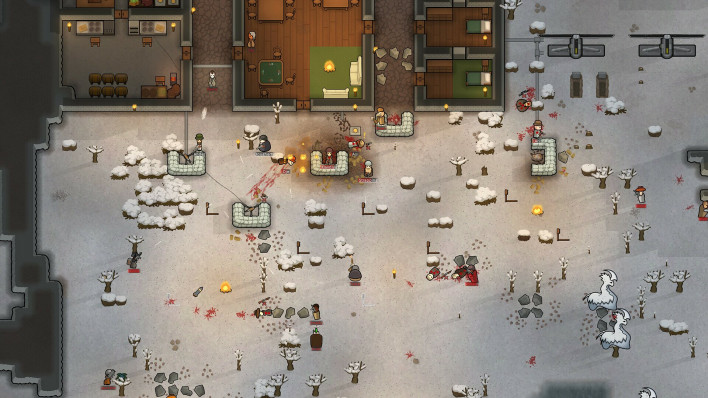
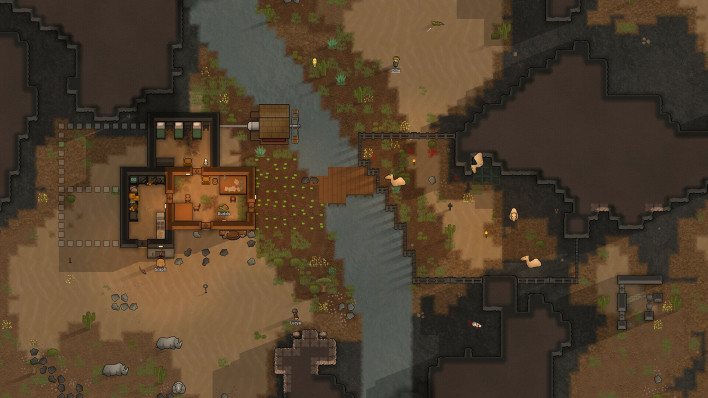
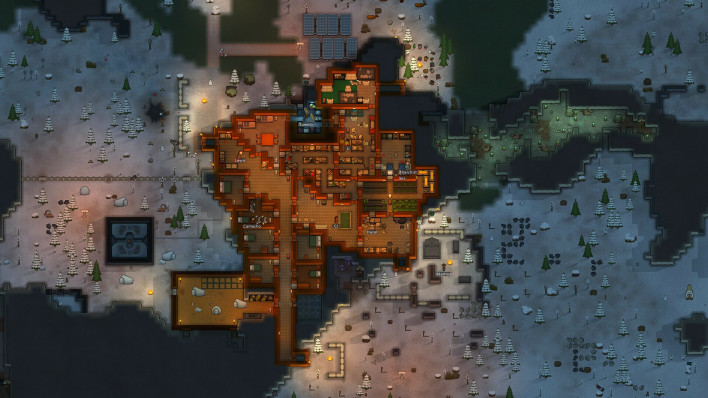
For the grand seventh attempt, 'RimWorld,' fragments of previously discarded prototypes returned intact. On top of the 'wall building' base proven fun in 'Wizard Academy,' he layered the 'autonomous behavior' algorithm tested in 'Starship Architect.' However, he boldly expanded the setting from cramped spaceship interiors to an open planetary surface. A vast stage opened where characters stepped outside buildings to farm, mine minerals, and interact with numerous external objects. Placing the exact same systems in a different context and space unlocked far more multi-dimensional and varied gameplay.
The combat system was not clearly benchmarked from the start either. Deeply inspired by 'Dwarf Fortress,' Sylvester originally envisioned an 'indirect control' combat system where characters acted autonomously once players set high-level goals. But not wanting to waste precious time building a brand-new combat AI from scratch right away, he temporarily attached the 'direct-control tactical shooting' system he had hacked together in three weeks during his fifth attempt, 'Revolutionaries.' His plan was to swap it out later for the indirect control system he had in mind.
However, playing the game with the temporary system attached completely upended his plans. The dual hybrid structure—where characters went about their daily lives autonomously during peacetime, but players gave explicit commands for cover and firing positions once combat mode engaged—interlocked with surprising tightness. The flow returning naturally to autonomous routines after combat ended was also smooth. For Sylvester, the most thrilling discovery came not from spending endless hours painstakingly developing a new combat system, but from accidentally stitching together disparate systems he already held.
He explained that while earlier failed games were discarded because they didn't work as a whole, the fragments within them survived as precious assets. After rigorously testing wall building, autonomous routines, and tactical combat in separate labs, weaving them together within a new space and context allowed them to perfectly plug each other's gaps. The legacy left behind by abandoned prototypes was not mere code, but raw data on 'what actually works,' and that accumulated insight determined the outcome of his next attempt.
The moment Sylvester felt the full onset of this new potential involved his friend Andrew. Around 10 p.m., he handed over an early build under development for testing. Far from polite praise, heavy silence filled the room as Andrew played on without a word. Watching his friend sucked so deeply into the screen that Sylvester himself grew drowsy, he was only able to wrap up the test much later. He smelled real victory not in a friend tossing out a light “Wow, cool,” but in the actual behavior of someone unable to put the game down, playing through the night.
He recalled that the arduous journey to cross the threshold of success was the most dangerous and painful part of the development process. The subsequent process of adding meat to the bones—such as the drug system, world map travel, and diplomacy—and expanding through community feedback moved at a relatively smooth pace. Yet he did not sugarcoat this dazzling result as an achievement won by stubbornly pushing his initial ideal vision of 'RimWorld.' He confessed that just months prior, he had no idea what he would end up completing, keeping his eyes glued solely to the questions and experiments right in front of him each week.
“Rather than forcing my vision onto the world, I shut my mouth and try to listen more to what the world wants me to make.” His poignant remark represents the true meaning of 'letting go' painfully demanded during development. Even when he desired the grand vision of a wizard school, what he salvaged was the fun of 'wall building'; even when he dreamed of a thrilling tactical game, what remained in his hands was merely a 'shooting system.' His initial persistence to unify the game around indirect control also had to be ruthlessly let go the moment he witnessed the explosive potential of the temporary combat system.
He urged that just as water flows around hard rock rather than trying to force its way through, developers must willingly ride the direction indicated by experimental data. Of course, he acknowledged the realistic limitation that larger organizations face greater difficulty making such pivots due to more people to align with and intricate plans. However, he added that by making subtle changes to how projects are structured and how investment and resources are managed, the wondrous agility of small experiments can still be reproduced within large organizations.
As he brought his talk to a close, Sylvester's final advice to the audience left a deep resonance.
“Willingly embrace the power of poverty. And accept the courage to let go of the ideas and old plans in your head without regret.”
From the Opening Ceremony to Five Talks, Panels, and Hands-on Game Demos
Q&A Sharing Platform Standards, Optimization, and Porting Experience
Early English & Controller Support, and the Roles of AI and Creativity
Quest Design Starting from Emotion and Purpose
Walls, Autonomous Living, and Tactical Combat Salvaged from Failed Projects
Verification Process Fixing Ammo Shortages and Combat Telegraphing
Understanding a Long-Standing IP Through Pricing, Distribution, and Community