"The moment players start to feel emotion, criticism stops. Instead of logically scrutinizing and analyzing the story, they seep completely into it and become immersed. For me, capturing that moment is more important than anything else."
This is the essence of an "unforgettable quest" as defined by Paweł Sasko, Associate Game Director at CD Projekt Red (CDPR). Having spent over 20 years in AAA RPG development as a quest designer, team lead, and quest director across 'The Witcher 3: Wild Hunt', its two expansion packs, 'Cyberpunk 2077', and 'Phantom Liberty'—and currently serving as Associate Game Director on 'Cyberpunk 2' while supporting the development of 'The Witcher 4'—he defined quest design as "the act of stacking cards to reach the emotions that lie beyond the player's reason."
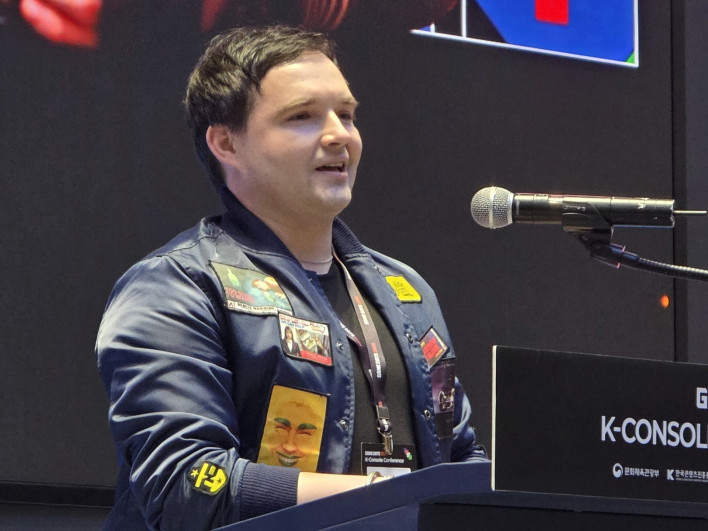
Taking the stage as the opening speaker for the Global Track at the 'Console Game Developers Conference 2026', held on November 9 at the SKY31 Convention in Lotte World Tower, Jamsil, Seoul, Director Sasko presented a lecture titled "Anatomy of Unforgettable Quests in The Witcher and Cyberpunk Games." Dissecting quests he wrote himself as well as those crafted by his colleagues, he generously shared his working notes on how to make players care about the story as if it were their own, encourage them to actively participate, and balance player agency with narrative pacing.
"Understanding Doesn't Mean Forgiving": Mature Narratives and Reframing Control Mechanics Present real-world dilemmas instead of shallow reconciliations, and imbue familiar mechanics with narrative weight
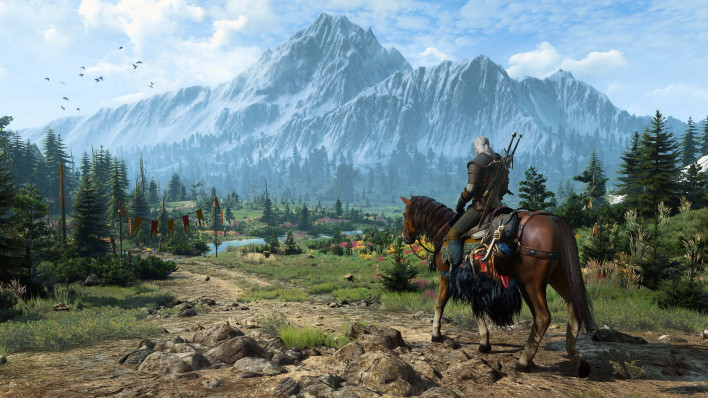
The first topic Director Sasko brought up was the proposition that "video games are mature entertainment for adults." The life challenges adults face in reality rarely have clear-cut answers, and often it is ambiguous what one should even do. He emphasized that game narratives must not shy away from this real-world weight. In particular, he strongly warned against "naive and immature writing that forces players to immediately forgive a character and side with them simply because they learned their backstory."
"Just because you encounter a terrible person in a game and learn the backstory of why they became who they are today doesn't mean you have to like them. Seeing and understanding their perspective is enough. You don't need to accept them with joy or empathize with them, and you certainly don't need to forgive them."
The Bloody Baron quest line ('Family Matters'), considered one of 'The Witcher 3's standout achievements, was designed to demonstrate this exact philosophy. It tells the story of a man who returned from experiencing terrible atrocities on the battlefield only to unleash his broken inner self onto his family through violence. Designing this quest, Director Sasko placed Geralt—Ciri's father figure—and the Bloody Baron—another type of father—side by side, constantly drawing parallels between the two fathers. Accompanied by the Baron, the player develops a multi-dimensional understanding of who he is and how his relationships broke down, but in the final moment after confronting the full truth, the player is left standing alone before a heavy dilemma: "Will you forgive this man?"
To maximize player emotion during this process, the core technique Director Sasko employed was the "narrative reframing of gameplay mechanics." He referred to the sequence where the Baron unearths the Botchling—a miscarried baby turned monster—holds it, and walks to the threshold of the manor as a "peregrination." Drawing from Slavic tradition where a child was buried under the threshold to bring blessings and lift curses on the household, players escort the Baron through this section, soothing the raging Botchling using Signs and combat mechanics they learned early in the game.
While the controls themselves are familiar, the moment the context of the Baron's tragic family history and the need to lift the baby's curse is layered over them, simple combat mechanics assume a completely different emotional weight. Added to this are the music swelling at the precise second a character speaks, the weather staging as dark clouds roll in and rain falls, and the narrative pacing of events before and after the scene—bringing every element together to optimize emotional impact. Director Sasko added that when teaching in-house designers, he describes this process as "stacking every card in the deck layer by layer to deliver an emotional hit."
Emotional arcs so meticulously built sometimes reach into players' lives with a depth beyond what developers ever imagined. Director Sasko recalled a letter he received after the release of 'The Witcher 3' from a father who had lost his wife and daughter in real life. That player wrote that he wept endlessly while playing the "peregrination" sequence where the Bloody Baron carries the baby to the manor, desperate to succeed in the ritual, and said the quest provided him with deep catharsis. Director Sasko emphasized: "We can never fully know what pain and struggles players are fighting in reality. But when we draw a line of empathy between a character's story in a game and a player's life, that experience stays in the player's heart for a very long time."
Make Player Actions the Theme: Emotional Charge in Environments and Props Direct interaction outside dialogue boxes and writing a character's autobiography through entire spaces
Emotionally stirring design isn't limited to choices made inside dialogue boxes. Director Sasko stressed that the actions players directly perform on screen—the player experience—must mesh closely with the quest's theme. Aside from selecting choices with button prompts in cutscenes, what players actually do on screen needs to connect directly to the narrative.
The spoon collector quest ('La Cage au Fou') in 'The Witcher 3's second expansion pack, 'Blood and Wine', originated from Director Sasko's deeply personal experience. At the time, his partner was going through a very difficult period suffering from an eating disorder, and that pain was birthed into a mature, heavy quest through the framework of The Witcher.
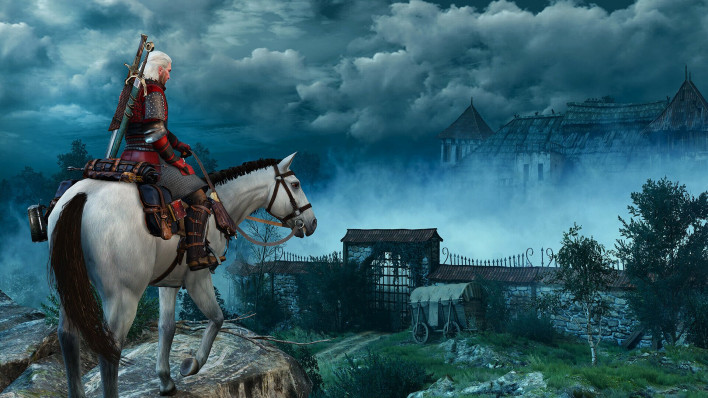
He laid down foreshadowing from the moment players approach the manor. In front of the dark, fog-shrouded estate, countless wooden spoons hang from strings, clattering against each other in the wind. This design uses audiovisual devices to create an eerie atmosphere, giving players an intuitive sense that the upcoming story revolves around "dining." And at the decisive moment, to lift the curse on the monster (the Wight) whose affliction serves as a metaphor for eating disorders, players must choose for themselves to sit at the same table opposite the creature and share a meal.
"The act of lifting the curse itself had to be 'sitting at the table with the monster and sharing a meal.' I wanted the action that players directly perform in the game to connect seamlessly with the narrative theme of an eating disorder. This is a principle I always emphasize when training in-house designers."
The "human aftermath" of confronting the old woman Marlene after lifting the curse is an indispensable link as well. It is a technique that firmly grounds the story in reality by having players face the pitiful life of a human being hidden behind the curse after completing the fantasy task of monster hunting.
'Scenes from a Marriage' in 'Hearts of Stone', which externalized internal conflict into physical spaces and puzzles, follows the same context. The simple puzzles Geralt solves after entering the Painted World act not as tedious obstacles, but as narrative devices that systematically expose the couple's broken relationship. The large, jet-black spiders that Iris abhorred and threw out into the garden during her life appear as enemies in the Painted World, and as the quest deliberately shifts genres into pure horror, the character's internal anguish is converted into terror that players must confront with drawn swords. Director Sasko explained that by layering context around what specific props or objectives mean to a character, an ordinary Witcher contract is transformed into an "emotionally charged" act.
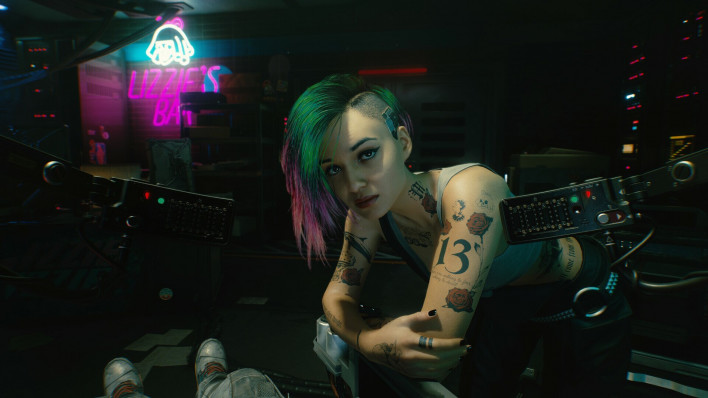
This narrative use of environment and props reaches its peak in 'Cyberpunk 2077's romance quest 'Pyramid Song', where players dive down into a submerged hometown with Judy Alvarez. Expanding on the environmental storytelling technique used in early Skellige in 'The Witcher 3'—where Geralt and Yennefer searched Ermion's laboratory to learn his story—Director Sasko turned the entire underwater town into "Judy's autobiography." Every small prop placed underwater in close coordination with artists testifies to Judy's past and relationships.
In particular, he shared that through this quest, he wanted to break the video game industry's immature practice of handling romance.
"Our game is rated 18+ and features sex, violence, blood, and gore. Honestly, sex is the easiest solution in romance narratives. Countless games in the industry adopt a childish and juvenile approach: talk to a character a few times, eat ramen together, bring them flowers, and finally a sex scene plays and the story ends. We wanted to prove how deep and authentic intimacy can be shown even without physical relations. In 'Cyberpunk 2077', sex isn't the beginning of a relationship or the final reward; it exists merely as one of several points within a natural progression."
Breaking Rigid Characterization and Channeling Creativity with 'Guardrails' Comedic twists unlocked through possession, and the secrets of comedy involving even QA
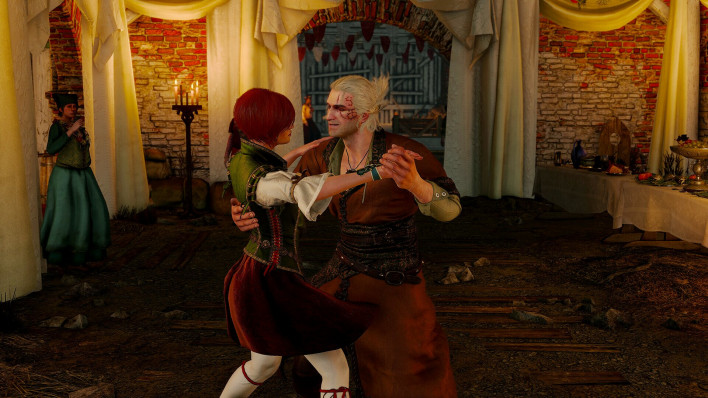
The second pillar of the presentation was the methodology for twisting player participation and coordinating the entire team's creativity. Director Sasko confessed that when writing the wedding quest ('Dead Man's Party') in 'Hearts of Stone', he had one personal goal: "to make Geralt do all kinds of crazy shit." However, whenever he pitched novel ideas, his studio colleagues responded with a unified refrain: "Geralt would never act like that. Geralt would never say that. That's just not his character."
After much deliberation, the solution he found was to have the ghost of Olgierd's dead younger brother, Vlodimir, possess Geralt's body. The moment his body is taken over by the ghost, Geralt becomes a completely different person. His gait and gesture animations change, his speech pattern and jokes shift, and new emotion is infused into every interaction. Geralt's voice actors across various languages also thoroughly enjoyed the recording sessions playing a totally different character from usual.
Director Sasko laid out diverse activities throughout the wedding venue so that players could experience this new persona firsthand. Players directly performed actions the real Geralt would never do: losing at Gwent and wearing donkey ears, herding pigs, and beating the brothers of the woman he fancied with a wooden plank. This provided a lighthearted breathing room for 'Hearts of Stone', which had otherwise flowed darkly and heavily throughout.
However, the true payoff came immediately after. Just as players got completely comfortable with the wedding's cheerful comedy and lowered their guard, the absolute, devilish entity known as the Man of Glass (Gaunter O'Dimm) makes his entrance. As he ruthlessly banishes Vlodimir's soul and the real Geralt returns, the atmosphere of the quest instantly plummets into pitch-black darkness.
Director Sasko described this as "tragicomedy—one of the trickiest genres to execute." It is a sophisticated contrast technique that intentionally leads players down a thread of comedy to put them at ease, only to sharply twist the story with Gaunter O'Dimm's appearance, leaving them entirely unable to predict what will happen next.
On the other hand, the quest in 'Blood and Wine' where Geralt talks to his horse Roach (development working title "Talking to Roach", released as 'Equine Phantoms') demonstrates how the "subversion of familiar relationships" combines with an "inclusive creative process." The human brain excels at recognizing patterns, and players who have ridden their horse for dozens of hours assume they fully understand the game's rules for interacting with a mount. But suddenly, the horse starts talking back in human language, and as other animals join in, those familiar rules are completely flipped. Bringing in voice actors skilled in comedic performance across each language to capture the flavor, this quest saw a massive number of ideas adopted from developers across all roles within the studio—including QA team members conducting playtests, not just quest designers or writers.
The secret to keeping the quest from going off the rails despite so many cooks pitching ideas lay in CDPR's strictly maintained "guardrails."
"Working in a group of creators, everyone is creative and eager to contribute, so ideas pour in from all directions. If you don't define a clear framework, those ideas will inevitably derail. That's why we strictly define the quest's 'genre' and 'theme' first as guardrails for the team. The genre for 'Talking to Roach' was unequivocally comedy. Because we had this guardrail, everyone could easily judge what was allowed and what didn't fit, enabling all roles to contribute ideas toward a single shared goal."
Player Influence and Narrative Control Are Different: Immersion Created by Grey Areas Prioritizing variables to prevent budget explosions, and achieving an 'experience' rather than a 'simulation'
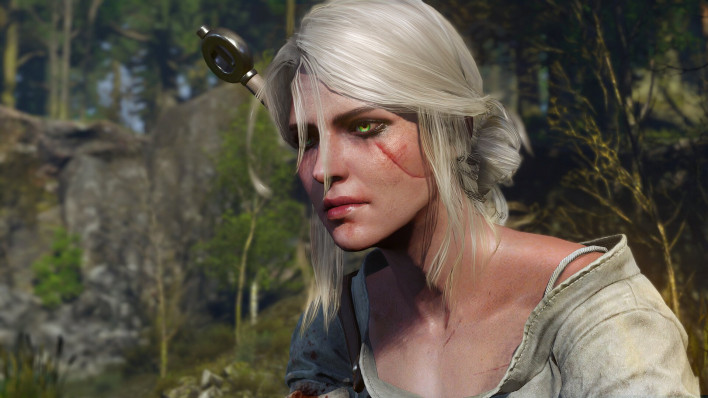
In the latter half of the talk, Director Sasko tackled head-on the issue RPG developers struggle with most: balancing player agency with controlling production scope. The quest he cited as the hardest work of his entire life was the climax of the base game of 'The Witcher 3', 'The Battle of Kaer Morhen'. In this quest, where Geralt gathers all the companions he has bonded with throughout his journey to the fortress to protect Ciri—who is hunted like prey—served as a massive proving ground that had to deliver payouts for the countless choices players had made since the start of the game.
Director Sasko structured the sequence so that "consequence telegraphing" continued from start to finish, letting players feel that their choices were not in vain. The challenge was that as numerous choice variables conflicted and intertwined, the sheer number of scenes requiring production expanded exponentially. He overcame this through a sophisticated design strategy: "prioritizing variable combinations."
For example, even for events occurring in the exact same spot inside the fortress, if Vernon Roche and Ves joined Kaer Morhen based on the player's prior choices, a conflict scene between them and the witchers takes top priority. If Roche's group isn't present but Letho is there, it shows the next priority—a conflict scene between Letho and the witchers—and if even Letho is absent, it displays an atmospheric scene of the witchers spending the eve together. It tracks numerous variables to pull up and reward players with a single tailored scene that best fits their journey.
At the same time, he anchored fixed, absolute events into the story. The moment a critical character (Vesemir) dies toward the end of the Battle of Kaer Morhen cannot be altered, regardless of what prior choices the player made.
"A player's influence doesn't mean total control over the entire story. Events that must happen for narrative flow and powerful emotional impact must be anchored by designer decision. Showing plenty of consequences for choices in the surrounding space while preserving core events—that is how you tell a compelling story while consciously controlling production scope."
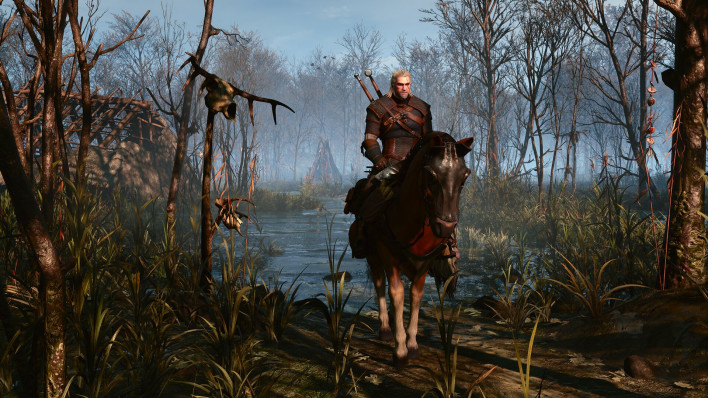
Another weapon for pulling players deeper into the story is "half-truths and lies," as well as "withholding information." Explaining 'A Towerful of Mice' from 'The Witcher 3', which drew inspiration from Polish folklore, Director Sasko noted, "Characters in our games lie as naturally as breathing and deliberately hide the truth." When a character's spoken words diverge from the subtext left unsaid, that character finally feels multi-layered and alive.
When designers intentionally leave wide grey areas and ambiguity, players continuously construct "interpretation hypotheses" in their minds, piecing together clues to ask, "Who is the real culprit?" or "Who started this tragedy?" The 'Dream On' quest in 'Cyberpunk 2077' was engineered so that the deeper players dig for truth, the more information is denied to them and the more questions amplify. Ultimately, without ever learning the full truth, players are forced to make heavy decisions based on incomplete information, and even after completing the quest, they may face a bitter trade-off or terrible outcome rather than a happily-ever-after where everyone is satisfied. Director Sasko pointed out that this very uncertainty and trade-off hook player curiosity and cause them to dwell deeply on their choices.
Furthermore, he demonstrated that a player's refusal of a quest can itself be part of the design. A prime example is the 'Sinnerman' quest line in 'Cyberpunk 2077', which revolved around the crucifixion of a prisoner and sparked major controversy inside and outside Catholic-majority Poland. Because it was an adult title, it presented a controversial subject unseen in any other game, but at the same time, it left open a path for players to walk away from the scene and decline participation, feeling "I can't possibly take part in this madness." Director Sasko remarked, "Refusing to participate is also a form of participation," interpreting a player's decision to turn away out of discomfort or shock as an active reaction to the emotion conveyed by the content.
Referencing 'Somewhat Damaged' in 'Cyberpunk 2077: Phantom Liberty', which abruptly shifts into pure horror inside a bunker, he emphasized the same principle: shift genres to strip away player certainty and leave them blind to what comes next, while tuning gameplay cues so that players can clearly read what is happening.
Laughing at himself for running short on presentation time, Director Sasko breezed past slides covering 'Phantom Liberty's spaceport quest 'The Killing Moon' and 'Chippin' In'—which defines the player's relationship with Johnny Silverhand—before concluding his talk with a 6-step working model that active developers can immediately take into practice.
1. Write intent before scenario: Before writing dialogue, clearly define what emotions this story should make players feel and what its purpose is.
2. Track actual truth and player belief separately: In narratives filled with lies and ambiguity, "what the player believes to be true" is far more important than objective truth. Managing these two tracks separately prevents the design from collapsing.
3. Assign purpose to every narrative beat: Every stage of a quest must have a clear role and goal. If a scene's purpose cannot be explained, cut it without hesitation.
4. Map out outcomes before multiplying branches: To avoid blowing up budgets and schedules in a game with intricate choices, map how outcomes intertwine before recklessly expanding branches.
5. Validate your riskiest assumptions early through prototyping: The most uncertain and dangerous attempts in a quest or mechanic must be tackled early in development through prototyping to find answers.
6. Provide a single shared goal across all studio disciplines: Like the Black Sapphire party scene in 'Phantom Liberty', present a shared goal so artists, sound engineers, programmers, and designers can all run toward a single emotion.
The final advice Director Sasko left for the developers packing the venue was clear.
"What we designers do is not build a perfect simulation. It is creating an 'experience' for the player. To deliver that experience, you don't need to perfectly simulate how a character will move in every branch and situation. Of course, a certain level of implementation is necessary, but if you as a creator and designer know when to stop and say 'that's enough,' that alone is plenty."
From opening ceremony to five lectures, panel, and game demos
Q&A sharing platform standards, optimization, and porting experiences
Early English/controller support and the role of AI vs. creativity
Quest design starting from emotion and intent
Walls, autonomous life, and tactical combat left over from failed builds
Verification process fixing ammo shortages and combat cues
Reading long-running IP through pricing, distribution, and community