
A shift has occurred in Steam users' PC memory configurations. According to the October 2026 Steam Hardware & Software Survey published by Valve, the share of PCs using 32GB of RAM across all operating systems decreased by 5.16 percentage points month-over-month, allowing the 16GB configuration to reclaim the top spot.
In the October survey, 32GB RAM registered a 37.06% share, down 5.16 percentage points from 42.22% the previous month. Conversely, 16GB RAM rose 3.60 percentage points, climbing from 37.82% to 41.42%. Additionally, 8GB RAM increased by 1.05 percentage points to 7.52%, while 64GB RAM rose 0.23 percentage points to 3.94%.
These results draw attention as they contradict the findings from just a month prior. In September, the share of 32GB RAM had increased by 4.77 percentage points, overtaking 16GB to become the most common memory configuration. However, after surrendering most of those gains in the October survey, 16GB moved back into first place.
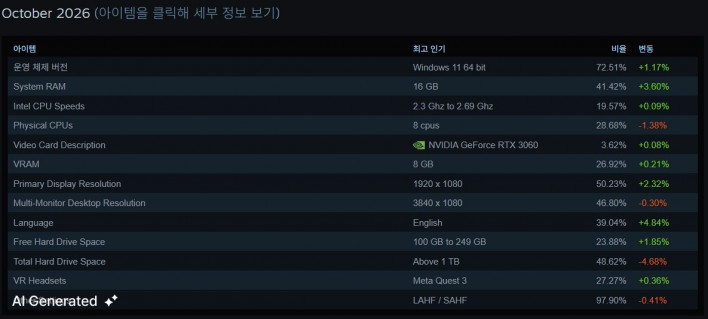
Tech publication Tom's Hardware raised the possibility that this shift could be related to supply pressures in the memory market driven by surging demand from the AI industry. The outlet noted that PC manufacturers have recently been making conservative adjustments to memory and storage configurations, adding that systems with over 1TB of storage space also saw their share decrease by 4.68 percentage points in this survey.
However, it is difficult to definitively conclude from this survey alone that PC gamers are actively downsizing their memory capacity. The Steam Hardware Survey is conducted among users who opt in, meaning the composition of the survey pool can vary month to month. In fact, significant fluctuations were also observed between the September and October surveys across major graphics cards, display resolutions, and language distributions. As such, while these figures serve as a reference indicator highlighting potential changes in the memory market, further examination is required to determine the direct cause.