<Joint Project: Inven X Gyeonggi Content Agency>
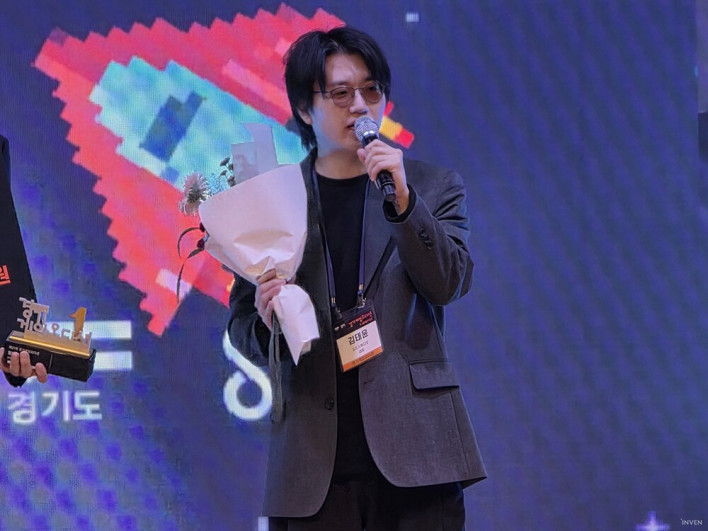
'NAMMO', an indie game that drew attention with its Korean dark fantasy theme and striking pixel art, won both 1st place in the General Division and the Gamer's Pick at the 2026 Gyeonggi Game Audition, which saw a record number of applicant teams.
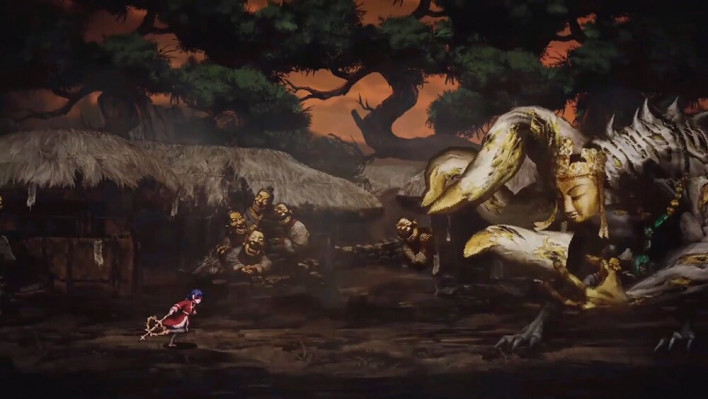
Currently in development by Guild Studio, NAMMO is a 2D Soulslike game set against the backdrop of ancient Silla. It plays out as a boss rush and features the 'Spirit Eye' system, which allows players to perceive the soul realm hidden from reality. However, NAMMO was not like this from the beginning. Guild Studio completely overhauled the main system in pursuit of pure fun. Today, they continue development while testing and adding various new content.
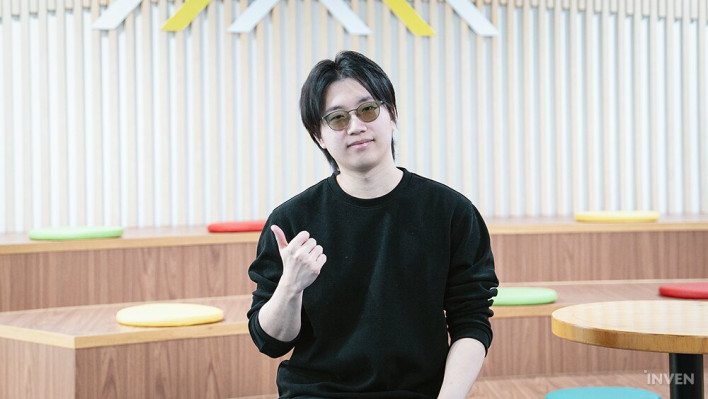
Following the Gyeonggi Game Audition awards, an opportunity arose to speak with Tae-yoon Kim, CEO of Guild Studio. Despite taking 1st place, he remained humble. He continues to push forward for the fun and completeness of NAMMO, working hard toward a demo release in February 2027 and an official launch in August.
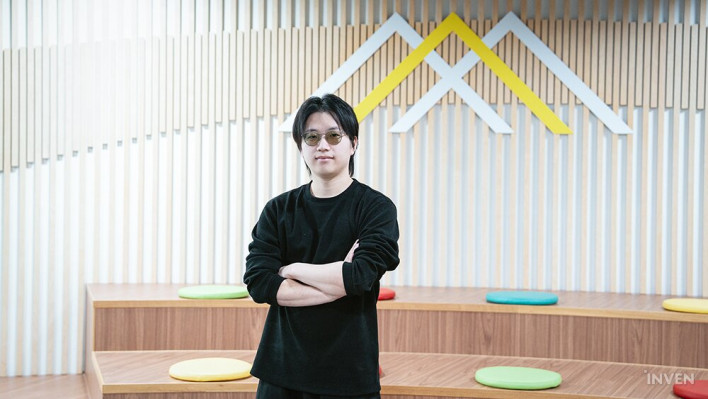
Most Important Is 'Fun' Gyeonggi Game Audition 1st Place, Korean Dark Fantasy NAMMO
You won both 1st place in the General Division and the Gamer's Pick at the 2026 Gyeonggi Game Audition. How do you feel about this achievement?
"We brought the exact same build we showed at previous events. Rather than preparing a separate showy build for the presentation, we approached it with the mindset that attendees should just focus on and enjoy the gameplay itself. Thankfully, visitors on-site seemed to immerse themselves completely in the game, and I think that led to a good result.
A record number of teams applied for this year's Gyeonggi Game Audition. What do you think was the decisive reason NAMMO was selected amid such fierce competition?
"From a conceptual standpoint, I think the Korean dark fantasy theme resonated as something fresh and intriguing. China has works based on Wuxia or Journey to the West, and Japan has many games themed around samurai or ninja. I wanted to make a dark fantasy game set in Korea. That's why we drew upon Silla as our foundation to convey original artwork and story.
I think another reason is our core system, Spirit Eye. Through Spirit Eye, players can observe the soul realm invisible in reality, discovering boss weaknesses or their true identities within it. People seemed to find a unique freshness in how you use this to tackle boss encounters.
Many indie games have achieved great success after winning at the Gyeonggi Game Audition. Expectations for NAMMO must have risen after this win—do you feel any pressure?
"First, thanks to the Gyeonggi Game Audition win, a lot more people recognize us. I'd like to take this opportunity to express my gratitude to the Gyeonggi Content Agency.
As for pressure, I don't really feel much. Instead of aiming for massive success with NAMMO, our goal is simply to properly deliver what we want to showcase and what we personally find fun. We want to create elements that players will genuinely enjoy playing. We want to present the Korean dark fantasy theme within that scope; we aren't approaching this with grand ambitions of creating a global hit. I believe success is something that might follow if we work hard. For now, we are focusing on making the game we want to build.
Is there a core element in developing NAMMO that you refused to compromise on?
"NAMMO is fundamentally a boss rush game. No matter how interesting the Korean dark fantasy theme is or how charming the characters are, if we don't give our absolute best to what matters most in this genre, I feel it would be a flawed game. It would also be disrespectful to the players. That's why, above all else, we refuse to compromise on the boss battles. It's the area we focus on the most.
On the flip side, what is the biggest change compared to when the game was first conceived?
"The main system itself was changed completely. Take the champion Rek'Sai in League of Legends, who senses surroundings using sonar waves—NAMMO was originally designed with a similar concept. Since the protagonist is blind, we obscured the view and allowed players to perceive surrounding objects through sound waves. Players were supposed to parry attacks by reading the wave patterns generated by enemy movements.
You could say we tried to build a game that pursued the extreme thrill of deflecting attacks under limited vision. But when we actually built it, it just wasn't fun. Combat revolved around catching brief glimpses of enemy silhouettes through sonar waves, and at some point, I felt something crucial was missing. So I asked the dev team to temporarily remove the black fog obscuring the screen. Surprising to no one, playing without it was vastly more fun.
That's when the dilemma began. If we removed vision restriction, how should we represent the main character's condition? After examining various options, we settled on the current Spirit Eye system. Of course, Spirit Eye wasn't an easy choice either. Because we have to depict both the real world and the spirit world, the art workload effectively doubled. The entire team, including the art department, worried heavily about whether we could actually pull it off.
However, in the end, using Spirit Eye was overwhelmingly more fun. Since I believe fun is the single most important aspect of a game, we chose the current system.
Changing the core system must have been a massive decision.
"At that time, we had already spent about two months developing based on that design. We had even won the Grand Prize in Game Design at GIGDC with that concept. Having received recognition for the concept itself, we had a lot of confidence. But when we built it, it was simply not fun. It was really disappointing.
In the end, we rebuilt almost everything from scratch. Even when we attended PlayX4 in 2025, it had only been about four or five months since we began working on the new system. As director, I carefully proposed changing the system, and I think my teammates were incredible for accepting it. After all, two months of work effectively vanished. I am deeply grateful to the team for willingly embracing that change despite such a heavy burden.
Were there any specific games or elements that inspired NAMMO's development?
"There's a character named Leroy in Tekken 7. He's based on Wing Chun, and his fluid movement of parrying opponent attacks followed by rapid striking looked incredibly cool. That visual really cemented the concepts of a visually impaired protagonist and parrying mechanics.
As I mentioned earlier, the initial vision restriction system drew inspiration from Rek'Sai in League of Legends. Later on, we referenced Blasphemous and Nine Sols heavily for combat and art.
Last year, I even sent a direct message to a pixel artist behind Blasphemous. I asked if NAMMO's art direction was heading in a good direction, and received a response saying it looked fantastic and amazing. Our team had been debating whether our direction was right, so getting that response felt like receiving a stamp of validation. It gave us a huge confidence boost.
In the case of Nine Sols, I traveled to Taiwan and met with their development team twice. We received extensive feedback regarding combat and actual gameplay, and we are incorporating those insights into development with immense gratitude.
Boss Rush and 2D Soulslike Over 10 Unique Bosses and Distinctive Boss Encounters
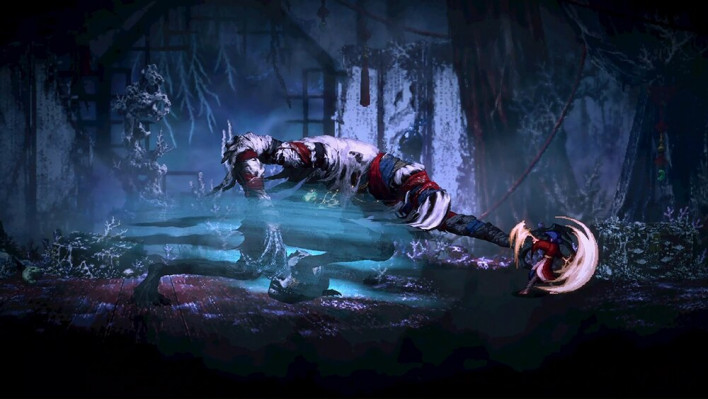
How many bosses are you targeting for the official release?
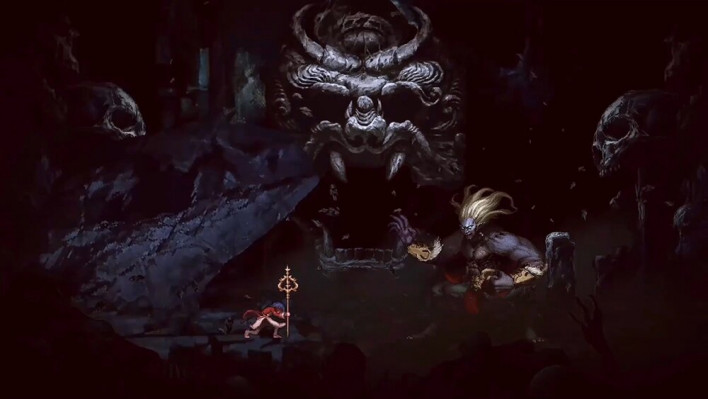
"Currently, we are looking at more than 10. Originally, I confidently talked about 12 or 13, but building them firsthand proved far more difficult than expected. Crafting each boss properly is no simple task. I believe what matters most is how much fun each boss delivers, rather than sheer quantity. We are prioritizing quality and fun over boss count.
Given the structure of continuously facing bosses, each encounter needs to feel distinct. What did you focus on most when designing bosses?
"We strive to give each boss strong individuality. During development, there are times when one particular boss turns out amazingly fun. When that happens, you naturally start using that boss as the baseline to design others, locking your mindset into that template. That tendency actually happened to us early on. So for the bosses we are designing now, we try our best to emphasize their unique traits.
Since each boss has a distinct look and form, we aim to match that with tailored combat fun. We focus especially on creating variety in attack patterns. Of course, being a 2D side-scrolling game, mechanics and gimmicks are necessary too. But at its foundation, our emphasis remains on pure action and boss encounters.
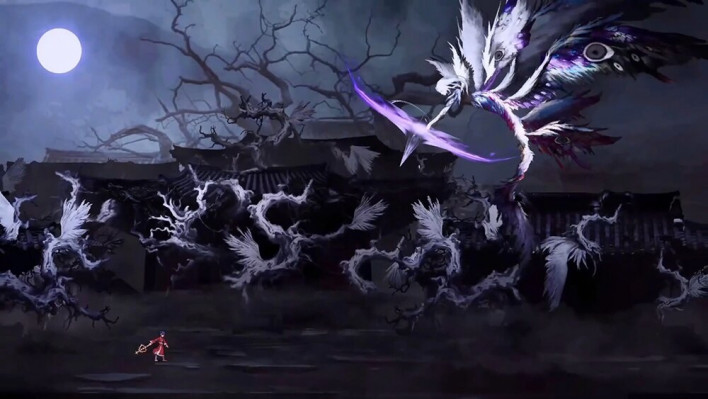
You describe the game as a 2D Soulslike. Could you explain specifically how you bring out boss individuality in line with that genre description?
"To be honest, using the label 'Soulslike' can feel a bit daunting. Speaking as a huge Soulslike fan myself, while there are certainly similarities strictly speaking, I also feel a bit self-conscious using the term.
It shares similarities in the concept of facing formidable bosses, learning attack patterns, and experiencing personal growth as a player. However, we don't incorporate signature Soulslike elements like intricate level design, losing currency/progress upon death, or traditional stat-based level-up mechanics.
Even so, we strive to deliver core Soulslike hallmarks: intense boss fights and the sense of growth coming from player mastery rather than numerical stat gains.
Was there a decisive reason why NAMMO settled into its current format as a 2D Soulslike boss rush?
"Because boss fights are what we can do best. While expanding Metroidvania or platformer elements might appeal to a broader audience, we felt it was better to double down on our strengths rather than forcing features we weren't confident in.
Being a pure boss rush gives us immense freedom in designing bosses. Trying to incorporate other gameplay styles requires balancing boss placement against overall map design, whereas NAMMO can focus purely on the boss encounters themselves. That's not to say we're better than other dev teams, but rather that the genre design allows us to experiment with various ideas. We hope players will find fun in that focus.
Does pure player mechanical skill play the most crucial role then?
"Not necessarily. We also wanted to create room for strategic approaches. While some bosses rely heavily on raw mechanics and high tension, others let players enjoy tactical problem-solving—using Spirit Eye to decide which weakness to break first and navigating the battle accordingly.
We wanted every boss encounter to offer a distinct experience. If every boss demanded the exact same loop of parrying and dodging, it would feel repetitive. Conversely, constantly repeating gimmicks or weak-point destruction would get boring as well. So we work to balance mechanical skill and strategy for each fight. Repeating similar experiences over and over ultimately reaches a limit.
Designing combat so players understand why they died is critical. How are you balancing the game's difficulty?
"That has been one of the toughest challenges. Originally, we considered targeting a small niche audience. But as development progressed, the concept of Soulslikes grew broader, and pushing difficulty to extreme highs didn't seem to be the dominant trend anymore.
Ultimately, we concluded that satisfying every player with a single difficulty setting was impossible. So we decided to offer difficulty options. We are currently planning two difficulty levels. We hope that even players entering 2D Soulslikes for the first time through NAMMO can enjoy the game.
If there is strong demand for higher difficulty after launch, we are open to considering a third difficulty level. Of course, nothing is set in stone yet, and we'll have to see the reception post-release.
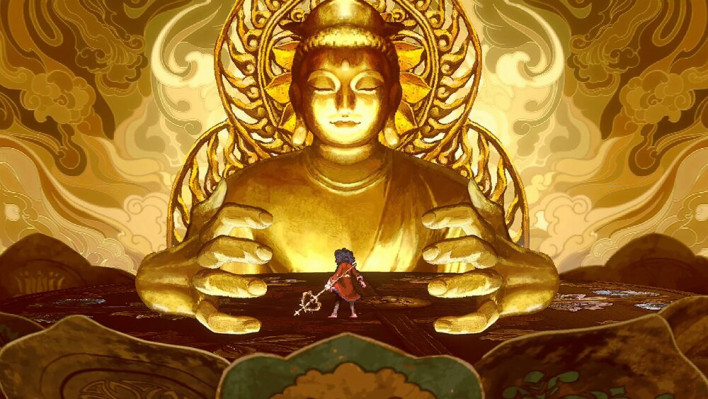
The bosses shown in trailers so far look impressive. Will we be able to meet all of them at launch?
"As development progressed, we came up with many new bosses that were more fun than our earlier designs. Consequently, some of the bosses featured in our first trailer might not appear in the final release, while others may appear in altered or evolved forms. Since some players likely wishlisted the game after being impressed by specific bosses in the trailer, we are working hard to deliver an even more satisfying experience.
How are the gaps between boss fights structured? Are there separate exploration elements?
"The overall structure alternates between story delivery and boss battles. Initially, we tried creating elaborate maps between bosses and packed in various features, like platforming action and puzzles utilizing Spirit Eye. Players did find those parts enjoyable, but there was a major issue: fatigue. After a boss fight, players need a moment to breathe, but throwing complex platforming or puzzles at them in between left no downtime.
So we shifted direction. While Spirit Eye puzzles or platforming gimmicks might appear in certain segments, we don't intend to make every transition area complex. Since boss fights are the main attraction in NAMMO, we plan to keep the interstitial areas properly balanced.
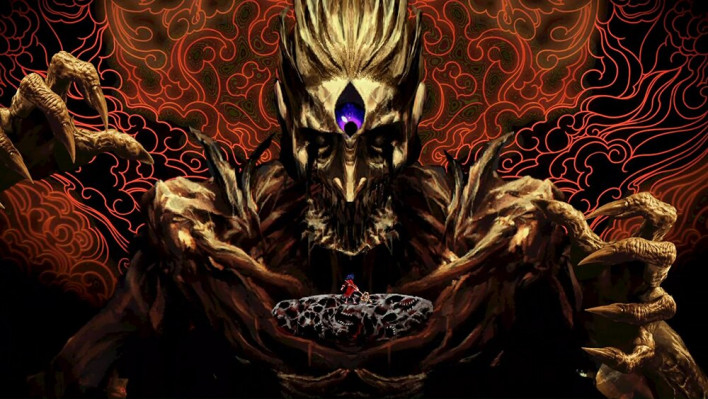
Strategic Depth Brought to Life by Spirit Eye A Signature System Applied Across Combat
Could you elaborate on how the Spirit Eye system differs from typical scanning or weakness detection mechanics?
"At its core, combat is centered around parrying, with Spirit Eye serving as a key accent. However, if it merely exposed weak points, it wouldn't differ much from other games. Therefore, we designed Spirit Eye to be woven into combat as a whole.
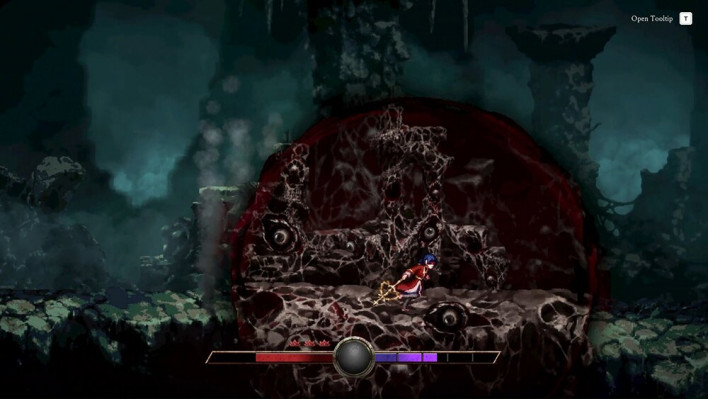
For example, there might be platform outlines that appear as mere traces in the real world. Activating Spirit Eye reveals the actual platform so you can step on it to reach the boss during fight sequences. Another boss might create multiple clones to unleash sequential attacks; activating Spirit Eye allows you to spot the real body among the clones. In this way, rather than just showing weak points, it interacts directly with boss patterns and combat tactics.
The artistic side is equally important. NAMMO carries a theme where reality is false and the spirit world is real. Spirit Eye lets you peer into that truth. So activating it exposes the true form of bosses or hidden structures within the map. To emphasize the spirit world, we felt it needed to serve as a thematic pillar rather than just a combat helper tool.
Can players freely toggle Spirit Eye on and off during combat? How does it function resource-wise?
"Of course there are restrictions. You build up a gauge through combat actions like basic attacks or parries, which then allows you to activate Spirit Eye. The key decision is deciding when to use it. You don't have to fully max out the gauge to activate Spirit Eye.
Once activated, the gauge steadily drains, imposing a time limit. Furthermore, activating Spirit Eye consumes a set chunk of the gauge immediately—think of it as an activation cost. So if you want maximum efficiency, saving up a larger portion before turning it on is ideal. But depending on the situation, triggering it immediately even with a small amount can be advantageous.
Even if the gauge is only half full, if you judge that exposing a boss's weakness right now gives you the upper hand, you can activate Spirit Eye then. The same applies when you need to make use of hidden platforms. Deciding when and for what purpose to activate Spirit Eye is a central tactical choice.
How are character growth systems like weapons and skills designed?
"There is only one weapon. Nammo wields a monk's staff, and we have no plans to change that core concept. Instead, there are multiple skills, and we are exploring ways to differentiate combat using add-ons.
Initially, because we wanted total focus on boss battles, we tried not to make the protagonist's moveset overly complex. Each boss has an intended difficulty balance, and if the player's abilities are too versatile, it could dilute the specific fun each boss fight offers.
Recently, however, discussions emerged about taking a bolder approach. So we are currently testing a simple command system. It's not overly complex controls, but rather having a single button trigger different actions depending on equipped add-ons. No matter how varied the bosses are, repeating the exact same pattern of attack, parry, and Spirit Eye might feel repetitive over time. So while it won't be flashiness for its own sake, we are working to add more variety to gameplay.
Even as launch draws closer, you seem to be experimenting with various changes to the combat system.
"With about a year left until launch, we are actually conducting various experiments right now. It's not that we lost our core direction, but we had many ideas. Now that a solid number of bosses have been created, we are testing things we've always wanted to try—without compromising the game's core direction, of course.
The growth of our development team throughout this process has been huge as well. Since this is the first full-scale game project for myself and the team, our understanding of action games and development know-how were initially quite shallow. But through crafting the game, we gained experience and honed our skills. The problem is that our standards grew higher alongside our skills [laughs].
That makes us want to try more things and make the game richer. While I don't think NAMMO is a perfect game right now, I am confident it will be a far more impressive game when it officially launches.
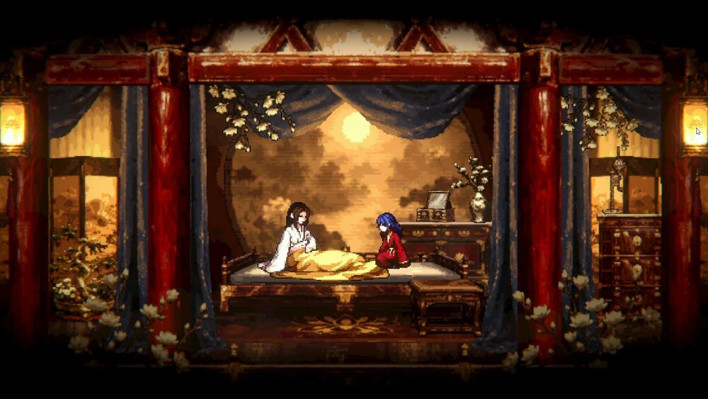
In a previous interview, you mentioned wanting to convey the unique Korean sentiment of 'han' through Nammo and Junjeong. Outside of the story, have you tried expressing this emotion through combat or gameplay mechanics?
"I see 'han' [deep sorrow/regret] as one of several emotions we want to convey. NAMMO isn't fundamentally a story-heavy game, but we still try to build a clear narrative arc within it. 'Han' is an emotion that emerges within that narrative. While we make an effort to capture it as a distinctly Korean sentiment, it doesn't define every single aspect of the game.
Striking pixel art is indispensable to NAMMO's first impression. However, visual readability is crucial for an action-centric game—what visual challenges are you grappling with?
"That is precisely what we are wrestling with right now. I think NAMMO leaves a strong impression when viewed in still screenshots. On the other hand, gameplay videos don't quite capture that same impact, whereas actually playing it feels better than it looks.
So we are considering how to make character movements look more natural and how overall visuals and motion should harmonize. I don't think we've mastered this aspect yet. In fact, we see it as an area needing improvement, so we are actively working to bridge that gap.
How far along is development?
"Currently, we plan to release a demo in February 2027 and officially launch in August.
Do you plan to attend this year's G-STAR?
"We will participate in the Indie Showcase. However, due to our development schedule, running a full-scale booth will be difficult. Right now, we plan to keep our presence minimal. We haven't decided which build to show at G-STAR either. It might be the same build used at previous events, or it could be different.
Right now, rather than spending a lot of time on events, we really want to focus on making the game itself better. Once the game stabilizes a bit more, we want to participate more actively in various events next year and share more progress.
How are you collecting player feedback?
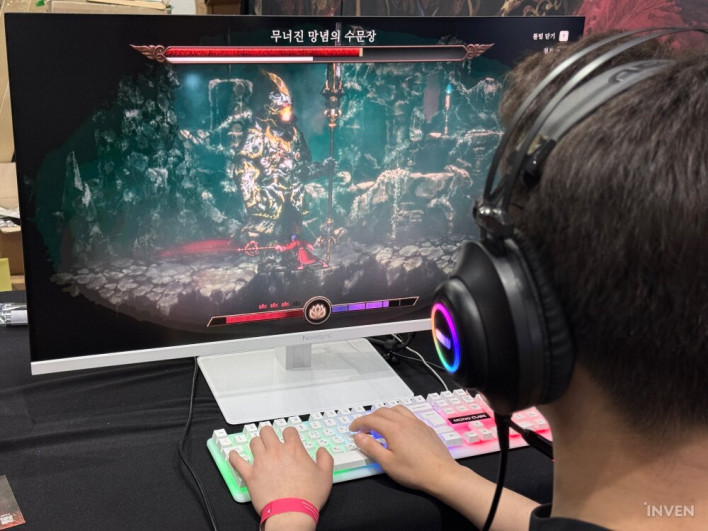
"The biggest portion comes from players who tried the demo on-site at events. A lot of that feedback has actually been implemented into the game. Beyond that, we apply for support programs that offer testing opportunities whenever possible to get extra help.
When developing a game over a long period, maintaining objectivity is the hardest part. Developers play the same game countless times, so at some point, everything starts feeling too easy. Our team members and acquaintances have also become extremely skilled at it. That makes it hard to gauge whether the current difficulty is actually easy or if we've just grown overly accustomed to it. That's why external feedback is vital.
Personally, I really want to run a Steam Playtest. Visitors at offline events tend to be interested in the game and generally favorable. Professional playtesters also tend to be highly skilled gamers. So I want to see how more general players react when they play NAMMO. Is the difficulty fair? Are combat mechanics easy to grasp? Are there any frustrating elements in gameplay? There are so many things I'm curious about.
Honestly, I want to get called out a bit [laughs]. From my perspective, the game is still far from complete, so I want more objective evaluations. In the end, we will compete on the global stage, directly alongside many outstanding titles. I feel we still fall short compared to those titles. We need to keep working harder.
Lastly, do you have any message for players waiting for NAMMO?
"The NAMMO demo is scheduled for release in February 2027. There isn't much time left, so I hope you will give us realistic and candid feedback so the game can get even better.
If there are shortcomings, please feel free to point them out without holding back. Although the remaining time until official launch isn't very long, we want to incorporate as much feedback as possible and show you how much we've grown. Of course, if you enjoy playing NAMMO, we would be deeply grateful as well.