
The Korea Media and Communications Commission (KMCC) resolved on the 28th to impose corrective orders along with a total of 63.7 billion won in fines on Google and Apple. Google was fined 42.9 billion won and Apple 20.81 billion won. This marks the first enforcement case applying the provision since the 2021 amendment to the Telecommunications Business Act, which established new prohibited acts for app market operators.
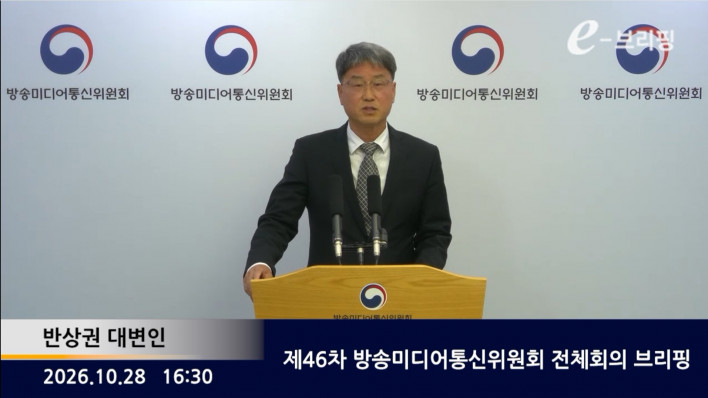
The core of the corrective order is the choice of payment methods. The KMCC ordered both companies to provide separate payment options via external links (out-links) within apps so that users can actually select alternative payment methods other than in-app payments. This was disclosed by a KMCC official during a briefing held on the same day. Both companies must also revise their app review procedures. Apple must additionally prepare measures to prevent recurrence and eliminate discrimination between domestic and foreign developers.
However, the commission fees charged on out-link payments are not the direct target of the corrective order. While the KMCC issued an order to improve commission policies for existing third-party payments, it does not regulate whether fees are charged or the level of fees for newly opened out-link payments. A KMCC official stated that this aspect depends on checking the operators' policy direction. Questions were also raised during the briefing that if fees similar to existing ones are attached to out-link payments, the effectiveness of the measure would be diminished. Ultimately, the tangible change felt by developers will depend on how much Google and Apple decide to set as out-link commission fees.
According to the KMCC, Google and Apple revised the terms applied to developer contracts to allow only their own in-app payments and third-party payments. Other payment methods, such as external payments, were blocked from use. Third-party payment refers to a method where developers integrate their own payment system inside the app. While allowing this, both companies charged a 26% commission fee and provided services lacking certain features compared to their own in-app payments, such as subscription management.
In addition to payment gateway (PG) fees, developers must bear separate costs for building payment systems and settling transaction fees. The KMCC determined that both companies failed to account for these expenses. Furthermore, Google restricted price displays by payment method, while Apple required a separate app submission. The KMCC concluded that these overlapping conditions effectively forced developers to use only proprietary in-app payment systems. The KMCC defined this as forcing specific payment methods by unfairly abusing bargaining position.
Unfair app review delays were also an issue for both companies. Google and Apple did not inform developers of specific reasons even when reviews were delayed. Even when developers inquired separately, the companies failed to clearly explain the cause for delay or future schedules. A KMCC official explained that unfair delays were determined by comprehensively evaluating the grounds for delay, whether notice of reasons was provided, and whether grievance handling procedures were made available.
It was also revealed that Apple charged discriminatory commission rates to domestic developers. From the implementation of the revised Value-Added Tax Act in July 2015 through January 2023, Apple applied a 30% commission fee to foreign developers based on the supply price excluding value-added tax (VAT) from the final consumer price. Conversely, for domestic developers, it charged 30% based on the final consumer price including VAT. As a result, only domestic developers paid commissions on the VAT portion as well. The KMCC judged this as an act of unfairly discriminating economic benefits compared to other users.
The KMCC conducted fact-finding inspections and investigations starting in 2022, and heard opinions from Google and Apple on August 12. The KMCC explained that although additional facts were verified following the hearing, the conclusion remained unchanged.
KMCC Chairperson Kim Jong-cheol stated, "A fair and sustainable app market ecosystem can only be achieved through a cooperative, symbiotic relationship between app market operators and developers, and we must keep in mind that the efforts of app developers contribute to app market innovation." He added, "We hope this corrective measure will serve as a turning point for substantive structural market changes that app developers and end-users can feel." Chairperson Kim emphasized that the law will be enforced without discriminating between domestic and foreign companies. He also expressed his intention to examine the market as a whole and supplement areas of deficiency as platform user protection issues continue to grow.
Regarding the scale of the fines, the KMCC also acknowledged limitations. Under the current Telecommunications Business Act, the fine cap is set at 3% of relevant revenue. During the Q&A session at the briefing, reference was made to KMCC background materials showing that the EU can impose fines of up to 10% of global revenue and Japan up to 20% of revenue. Kim Mi-jung, acting Director General for Market Investigation at the KMCC, pointed out that as the telecommunications and platform markets grow, existing regulations make it difficult to exert a deterrent effect. Acting Director General Kim added that amendments to the law, enforcement decrees, and public notices are being prepared, including raising the fine ceiling.
Meanwhile, Google announced a payment policy reform plan in March that includes allowing external payments and lowering service fees. Apple explained to the KMCC its direction for voluntary improvements to enhance the app market transaction environment. However, the KMCC maintains that it is difficult to judge whether implementing Google's reform plan alone will satisfy the corrective order. The commission drew a line by stating that the timing of implementing the reform plan remains within the operator's purview.
Google and Apple must submit an implementation plan within one month of receiving the written decision. Within three months thereafter, they must consult with the KMCC regarding the improvement of business procedures and report the implementation results. The KMCC plans to continuously monitor market trends to ensure that the payment policy reforms of both companies take root in the domestic market.