
'Survivor: Ace' is a roguelike aerial shooting game where you pilot a fighter jet with a single finger. Clearing a stage takes about 5 to 10 minutes. By making use of continuous auto-attacks and enemy-targeting skills, players build their own custom setups through randomized choices. While the controls are easy to pick up, where to position yourself to dodge bullet hell and how to scale your firepower are decisions you must make yourself.
Looking at mobile games these days, smartphones feel busier than ever. Visuals have gotten flashier, open worlds larger, and content checklists longer. While setting off on a grand adventure with a power bank as heavy as a blunt weapon has its charms, some days you just want a quick session. 'Survivor: Ace' was perfect for that exact mood. It combines the familiar thrill of weaving past enemies with your finger and the strategic fun of deciding how to empower your craft next.

Short Explanations, Fast Sorties Move with One Hand, Survive by Finding Gaps
Touching and dragging the screen moves your fighter. The flow of vertical scrolling shooters—firing at enemies while weaving out of harm's way—feels intuitive almost instantly. Even on your first playthrough, moving your craft around a few times is all it takes to grasp the basic controls, and there's no need to look for an attack button. It's already firing.
This keeps your eyes naturally focused on the combat. You dodge incoming enemy aircraft and look for safe spots when bullet patterns spread across the screen. Destructible enemy missiles also fly toward you, allowing you to clear immediate threats with your own fire. Positioning yourself to keep attacking while dodging is key. If your aircraft is a diligent employee spitting out bullets, deciding where to assign it and which skills to upgrade is up to you.
Lifting your finger from the screen also slows down the combat. This mechanic gives you breathing room when heavy attacks sweep in, letting you assess the situation and plan your next move. Knowing when to lift your finger and spot an opening becomes just as important as constant movement. It essentially gives you a quick moment to think in the cockpit.
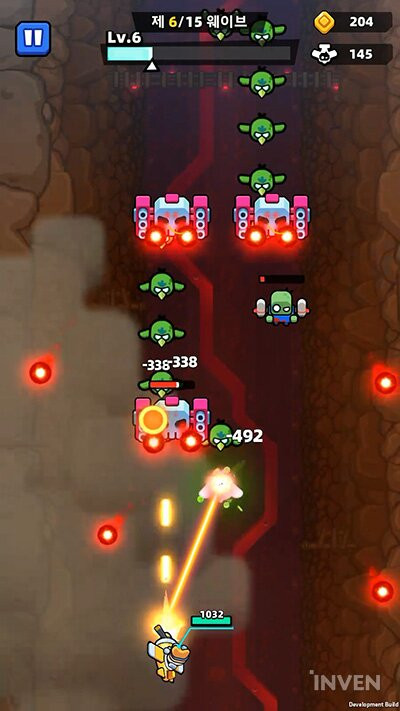
Stages progress through multiple waves, featuring tough elite enemies along the way and a final boss waiting at the end. Unlike endless fliers aimed at pushing high scores, flights in Survivor: Ace have a clear destination. Defeat the boss to clear the stage, or crash along the way to end the run. Naturally, you'll want to land for the former reason.
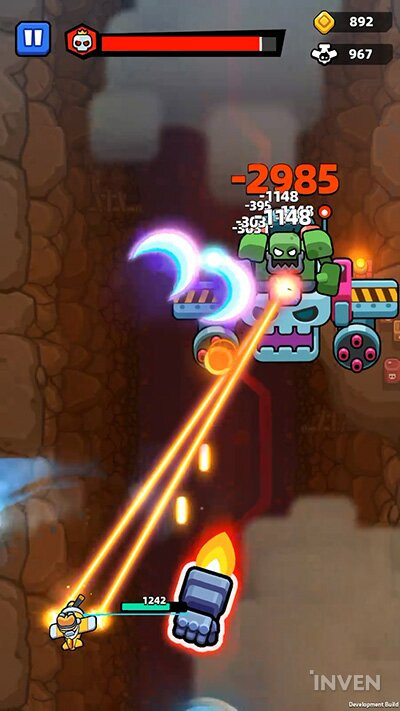
Boss battles test both the upgrades you've accumulated and your ability to navigate dodging paths. Surviving means avoiding attacks, but you also need enough firepower to bring down your opponent. Seeing how the weapons picked up in earlier waves make a difference against the final foe is part of the fun in every run.
There's also a subtle charm in recognizing enemy faces, as monsters from the previous title 'Survivor.io' return piloting fighter planes. Whether seeing them is a welcome sight is debatable, but at least they're familiar faces. After meeting them so often on the ground, they're now working shifts in the sky too. The manpower recycling in this industry is quite something.
Apologies for Underrating the Basic Weapon Before Complex Builds, I Tried Upgrading a Single Autocannon
There was no need to memorize endless weapon combinations from the start. Early on, focusing all upgrades on the default Rapid Fire Cannon made the satisfaction of progression clear. While picking up a new weapon was nice, watching an existing weapon transform was particularly entertaining.
At first glance, it looks ordinary. It fires bullets forward and deals damage on hit—so simple that its instruction manual could be left blank. Placed side by side with grander names like Energy Lightsaber or High-Energy Laser, it seems rather modest. Starter gear naturally sets low expectations.
However, concentrating upgrades on it completely changed the story. Hits began causing explosions that dealt splash damage, and eventually bullets ricocheted off enemies. They exploded on the first hit, then exploded again where they bounced. Adding multishot effects meant multiple rounds were ricocheting and exploding simultaneously. The workload of a single bullet kept expanding. Who knew a basic weapon could be so ambitious?

In the early game, rapidly upgrading the Rapid Fire Cannon felt more efficient than spreading out into new weapons. That doesn't mean it's the right choice for every situation, but focusing on a single main weapon clearly demonstrated the impact of your choices. The screen directly shows you that you made a good pick.
This experience sparked curiosity about other weapons. If a simple autocannon can evolve like this, what happens if you pour upgrades into something else? Could equipping multiple weapons complement each other's weaknesses? After getting a taste of the fun through a single basic weapon, I wanted to try different options next.
If a Weapon Looks Cool, You Have to Try It Three Choices and Elemental Weaknesses: Crafting Your Firepower
Looking only at the autocannon would be a waste when other weapons demand attention. From the Energy Lightsaber slicing nearby foes, to Ice Blade Bullets automatically tracking targets, and the High-Energy Laser focusing intense damage on a narrow forward arc, each weapon offers distinct visuals and roles.
Reading their names and effects naturally leads to imagining the next battle. You wonder how satisfying it would be to slash approaching foes with a lightsaber, or how convenient homing attacks would be against moving targets. Before searching for meta builds, you find weapons you simply want to test out. Efficiency matters, but if your fighter jet can wield a lightsaber, you have to see it in action.
In battle, you build your loadout by choosing one of three randomized options. You can combine multiple weapons to expand your arsenal or focus upgrades heavily on a single core weapon. Combining these effects yields over 100 possible build variations. Deciding whether to level up your current weapon or add a new attack gradually defines your fighter's playstyle.
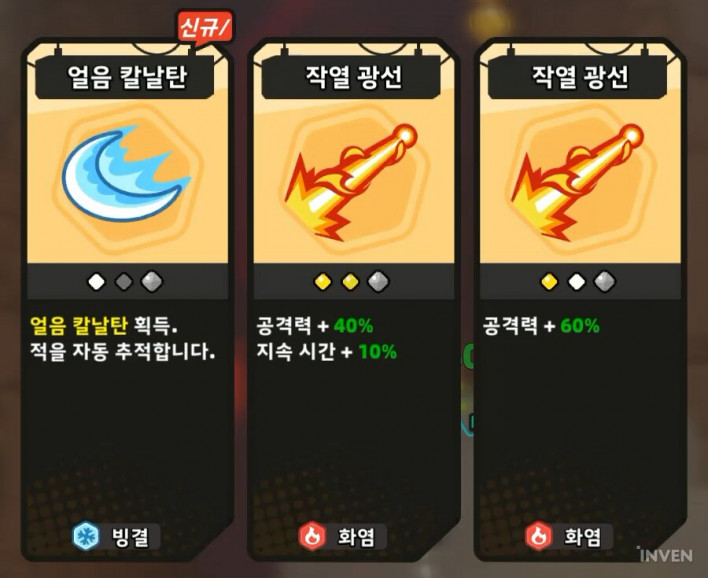
Elemental weaknesses add another layer to your choices. Monsters display elemental weaknesses, and picking skills corresponding to the elements indicated by green arrows makes combat significantly easier. Rather than blindly picking familiar weapons, players have a reason to consider what works best against current enemies.
For instance, if a green arrow appears over Fire, choosing a Fire skill like Searing Beam is effective. Showing weaknesses reduces the burden of memorizing all elemental matchups beforehand. When enemies go out of their way to show their weaknesses, ignoring them feels wrong. Reading a kindly written intro is only polite.
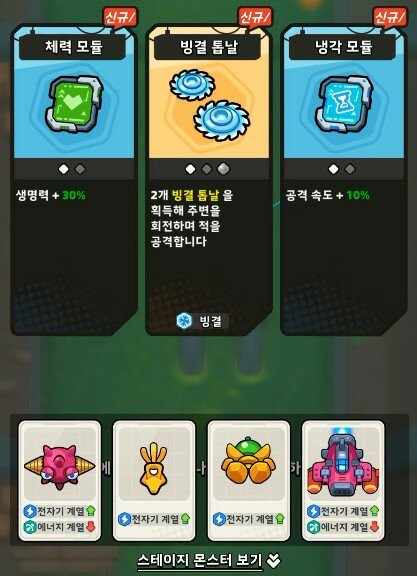
Core upgrades granted every three skill levels reward these decisions even further. Attack patterns and firepower change dramatically, such as lasers splitting into two beams or a lightsaber swinging twice instead of once. As previous upgrades stack, they reshape your attack into something entirely new. While higher attack numbers are welcome, seeing the visual transformation of your attacks makes upgrades feel far more rewarding.
There are also passive upgrades that boost attack speed or health. This introduces decisions between pushing offensive firepower or securing survivability. No matter how flashy your setup is, if your jet explodes first, the airshow is canceled. Weighing your current weapons, enemy elemental weaknesses, and remaining health can change which card catches your eye from the exact same options.
Your pre-flight plan won't always align with randomized choices. You might resolve to try a new weapon, only to see an autocannon upgrade drop, making you pause and think twice. Deciding whether to stick stubbornly to your plan or seize a good opportunity right in front of you is a decision made within every run.

When Fingers Aren't Enough, Head to the Hangar From Pilots to Gear, the Thrill of Preparing Your Next Sortie
Simple controls do not mean easy combat. High-HP enemies resist quick defeats, while persistent foes chase players relentlessly until eliminated. Even if you dodge bullet hell, leftover enemies keep your hands busy.
Chasing enemies in particular are a constant nuisance. Trying to dodge other attacks while keeping an eye on them creates pressure. It's not a welcome pursuit. You're firing bullets to say "no thanks," but the message clearly isn't getting through. Ultimately, clearing them with raw firepower is the only way to relax.

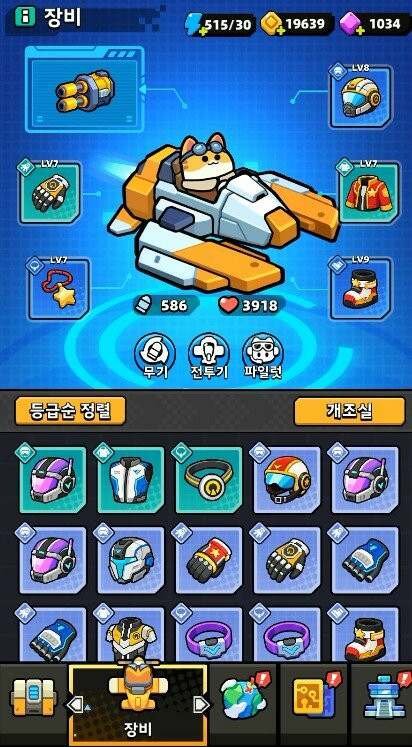
This is why out-of-combat progression matters. Using resources earned from clearing stages, you collect and upgrade equipment, preparing fighters and weapons for the next attempt. If clearing enemies took too long in one run, you can boost firepower before launching the next. Some of the reasons your fingers were busy can be solved right in the hangar.
There are 11 animal pilots and 9 fighter aircraft to choose from. Both pilots and aircraft come with exclusive skills, making setup synergy worth considering. Selecting a pilot specialized in a specific weapon allows you to tailor your starting build around favorite guns. You might start hiring based on cute faces, but end up checking job suitability. Even cockpit HR has work to do.

Progression extends beyond fighters, gear, and weapons. Elements like Talents, Research, Chips, Support Aircraft, and Pilots offer plenty to upgrade outside of combat. While mid-battle options are randomized every run, pre-flight preparations remain firmly in your hands.
These preparations create concrete goals once you discover a favorite weapon. A weapon enjoyed in one run motivates you to maximize its potential in the next. Looking for matching pilots, upgrading relevant aircraft and gear—all of it alters your starting line for the next flight. Choices made in a single run connect directly to preparing for the next.
The advantage of pick-up-and-play simplicity remains intact. Learning basic controls requires no lengthy tutorial, and upgrade results show up quickly in each session. Over time, favorite weapons prompt build planning, while tougher enemies encourage hangar adjustments. What began with a single finger smoothly expands to managing your armory and cockpit.
Sometimes, a Quick Round Hits the Spot Start Casual, Adapt Your Next Run
Exploring massive open worlds to follow storylines or checking off game content step by step is great. However, you don't always have the energy for grand adventures. Sometimes, you just want to launch a game, dodge enemies immediately, and wipe them out with overpowered weapons.
'Survivor: Ace' fits that mood perfectly. It offers easy-to-learn controls, defined stage lengths, and visually distinct upgrades. Players familiar with 'Survivor.io' will enjoy meeting familiar monsters once again. From the moment your finger touches the screen to guide your aircraft, the classic thrill of mobile shooters takes off.

Deciding how to grow your firepower is entirely up to you. Concentrating early upgrades on the Rapid Fire Cannon alone was plenty exciting. Exploring other weapons sparked curiosity about new combinations, while checking elemental weaknesses provided reasons to adapt skills to specific targets. Preparing pilots and craft around favorite weapons adds another layer of depth. Inside each short run lie choices to make, and outside lie preparations for the next challenge.
Next time, I want to focus on upgrading the lightsaber. I'll check out matching pilots and send a much clearer message to enemies that get too close. Of course, plans can shift depending on enemy elemental weaknesses or randomized skill choices. If a Rapid Fire Cannon upgrade pops up along the way, I'll probably hesitate again. My head says lightsaber, but my finger keeps reaching for the familiar favorite.