
Applying marketing strategies proven in mobile games directly to PC and console games yields poor results. This was the shared consensus among platform, agency, and publisher practitioners at 'G3 Seoul Forum 2026'. PC and console players take longer to deliberate and make purchasing decisions in places publishers cannot directly observe. This is why the approach to measuring and interpreting ad performance needs to be rebuilt from the ground up.
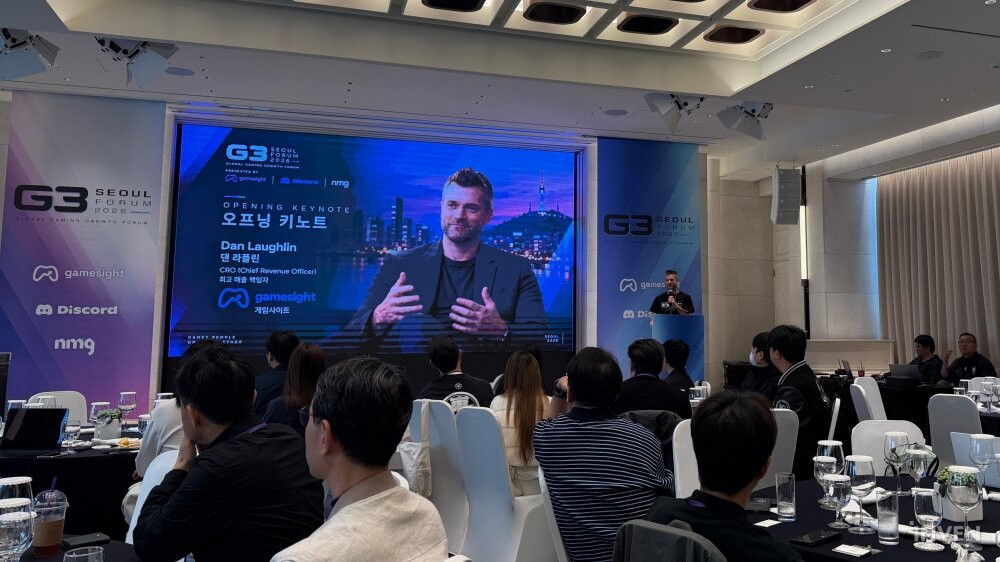
On the 16th, Next Media Group (NMG), together with Gamesight and Discord, hosted the forum at El Tower in Seocho-gu, Seoul. The theme was global expansion for PC, console, and cross-platform games. Presentations by the three companies were followed by marketing practitioners from KRAFTON and German publisher PLAION sharing their hands-on experience.
Serving as moderator, Kim Jeong-hee, Account Manager for APAC at Discord, addressed the current industry landscape in her opening remarks. "The market, which has long grown around mobile, is approaching saturation. While development and marketing costs are rising, achieving results is far from easy," she said. "Expanding globally on PC and console is a challenge where everything must be relearned—from growing Steam wishlists to community management and timing launch dates."
Gamesight: Stores are 'Black Boxes', 40% of Budgets Go to Influencers
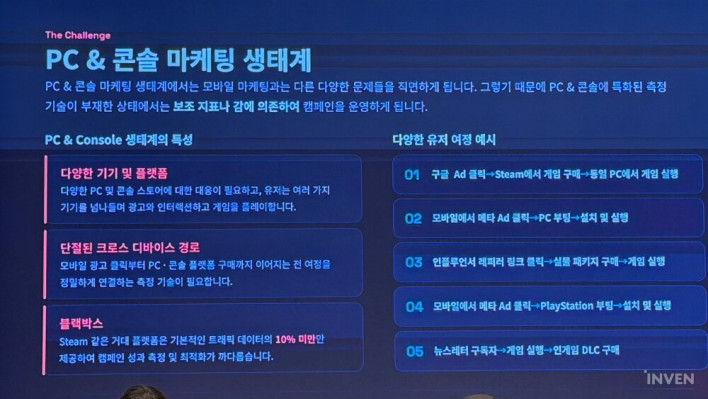
Yu Ha-neul, Manager at Gamesight, cited performance measurement as the biggest difference between PC/console and mobile marketing. On mobile, the path from viewing an ad to installing from an app store and playing is relatively straightforward. Conversely, PC and console involve multiple storefronts, with individual users jumping across devices to view ads and play games. The data provided externally by Steam and console storefronts is also limited, making it difficult for publishers to know what is happening inside the stores.
Budget allocation is also different. Yu explained that influencer marketing accounts for a much larger portion on PC and console than on mobile, with global publishers spending around 40% of their budgets on influencers on average. Selecting the right creators for a game, judging whether content aligns with local gamer sentiments, and verifying whether views translate into actual user acquisition were highlighted as key tasks for marketers.
Discord: A Friend Playing Is Stronger Than Ads
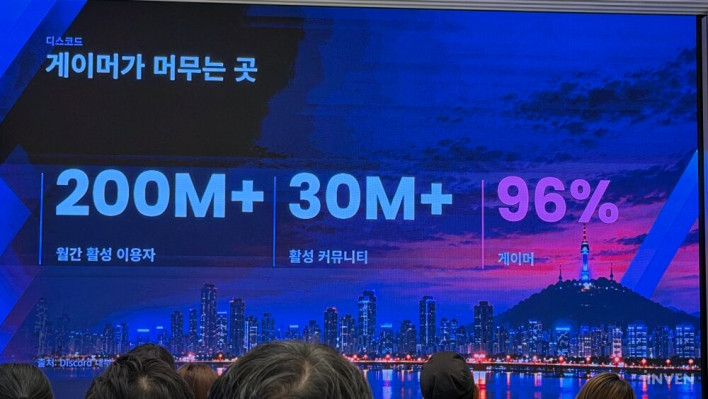
Yu Yeong-eun, Manager at Discord, addressed how PC gamers discover new games. Discord has approximately 200 million monthly active users, 96% of whom are gamers. Every month, 1.4 million users start playing a game within a day after seeing their Discord friends play it. 85% of users communicate daily with friends playing the same game, and half stream their own gameplay to friends. In an internal Discord survey, 45% of respondents answered that they use Discord to search for game information and make purchasing decisions.
Yu explained that gamers have a strong tendency to block or ignore conventional advertisements, which is also why Discord avoided ads for a long time. Consequently, Discord adopted opt-in, interactive ads where users accept them and receive rewards upon completing tasks like watching videos or playing for a set time. The assessment is that encouraging users to experience content voluntarily works better with gamers than one-sided exposure.
NMG: Paid Games Take 9 Days of Deliberation; Steam Reviews Make or Break Conversion Rates
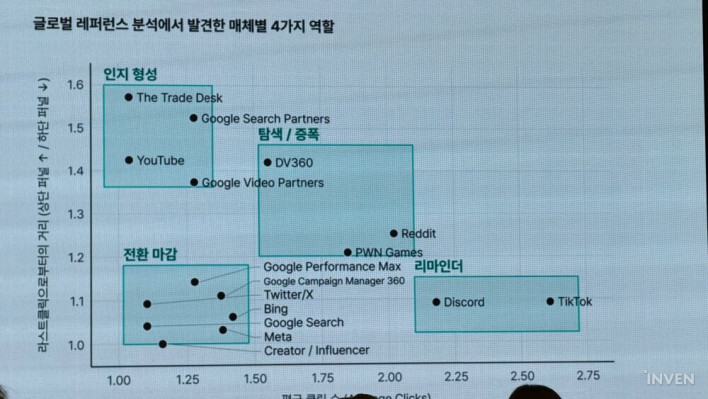
Lee Sang-ki, Director at NMG, presented an analysis of Gamesight's global reference data. He pointed out that under the 'last-touch' attribution model, which attributes all credit to the final ad touchpoint right before conversion, roughly half of major ad channels might be undervalued relative to their actual contribution. If a YouTube ad budget was reduced or halted due to low last-touch efficiency, marketers might have missed its contribution during the phase where users first learn about the game and build interest.
In the reference data, media channels played distinct roles within the marketing funnel. Channels like YouTube created first impressions for the game, while DV360 and Reddit expanded exploration and interest. TikTok and Discord held interest and drove re-engagement, whereas Google Search, Meta, and influencer traffic were closer to closing the conversion. Director Lee cautioned that while these role distinctions are not fixed for every campaign, eliminating awareness-phase channels and retaining only those involved in final conversions reduces the very activities that generate new user interest.
He explained that a 'multi-touch' perspective—evaluating contributions across multiple touchpoints together—is necessary. Even if the attribution window is set to 7 days and the final installation occurs via a Discord ad, if the user encountered a YouTube ad 10 days before installation and a Meta ad 3 days before, both media can be viewed as having influenced the conversion. Channels like TikTok, which yield fewer direct conversions but frequently register as secondary touchpoints, can be evaluated as bridging the path to final conversion. If older touchpoints outside the attribution window recur frequently—like YouTube—marketers should check whether the measurement window is set shorter than the user's purchase deliberation period.
The deliberation period varied significantly depending on the game's characteristics. Paid games took an average of 27% longer to convert than free-to-play games, while premium paid games priced at $40 or more took about 9 days. Director Lee stated that while this does not mean every user deliberates for 9 days, campaign design must account for the possibility that users are reviewing videos and ratings before purchasing, even if they do not install immediately. That said, paid game performance was not inferior. While average conversion rates were higher for free-to-play games, about 30% of paid games exceeded the median conversion rate of free-to-play games. This suggests that rather than pricing models dictating overall success, the time required for conversion differs.
Differences were also significant based on gameplay modes and genres. Multiplayer games took roughly 2.5 times longer to result in an installation compared to single-player games, even though the number of ads encountered during that period was similar. The analysis indicates that it is not because users saw more ads, but because checking whether friends will join or reviewing feedback from other players extends the decision-making process. By genre, MMOs took approximately 2.4 times longer than shooters.
Director Lee noted that these differences directly impact how performance should be evaluated. For games with slower conversions, the gap between initial performance figures and those checked after time has elapsed can be substantial. Rather than halting media channels or creative assets based solely on short-term cost per conversion, companies should time budget and asset adjustments to match their game's conversion timeline, and avoid directly comparing newly launched ads against those that have run for a sufficient period.
Ad creatives also vary depending on gameplay style. According to Director Lee, global marketers promoting single-player games highlight personal reasons to choose the title—such as story immersion, challenging combat, and open exploration—while driving installations through clear calls-to-action like 'Play Now' alongside discount and demo schedules. For multiplayer games and MMOs, campaigns frequently feature actual influencer gameplay, cooperative and competitive action with friends, and community events to demonstrate who users can share fun with, continuously delivering information and motivation until players decide to join.
For paid games, Steam user reviews directly correlated with ad performance. Installation conversion rates were approximately 2.8 times higher when review ratings were in the 'Very Positive' range compared to 'Mixed'. One paid game tracked over 21 months saw its average conversion rate rise from 2.5% to 3.8% around the time its recent reviews reached 'Overwhelmingly Positive', maintaining that level thereafter. In free-to-play games, this relationship was not as pronounced. This suggests that the more players pay upfront, the more likely they are to verify other users' reviews before purchasing. If ad acquisition costs are similar, higher conversion rates driven by improved reviews directly translate into lower costs per conversion.
Director Lee remarked that reviews should not be viewed merely as a community management metric, but as an essential factor for interpreting ad performance. When complaints that cause purchase hesitation—such as bugs or performance issues—recur in recent reviews, the recommended approach is to first discuss resolution priorities with development and business teams, confirm whether reviews and campaign conversion rates improve together post-fix, and then scale up budgets in phases. Conversely, even if reviews deteriorate, rather than cutting budgets immediately, teams should first investigate what issue arose and how actual conversions were impacted. He emphasized that reviews serve not as a raw benchmark for raising or lowering budgets, but as insights into how users evaluate purchase decisions.
KRAFTON: Design Emotion, Don't List Features
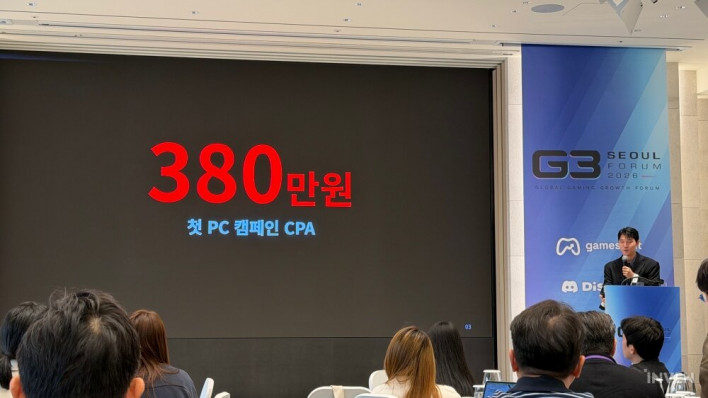
Jeong Yeo-won, Growth Marketing Manager at KRAFTON, shared trial-and-error experiences transitioning from mobile user acquisition to taking charge of a new PC title at KRAFTON. The cost per acquisition for the first PC title she managed was significantly higher than anticipated. Looking back, she realized the root cause was not a lack of IP awareness or creative volume, but rather being trapped in habits that worked on mobile. Describing herself as having been a "Homo Mobile Sapiens," she noted that performance transformed once she questioned and changed the practices taken for granted in mobile.
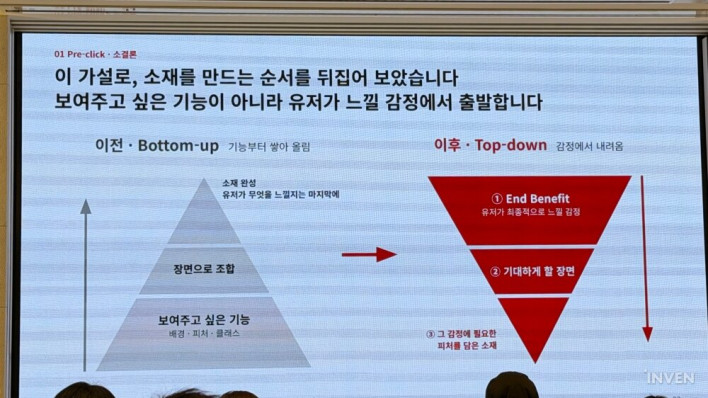
The first area addressed was ad creative. On mobile, it is customary to diversify creatives by breaking game features down into fine segments and combining them by class. However, creatives made this way—even if numbering 14 variations internally—appeared virtually identical to gamers scrolling through feeds. Manager Jeong found clues in a GDC presentation showing that users rarely read descriptions and judge genres primarily through screenshots and tags, as well as an indie developer's post-mortem noting how response varied depending on which emotional angle was highlighted for the same game. She subsequently reversed the planning order: first deciding the emotion she wanted users to feel, and then working backward to select the necessary scenes and features. Test results showed emotional-driven creatives performed significantly better, whereas feature-listing creatives failed to produce top-performing assets.
In ad copy experiments, click-through rates (CTR) and conversion rates diverged. Copy tapping into joy or tension yielded relatively lower CTRs but achieved the highest conversion rates. Conversely, copy listing game strengths in a third-person narrative generated high CTRs but the lowest conversion rates. Within KRAFTON, there was a case where a creative ranking #1 in CTR fell significantly behind during post-Steam landing stages. As a paid game, the gap between a click and an actual purchase is substantially wider than on mobile.
She also highlighted measurement issues. Manager Jeong noted that while Steam has released no official metrics, industry consensus suggests over 70–80% of ad-driven users are lost in Steam's UTM tracking. Because only logged-in users are tracked, mobile ad placements where user sessions frequently disconnect are easily undervalued. The fact that data finalization takes at least 3 days is another challenge. PC titles often concentrate ads during game show windows lasting about a week; if day-one results solidify only on day five, optimization can begin only after half the campaign duration has passed.
The solution she chose was inserting a 'bridge' landing page between the ad and Steam, placing tracking mechanisms on the button leading to Steam. This allows ad channels to optimize for post-click behavior rather than just clicks, while making it easier to estimate tracking loss by measuring the volume of users proceeding to Steam. In KRAFTON's case, nearly half of the visits arriving at Steam via the bridge page converted into wishlist additions. However, direct routing to Steam was sometimes more cost-effective. Manager Jeong recommended securing performance via direct Steam links while enhancing analytical resolution through bridge pages.
She also stressed that optimization speed must differ from mobile. Unlike mobile, where adjustments are made after monitoring results for just a day or two, PC titles require more patience unless backed by immense IP awareness or massive budgets. In KRAFTON's case, ad channel cost metrics eventually dropped to one-sixth or one-seventh of initial campaign launch levels.
PLAION: Cutting Awareness Ads Increased Acquisition Costs
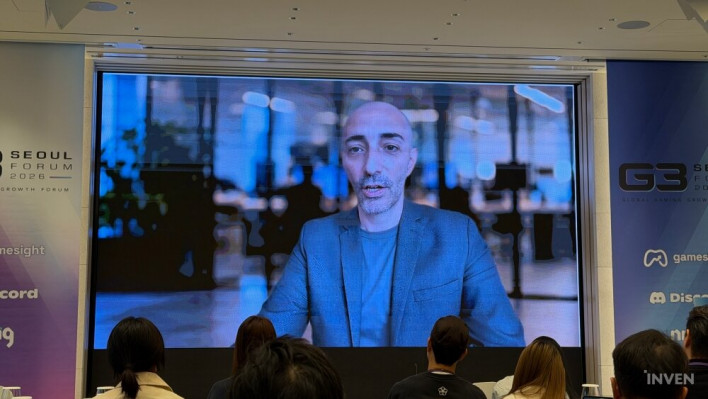
David Azria, Director of Player Growth & Lifecycle at PLAION, observed that amidst slowing market growth, a small handful of blockbuster titles captures most player playtime, even as nearly 20,000 new releases flood Steam alone each year. He described this as a structural issue where more games compete for the same players. In such a market, players desire novelty yet frequently return to trusted franchises, making long-term IP building essential in his view.
Director Azria identified the greatest challenge in PC/console marketing as purchases taking place outside the publisher's line of sight. Users watch trailers and creator videos, chat on Discord, and only purchase games on Steam weeks or months later. Premium games dedicate most marketing efforts to building awareness and wishlists months ahead of launch, yet revenue concentrates heavily at launch, making it difficult to tie individual expenditures to sales.
Following industry conventions, PLAION ran exclusively conversion campaigns after releasing 'Kingdom Come: Deliverance'. Over time, average user acquisition costs exceeded targets. Rather than slashing budgets, PLAION reallocated around 30% of its budget back to awareness campaigns, subsequently verifying that awareness campaigns reduced acquisition costs for conversion campaigns. This case directly aligns with NMG's analysis that last-touch metrics miss the contributions of awareness-stage media.
Director Azria recalled being surprised by the lack of PC/console data when he joined PLAION, noting that changing team culture was harder than adopting measurement tools. He added that while AI will transform campaign operations, AI is only as useful as the underlying data. His advice to teams preparing premium games is to establish a measurement framework before making the first expenditure, as most budgets and learning opportunities occur pre-launch—meaning starting measurement at launch misses the most crucial lessons.
This forum highlighted that the core challenges Korean game companies face in global PC/console markets lie in 'reach' and 'measurement' after game development is complete. New domestic PC and console titles generate a substantial portion of their revenue from overseas digital stores. Pearl Abyss, led by 'Crimson Desert', recorded 84.4% of its revenue in the first half of this year from the Americas and Europe according to its semi-annual report, while domestic revenue accounted for just 6.9%. As long as players purchase games on overseas storefronts, the ability to find and convert users beyond the unobservable purchase funnel plays an increasingly crucial role in commercial success.
What stands out is that presenters from different positions arrived at the same conclusion. The measurement solution provider pointed to data voids in storefronts, the agency cited limitations of last-touch metrics, and KRAFTON and PLAION offered their respective trial-and-error experiences. The shared conclusion was that short-term efficiency metrics used in mobile cannot explain the purchasing journey of PC and console players.
It is also significant that practitioners from a leading Korean publisher publicly discussed failure experiences tied to mobile habits. In a market flooded with new titles, the time spent unlearning mobile formulas directly translates into cost.