'Mabinogi Eternity,' which conducted its first alpha test last September, has shared new updates.
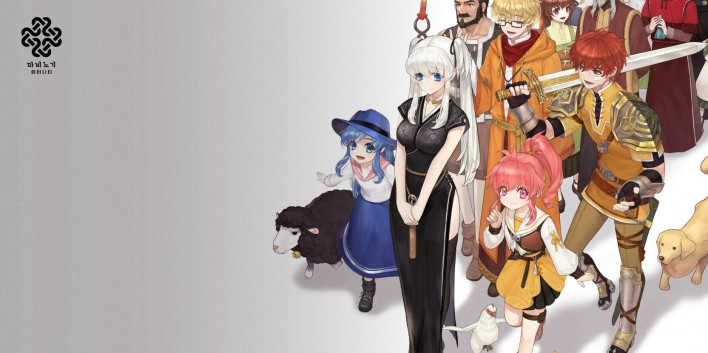
On October 15, the Mabinogi Eternity development team shared insights via 'Nexon TAG' explaining why Mabinogi Eternity remade the existing world rather than creating a new game, along with the process and considerations involved in reviewing original concept art and legacy assets.
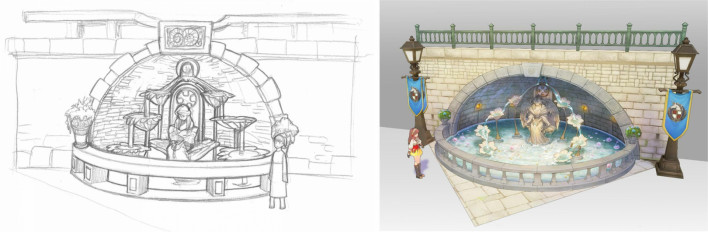
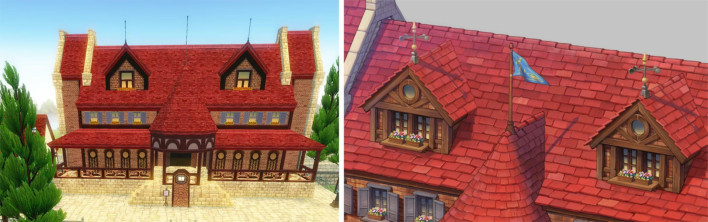
The team explained that by examining past concept art and assets, they revisited original design intentions that could not be realized at the time due to technical limitations. They focused on maintaining characters' silhouettes and distinct impressions while adding details like running water to the Dunbarton square fountain, as well as flags, weather vanes, and a bell on the school roof. Furthermore, they retained the toon rendering and hand-painted texture approach, while adding Unreal Engine 5's lighting, cloud, atmospheric, and fog effects, alongside an expanded dyeing system.
For 'Mabinogi Eternity,' the first alpha test—held for four days starting September 3—received positive feedback for its newly implemented visuals, background music, world exploration, and character customization. On the other hand, UI sizing, font legibility, interactions and controls, combat impact, and sound effects remained areas for improvement. The developers stated, "This alpha test was the first verification step to confirm the direction we prepared together with the players," adding that they will develop under the principle of boldly improving what needs to change while resolutely preserving what must be kept. Below is the breakdown of the development process for 'Mabinogi Eternity' revealed via Nexon TAG on October 15.
In the alpha test for 'Mabinogi Eternity,' the Erinn (the world where Mabinogi players adventure) that players encountered again felt clearly refreshed, yet never unfamiliar. Mabinogi Eternity is a project rebuilding the foundation of the game on Unreal Engine 5 while preserving the identity of Mabinogi, which has been in service for 22 years. Why did the development team choose to recreate the existing world anew instead of making a new game? Here is a look at their choices and considerations as they brought change while preserving familiarity.
What to Change and What to Preserve
The development team started by tracing back the original design intentions from when past assets were first created.
Mabinogi is a game that has been in service for over 20 years. Older assets often failed to fully embody their original intent due to the technical limitations of that era. The development team first identified what was originally intended and what was omitted due to performance constraints, then focused on recreating those elements using modern technology.
Take the fountain in Dunbarton Square, for example. While water does not currently flow in the in-game fountain, early concept art clearly depicted running water. Although implementation itself was likely possible at the time, it appears it was excluded from the live game due to optimization and other reasons. The developers explained that reviewing these concept sketches reminded them of how meticulously the world of early Mabinogi had been designed.
Reviewing existing concept art also led to unexpected discoveries. Noticing long structural posts left on the school roof, they inferred an original intention to erect flags. Based on these traces, the developers newly added flags, weather vanes, and a school bell, honoring the spirit of the concept art while further enhancing the world's immersion.
Choi Jin-man, development leader for Mabinogi Eternity, does not view this process as a simple graphical renewal. He explained, "Simply painting over graphics to make them look nice was not our goal. We wanted to fully show the 'true vision of Erinn' that senior developers 20 years ago couldn't realize due to technical limitations to our Milletians [Mabinogi players]."
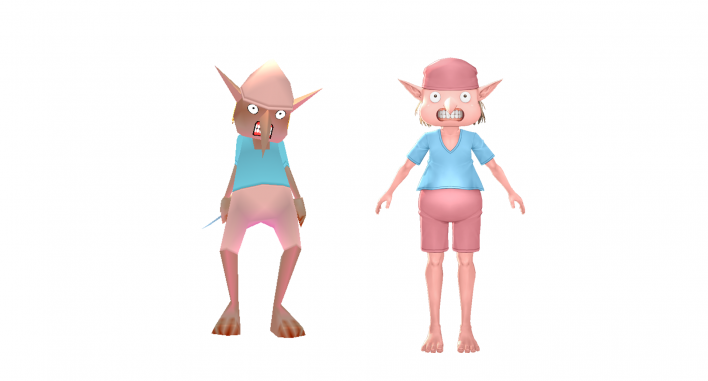
The standard for recreating characters was also not just making them smoother or prettier. The team prioritized the silhouette, impression, and unique personality that players recall when hearing a character's name as their most important criterion.
For example, rather than unifying Imp's design with other characters of the same race, they chose to maintain the distinct impression and atmosphere that Milletians remember. While raising visual quality, they fully preserved the unique identity established in Milletians' memories over a long period.
Their persistence in retaining visual 'Mabinogi-ness' extended to their art methods as well. Instead of following recent trends of intricately carving 3D polygons to convey depth, they stuck to toon shading paired with hand-painted texturing ('hand-mapping'), meticulously detailing textures by hand. They believed that deviating from this handcrafted approach could compromise the warm, cozy charm of Erinn that Milletians remember.
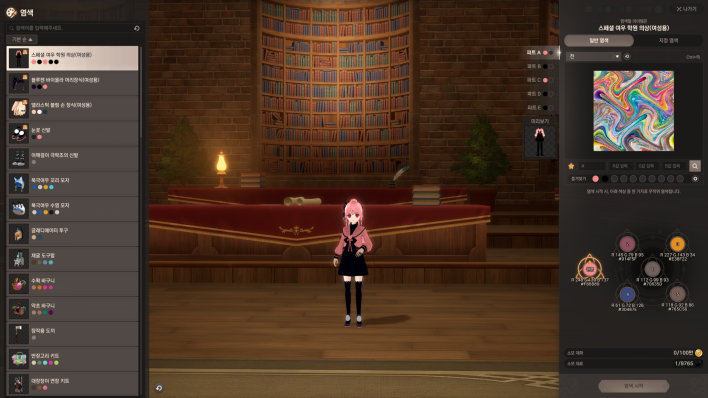
The dyeing system—an iconic symbol of Mabinogi—has also been further expanded. Players can now select their desired material palette among cloth, metal, leather, and silk for all dyeable items, giving them greater freedom to express their individuality.
Modern technology was also leveraged as a tool to enrich the Mabinogi atmosphere. While applying Unreal Engine 5's real-time lighting, cloud, atmospheric, and fog rendering to bring the world to life more vividly, they retained the game's distinctive time representation where shadows rotate around objects. The key change developers wanted to deliver to players in this alpha test was a more immersive world—making Erinn feel more vividly like a living, breathing realm.
The changes were certainly substantial. However, the direction of those changes was not about adding something entirely new over top. Delivering the emotions and experiences of Mabinogi that players remember with greater clarity was the core principle the developers sought to protect in Mabinogi Eternity.
Why Choose an Engine Switch Over a Sequel
Mabinogi Eternity was not conceived as a sequel from the start. What the developers wrestled with was, "How can we ensure a 20-year-old game continues for a long time to come?" Because the project assumed the live service of Mabinogi would continue uninterrupted, creating a sequel was off the table, making an engine migration the optimal path for everlasting service.
Migrating proprietary extension (PMG) data from the existing Pleione Engine onto the new foundation of Unreal Engine 5 was no easy task. To achieve this, the team built custom conversion tools from scratch, and for each ported region, they had to reconfigure walkable areas, terrain, and building textures and rendering techniques to fit the new environment.
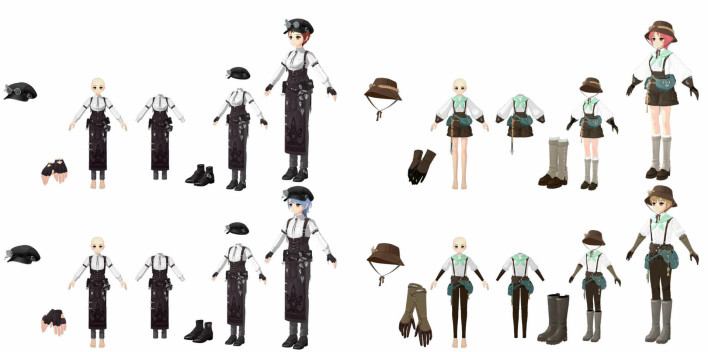
In many cases, legacy assets had to be remade entirely. Costumes and hairstyles required additional rigging setup to achieve natural movement. Recreating the various systems used in the old engine identically within the new environment was particularly difficult. Notable examples included outfit dye-region separation data and specification data for individual parts like gloves, shoes, and hair, which could not be used directly in Unreal Engine.
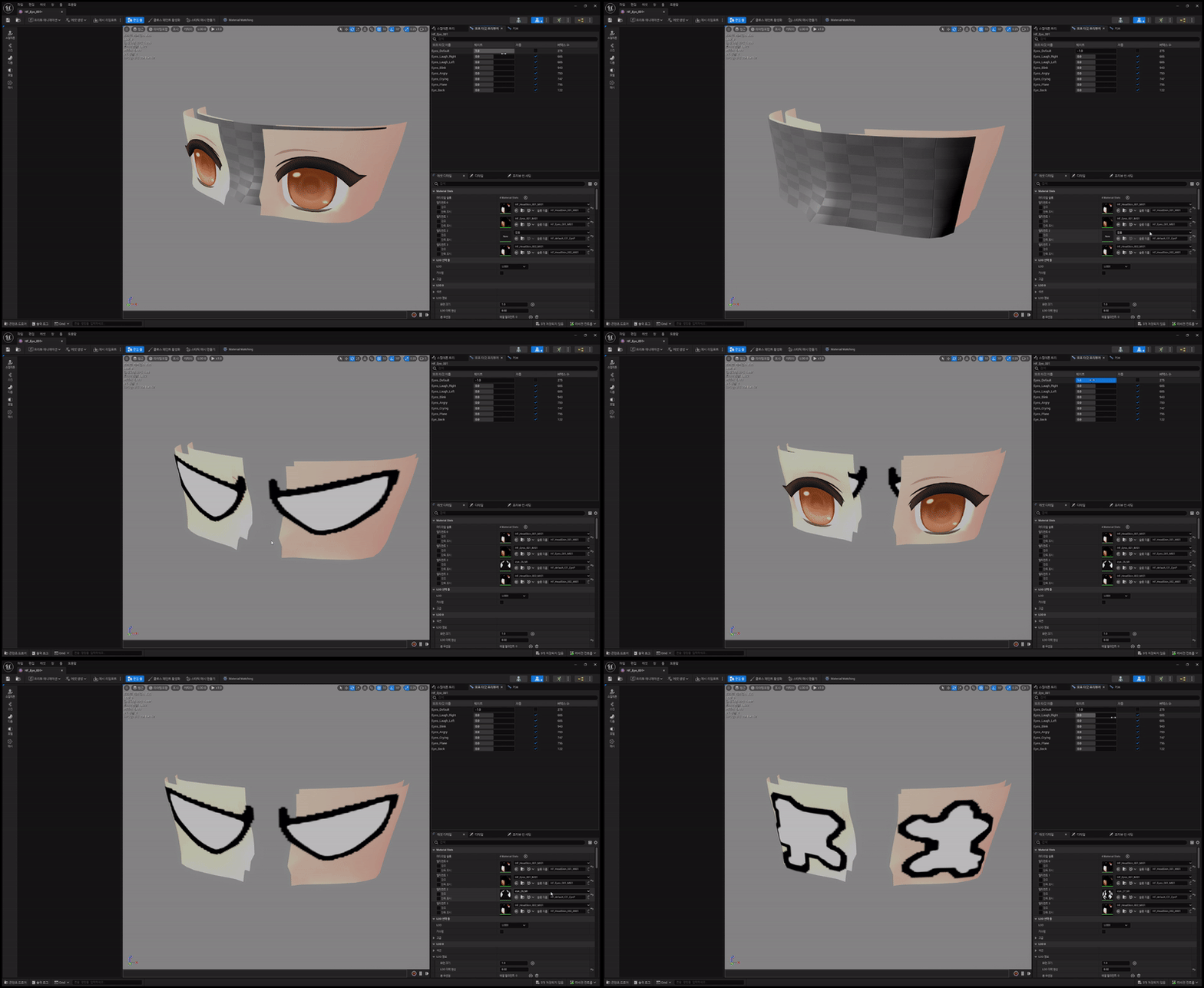
The limitations of the legacy engine were also evident in character facial expressions. In current Mabinogi, eyes and mouths are implemented by applying 2D textures onto 3D face models. In the developers' words, it was like sticking decals onto a smooth egg. However, because textures are purely 2D images, capturing depth and natural animation was difficult. Combined with the reality that decades of accumulated data and live service structures were hard to touch, this had long been an unresolved challenge.
The switch to Unreal Engine 5 provided a clear opportunity to solve this problem. However, rather than converting everything into full 3D, the developers chose an approach that preserved the unique feel of Mabinogi. This was because certain cartoonish expressions—such as exaggerated expressions where the mouth pops outside the profile of the face—were only possible through texture-based rendering. Thus, they used 3D eyes and mouth models for standard expressions while applying a system where texture masks pop forward for specific expressions. It was a choice aimed at overcoming technical constraints while maintaining the cherished aesthetic that has been loved for years.
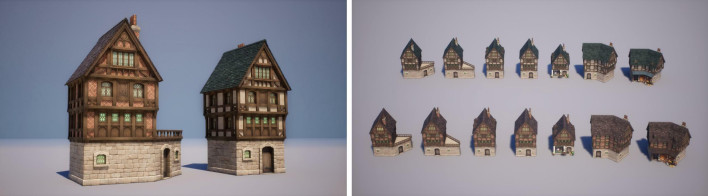
Leader Choi Jin-man stated that they also redesigned their asset production pipeline to handle the massive workload. For 'Tara,' a city densely packed with intricate architecture, they applied a modular system, splitting walls, pillars, windows, and stairs into reusable assets. This reduced repetitive work while preserving the city's unique atmosphere through various combinations. They boosted efficiency with tools where automation was possible, while meticulously hand-crafting elements that directly impacted quality and identity.
The developers' goal, which they refused to compromise even if the engine switch prolonged development, was clear: not merely delivering better graphics, but providing a superior play experience on the new engine while seamlessly maintaining the existing live service. To achieve this, they chose the somewhat complex path of comprehensively redesigning server and client architectures, data structures, and asset frameworks.
Achievements and Challenges Left by the First Alpha Test
In the first alpha test held for four days starting September 3, the newly recreated visuals of Erinn, background music, world exploration, and character customization received high praise. On the other hand, UI sizing, font visibility/legibility, interactions and controls, combat feedback (hit feedback), and sound effects were identified as areas requiring further refinement. The developers designated these as key focus areas for improvement in the next phase.
Even regarding the same changes, opinions among Milletians were divided. Some players wished for faithful retention of the original look, while others expected bolder transformations. The development team did not deem either side's feedback as exclusively right or wrong, recognizing that each player's time spent in Erinn and playstyle differ, and that very diversity forms Mabinogi's "Fantasy Life."
Above all, what touched the developers most was the behavior shown by Milletians during the alpha test. Even in a test environment with lingering operational inconveniences, players gathered in small groups to help beginners, share equipment, and act as dungeon guides. Gathering around campfires to share memories was Mabinogi itself.
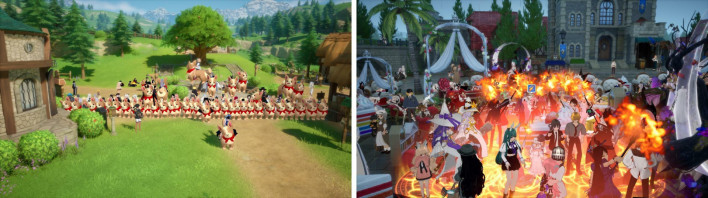
Leader Choi Jin-man recalled, "Normally, concurrency drops toward the end of a playtest, but player logins surged dramatically on the final day. Seeing countless Milletians gather in the square as the test closed, simultaneously casting the Meteor Strike skill to create a massive 'human campfire,' was a deeply moving scene that could only happen in Mabinogi."
After the initial journey concluded, Min Kyung-hoon, General Director of Mabinogi, shared his heartfelt gratitude to Milletians along with the next milestones for Project Eternity.
"What Project Eternity ultimately seeks to carry over are the memories that you, the Milletians, have built up over a long time in current Erinn. To continue growing over the long haul, we will boldly attempt changes where necessary while firmly preserving what must be protected. Taking your feedback and love as nourishment, we will return with an improved presentation."
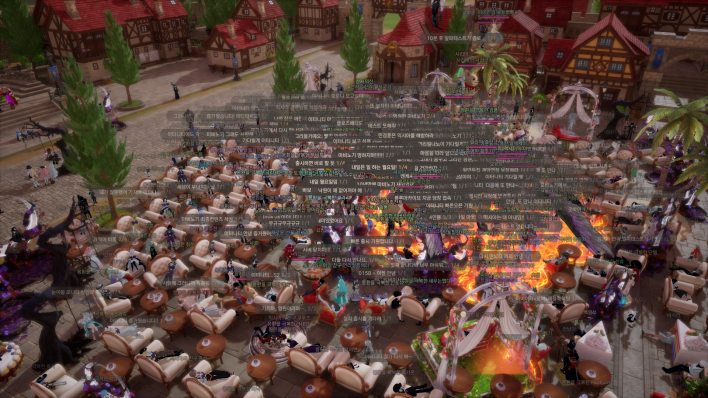
The goal of Mabinogi Eternity is not simply upgrading graphics and systems. It lies in laying a foundation that bridges the memories and experiences Milletians built in present Erinn with the time they will create in the future.
This alpha test was the first verification step to confirm the direction prepared by the development team alongside the players. Guided by the principle of boldly improving what needs to change while resolutely defending what must be preserved, Mabinogi Eternity is building the Erinn for the next 20 years today.