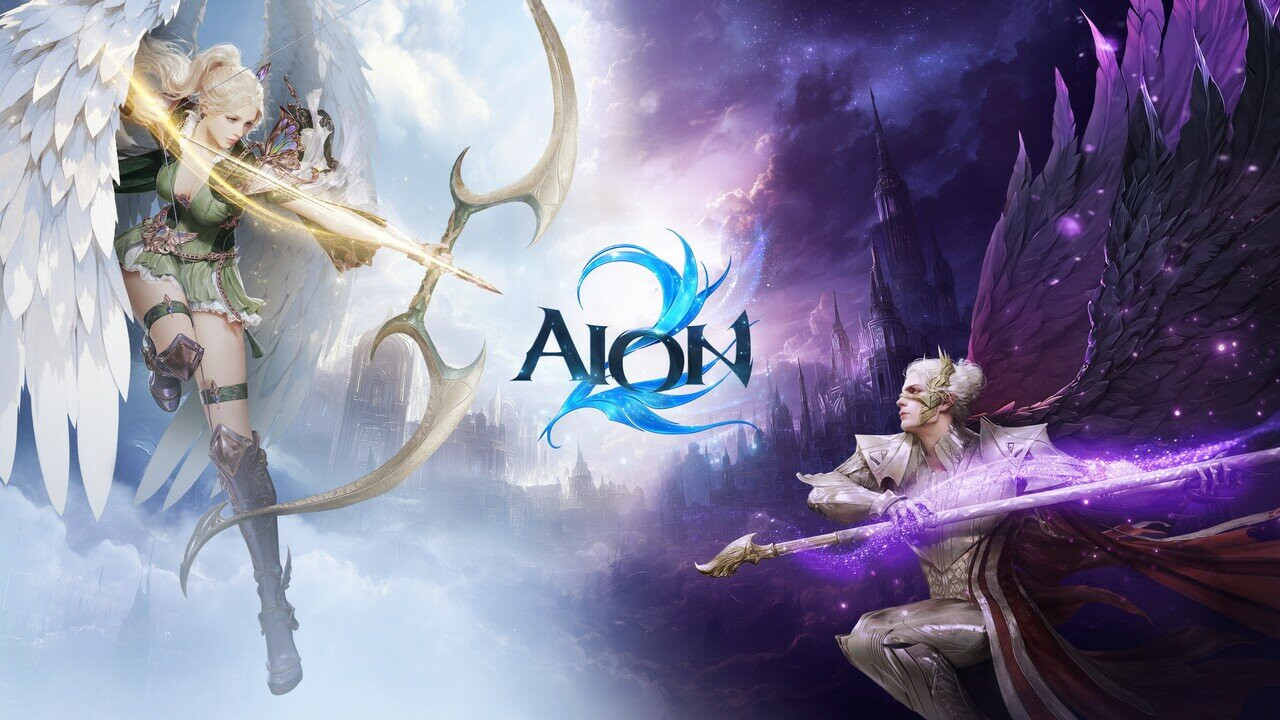
Looking solely at the metrics, it is a strange coexistence. The initial report card achieved by NCSOFT's PC MMORPG 'Aion 2' in the global market is undoubtedly impressive. As soon as early access opened on September 30 for paid Founder's Pack buyers, the game hit No. 1 in Steam sales in eight countries, including Brazil, France, and Thailand. Adding the US and Germany, it topped the charts in 15 countries throughout the early access period. After the free-to-play official service launched on October 5, peak concurrent players on Steam soared to 397,905. On October 8, two new European servers were added, and as of 10:06 AM on October 16, the peak concurrent player count over the past 24 hours reached 292,931. Even in its second week after launch, the game continues to draw hundreds of thousands of concurrent players.
However, the player evaluation on Steam on the same day tells a markedly different story. Out of approximately 32,000 reviews across all languages, the positive ratio stands at around 59%, resulting in an overall rating of 'Mixed'. Just because many players log in does not mean they willingly recommend everything they experienced inside. Reviews for 'Aion 2' carry both fond memories of exploration and complaints about progression bottlenecks. What captured Western gamers who had been longing for a major MMORPG, and at what point did their thumbs turn toward the 'Not Recommended' button? We examined what lies beneath by cross-analyzing the original text of the top 40 'Helpful' Steam reviews, eight hands-on impressions from six North American and European media outlets, and domestic and international live-service logs.
A 'Collection Marathon' That Kept Even Negative Reviewers Playing for Dozens of Hours
A check of the top 40 reviews sorted by 'Helpful' on Steam on October 14 revealed that only 6 were 'Recommended' while 34 were 'Not Recommended'. What is interesting is the playtime and tone of some negative reviews. While pouring out sharp criticism, they also mention that exploring the world and engaging in combat in the early game was genuinely enjoyable. A reviewer who clicked 'Not Recommended' after playing for over 100 hours recalled being initially impressed by the beautiful world. In short, the charm that hooks players early on and the issues that make them hesitate to recommend the game coexist within the same title.
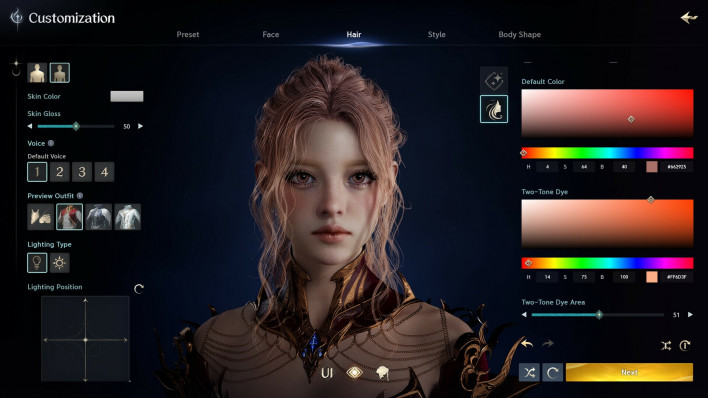
The first appeal highlighted in several reviews is the "connection between collecting what you see and progression as a clear goal." One positive review that received 669 'Helpful' votes praised the detailed customization and flying, stating, "The mount system is really fun. You can tame and ride most monsters." Dressing a character customized to your liking in stylish outfits and taming a monster you were just fighting to ride it around provides enjoyment separate from the gear chase. However, this author also pointed out late-game monetization and progression constraints at length, leaving a conditional recommendation to enjoy early exploration for about a week.
Furthermore, the process of steadily building character foundations resonated with another reviewer as a satisfying sense of progression. A positive review with 318 'Helpful' votes compared growth in 'Aion 2' to a marathon, noting that "whatever you do contributes to your character's overall strength." The author cited examples such as capturing monsters for mounts and defeating them a certain number of times to stack permanent stats. Taming an impressive monster as a mount directly ties into making your character stronger. Since the time spent completing collection logs directly boosts combat power, players still have tangible goals to pursue even if they fail to obtain top-tier gear immediately. The reviewer also noted that relatively simple class controls relieve pressure when solving complex mechanics in high-difficulty dungeons and raids. In essence, the loop where minor collection leads to stat boosts, preparing players to tackle boss encounters, was seen as a key fun factor.
Flight Without Invisible Walls: Turning Scenery into Paths
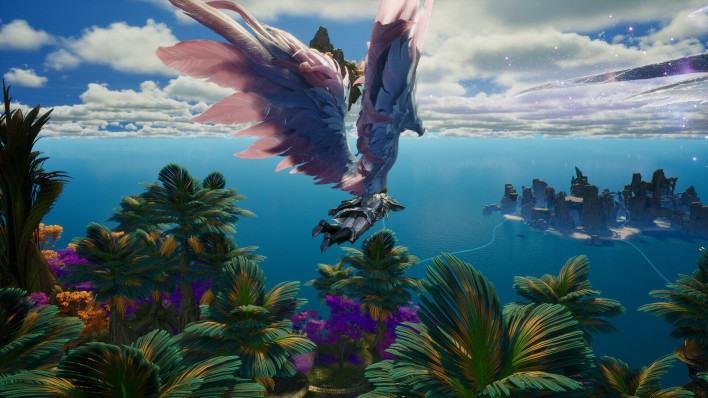
While player reviews highlighted the loop of collecting and growing, Western gaming journalists focused on the "three-dimensional sense of space" supporting that journey. By weaving 'Aion 2's gliding and flying mechanics into travel between quest markers, movement itself was transformed into a form of play.
Joseph Bradford, a writer for North American outlet MMORPG.com, described in his review in progress for the full release, "Every time I soar along a cliffside or pause to gather floating resources, it's fun." Despite never having played the original 'Aion', he cited flight as his favorite feature. Massively OP also praised the world design as its greatest strength in a pre-launch hands-on preview, writing, "I kept expecting to wander off the path and hit an invisible wall, but it never happened."
This creates synergy with the collection elements praised earlier by Steam users. Players heading toward a quest objective might veer off course upon spotting aerial gathering nodes. Travelling by flying or swimming, and discovering small dungeons and collectibles along the way makes the world function like a giant playground. Combat also offers room for mastery, as Dutch outlet intheGame explained: "The longer you play a class, the better you recognize the combos between these skills." It involves positioning during boss fights, chaining appropriate skills, and holding back abilities to set up stronger combos. The satisfaction of combat varies based on when and how players execute familiar skills.
Eager to Keep Sprinting, But the Doors Close... The Glass Ceiling Facing 400,000 Concurrent Players
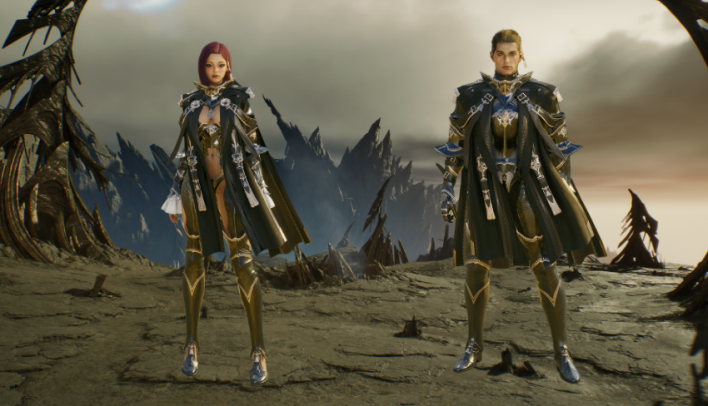
The issues emerge when players who become hooked start diving deeper into the game. The 34 negative reviews contained various complaints, such as repetitive combat or language support, but several acknowledged early-game fun while taking issue with monetization and reward caps. Players felt frustrated that just as they found new goals to pursue, constraints were placed on how fast and in what manner they could pursue them.
Cited as the biggest barriers are the membership structure and reward restrictions that narrow the scope of free-to-play. While base access is free in the global version, a paid membership is required to buy and sell items on the player marketplace. Furthermore, membership and certain paid perks are bound to specific servers or characters. As a result, players joining friends on a different server or rolling a new class cannot carry over perks they already paid for.
Receiving particularly sharp criticism in reviews are the reward limits epitomized by 'Aether Energy'. Even after clearing a dungeon, opening the reward chest requires Aether Energy, and because this resource is limited, earning rewards as much as desired is difficult. A negative review with 3,120 'Helpful' votes criticized Aether Energy, content schedules, and RNG crafting, stating, "I don't want an MMO telling me when I'm allowed to enjoy my favorite content." Players find enjoyment in collecting and dungeon farming, only for their opportunities to open reward chests to be capped despite repeated runs. While different from being locked out of dungeon entry, restricting rewards still dampens motivation for players striving for progression. Foreign gaming outlets also commonly pointed out the complex UI overlaid with multiple currencies and shop menus.
NCSOFT is also tuning related systems. An October 7 patch changed Founder's Pack cosmetic rewards to be accessible across characters on all servers, and an October 9 update boosted the flight power of four quest reward wings by 500 each. Starting October 14, the fee for the first server transfer per account was waived for early access servers. Transfers are restricted to the same region and faction, and the cost to add extra character slots remains separate. In the same day's patch, the weekly per-server purchase limit for bound Aether Energy sold by the Wind Spirit Merchant was removed during the transfer period, while the per-character cap was raised from 4 to 20. While these adjustments expand opportunities to earn rewards, the core structure requiring energy for dungeon rewards and the paid membership requirement for the marketplace remain intact.
Behind the Global Celebrations, Screams of 'Test Server' Erupt from the Korean Live Server
The global version, launching later than in South Korea, also included service design adjustments. When expanding overseas the game originally launched in Korea and Taiwan in November last year, NCSOFT excluded Heroic-grade gear at the start of Global Season 1 to maintain progression balance. In a pre-launch interview, the global head explained that Expedition and Transcendence party sizes were expanded from 4 to 5 players, and Sanctuary raid sizes from 8 to 10 players. In domestic broadcasts, developers revealed that percentage-based stat inflation was capped for the global version. Experiences from the earlier live regions were clearly reflected in adjustments for the late-starting version.
However, these adjustments triggered a fierce backlash from Korean players. A live broadcast by the domestic development team on October 13 became a session to appease angry sentiment, offer explanations, and deliver apologies. Criticism from Korean players was clear: seeing improvements they had given feedback on implemented globally first made them feel as though South Korea had served as a paid test server. This was compounded by a sense of deprivation over spending significant money on gear progression only to lose value with every update, roadmap delays for systems like housing and sailing, a lack of endgame content, and demands for class change vouchers.
The developers responded that they would do their utmost to bring features that received positive feedback in global servers to the domestic server as well. They explained that server lag during large-scale battles and macro efficiency issues experienced by Korean players were tied to inflated stats. High attack speeds increased effect generation frequency and server packet volume, contributing to large-scale battle lag, and team members are putting effort into optimizing this. While percentage stat increases were suppressed globally, domestic servers had high attack speed and cooldown reduction stats, making macros more efficient than manual play. The developers promised to find ways to reinforce the satisfaction of manual controls, even if fixing already inflated stats proves difficult.
Regarding content drought controversies, developers explained that dungeon difficulties were kept easy to lower entry barriers, but promised to restructure operations starting next chapter by introducing distinct difficulty tiers so existing players can enjoy content without feeling at a disadvantage. Class change vouchers will not be pursued for the time being. Housing was delayed due to extra work enhancing player freedom—such as wall/floor customization and furniture scaling—and is currently undergoing final quality checks. They also mentioned exploring solutions for PvP issues and preparing 'Abyss Outlands', a 100-player content where participants start under identical conditions to gather gear and buffs while competing for ranks.
In the end, what 'Aion 2' demonstrated in its early launch phase is the gap between eye-catching fun and conditions for long-term play. Core mechanics—flying through the skies, taming monsters, and turning minor collections into character strength—remained appealing in overseas reviews. However, the global audience faces barriers around rewards and the marketplace for players wanting to play more, while domestic players harbor grievances over failing to protect the value of early investments. Having gathered nearly 400,000 concurrent players, the challenge now remains how NCSOFT will resolve these two dilemmas waiting on the ground.