The 21st Gyeonggi Game Audition in 2026 will hold its final audition on October 15. In this edition, 10 games in the General Division and 3 games in the Student Division across various genres participate as candidates, with final rankings determined through a comprehensive evaluation that includes on-site assessment. The final audition will take place on October 15 from 10:00 to 14:00 at the International Conference Hall of the Pangyo Gyeonggi Center for Creative Economy & Innovation.
The 13 games competing in the final audition showcase gameplay across a wide range of genres, including simulation, RPG, puzzle, shooter, adventure, and visual novel. While most platforms are PC, players can also encounter some console and mobile games.
Marking its 21st edition this year, the Gyeonggi Game Audition serves as a stepping stone for the indie game industry, having produced numerous famous indie games such as SANABI, Shape of Dreams, and Ratopia. Notably, this year's audition introduced a new Student Division, expanding participation to high school and university students. As many outstanding games enter each event, it will be exciting to see which titles take first place in the General and Student Divisions among the finalists.
General Division 10 new titles standing out with high levels of polish
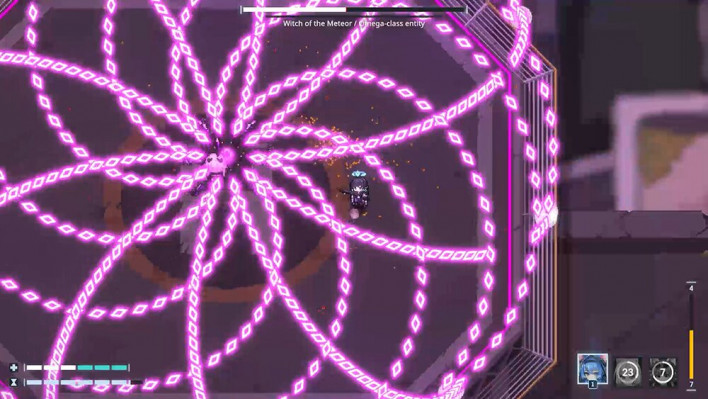
This is a top-down twin-stick bullet hell shooter where players manipulate time to navigate through barrage attacks. Utilizing "Time Acceleration," which slows down surrounding time, players find gaps in incoming bullet patterns to dodge or counter incoming attacks during battle.
A core aspect of the game is freely combining weapons, companions, and traits to build unique squad compositions. Players adjust their team setup according to each mission and earn new weapons, companions, traits, and growth resources as completion rewards. The collected resources are used to power up companions.
Gameplay progresses sequentially through various missions alongside the main story. A powerful boss awaits at the end of each mission, and completing them unlocks "Arena Mode," where players can challenge tougher boss encounters. In the Arena, players face bosses utilizing new attack patterns in even more demanding battles.
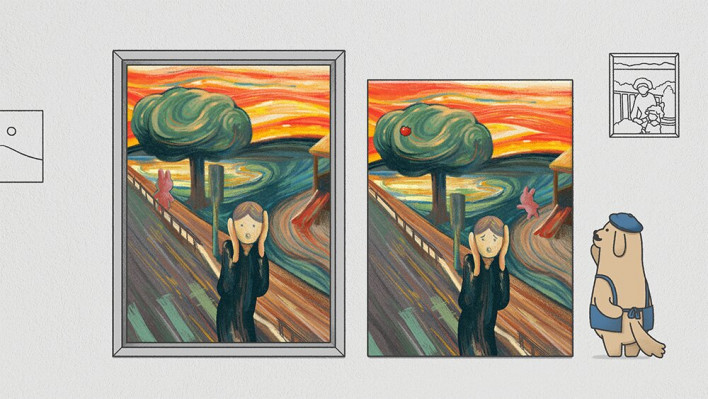
True to its title, this is a wholesome puzzle game about finding a red ball for a crying cat. The objective is to observe the environment, interact with various objects to uncover clues, and present the cat with the exact red ball it desires.
Rather than repeating a single gimmick, the puzzles feature different solution mechanics for every stage. Solutions vary widely—including finding a ball hidden behind objects, dyeing a white ball red, opening locked spaces to retrieve a ball, as well as searching, crafting, extracting, and trading. Physics-based interactions, such as moving, throwing, or dropping objects, are also utilized.
Diary entry fragments obtained by solving puzzles contain the backstory surrounding the cat and the red ball. As players progress, the mystery behind "why it had to be a red ball" gradually unfolds. Collecting diary entries is entirely optional, allowing players to enjoy the game in whichever way they prefer—whether by following the narrative or focusing solely on the puzzles.
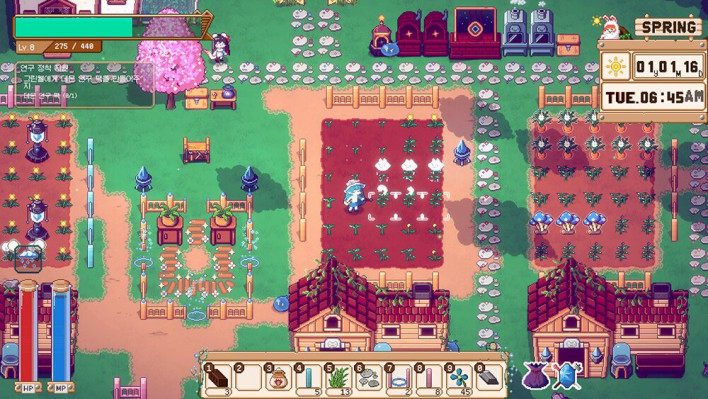
Mystical Demon Farm is a vibrant farming game combining farm simulation, monster collection, and dungeon crawling. Featuring cute and charming graphics, players hatch and collect Demons while exploring dungeons and fields to gather Essence and materials to expand their farm.
Demons are hatched by creating cores from "Essence" gathered through dungeons and farming, then activating them. Inside dungeons, tool magic transforms into powerful offensive magic, and strengthening skills allows players to destroy enemies and obstacles more easily. Summoned Demons also attack nearby enemies and objects alongside the player.
Materials obtained from dungeons and fields are used to expand the farm. Raising the farm level through item deliveries, Demon collection, and farm expansion unlocks new recipes, Demons, and areas in turn. Meeting NPCs and collecting ancient records also allow players to uncover the truth behind the Mana Anomaly, the Great War, and the three archmages of the past.
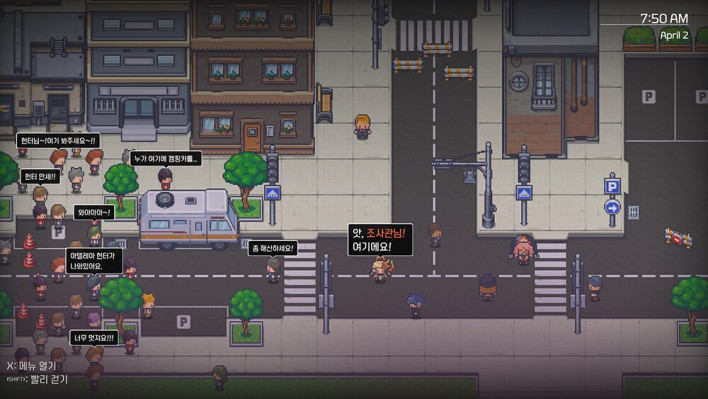
Set in Elysia, a city where dungeons have become part of daily life, this urban fantasy adventure RPG features a storyline filled with both wit and tension. Players take on the role of a rookie investigator at the Dungeon Management Bureau, taking complaints from citizens and hiring hunters from agencies to investigate dungeons. How issues are resolved depends entirely on the investigator's choices.
Defeating otherworldly creatures with powerful skills isn't always the correct answer. Players can find entirely different solutions, such as talking to targets or investigating nearby objects. Dialogue and plot developments shift depending on who players talk to first and what actions they take, while deduction puzzles require organizing collected clues on an investigation board to reconstruct cases.
Combat combines a front-view perspective with a grid system. Tactical positioning is crucial—such as pushing enemies to adjacent tiles or luring them into pre-set traps—while enemies' special skills must be countered using QTE prompts. The game also features a "Logos" system that grants new skills to hunters by combining words discovered during investigations.
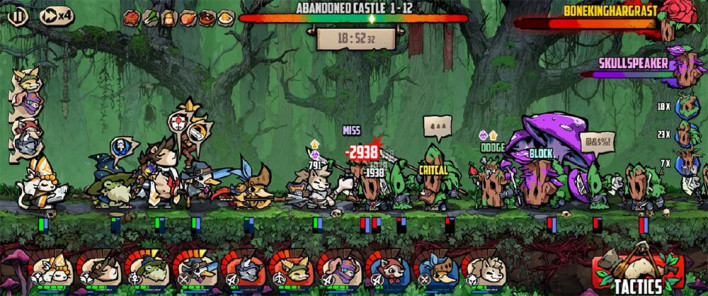
Animal Frontiers is a line-battle RPG that combines familiar animal characters with a dark fantasy setting. The core gameplay revolves around head-to-head front-line combat where allies and enemies clash, pushing and pulling the battle line against each other. Players form units by combining six classes—Knight, Warrior, Rogue, Archer, Mage, and Priest—and can alter formations and target priorities mid-battle.
In hexa-grid exploration, players must expand their territory within a limited number of turns to defeat the final boss. Various events—such as combat, gathering, healing, resurrection, treasure acquisition, and PvP—occur across the grid, and capturing cells yields roguelike team buffs. Conversely, enemy "Hate Buffs" also accumulate, steadily increasing difficulty as exploration continues.
Characters grow through six development elements: level, star rank, tier, skills, equipment, and relics. In town, players can utilize various functions such as recruiting and training heroes, cooking, and crafting equipment, alongside dedicated PvP and raid modes. The game also features territory control battles where multiple players compete on a single grid map, as well as large-scale guild wars between guilds.
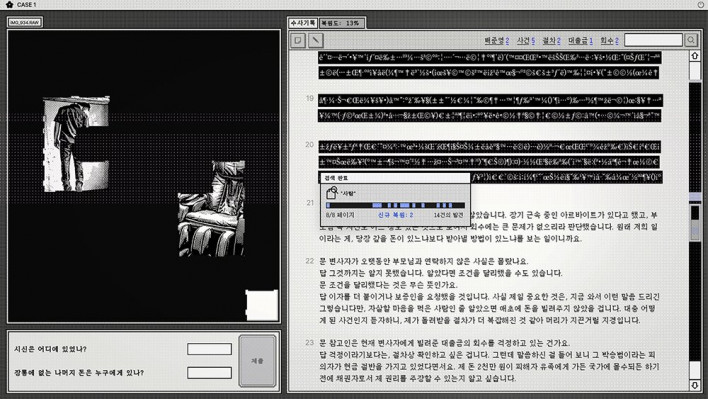
This is a mystery visual novel where players become an investigator in the Archives Department, managing past criminal case records to restore eight burned cases. Because case files found at fire scenes have turned completely black across both photos and text, players must use department equipment and digital forensic techniques to bring lost records back to life.
After deducing keywords that need to be identified from case records, typing them directly restores text fragments containing those words. As documents are revived, parts of damaged photos are also revealed, allowing players to zoom in and inspect evidence in detail. Based on these restored materials, players must deduce the truth behind each case and arrive at the correct answers.
The game's defining feature is delivering a genuine sense of deduction through active typing. Necessary information can be organized using notepad and drawing features, letting players piece together scattered clues by typing them out manually. Rather than simply selecting pre-set choices, the focus is placed on the player coming up with words themselves to revive case records.
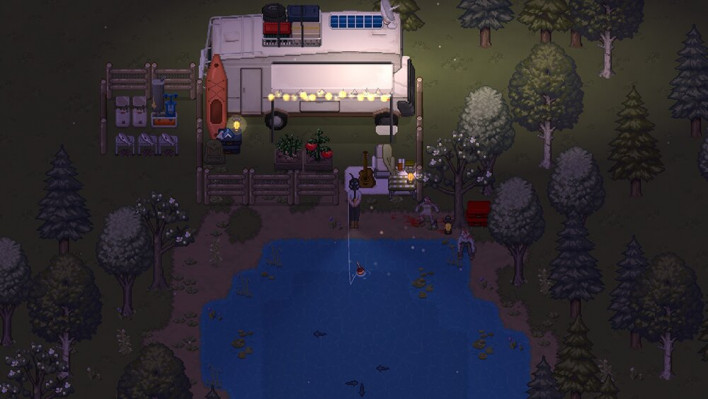
This is a survival simulation game where players survive alongside a van serving as a mobile base in a world faced with a sudden apocalypse. Players scavenge abandoned locations for food, fuel, and crafting materials to construct necessary equipment while exploring the dangerous outside world.
The van serves as both a vehicle and a cozy sanctuary for survival. Players can store supplies and customize or upgrade its interior into their own personal living space. Creating a personal survival routine through repeated exploration, crafting, cooking, and gathering forms a major component of gameplay.
Digital devices left behind across the land serve as clues to trace the truth behind the apocalypse. By investigating traces left by the deceased and seeking out hidden locations, players gradually uncover what happened to the world. The gameplay features a distinct loop alternating between hazardous outdoor survival and cozy daily life upon returning to the van.

NAMMO is a 2D Soulslike boss rush game set in a Korean dark fantasy universe themed around the ancient kingdom of Silla. It features visually striking bosses, including a wise ruler turned monster, a warrior consumed by madness, and lingering specters that refuse to vanish even in death. Players take on the role of the protagonist Nammo, who awakens the "Spiritual Eye" to perceive the spirit world after losing both eyes to trusted friend Junjeong, embarking on a quest to pursue the truth.
Combat revolves around parrying enemy attacks with precise timing and launching counterattacks. Activating the Spiritual Eye reveals otherwise invisible boss weaknesses and hidden passages. Destroying weaknesses can also neutralize dangerous attack patterns linked to specific body parts of a boss.
Storylines and battles branch based on the true forms of characters observed through the Spiritual Eye. Trusted allies turn into foes, while suspected entities become companions through continuous twists. After defeating formidable enemies, players can absorb their souls to gain new abilities and combine different souls to craft their own combat style.
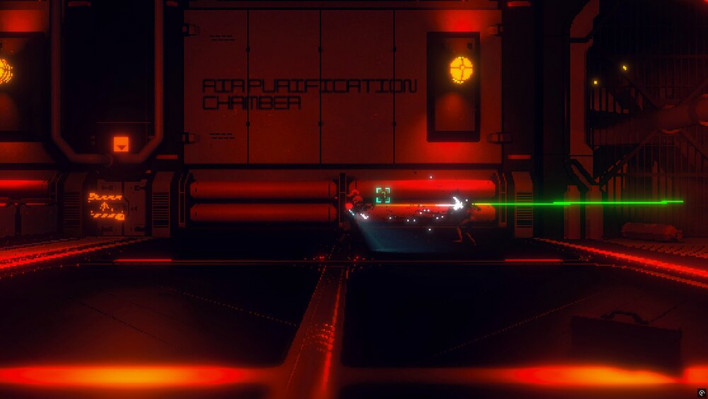
The Irony is a horror action platformer where players become an inspector for a private military contractor investigating Underdog Corporation, a research facility ruined by unauthorized human experimentation. While battling test subjects equipped with powerful prosthetics, the protagonist loses part of their body. To survive, players attach enemy prosthetic parts to themselves, becoming progressively stronger but growing increasingly similar to the test subjects.
Combat delivers impactful hit feedback. Players utilize a weapon that transforms between a gun for precise shooting and a baton for heavy melee attacks, with close-quarters combat featuring parries to deflect enemy attacks before countering. The core concept—gaining power through prosthetic augmentations while gradually forfeiting humanity—threads through combat, progression, and narrative alike.
The game features 2.5D visuals blending 3D environments with pixel art graphics. Gritty visual styles paired with dynamic lighting and background staging create a grotesque sci-fi horror atmosphere as players explore the research facility side-scrollingly to uncover the events that transpired within.
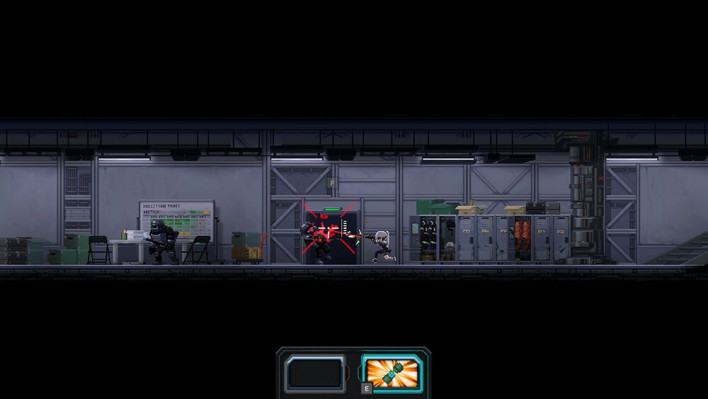
Project Revenant is a side-scrolling shooter inspired by the movie John Wick. Attacks require precise cursor aiming to hit targets, and with only 1 HP, a single hit means defeat—making it essential to analyze enemy placement and attack patterns to determine priority targets.
Beyond directly aiming at enemies, players can leverage environmental features to handle encounters. Flexible combat options include throwing flashbangs to stun enemies, dropping chandeliers onto targets below, or detonating gas canisters to take out multiple foes at once. New mechanics are introduced in every stage, and players can equip skills suited to their playstyle to adapt combat strategies.
Boss stages introduce RPG-style boss encounters, including unique cyborg ninjas, giant robots, and bounty hunters. Beyond combat, cinematic cutscenes for narrative delivery and space-tailored sound design enhance overall game immersion.
Student Division 3 new titles bursting with brilliant ideas
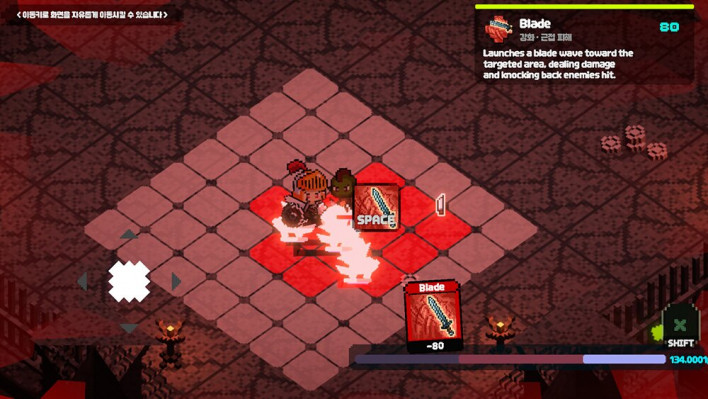
IGNOTUS is an action RPG combining roguelike elements, deckbuilding, and real-time action. It incorporates turn-based strategy elements into real-time combat via a tile system. Its defining feature is a combat system where players must first expand a tile-based "Domain" to cast skills, inspired by Jujutsu Kaisen.
When a Domain is expanded, time freezes. In this paused state, players place skills onto the Domain tiles much like a turn-based game, then trigger them. Once skills execute, the game returns to real-time combat. The battle flow alternates between real-time action and turn-based tactical placement by repeatedly expanding Domains during combat.
Skills used during Domain expansion are selected through custom deckbuilding. Players can upgrade duplicate abilities or purchase new skills. Monsters are also capable of expanding Domains, which similarly freezes time upon activation. Boss encounters are present, with bosses utilizing unique mechanics.
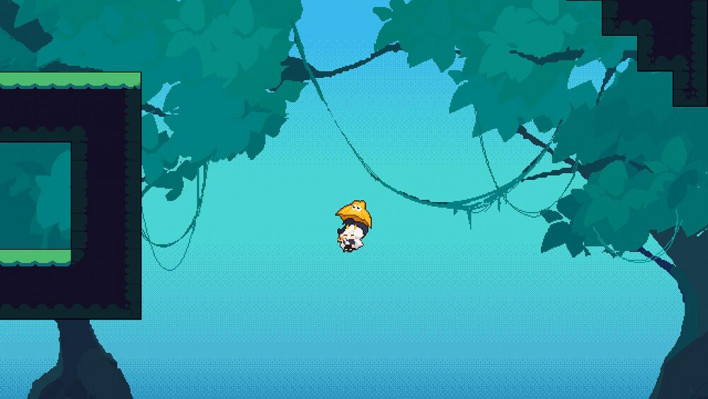
UpBRELLA is a knowledge-based puzzle platformer adventure following a witch's journey to save the world with a single umbrella. The game features versatile uses for a single tool—such as opening the umbrella to glide or placing it on the floor as a stepping platform. Environmental interactions, including riding updrafts to reach higher places or reflecting lasers, form integral parts of the puzzles. Puzzle designs eliminate repetitive mechanics, offering intuitive layouts visible at a glance.
Instead of obtaining separate items or skills, progression revolves around learning new mechanics to unlock fresh exploration. Discovering new principles while solving puzzles opens previously impassable paths, making past terrain and mechanics appear in an entirely new light. In this way, knowledge acquired by the player directly drives character progression.
The story touches on relatable, universal themes of friendship between Sarah and Tani, alongside saving the world. Graphically, charming pixel art is used to depict warm game backgrounds that appeal easily to all players.
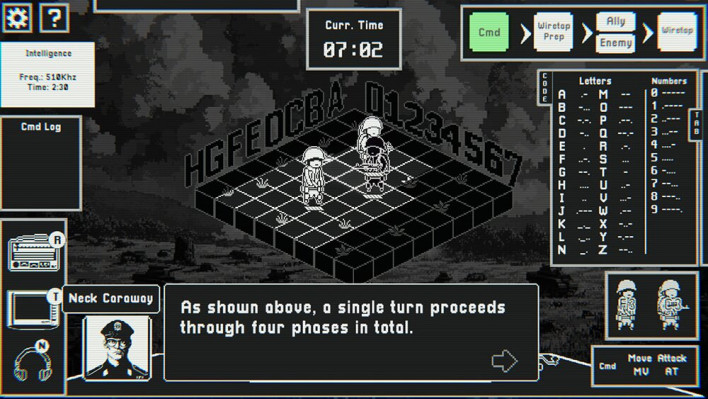
War In The Dark is a 1-bit turn-based wiretapping simulation game set in a 1950s battlefield. Players command allied troops by intercepting enemy Morse code signals. By receiving enemy transmissions, translating Morse code into text, and deciphering contained information, players must track unseen enemy movements.
When wiretapping begins, transmitted Morse code converts into letters character by character through a decoder, which players transcribe. Once deciphered, collected information is used to issue Morse code orders to move allied units or command attacks. Deciphered data is also used to prepare for subsequent wiretapping operations.
Allied units include Scouts, Infantry, Snipers, and Medics, each with distinct movement ranges and attack methods requiring tactical deployment depending on the situation. Chapters cover the Western Front and Northern Front. The narrative unfolds as a flashback recounted by hospitalized retired commander Remarque to his grandson Anderson about his military service.