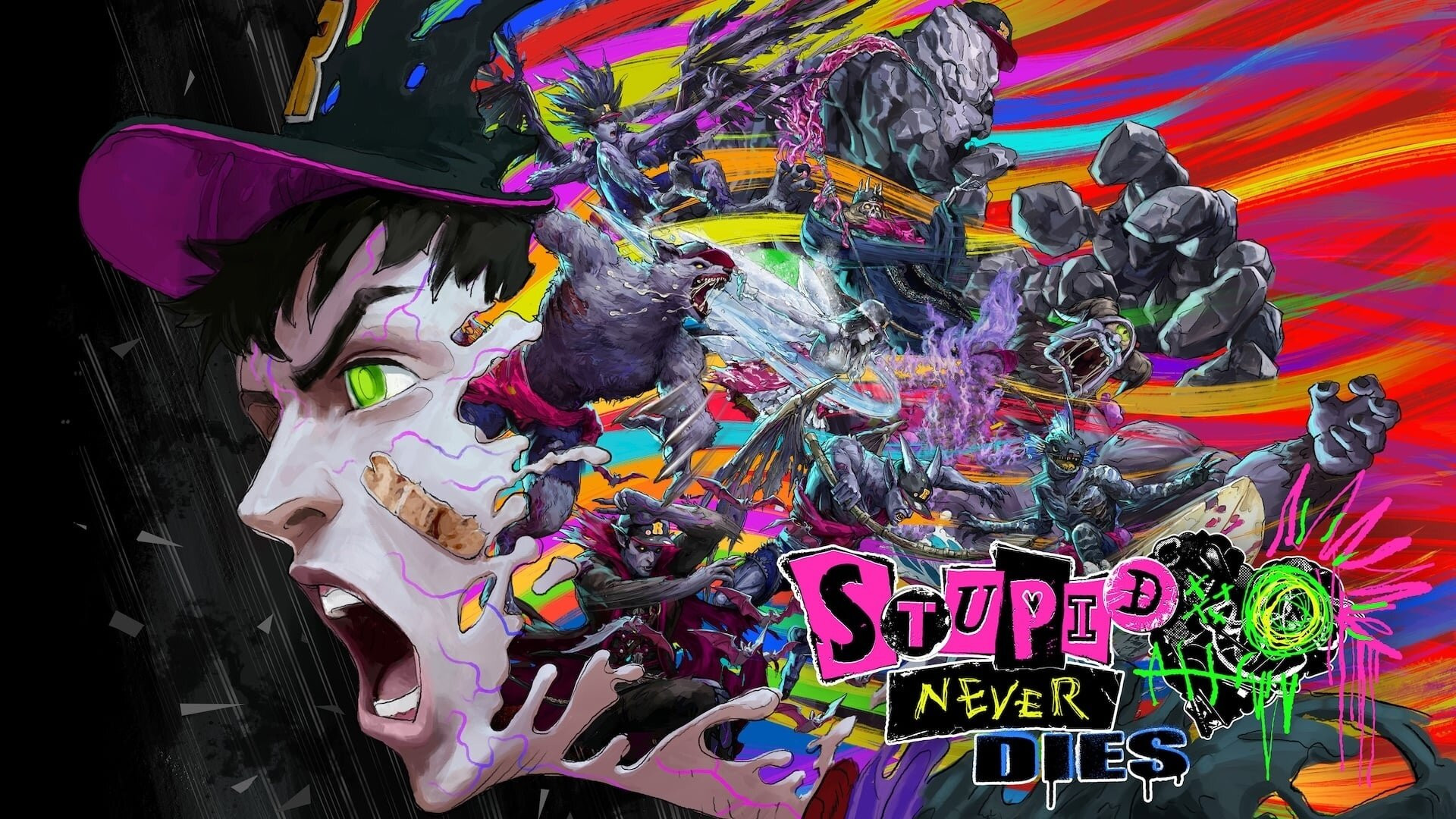
The protagonist is a zombie, but there's no dodging and no guarding. He doesn't fall even when hit, instead fighting on by attacking and devouring enemies. At first glance, it might look like just a wacky, cheerful game, but the combat in 'Stupid Never Dies' contains answers carefully thought out by action game veterans.
Currently under development by GPTRACK50, 'Stupid Never Dies' is a title that twists the familiar formulas of traditional action RPGs to showcase unique combat and progression systems. In particular, through its 'Blazing-Fast Growth'—where characters grow explosively in a short time—and dungeons that are generated differently every run, the game constantly demands new choices even within a single play session.
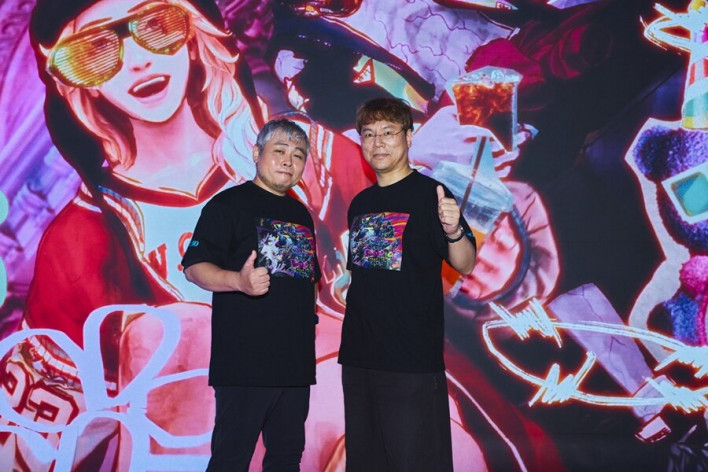
At Gamescom 2026, we sat down with Director Eiichiro Sasaki to talk about the combat and progression systems of 'Stupid Never Dies.' Time passed, and at TGS 2026, we met again—this time joined by President Hiroyuki Kobayashi. We were able to dive much deeper into topics we couldn't ask about at Gamescom, including why they chose a zombie as the protagonist, the development background behind the unique combat system, and the direction they want to take with this new IP.
The premise of the protagonist Davy falling in love at first sight with Julia, a human woman frozen to death, somewhat brought to mind the movie 'Warm Bodies.' Were you aware of that?
Kobayashi: First off, only myself and one other member were even aware of 'Warm Bodies.' Most of the team didn't even know it existed. In fact, I think that's precisely why the idea of a romance between a zombie and a human came about naturally.
Of course, because I knew about 'Warm Bodies,' I felt we shouldn't head in the same direction, and during scenario meetings I steered things so we wouldn't become too similar to it.
In the end, I think this is what you're curious about—whether we were influenced by it or anything like that. To answer that, there's nothing we specifically referenced or were influenced by. It would be more accurate to say it happened to move in a similar direction purely by coincidence. In fact, to prevent it from becoming too similar later on, we actually showed 'Warm Bodies' to all our staff and the development team, telling them, "Let's make sure we don't end up similar to this work."
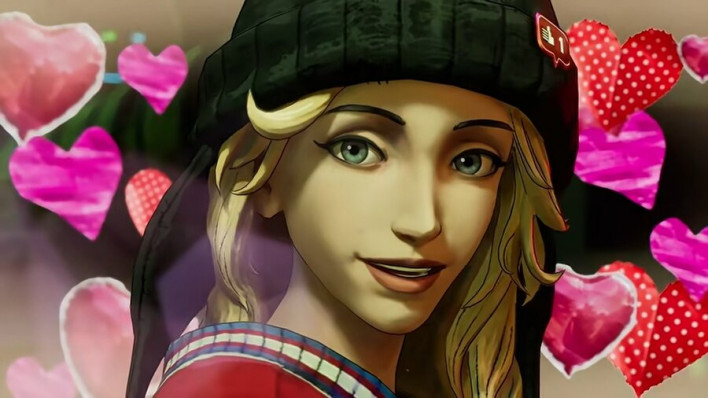
The fact that the protagonist is a zombie is a crucial element in this work. On the other hand, as the story unfolds, it almost seems as if becoming human in the end is his goal. We're curious if you set the protagonist as a zombie with that kind of ending in mind from the beginning, or if there were other reasons.
Kobayashi: It has nothing to do with the fact that we've made many games where you slay zombies in the past.
When I first established the studio, we had a proposal document of about eight pages, and the protagonist in that proposal was a zombie. It was an action-adventure game starring a zombie. In other words, having a zombie protagonist wasn't something created with the later story in mind, but rather an element that was set from the very beginning.
However, that too was merely an early concept. Afterward, as we developed new ideas from various angles based on that pitch document, many parts of the original plan disappeared. But it would have been a problem if nothing remained. Since the reason we secured our budget would also vanish, we needed to preserve the premise of a zombie protagonist no matter what, and that's how we arrived at where we are now.
After that, since the protagonist was a zombie, we crafted action mechanics fitting for one, which Sasaki-san will explain.
Sasaki: When you think of a zombie's characteristics, immortality—not dying—and being able to eat anything come to mind. So, we naturally created action combat that leverages those traits.
Kobayashi: On the other hand, we wrestled with the story for a long time—for about a full year, in fact. Then came the idea to introduce a heroine, and we thought it would be interesting if that heroine was also a dead human woman. The premise of a dead zombie falling in love with a dead human seemed like it could create an engaging story. That was the starting point for the story we have today.
As for the story after that, it has already been revealed: the protagonist's goal is to bring the dead heroine back to life. So the narrative progresses toward the idea that by fighting monsters and defeating the final boss, he'll be able to revive her.
What's interesting is that if you look at the video released in September, for some reason, you can see her moving even though she's supposed to be dead. I'll leave it at that for now and hope you check out the details yourself in the game.
Looking at the games you two have worked on so far, many of them were relatively dark and serious, whereas this title feels quite funky and bright. We're curious if deciding to go independent was partly because you wanted to make a game like this, but your previous company wouldn't allow it. Also, did you always have the desire to make such a distinct and fun game?
Kobayashi: The reason for establishing the studio itself was very simple. We truly wanted to create a new IP and make a completely new game. The goal of the people gathered here now is similar. However, we didn't gather with the explicit reason of "let's make a funky game" from the start.
After coming together, based on the proposal I mentioned earlier, it evolved into the direction of making a funky zombie action game with a zombie protagonist. When the studio was founded, you can see it as everyone gathering simply with the mindset of creating an action game for a brand-new title. The funky vibe was added afterwards.
Sasaki: It wasn't a matter of leaving to go independent because we couldn't do what we wanted at our previous company.
Kobayashi: It's not as if there were no opportunities to create new titles at Capcom. In fact, new works are being made there too. However, it is true that priorities tend to lean higher toward established series, remakes, or ports rather than brand-new titles.
To summarize, rather than leaving because we absolutely couldn't make it there, it was more about wanting the freedom to make what we wanted, regardless of company demands. By going independent, we could create the games we wanted with more freedom, so we took that step.
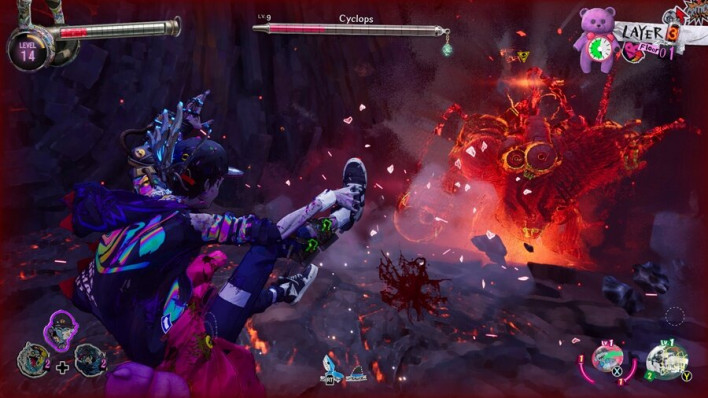
In Korea, this kind of vibe is often described as having a "crazy" or "off-the-wall" sensibility. While it is certainly unique, there's some question as to how much this translates into actual gameplay depth or satisfying combat feel. Often, games have an amusing atmosphere that doesn't actually translate into fun gameplay—what are your thoughts on this?
Sasaki: First of all, we are quite confident in the combat feel. As mentioned earlier, we have many veteran members with extensive experience developing action games, so you can trust us on this aspect.
And it's not just a game that merely feels good to hit things with. Just because you're a zombie and don't die easily doesn't mean it's a game where you blindly rush at enemies, mash buttons, and win. Surprisingly, there are many aspects where you have to think strategically.
For instance, you have to consider how to combine the Styles stolen from enemies, how to equip gear obtained from foes, and how to mix those with the skills you're proficient with to clear challenges. These elements are built with considerable depth.
Also, while the growth elements gained inside the dungeon disappear once you return from it, the Styles you can acquire vary depending on which enemies you fight and when or where you encounter them. Therefore, every time you enter the dungeon, the enemies you come across constantly change.
For example, even if you encountered a Werewolf in a specific location during a previous run and think, "I should eat a Werewolf and proceed this time as well," there's no guarantee the same situation will occur in your next run.
How you move inside the dungeon under those circumstances and how flexibly you respond to the events or unexpected situations that arise along the way showcase the player's skill. We consider that to be one of the core elements of clearing the game.
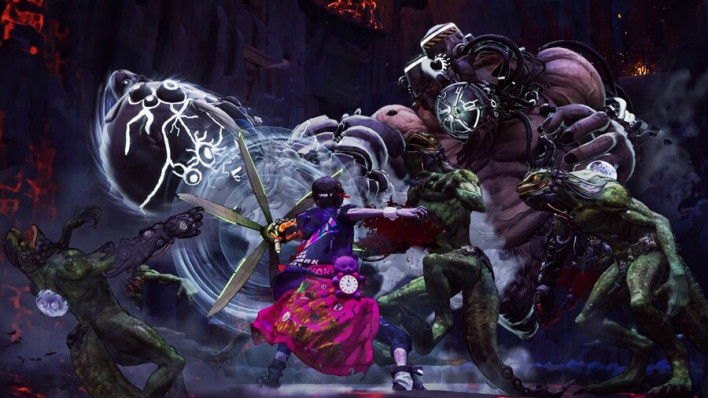
In the videos revealed so far, various bosses and enemies such as Vampires, Dullahans, and Werewolves appear. Approximately how many main boss-level enemies are in the game?
Kobayashi: You could say around 10 or so.
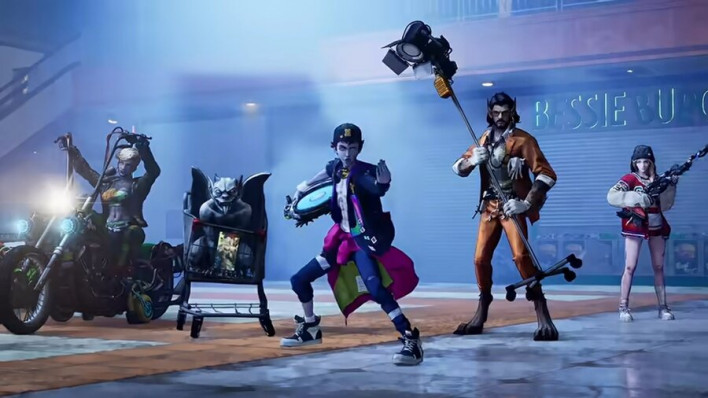
A scene showing several characters gathered alongside the protagonist Davy was also revealed. Does clearing the game unlock new playable characters, or does that scene hold a different meaning? Also, could you explain the playable characters as far as you're able to disclose?
Kobayashi: To be honest since we shouldn't lie about this, the only playable character is the protagonist, Davy.
However, because there is a scene where everyone fights together, it would be best to view it as "so there's cinematic staging like this." Since that scene takes place in the shopping mall, you can look forward to something happening there.
Sasaki: They are Davy's companions. Much like in the movie 'Guardians of the Galaxy,' these strongly distinct characters end up fighting alongside Davy due to various ties. While Davy handles the actual combat, we made the story of how they come to fight together very entertaining, so please look forward to it. As a side note, among them is a character who was once hostile.
Based on what's been revealed so far, it seems the main characters are limited to Davy, Julia, and Dr. Frank. Combined with the casual, roguelike feel, one might worry that the story could be light. Could you explain the depth and volume of the story?
Kobayashi: The story is thoroughly prepared. Just like in 'Devil May Cry' or 'Resident Evil' that I worked on in the past, there are cutscenes, videos, and various cinematic presentations, so players who enjoy story will find plenty to enjoy.
As for characters, many figures appear besides the three you mentioned. From a zombie character named Betsy, to a gargoyle statue named Oil, and even a werewolf—or strictly speaking, a 'were-chihuahua' who is a chihuahua rather than a wolf. This were-chihuahua is a character where a chihuahua transforms into a cool form, responsible for modifying Davy's equipment and handling Body Hacks.
With so many highly distinct characters appearing, we believe players who love characters or story will fully enjoy this game.
On a lighter note: in the games you two have made so far, you've continuously slain zombies. In that sense, did you feel a sort of "debt" to zombies, prompting you to make one the protagonist with a "this time, I'll make you the main character" mindset?
Kobayashi: Ah, it wasn't that kind of sense of debt (laughs). More than debt... honestly, zombies are just meant to be slain. Anyway, zombies are simply something I like, and I think gamers unexpectedly enjoy zombie games or seeing zombies appear in general games. After all, they're iconic monsters that people all over the world can recognize.
In that sense, having a zombie—typically depicted as the weakest creature in games—fight against powerful monsters and ultimately challenge KOM, the 'King of Monsters,' felt like a concept that would make for fun gameplay as an action game and an entertaining narrative progression as well.
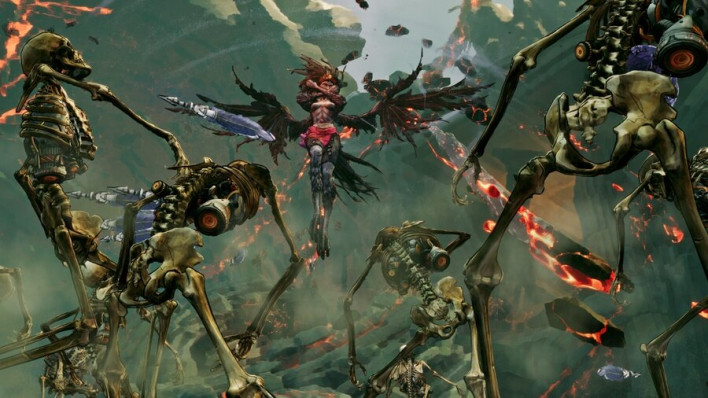
It looked like there was parrying, but we couldn't spot any dodging.
Sasaki: You spotted that correctly. This game does not have conventional dodge or guard controls. Rather than performing those actions, we designed it so that even if you take a hit, you just strike right back.
If you look closely, even when an enemy punches Davy in the face, Davy doesn't stop attacking and keeps swinging, or he delivers a kick even with his neck bent back, exhibiting reckless combat. We created these action mechanics drawing inspiration from the intense, visceral combat style felt in works like 'Chainsaw Man.'
As for parrying, it differs from the extremely tight-timing parries common in recent action games. When you see an enemy attack, you simply headbutt straight in while attacking to deflect their blow, crafted in a way that highlights our game's unique character.
However, whereas typical games deflect attacks without taking damage, in our game, because you deflect by slamming into the enemy's attack head-first, you take a certain amount of damage. In other games this might seem strange, but we felt it fits our game. Because he's a zombie. That's how you absorb enemy attacks while creating an opening for a counterattack.
So rather than tight-window guards or parries like in other games, we hope you enjoy playing with a more casual feel—charging into enemies with a frantic "ora ora ora!" Simply put, please play with the mindset that if you take one hit, you pay back two.
However, as mentioned, with Stupid Parry, you still take damage even when deflecting an enemy's attack. If your HP drops significantly as a result, you can recover by eating enemies. To summarize, the basic combat flow is striking the enemy, striking them again, using Stupid Parry, and devouring an enemy when in danger before jumping back into the fight.
You recently released a demo. Were there any particularly memorable pieces of feedback? Also, with the release drawing near, what are the highest-priority fixes at this point?
Sasaki: First of all, thank you to everyone who played and shared so much feedback. As for the most frequent feedback, there were many comments regarding a lock-on feature. Many asked why there was no lock-on, so we plan to issue a patch in the near future that addresses this even for the demo build.
You could have designed it like a typical action RPG—starting in one corner of a massive world, defeating low-level area bosses, and progressing into more dangerous regions. We're curious why you chose the current structure instead.
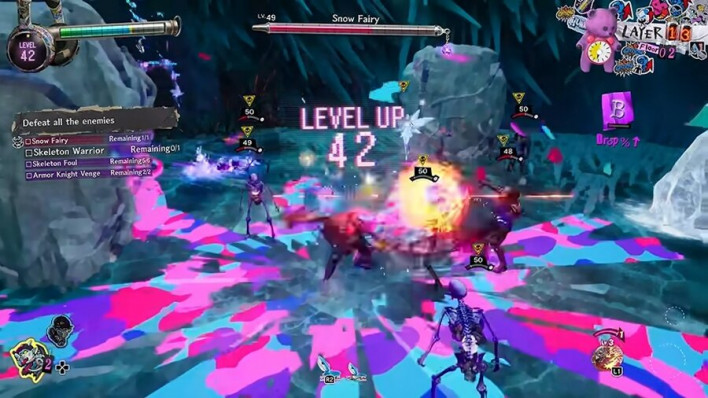
Sasaki: One of the most unique aspects of this game is the 'Blazing-Fast Growth' system.
In conventional RPGs or action RPGs, you level up by earning EXP. In this title, not only does your level go up, but the speed at which you level up gradually accelerates.
For example, at first your level increases slowly as you defeat enemies—level 1, 2, 3—but as you enter the dungeon repeatedly, you'll eventually experience jumping rapidly to level 20 or 30 within just the first few minutes.
This experience of Blazing-Fast Growth is meaningful because the time you can spend inside the dungeon is limited. Initially, you can only stay in the dungeon for a short time and cannot go deep, but as your growth speed accelerates, you can delve much deeper within that same time limit.
What we originally wanted to do was compress the long character progression experience of a typical action RPG—spending dozens of hours leveling up to challenge the final boss—into a short window of time. Even if you spend only 20 to 30 minutes in a single play session, you can experience a compressed progression curve that normally spans tens of hours. The time limit and Blazing-Fast Growth system are mechanics designed for that purpose, and we felt the current dungeon and gameplay structure was better suited for compressing such an experience.
How long do you estimate it will take players to actually defeat KOM? Also, is there content prepared to enjoy even after defeating KOM?
Kobayashi: One cycle takes about 20 to 30 minutes, and players will continuously repeat that cycle.
We estimate the time required to defeat KOM in the story to be around 20 hours for skilled players, and about 30 hours for average playthroughs.
Sasaki: Including playtesting, I've played this game for about 1,700 hours, so I can clear it quite quickly. It's difficult to share exact records here, but I think aiming for time attacks to see who can defeat him the fastest would also be fun.
Kobayashi: End-game content is also prepared after clearing the story. We've set up content where you can fight even stronger enemies using a powered-up Davy.
Additionally, there are around 10 Styles in total, acquired sequentially. By the time you finish the game, you'll likely have fully utilized about half of them on average, while the remaining half may not have been properly utilized yet.
So we designed it to leave players wanting to play more, naturally guiding them toward enjoying the endgame content.
You mentioned there are 10 play Styles—there might be concerns that using a specific single Style becomes the most efficient, or that a certain Style is overly strong, reducing the appeal of others. How did you balance the Styles?
Sasaki: First, as a basic rule, we made it impossible to maintain a single Style continuously. An absorbed Style lasts for only three floors. Naturally, you must constantly seek out new Styles.
Furthermore, even within the same Style, multiple skill types are prepared. For example, even with the same Werewolf, the ability you acquire varies depending on which Werewolf's abilities you encounter.
And Werewolves encountered on higher floors are much stronger than those met on lower floors. This is distinguished by rarity, and at higher tiers, very powerful Legendary-grade enemies appear. Therefore, continuously discovering and swapping to new Styles is one of the key elements to clearing the game.
Earlier, you mentioned that even within the same Style, there are 5 types of skills. Are these 5 skills individually divided into tiers like Common, Rare, and Legendary? Or is the Werewolf itself split into Common Werewolf, Rare Werewolf, and Legendary Werewolf?
Sasaki: Fundamentally, the enemy's base strength differs. Starting from basic attacks, strength is indicated by star ratings—ranging from a single star for weak enemies up to 10 stars for strong ones. We've also prepared enemies with completely different combo capabilities and various abilities.
Kobayashi: And the five skill types mentioned earlier are a separate concept. For example, if skills A, B, C, D, and E exist, one Werewolf might have A, while another Werewolf might have B.
Only after eating that enemy do you find out, "Ah, this Werewolf had B" or "This Werewolf had A." That part is determined randomly and is an element separate from rarity.
Is there also a progression element when you repeatedly obtain the same Werewolf Style?
Sasaki: If you keep eating enemies of the same Style, there is a permanent growth element. The level of that Style increases based on how many times you've consumed that type of enemy.
Kobayashi: For instance, there are various types like Werewolves or Harpies; if you keep eating Werewolves, your Werewolf Style level goes up. Conversely, if you've only eaten a Harpy once, your Harpy level remains low.
So if you want to play aggressively with the Werewolf Style, you can play by continually devouring Werewolves to raise that Style's level.
Sasaki: However, this permanent growth is distinct from the Styles acquired inside the dungeon.
Does that permanent growth persist across the entire game rather than applying only inside the dungeon?
Kobayashi: That's right. It is maintained continuously across the whole game. Even if you chance upon an elite monster in a dungeon, eat it, and gain its Style, the total number of times you've eaten that Style's enemies up to that point is permanently recorded. As a result, the Style's level carries over accordingly.
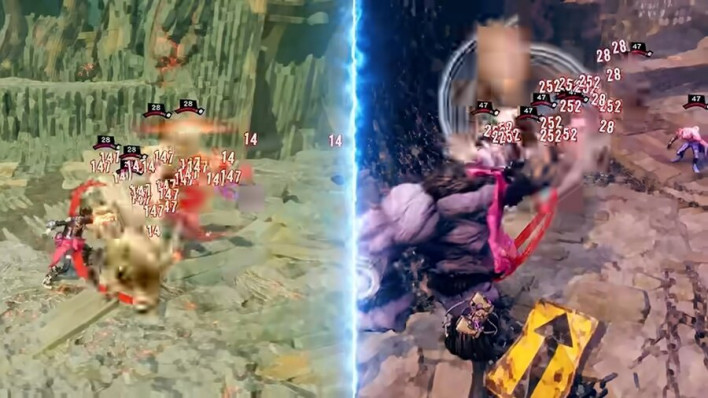
If so, some players might like a specific Style, repeatedly devouring the same Style and looping resets to play. Is that playstyle fundamentally restricted? Or are there elements that allow players to bypass those limits?
Kobayashi: There aren't elements that completely break through the restriction. For example, when you first acquire a Style, the number 3 is displayed; on the next floor it becomes 2, on the following floor 1, and then it disappears.
However, if you happen to meet and absorb another Werewolf before it vanishes, it resets back to 3. So if you're lucky enough to repeatedly encounter new Werewolves, keeping it for a fairly long time is possible.
That said, because you won't consistently meet the enemy you want in the same place, practically speaking, maintaining it indefinitely would be difficult.
Looking at the structure and restrictions you described, the roguelite genre naturally comes to mind. Yet publicly, this title is presented as an action RPG. Is there a specific reason you want to avoid the roguelite genre label?
Kobayashi: Of course, there are roguelite elements, and the actual systems are constructed with that structure. However, labeling the genre as roguelite can give the impression that it's a niche game for enthusiasts. We wanted more people to approach and play this game as an action RPG.
Personally, I tend not to purchase or play games labeled as roguelite. I'm not particularly fond of that genre and prefer traditional action games or action RPGs. When a genre label comes first, I think people judge the game based on that word before even experiencing it. That's why, if possible, I wanted to avoid using terms like roguelite or roguelike.
Also, in terms of cinematic presentation and story, I believe it differs from typical roguelike or roguelite games. Our game includes a substantial amount of cutscenes and video presentations, with cinematic direction that showcases narrative depth. In that sense, players will feel like they are playing a proper RPG.
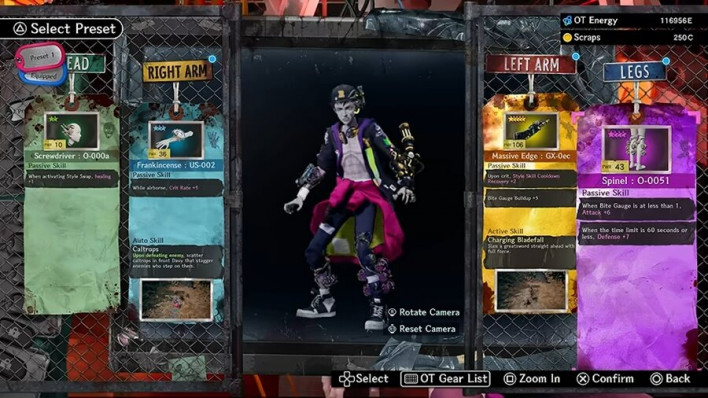
Sasaki: From a gameplay perspective, there is 'uncontrollable growth'—figuring out how to grow stronger amid uncontrollable situations inside the dungeon—and 'planned growth,' where you deliberate back at home over what gear to equip and which stats to enhance.
In other words, how you play by combining these two elements—uncontrollable growth and controllable growth—is key. In that respect, one side features roguelite elements, while the other features full action RPG elements. We hope players enjoy this combined structure.
To ask a slightly heavier question: you originally worked at Capcom before going independent and launching GPTRACK50. What kind of relationship currently exists among NetEase, SEGA, and your studio? Also, there have been discussions recently about NetEase scaling back overseas investments somewhat—is there anything you can share regarding this?
Kobayashi: Structurally speaking, regarding development, NetEase fully funds the development costs while we develop the game. Meanwhile, SEGA handles global publishing. They prepare marketing budgets worldwide and take charge of publishing and selling the game across global markets, including physical and digital sales.
It's difficult to comment on specific internal details or the exact relationship between NetEase and us. However, I can say that game development is currently progressing smoothly without any issues.
Lastly, do you have a word for Korean gamers?
Kobayashi: I believe 'Stupid Never Dies' is an action RPG made truly for players who love action games.
Including my past experiences, I personally enjoy characters and stories, as well as various elements like art and sound. So I think this is a game that can be enjoyed in many ways not only by action game fans, but also by those who appreciate characters, story, art, and sound.
And for players who find action games difficult, we've included an option menu feature that slightly powers up the protagonist. Turning this on allows you to progress more comfortably without worrying too much about a game over.
By the way, I couldn't clear the game without that feature—I used it to clear it myself (laughs). So please be sure to give the demo a try.
Sasaki: I would like to touch upon the combination of 'uncontrollable growth' and 'controllable growth' mentioned earlier.
The character combinations resulting from merging these two elements are immensely diverse. Even if you think "this is the ultimate build" during one run, in your next run you might see a completely different combination and wonder, "Isn't this one even stronger?"
I think the fun of this game lies in discovering your own ultimate version—the 'strongest Davy ever'—each time you play. I truly hope you try it for yourself.