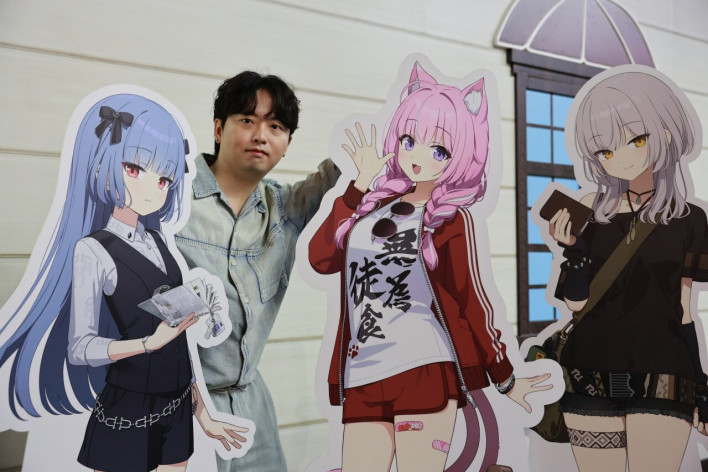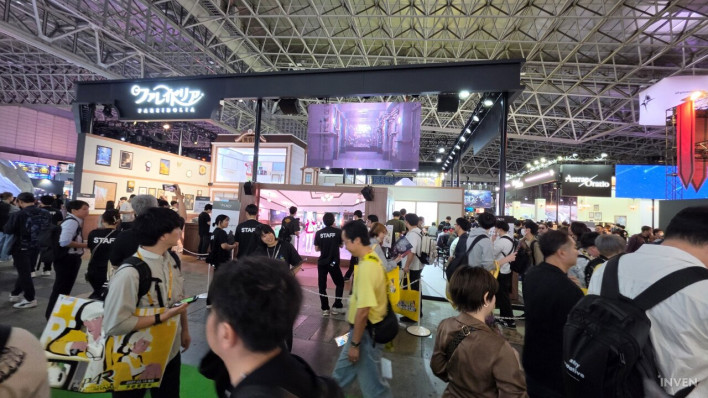
"Pareidolia," the new title from Nexon Games' IO Division—well known for Blue Archive—lifted its veil at TGS 2026. While details including key visuals had trickled out since it was known as Project RX, news momentum began accelerating as its official title was confirmed alongside the full reveal of actual gameplay and key concepts.
Beneath the surface lay a sound profile rarely attempted in subculture games. Just as Blue Archive incorporated distinct genres like future bass and kawaii bass, Pareidolia naturally conveys a nostalgic, comforting emotion to demo players through lo-fi and house music. We sat down with Music Director Mitsukiyo, who led the music direction for Pareidolia following Blue Archive, to hear how he aimed to deliver the atmosphere of Anima City and Tasogare Hall—an otherworld that feels like home, yet where the ordinary and extraordinary coexist.
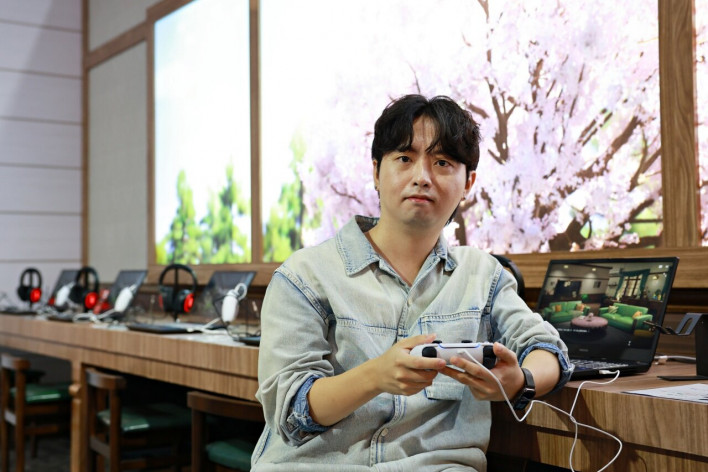
Pareidolia's Music: Following a Similar Process to Blue Archive, but Heading in a Different Direction
Please introduce yourself.
Director Mitsukiyo = I'm composer Mitsukiyo. I am also the CEO of Studio Allo. I worked primarily as a composer, but as our scale grew, I also took on the role of CEO of the corporation. Following Blue Archive, I am serving as music director for Pareidolia, this time working alongside the members of Studio Allo.
What is the process of translating game concepts and scenes into actual music?
Director Mitsukiyo = Similar to Blue Archive, the development team sends order specs detailing images, content, tone, and reference ideas they have in mind. Upon receiving them, I work by adding my own interpretation as a musician.
If our understanding doesn't match, we align through back-and-forth suggestions. Non-musicians and musicians sometimes view things differently. My key role is interpreting non-musical language musically and making adjustments. Having collaborated for a long time, I've come to understand well what certain expressions generally mean in terms of feeling.
How has the process for Pareidolia differed compared to Blue Archive, and do differences in expression style and development environment affect the music?
Director Mitsukiyo = A few tracks are being revealed at TGS 2026, and about 80% of the music feels different from Blue Archive. Where Blue Archive had strong doujin or subculture music nuances like EDM and rhythm game music, Pareidolia is dominated by comforting yet mysterious lo-fi style tracks. You could say if you swapped the music between the two games, the atmosphere wouldn't fit.
That said, it's hard to simply describe it as a lo-fi or mysterious version of Blue Archive's music. While some recent tracks in Blue Archive might share a similar feel with Pareidolia, the overall direction is different.
In terms of the process, the personnel in charge have changed. The process itself is the same, but the materials provided for Pareidolia are much more detailed. With Blue Archive, we've worked together for so long that we have an intuitive feel, whereas Pareidolia is still in its early stages, so tone-and-manner specifications come in with extreme detail.
How did you come to work on the music for Pareidolia following Blue Archive? What were your first impressions when you heard the initial game overview and description?
Director Mitsukiyo = I heard about the next project a few years ago. They said a new project was in development, and since it was following Blue Archive, I vaguely assumed it would have a modern, sci-fi feel. I thought another director might handle it. But as development progressed on Pareidolia, Producer Minseo Cha and Executive Producer Yong-ha Kim sent me some visuals and reached out asking me to take charge of the music.
When I saw those visuals, I knew I really wanted to do it. It had a peaceful, rural, healing-genre atmosphere. With Blue Archive as well, when I was first offered the BGM work, I saw the key visuals and thought, "I really want to do this." At the time, I wanted to make acoustic music, but they requested EDM, so I struggled a bit.
This time, seeing the images immediately brought ideas to mind for what kind of music would suit it. It felt like the music I wanted to make matched the game's design concepts very well.
The Core Themes of Pareidolia's Music: "Comfort" and "Retro"
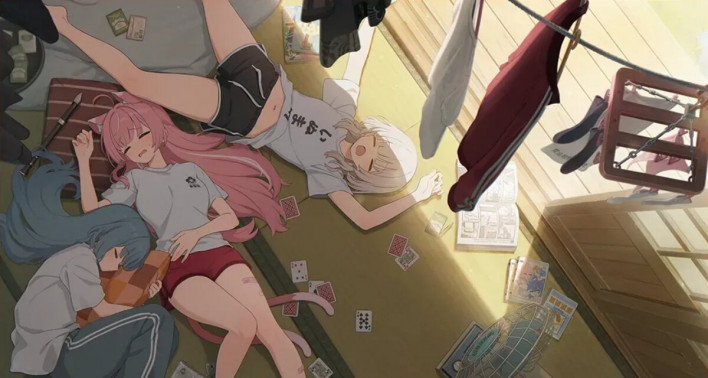
What is the most important direction you focus on when creating music for Pareidolia? What emotion do you want to convey to players through the soundtrack?
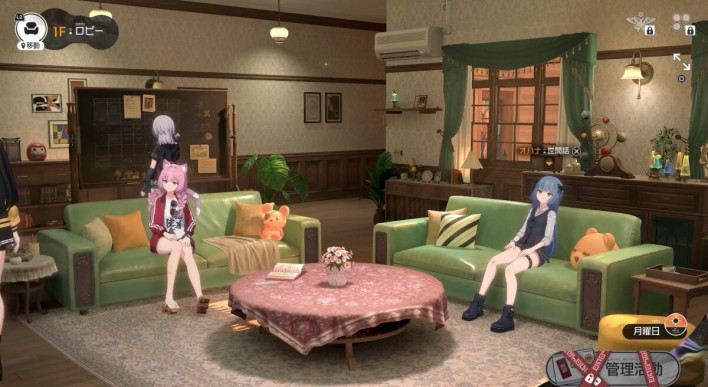
Director Mitsukiyo = If you look at the in-game visuals, peaceful scenery, old houses, and wooden buildings leave a strong impression. I wanted to create music fitting that mood—something you can listen to for a long time without fatigue.
Blue Archive's music has high energy and volume, with tense or fast-paced tracks, so listening for extended periods can cause some fatigue. For Pareidolia, I envisioned music you can listen to calmly in the background while sleeping, studying, or doing chores. I pondered how best to highlight the cute, peaceful mood of the art style.
It's the imagery of soft, soothing music playing as you fall asleep in a grandmother's wooden house bathed in gentle dusk light. It naturally ties into Tasogare Hall as well—when I saw its concept art, that was precisely the feeling it evoked.
What I consider important in game music is that it should allow you to visualize the scene. If no scene comes to mind and only music remains, you don't feel the connection between the music and the game. Game music serves as a medium to heighten impressions or evoke a specific scene. That's why for Pareidolia as well, I worked to craft music that captures the atmosphere of places like Tasogare Hall or specific scenes, helping players visualize them.
We heard that Pareidolia emphasizes a retro vibe and realism in instrument usage to differentiate its music from Blue Archive. Could you share the background behind this direction and how it was implemented in the music?
Director Mitsukiyo = In terms of working with virtual instruments, there isn't a massive difference. However, we incorporated many more real instrument recordings. Whether electronic or acoustic guitar and bass, musicians know that virtual instruments can't fully replicate the feel of a human performance. Since Pareidolia features a lot of acoustic music, we added more of those elements to achieve realistic expression.
Furthermore, Pareidolia features scenes with a mysterious atmosphere. For those scenes, we applied special audio effects to real instrument sounds, giving them an otherworldly unfamiliarity distinct from realism.
There are tracks featuring the natural sounds of instruments, as well as vintage, retro lo-fi tracks. We also processed sound effects to accentuate mysterious and serious tones, as well as feelings of erosion and enigma.
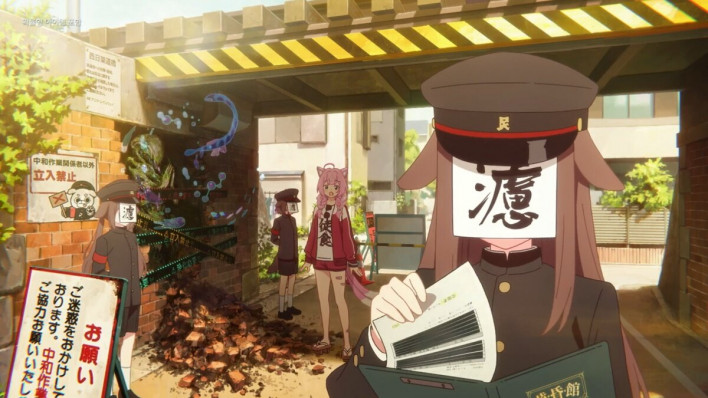
In Blue Archive, electronic genres like future bass and kawaii bass drew much attention as signature musical traits. What approach is Pareidolia taking in terms of genre and instrumentation? Also, how are the atmospheres of Anima City and Tasogare Hall reflected in the music?
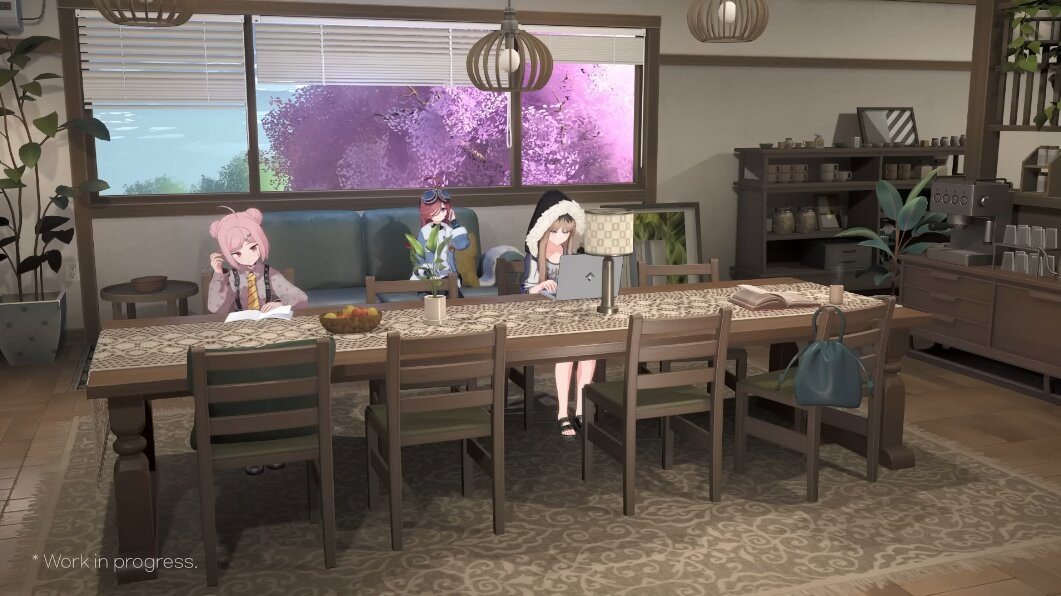
Director Mitsukiyo = Starting with Tasogare Hall, there are four house BGM tracks that play differently for morning, afternoon, evening, and night. I want to highlight these tracks because I feel they best represent daily life in Pareidolia. They were composed early on and capture the game's first impression, which is why I'd present them as representative examples.
The four house BGMs were composed by different artists, including myself. Each composer has a distinct style and direction, and those differences help express atmospheric contrasts well. Players will be able to experience Pareidolia as interpreted by multiple creators.
Pareidolia contrasts peaceful everyday life with tense erosion. How do you express these two contrasting atmospheres musically? How do you approach capturing the sense of "a home you want to return to," which the development team highlighted as a core theme?
Director Mitsukiyo = It varies depending on the situation, and there is no single right answer. Personally, for everyday life, I mainly used dry acoustic sounds—the natural tone of instruments without special effects added.
We adopted techniques that make the audio sound close and clear. Depending on the distance between the microphone and instrument, the impression of whether the sound comes from afar or near changes. Using close-miking techniques creates an intimate feel, as if listening right in front of your ears, making the music clearer.
Conversely, increasing distance creates a sense of spatial resonance. It conveys the feeling of being in a large space or creates a mysterious impression. So we used intimate sound placement for everyday life, and distance-based sound design where spatial presence or mystery was needed.
From a music theory standpoint, the atmosphere also changes depending on how scales and chord progressions are used. Major chords come to mind for bright moods, and minor chords for dark ones. Applying these elements effectively serves as another key method for capturing the intended mood.
Finding Pareidolia's Unique Identity Across Diverse Situations

How does the music transition or connect when switching between gameplay states like daily life and combat? What stands out regarding the interaction between gameplay and music, and does player focus on the music adjust depending on the situation?
Director Mitsukiyo = Audio transition mechanics themselves are handled on the technical engineering side. When I receive requests for tracks required for transitions, I compose accordingly. In Blue Archive, we used that method for Total Assault bosses like Binah, and Pareidolia also expresses different sections distinctively.
For certain tracks, we aimed for a flow that sounds natural when listened to as a continuous piece, while remaining equally cohesive when split into distinct sections like introductory and main body segments.
Combat BGM also has introductions and climaxes. We sought to express a progression starting with a mysterious tone before building into the climax.
Could you introduce the music featured in this TGS demo build? For visitors playing this short demo, what elements should they pay special attention to?
Director Mitsukiyo = I'd like to highlight the title BGM and the four house tracks. If "Constant Moderato" established the tone in Blue Archive, these tracks will let you feel the atmosphere of Pareidolia.
Among combat tracks, there's a piece named "Scrappy Underdog." It has the most neutral tone among Pareidolia's varied moods. Composed by another artist, rather than exuding Pareidolia's full personality, it gives players a taste of "how combat music compares to Blue Archive."
What required the most deliberation or represented a new challenge while working on Pareidolia's music?
Director Mitsukiyo = Blending lo-fi with Pareidolia's content. Creating a unique lo-fi identity specifically for Pareidolia rather than standard lo-fi was extremely difficult. I'm still pondering this aspect today.
When people hear "lo-fi," they usually think of popular YouTube channels. Many rely on jazz or hip-hop foundations, or trio arrangements. Listeners accustomed to that style will likely recognize Pareidolia's music as lo-fi.
Humans adapt over time. Blue Archive's music is often called future bass, but it differs from orthodox future bass. Yet many people came to perceive Blue Archive's music as future bass—even if strict genre purists found that slightly puzzling.
Pareidolia is similar. Music experts might claim it isn't strictly lo-fi, but I want to create music that general listeners accept as "that lo-fi feel." To avoid staying at standard lo-fi, I deliberate deeply on blending in distinct, unexpected elements one by one.
Lo-fi literally stands for low fidelity, the opposite of hi-fi or high audio quality. It intentionally reproduces sounds reminiscent of 1980s and 1990s cassette tapes or older vinyl and phonographs through modern interpretations.
However, if you recreate those original sounds too literally, hardware limitations mean lacking low end or adding excessive crackling noise. Staying strictly faithful to the original format wouldn't suit the game well.
So we are taking a new approach: "lo-fi listened to on high-end equipment in a digital environment." We retain the nostalgia of the past while making the listening experience more comfortable.
Delivering Tracks That Naturally Evoke Pareidolia's Warm Yet Mysterious World
Unlike Blue Archive, combat music didn't hit with high intensity. What was the reason behind this choice?
Director Mitsukiyo = Playtime is long, so if BGM stands out too aggressively or offers heavy stimulation, it can hinder focus on gameplay. That doesn't mean musically intense moments are completely absent, however.
You wouldn't expect boss battle music to play suddenly in the starting village. Pareidolia approaches musical composition with that same long-term pacing and narrative arc in mind.
In Blue Archive, tracks like "Unwelcome School" were widely loved for instantly evoking specific characters and scenes. Will Pareidolia also feature music focused on the distinct personalities and stories of individual Mates?
Director Mitsukiyo = We're still actively working on tracks, but we certainly have commissions tailored to specific Mates. For instance, there's a track expressing the Elevator Girl's mysterious, gothic vibe.
Gothic style leans closer to minor keys than major ones. It's about expressing that image musically. However, I didn't compose that track personally; another composer created it based solely on the character's visual design.
It seems like once all tracks are released, listening through them as a playlist will offer a very comfortable experience. Did you consider the flow between tracks?
Director Mitsukiyo = I hope listeners enjoy it as part of that distinct lo-fi feel.
Blue Archive's music had noticeable loudness variations between tracks. When listened to together, a track might suddenly burst out or force you to turn down the volume. For Pareidolia, we worked to narrow those dynamic gaps so it flows seamlessly.
If Blue Archive is music you listen to divided by themes, Pareidolia is envisioned as music flowing in a continuous stream—though differences naturally exist between daily life and combat.
Were there any specific game soundtracks that inspired your work this time?
Director Mitsukiyo = Rather than drawing direct inspiration from specific game OSTs, I studied jazz and classical music before specializing in jazz. As a result, I can compose lo-fi jazz without consulting separate references.
However, if I were to name game music I looked at, Persona and NieR: Automata come to mind. They possess a mysterious, unique atmosphere. With Persona, there are combat and daily BGM tracks that fit my personal taste, so I listened to them frequently.
I listen to various other OSTs as well, including Danganronpa. Though different in tone from Pareidolia, I felt that if our serious and mysterious mood intensified, it might share a similar vibe.
If you were to express Pareidolia's music as colors, what comes to mind? What imagery or instruments do you picture when conceptualizing tracks?
Director Mitsukiyo = Brown, purple, and highly saturated shades of brown come to mind, since I pictured wooden structures. I also thought of red and deep green with vintage textures.
When approaching music, however, I tend to think in terms of weather or scenery rather than color—tracks that evoke morning, or tracks that evoke night. That approach is well reflected in our house BGM tracks.
For instance, if composing BGM for an ocean backdrop, there are many ways to express it, but I wouldn't start with a classical harp. I view the harp as suited for elegant or sacred settings like forests, cathedrals, or ancient ruins. Each instrument has scenes it expresses best, so I consider that carefully.
For Pareidolia, classical guitar comes to mind. Wooden instruments like xylophones or marimbas, music boxes, and pianos also fit. Overall, wooden-based instruments define the aesthetic.
What goals or personal hopes do you wish to achieve through Pareidolia's music? How do you hope players remember this game's soundtrack?
Director Mitsukiyo = I want to establish a signature lo-fi sound unique to Pareidolia. And I hope the music isn't listened to solely inside the game.
Ever since I was young, I loaded game OSTs onto my MP3 player to listen on the go. Blue Archive's BGM receives that kind of love, and I hope Pareidolia's music is listened to naturally in daily situations like working out or taking a walk.
I also really want to release a vinyl LP album. These days many people lack CD drives, so CD sales are rare—CDs have practically become merchandise. I have a personal dream of crafting a package styled like a model of Tasogare Hall with a CD enclosed inside.
Even now, I listen to BGM from games I played in the past. I'm not from the generation that listened to retro console OSTs; my first console was actually the Nintendo Switch. I was heavily influenced by PC games, and I still listen to the music of the first games I played.
I hope the music of Pareidolia and Blue Archive becomes something that brings back fond memories 20 or 30 years down the line—music you'd want to return to at any time. You might not remember every BGM you heard in the past, but certain game tracks strike a chord and stay with you forever. I hope our music becomes one of those.
Do you have a message for fans experiencing Pareidolia or hearing its music for the first time at TGS?
Director Mitsukiyo = I'm not a game developer, so I'll speak strictly regarding the music. We strived to express something familiar yet special, so I hope you can feel what we intended through Pareidolia's music.
As I've continued my musical career, I've grown mentally as well as musically. As I grew older and gained new experiences, things I couldn't see before started to come into view. Building on those experiences in this new project, I will work to deliver even higher quality music and showcase more sides of my craft. Please look forward to Pareidolia.