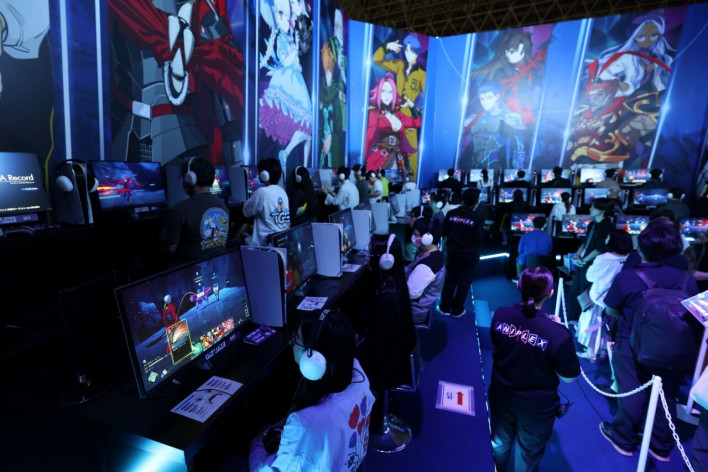
Aniplex hosted a demo booth for 'Fate/EXTRA Record' and held a media briefing at Tokyo Game Show 2026, held at Makuhari Messe from September 17 to 21. 'Fate/EXTRA Record' is a remake of Fate/EXTRA, which was released in 2010. Although originally slated for a 2025 release, it experienced multiple delays. While some fans worried the game might be canceled, those concerns subsided with the announcement of its presence at TGS and news of its Korean release.
During the briefing, Aniplex explained that TYPE-MOON Studio BB held the core planning role from the start, while practical development was handled by an external studio, noting that Meteorise had also been involved in development prior to the organizational changes. Aniplex emphasized that taking over publishing responsibilities did not mean abandoning any originally intended features. Following the Fate/EXTRA demo and briefing, a Q&A session was conducted with the development staff.
Fate/EXTRA Record: A Globally Oriented RPG Modernized Down to Its Core Systems
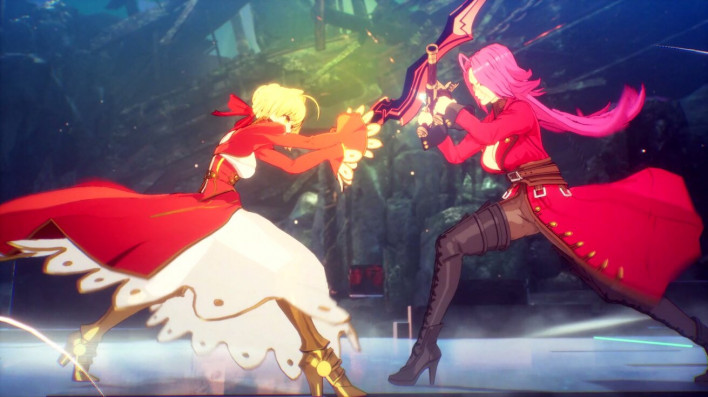
'Fate/EXTRA Record' is a full remake of 'Fate/EXTRA', the Fate series' first RPG released for the PSP in 2010. Retaining the original's story and characters while overhauling graphics and combat systems, the game aims to appeal to JRPG enthusiasts as well as longtime fans. At the TGS 2026 briefing, hands-on gameplay across two Arena floors was showcased, highlighting the redesigned combat and exploration.
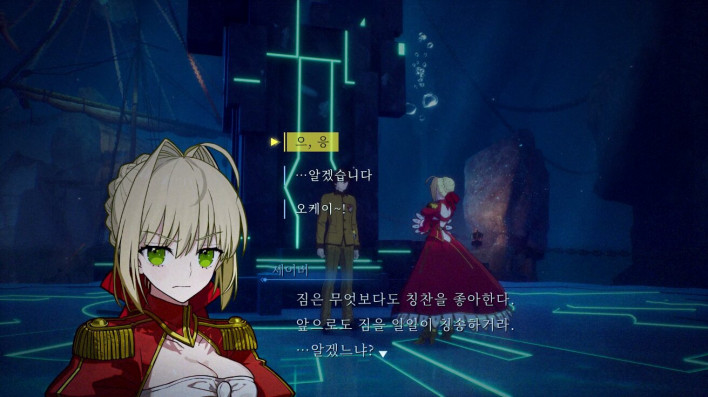
The story unfolds as the protagonist, living a peaceful school life, suffers memory loss and gets swept into the Moon Holy Grail War. Alongside the battle over the Holy Grail that grants any wish, uncovering one's true identity and the truth behind lost memories in the world of SE.RA.PH serves as a central theme. Players can choose the protagonist's gender, and selecting Saber, Archer, or Caster as a partner alters both the combat style and narrative experience.
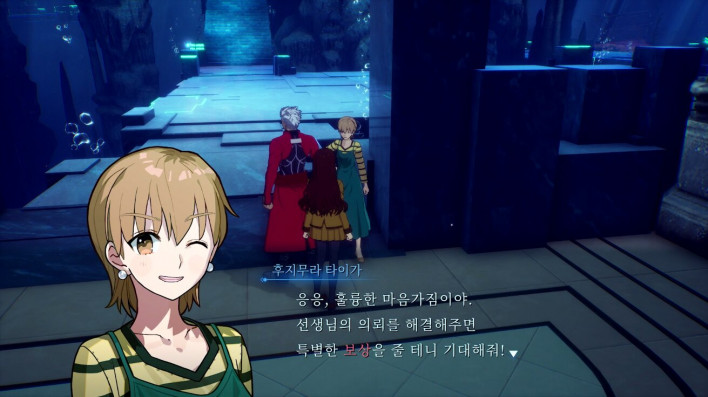
The visuals have been modernized into anime-style graphics based on Arco Wada's illustrations. Dialogue scenes feature Spine animation applied to newly drawn artwork, alongside visual novel-style direction where narration expands across the screen. During the demo, fully voiced Servant responses that vary according to dialogue choices could be experienced.

The game is structured around exploring the Arena during a seven-day prep period leading up to each round's final battle. Players level up their character, obtain items, and gather intelligence on enemy Masters and Servants to prepare for the final day's showdown. An enemy Servant's True Name is particularly critical information, as discovering a heroic spirit's identity allows players to deduce their weaknesses from their historical deeds and legends.

Combat has shifted to a "Deck-Building Dramatic Command Battle" system. Players spend AP to play Command Cards drawn from their deck, combining attacks, defense, and skills. Masters can also assist using MP-consuming "Code Casts" to redraw cards, deal fixed damage, or replenish AP. Character progression centers on leveling up Servants, collecting and upgrading Command Cards, and customizing your deck.
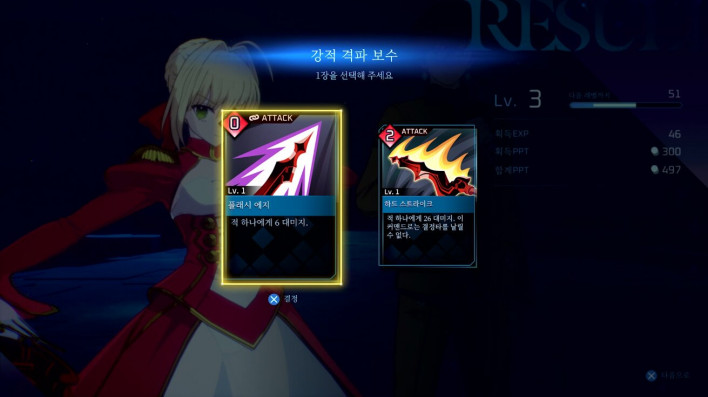
The gameplay demo was split into Floor 1, which teaches basic combat, and Floor 2, which showcases combat and exploration mechanics together. While in the full game Servants are chosen as the narrative progresses, the demo allowed players to select the protagonist's gender and Servant at the start for clarity. The initial demo segment opened with exploring the Arena on Day 4 alongside Saber.

The Arena functions as a JRPG-style field where encountering enemies transitions the game into turn-based card battles. Striking an enemy first on the field reduces a portion of their HP and lets you act first in combat. In battle, managing card order by reviewing AP costs and link indicators is crucial. Specifically, chaining three cards featuring a chain icon in the upper-left corner awards a 0-cost "Extra Attack" card for an additional strike. Furthermore, unlike recent roguelike deck-builders, shields gained from guarding persist across turns.
Saber's combat style focuses on buffing herself while sustaining attacks. Her core "Rose" cards enhance the power of her next attack card, and certain cards deal damage scaling with the number of Roses accumulated. Roses can be carried over into the next turn and combined to amplify their effects. The demo showcased a sequence stringing together defense-lowering spin kicks, zero-cost attacks, Roses, and Extra Attacks.
During the battle against the Gatekeeper blocking progress, players had to read the enemy's next action and adjust their hand. Using "Data Link" allowed checking enemy moves and card effects, while Code Casts served to redraw cards or recover AP when essential cards were missing. Defeating formidable foes awards new commands and abilities for use in battle.

Features beyond the playable booth demo included the Gate Room. Returning to the church via the Gate Room recovers HP, making it useful when running low on health during exploration. Acquiring a Floor Key completes that Arena floor's schedule, emphasizing strategic management of the limited preparation period.
During exploration, Shinji Matou and his Servant, Rider, make a surprise appearance. Since the official duel takes place on the final day, skirmishes inside the Arena carry a 3-turn limit and special objectives. On Floor 1, the goal was to deal a certain amount of damage within 3 turns. Dialogue triggers at the end of each turn, guiding the process of investigating the opponent's identity. By the third turn, players deduced Rider's era of activity after observing her signature weapons, such as her culverin cannons.

Floor 2 took place two days before the final duel, focusing on Archer's combat and exploration gimmicks set up by Shinji. Players had to run past bombs dropped on the field by a pixel-art "Bomber Shinji" or stop in time for explosions, and even dodge falling shipwrecks via QTEs, demonstrating active use of environmental field mechanics. Additionally, players could command Archer to sever chains holding shipwreck debris to wipe out swarms of Bomber Shinjis or clear obstacles, utilizing Servant powers directly in exploration.
Archer specialized in overwhelming enemies with combination attacks, utilizing Projection Magecraft for zero-cost attack cards like Kanshou and Bakuya, alongside "Hunter's Mark" to increase damage taken by enemies. Against multiple foes, he combined area-of-effect attacks with Extra Attacks, while cards that increased AP or restored HP upon attacking were also present. Meanwhile, starting from Floor 2, enemies began inflicting attack debuffs and nuisance cards, requiring tactical adjustments based on your hand and situation.

The Arena features NPCs and side quests alongside enemies. Completing requests for Taiga Fujimura rewards items such as My Room decorations. At event spots marked with a star, players can initiate "Servant Time" to converse with their partner and boost stats. This mechanic builds bonds as players discover their Servant's preferences through dialogue choices and reactions.
In the latter half of Floor 2, another 3-turn survival battle took place upon encountering Shinji and Rider again. Through dialogue during two turns of combat, players could infer that Rider's Noble Phantasm power decreased as the treasure chest gauge under her HP bar depleted. On the third turn, surviving a Noble Phantasm whose power was diminished relative to its flashy presentation concluded Day 5 in the briefing demo. Throughout this process, gathering enemy intelligence by observing emphasized dialogue keywords and combat traits remained a key flow.

However, developers emphasized that Servants and cards in this demo were pre-leveled to showcase combat features within a brief time frame. Since players could unleash stronger attacks than would be available at the same point in the full game, official release combat will feature tighter, higher-tension progression.
The game is scheduled for global simultaneous release on January 28, 2027, across Nintendo Switch 2, PS4, PS5, and Steam. It will support nine languages, including Korean.
Q&A
Combat has changed significantly in this remake. What made you adopt deck-building combat? Also, in the original, players often invested in Defense stats to offset Caster's low durability. Here, HP seems to increase with level-ups. Has the progression system where individual stats like Luck or Defense were directly invested in changed as well?
" In this remake, we wanted to revamp several elements, including the original's rock-paper-scissors combat. We deliberated on how to convey combat weight, and the card system was our answer.
Fundamentally, various systems, including combat, differ greatly from the original. Servants gain HP as they level up, and cards can also be upgraded by increasing their level. It differs from the previous stat allocation system.
It brings back memories of playing the scenario 10 years ago. Is the remake's scenario virtually identical to the original? We're curious if there are variations, unexpected developments, or new routes added.
" You can consider the scenario to basically inherit the original. Iconic dialogue remains intact as well. However, we introduced changes to character dialogue and situational presentation to enhance immersion.
Fate/EXTRA Record is a remake of Fate/EXTRA. The core direction is allowing players who experienced the original to relive those memories, with variations woven in throughout.
Considering it was the early game, the demo build felt appropriately tuned in difficulty, so hearing that cards were adjusted to be stronger was surprising. We assumed the early section was designed to let players adapt to the revamped combat system; what level of difficulty should players actually expect?
" In this demo, levels were set higher than what players would normally reach at that stage. The same applies to cards, so the damage dealt in the demo is not obtainable at that same point in the full game. In the official release, characters won't be at this level, so the play experience will differ.
For Caster, her card deck and combat design are very intricate and unconventional. She utilizes Magecraft cards alongside various options, differing considerably from the original. However, once you get used to her, you can enjoy the tricky fun unique to card games.
From what has been revealed so far, some characters seem to have changed, such as Ciel and Alice Kuonji appearing instead of the Aozaki sisters. Is this for story reasons, or is there another reason?
" The main characters remain unchanged. Alice Kuonji Lewis and Ciel appear instead of the Aozaki sisters, but this does not affect the main scenario. You can think of it as a bonus or extra addition.
While there are some differences in the cast between the original and remake, these changes were made within a scope that does not alter the overarching story.
At the end of the demo, Rider's Noble Phantasm was shown, but playable Servants' Noble Phantasms were not. Why were they withheld, and why was the early game selected for the demo segment?
" This gameplay demo featured the exact same build available at the booth. Because we had to demonstrate gameplay within a limited time window, showcasing playable Servants' Noble Phantasms was difficult.
The Noble Phantasms shown in trailers appear identically in the actual game. We did not intentionally restrict the timing of Noble Phantasm usage.