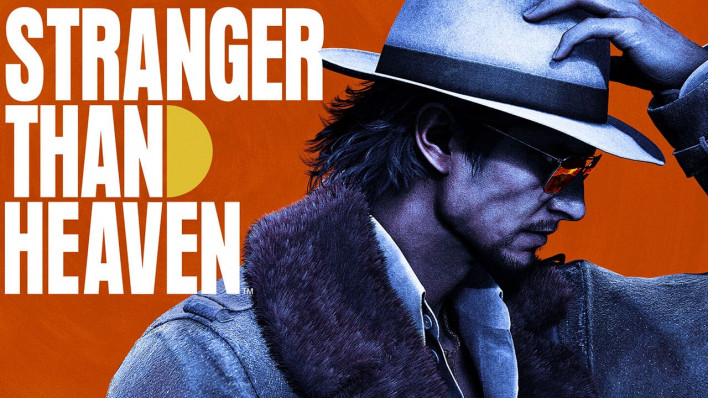
RGG Studio is preparing a new title that isn't 'Like a Dragon.' A new 'Judgment' series? No. This time, it is an entirely new story: 'Stranger Than Heaven.' Through this title, RGG Studio depicts nearly 50 years of one man's life.
That protagonist is Makoto Daito. Being of mixed American and Japanese heritage, he is welcomed nowhere. Chasing a "Japan Dream"—his own heaven—he boards a stowaway ship bound for Japan. However, the Japan he arrives in is far from the heaven he envisioned. Even here, he is forced to face discrimination for being biracial. Yet, it isn't a place he can call hell either. Thus, Daito begins a new life in a Japan entirely different from what he had dreamed.
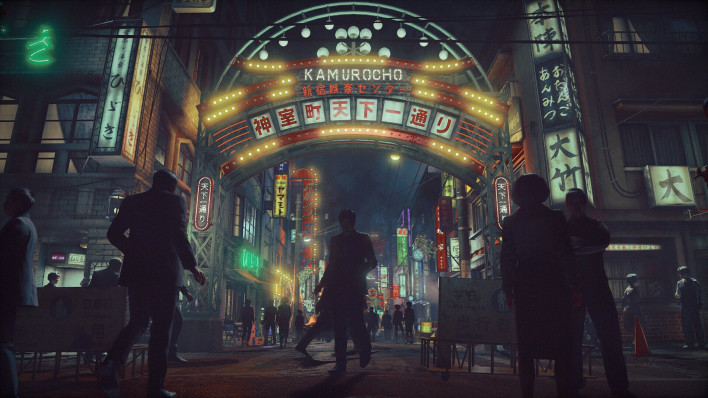
And at the end of that journey, Daito goes on to found the Tojo Clan, the iconic syndicate of the Like a Dragon series. Based on the premise alone, it might feel like a Like a Dragon spin-off, but apart from the connection of the Tojo Clan, Stranger Than Heaven walks a significantly different path from the titles RGG Studio has presented so far. Notably, its attempt to overturn stereotypes of controls in traditional action games stands out, starting with a unique combat system that controls the left and right sides independently.
So what story does Stranger Than Heaven aim to tell through one man's 50-year life? And what was the new, unconventional combat system designed to express? On the 18th at TGS 2026, we met with Executive Director Masayoshi Yokoyama and Producer Hiroyuki Sakamoto of RGG Studio to hear about Stranger Than Heaven.
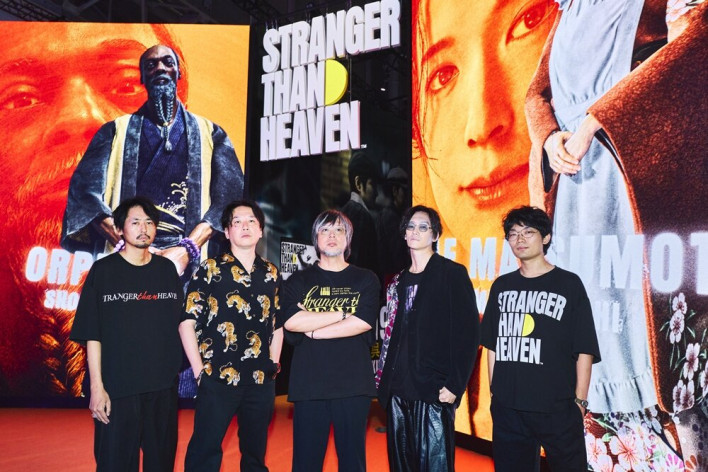
Depicting 50 years of a protagonist's life feels very ambitious. Where did the idea come from to structure the game across a long timeline spanning 1915 to 1965, with five eras and five cities?
Yokoyama: The reason the story begins in 1915 is that we established the timeline around the point when the Tojo Clan was formed. Since the men who founded the Tojo Clan are the protagonists of this work, working backward from when the Tojo Clan was established led us to conclude that starting the story in 1915 was appropriate.
What is important here is that this title did not start with the question "Why was the Tojo Clan created?" Rather, we wanted to depict the life of the man who formed the Tojo Clan. Because of that, his nearly 50-year life became key, and as we thought about the process of him arriving in Japan and moving toward Kamurocho, it naturally organized itself into five settings and five time periods.
While the Like a Dragon series has moved further away from the yakuza world over time to reflect reality, Stranger Than Heaven ironically feels like it is returning to the yakuza world. Is there a specific reason you conceived this kind of story?
Yokoyama: Rather than the Like a Dragon series intentionally moving away from the yakuza theme, I think it is the result of portraying modern Japan as we tackled contemporary dramas.
The original Like a Dragon was released in 2005, and Japanese society itself has continued to change over the 20 years since then. In that sense, while a world of chivalry existed at first, over time it transformed into criminal organizations within Japanese society. As we reflected that reality into fiction, it consequently ended up looking as if the Like a Dragon series moved away from the yakuza world.
The same applies to this game. Rather than depicting an era where the yakuza world already exists, we wanted to portray why such yakuza or organizations were created in the first place, and what kind of people gathered to build that world.
However, that doesn't mean we wanted to tell a purely historical story. Historical facts themselves can be looked up through materials or Wikipedia. Rather, we wanted to portray the origins—how the Omi Alliance or the Tojo Clan existed and were formed within the world of Like a Dragon that we created.
Are you considering turning this into a franchise with sequels?
Yokoyama: Since we conceived the story so that it concludes completely within this game, there are no plans for a sequel. In the first place, because it covers the life story of the protagonist Makoto Daito—a 50-year life story at that—releasing a Part 2 starring him would likely be difficult considering his age. It's out of the question, and we are not thinking about that at all.
Is there a specific reason for making the protagonist biracial, half-American and half-Japanese?
Yokoyama: When imagining "What kind of person would form the Tojo Clan?", the image I came up with was someone who needed a place to belong. The starting point was the thought that such a person might form an organization to fight against the world.
So then I began to wonder what kind of person in old Japan would suffer persecution and discrimination, losing anywhere to go. The first thing that came to mind was racial issues.
In Japan, Westerners look very foreign and inevitably stand out. We wanted to portray what kind of chemical reaction would occur when someone looking distinct from the start appeared in Japanese society at the time, and what kind of gazes that person would receive.
Will the content volume across the five cities be uniform, or will they be split into cities you briefly pass through and cities you delve deeply into as the story progresses?
Sakamoto: Basically, we made it so that the content volume in all five cities is at a similar level. Of course, the time Daito stays in each location may vary slightly. He might stay longer in some places and pass through quickly in others.
However, we didn't structure it so that play in a specific area is extremely short, or so that there is far too little content to do in the city.
Yokoyama: Still, there will inevitably be some variation, and among them, Kokura is quite long. That's because the people Daito meets when he first arrives in Japan exert a major influence on him. Those bonds and relationships run very deep and strong. Adding the extensive tutorial at the start of the game, Kokura can be considered the longest region.
In this game, murder and violence in combat are depicted quite intensely. Is there a specific reason you emphasized this?
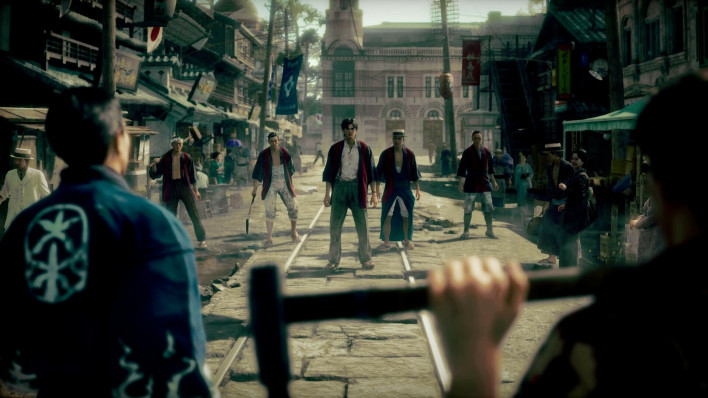
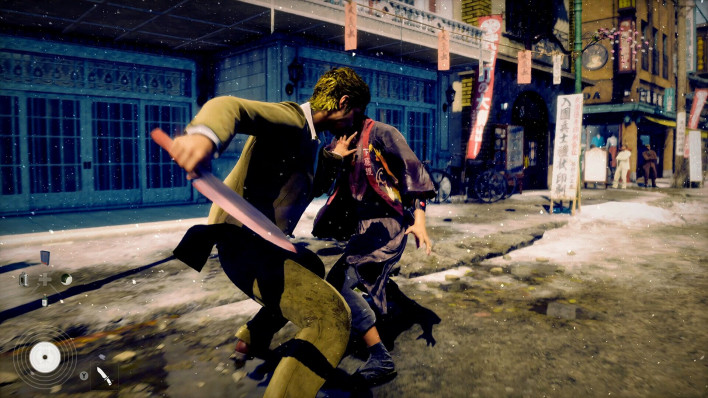
Yokoyama: It wasn't that we deliberately tried to emphasize depictions of murder. Rather, as we imagined fights back in those days, the depiction of violence naturally turned out more intense. It ended up that way because we portrayed it based on the idea that people would fight as if genuinely trying to kill each other.
What we wanted to create was not a game that forces players to experience violence, but one that conveys the sensations people living in that era would have felt. In that sense, fights in those days were situations where lives were truly on the line, while also reflecting an era when human life was held more cheaply than today, which led to its current form.
Nowadays, if someone gets severely hurt in a fight, people worry about legal punishment, and bystanders step in to break it up. But back then, those checks and balances were far scarcer. It was treated with a mindset like, "So what if I go to prison for a bit?" and we wanted to portray that kind of world.
By the 1960s, the atmosphere changes into what could well be called a rule-of-law society. Will those depictions tone down around then?
Yokoyama: That's not the case. They don't tone down. What I just mentioned was merely the premise to explain the reasoning and justification behind the rougher depictions of violence, so the combat style itself won't change drastically just because the era changes.
Instead, the types of weapons change. As you progress further, lethal weapons gradually increase. We created it while balancing historical aspects with gameplay enjoyment.
Changes to the combat system stand out, such as controlling the left and right sides independently. What prompted you to plan these changes?
Yokoyama: Because we have continuously made games where people fight one another, we've constantly pondered how to portray the sensation of hitting someone so players experience it as realistically as possible.
In fighting games, impact feedback is conveyed by dramatically showing the attack effects and how the person hit reacts. In the case of Like a Dragon, where one person often fights many, we expressed effects and sounds loudly and strongly. Recently, however, I felt that approach sometimes crossed beyond feeling like a game into feeling a bit like fantasy. So this time, we thought about ways to convey a truer sense of real combat.
In particular, modern game controls have almost fixed button counts and layouts on controllers. While it's optimized within the scope of what can be operated with both hands, realistically speaking, throwing continuous punches with only one hand isn't a natural motion. Controlling the left hand and right hand separately felt closer to actual physical sensation, and we wanted to weave that into this combat system.
Do you mean you wanted to break free from stereotypes regarding traditional game controls?
Yokoyama: Taking controls in the Like a Dragon series as an example, a single button is assigned to each action—like the A button for punching—which I think is a style inherited from traditional arcade games.
But I tend to think without preconceptions, so I wanted to flip what is taken for granted on its head. At the same time, I pondered what kind of control scheme players could understand intuitively, and what came out of that was splitting left and right.
Looking at 3D action games, I think they became their current form by shifting structures from existing 2D side-scrollers into 3D and changing the camera position. In that sense, I wanted to create a new action game using as a starting point what can truly optimize action in 3D—what the best approach in 3D actually is.
What was the most difficult part of implementing independent left and right controls?
Sakamoto: In the past, it was standard for the same result to occur no matter who pressed a button. This time, our goal was to make the vivid expression of combat change depending on the player's inputs instead.
Expressing that difference specifically through independent left and right controls was extremely difficult. Our ultimate goal was to create combat where, as players become accustomed to controlling left and right independently, they can feel their own fighting skill legitimately improving.
At first, we implemented controls different from simply throwing a punch as soon as a button is pressed, but when people first encountered it, there was an issue where the feeling of controlling properly felt weak. So we continuously adjusted it to provide a scheme that feels responsive while still giving players the sensation that they are actively controlling the movements.
Furthermore, we aimed to implement distinct feedback for each weapon that players can physically feel—such as making heavy weapons actually feel heavy and sluggish.
In the demo, holding down the attack button showed a stance-taking animation. Is this linked to charged attacks?
Yokoyama: Fundamentally, rather than having an attack go off instantly when pressing a button, we built it so players experience the feeling of properly throwing a punch.
In digital games made of 1s and 0s, it's standard for an attack to launch immediately upon pressing a button. Rather than that, we wanted to make it closer to sports games, where you assume a stance first and feel the actual swinging motion. In that sense, holding down the button prepares the move, and releasing it throws the punch. Of course, charged attacks also exist. In real life, people gather power before throwing a punch, right? That was our intention.
Because of the new control scheme, it seems like beginners who aren't familiar with action game controls might find it difficult to adapt.
Yokoyama: I think those who might feel confused by these controls are actually existing action game players. We thought newcomers encountering it for the first time might accept it as "This is just how this game controls" and naturally get used to it.
People don't pick a game based solely on control feel. They choose games for various reasons, such as story, worldbuilding, music, and cast. Therefore, we didn't intend to create something that would make players feel "I just can't play this."
We crafted it with overall entertainment value in mind, and structured the tutorial so players can properly learn the controls. Even people unfamiliar with action games themselves are designed to adapt to controls naturally as they play.
Unarmed combat is central early on, but how do weapons and character progression connect?
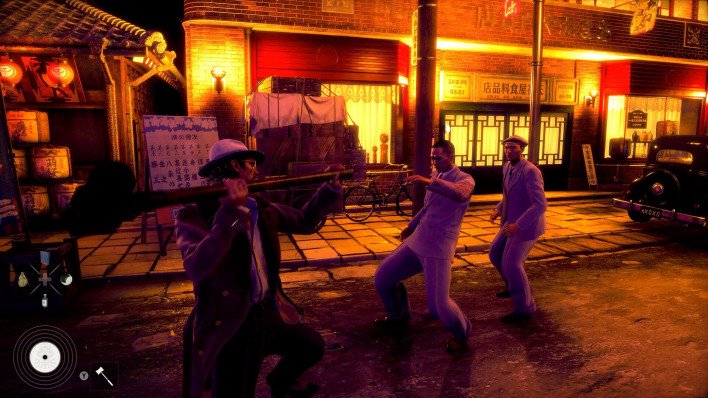
Yokoyama: This relates to the main story setting, but because Daito enters Japan as a stowaway on a smuggling ship, he cannot bring weapons with him. That's why he fights bare-handed at first.
As you progress afterward, situations arise where money or weapons are put on the line in fights, allowing him to gradually use weapons accordingly.
You can continuously strengthen the character through progression, and it is also possible to reflect the player's preferences. Players can build their character in any direction they want, such as further enhancing specific abilities or upgrading weapons.
You don't necessarily have to specialize in a specific ability to clear the game. Basically, players can naturally decide their progression direction as they play, and it is designed so they can feel differences in gameplay based on the choices they make.
The weight of weapon combat seems quite significant. There doesn't even appear to be a weapon durability mechanic—should this also be seen as design intended to further emphasize weapon combat?
Yokoyama: Fundamentally, the importance of weapons is very high. In this game, winning a fight doesn't end everything. That's because an opponent you defeated might come back to kill you. Trying to fight strictly bare-handed in such a world is not easy. Thus, weapons can essentially be called a necessary element for survival.
Of course, there will be players who attempt to clear the game bare-handed no matter what. We actually tested whether it's possible to beat the game bare-handed during development as well.
Could you elaborate on the Showbiz content?
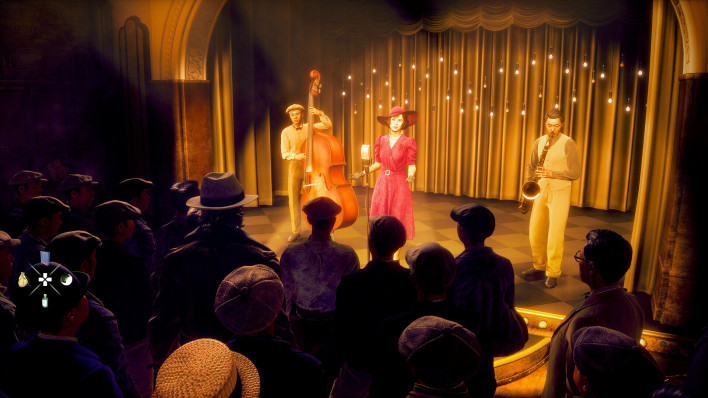
Yokoyama: It might be easier to understand if you look at the recently released video. It's not about the yakuza running something behind the scenes, but rather putting on live shows and performances. First you book a theater for the performance, gather people and an audience, then performers and musicians gather to put on the show and run the business through those revenues.
Of course, the business doesn't always go smoothly. Rivals also appear. Other yakuza come to disrupt and ruin the performance, and during those times, Daito fights against the other yakuza to keep singers and staff safe, protecting the business.
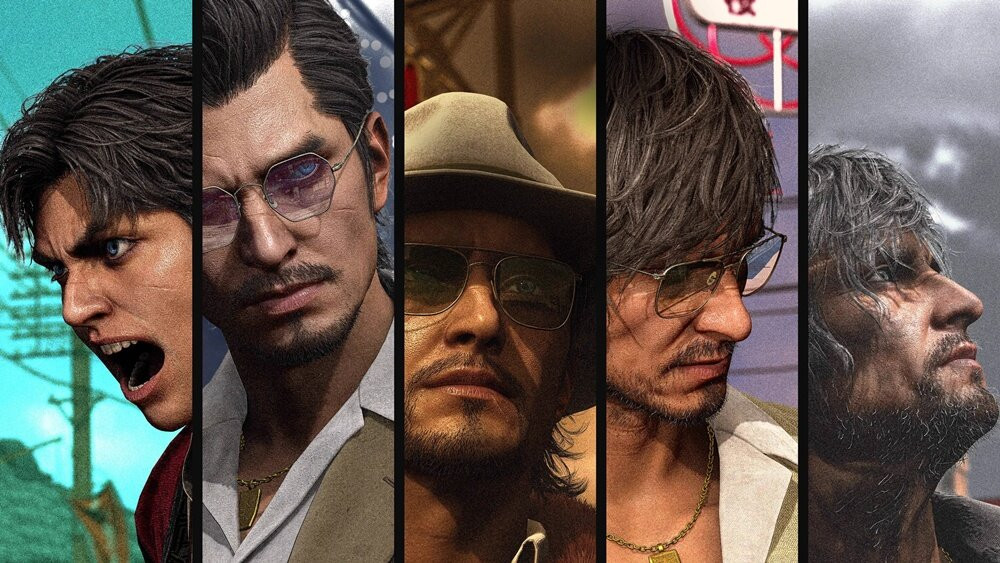
Actors and artists like Snoop Dogg, Ado, and Satoshi Fujihara are participating. Did they actively offer input while creating their characters?
Yokoyama: There were a lot of suggestions regarding appearance. Snoop Dogg suggested braided facial hair, while Ado shared thoughts on her eye shape and makeup. After reading the story and understanding the starting point, they made proposals to us within what was possible for that era, which we reflected in the actual characters.
Personally, those suggestions felt fresh in many ways. Up until now, actors often received pre-determined roles and simply performed them. However, since the participants this time are also artists, they actively proposed how to express their characters in their own way and showcase their personality. That experience was very refreshing.
What is the reason music was chosen as an important theme in this game?
Yokoyama: Because ultimately, I believed music is the only thing capable of overcoming issues like racial discrimination. In the story, the talent Daito possesses that Orpheus—played by Snoop Dogg—discovers is music, and that talent becomes the catalyst that completely changes his life in Japan.
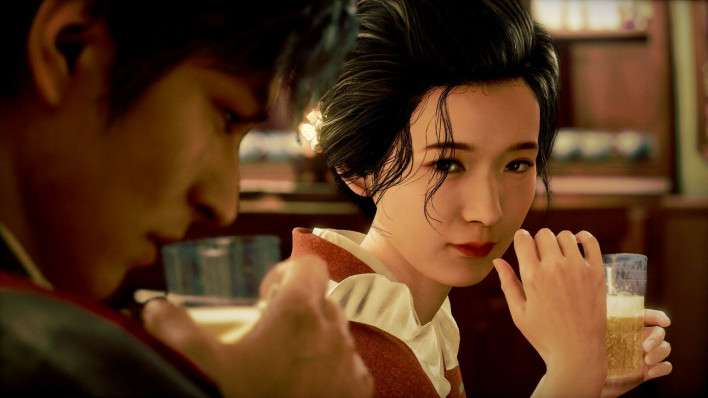
As a boy, Daito came to Japan thinking it was heaven, but arriving firsthand showed him it was not heaven. Yet it couldn't be called hell either; it was just a world immensely different from what he had imagined. That is also the meaning behind the game's title, 'Stranger Than Heaven.'
The relationship between Daito and the person who teaches him how to survive in such a Japan is portrayed with great importance, and music connects as an essential element in that process.
In the demo, fighting off large groups of enemies with small weapons felt quite difficult. Do weapons differ in ways that give advantages in specific situations?
Sakamoto: As you progress through the game, group battles and scenarios where multiple people fight together will appear. In those situations, you fight alongside allies, and it is designed so you can beat them by taking weapon characteristics into account.
However, not all battles are structured as group fights. Various forms of combat exist, including 1v1 fights where lives are on the line.
You aren't forced to use a specific weapon in a specific situation. It is built so you can fight with any weapon. It might feel very difficult at first, but once you get used to the controls, fighting with a variety of weapons becomes possible.
What kind of experience do you hope players get through this title?
Sakamoto: Experiencing the life of a single protagonist living through 50 years of history in a game is a very rare premise in itself.
The demo played now is merely a tiny fraction of the game. Playing through the actual full release from start to finish will deliver experiences unfelt in the demo. We hope players look forward to the feeling of becoming one with the protagonist, as if living through his life firsthand.
Yokoyama: We often get asked, "Why make this kind of work as a video game?" If it were just about showing a story or drama, it could be made as a film or show. Even so, the reason we make games is to deliver immersion, a sense of hands-on experience, and the feeling of becoming the protagonist oneself.
We wanted to create a work where, after beating the game and seeing the ending, players feel "I truly experienced this person's life proper." I hope everyone feels Daito's life in that way.