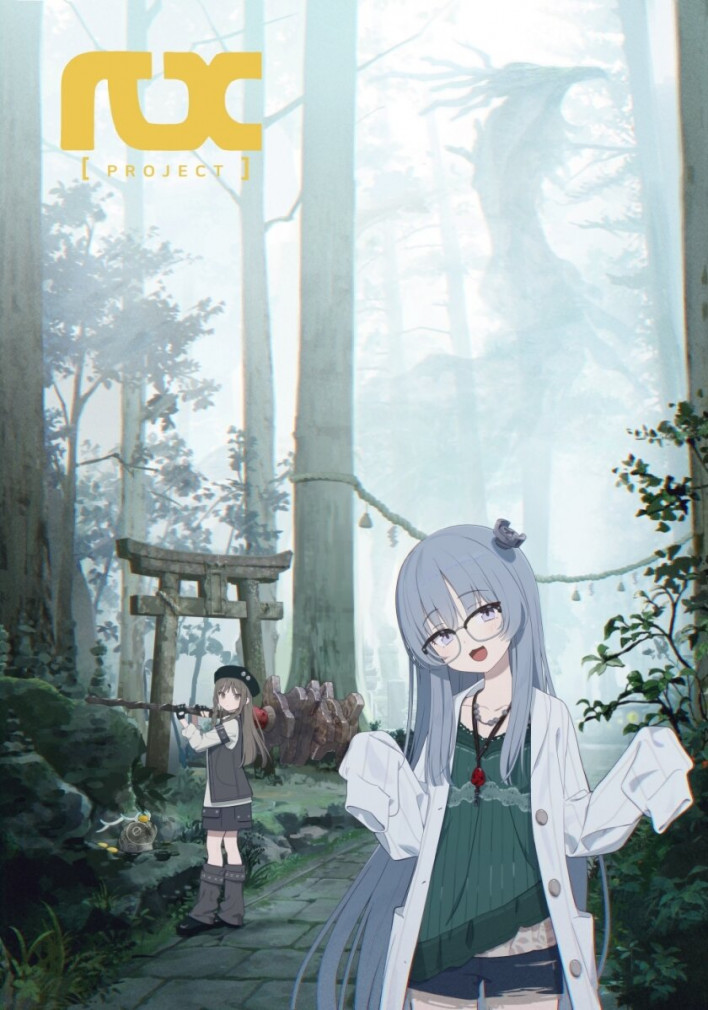
A new title that Nexon Games prepared as its next major project under the working title Project RX: this is 'Pareidolia', which unveiled its official title last August and arrived in Japan for TGS 2026.
While Nexon Games previously shared only teaser information and a brief glimpse of the game's atmosphere, it released a new official trailer to mark its presence at TGS 2026, offering a deeper look into the game's world. Furthermore, hands-on demos are available at its booth in Makuhari Messe, Tokyo, allowing visitors to experience firsthand the mood and combat that 'Pareidolia' promises to deliver.
The game remains in full development, with far more details left to await than what has been revealed so far. Even so, as the next new title presented by Division Head Kim Yong-ha following Blue Archive—and with its intriguing presentation across various teasers—it has gathered immense interest and buzz. 'Pareidolia' is a title packed with high expectations and immense potential. Here is a recap of this new project from its inception to where it stands today.
Pareidolia: From Unfamiliarity to Familiarity The Game's Identity Expressed in Its Title
Nexon Games' IO Division established RX Studio in 2024, but continued developing the new title under the name Project RX for quite a long time. They also promoted the game under the Project RX moniker right up until its official title was unveiled in August 2026. Considering they even hosted a booth for local fans at Anime Expo 2026 in the U.S. this July under the name Project RX, the official title was finalized virtually right before TGS 2026 in September, where playable demos for general attendees became available.
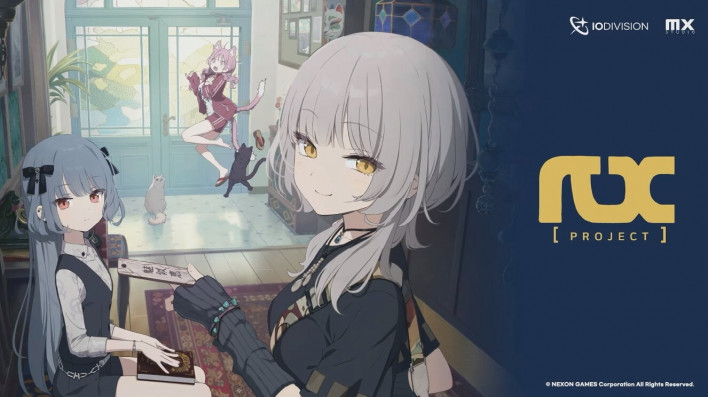
Pareidolia is a psychological and cognitive science term referring to the phenomenon where the human mind perceives a familiar image or sound in unrelated patterns. Examples include seeing a rabbit or a human face on the moon's surface, or the brain unconsciously projecting something familiar into rough shapes. Spotting spirit-like images in shadows or reflections on glass is also commonly cited as an example of this effect.
Choosing this word as the title of the game involved extensive deliberation. Division Head Kim Yong-ha even shared that coming up with the title required reviewing numerous internal proposals and was a challenging process. The selected title, Pareidolia, was deeply considered—from the distinctiveness of a single-word title to its semantic resonance with the game's actual characteristics.
Anime-style subculture games often opt for titles composed of word combinations or full phrase-like structures. Division Head Kim noted that a single-word title like Pareidolia could be far more memorable to players. This perspective had been consistently discussed even before the title announcement.
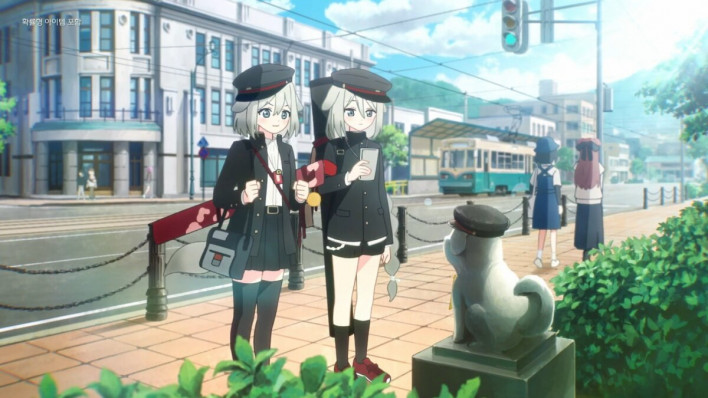
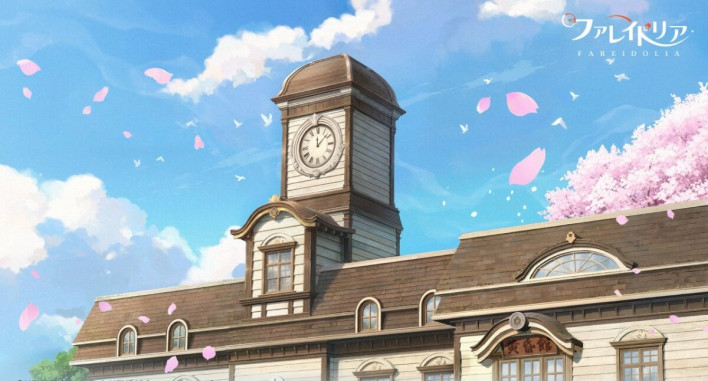
At the same time, the title perfectly fits the thematic direction of the story. The game is set in 'Anima City', an isekai world that resembles reality yet feels subtly unfamiliar. What the game seeks here is the comfort of familiar daily routine and the discovery of new bonds. Players essentially experience life in Anima City—a completely different world—yet the core concept is that the setting feels strangely familiar, allowing players to feel the grounded normalcy of real-life routine.
Finding familiarity in an unfamiliar place can thus be condensed into the single word: Pareidolia. While fans may initially find the Greek-derived word unfamiliar in sound, having it gradually feel natural is precisely why the development team selected Pareidolia as the title. It is a name chosen not merely for being a single word, but as a title that aligns with the game's soul while incorporating subtle linguistic playfulness. It is clear why finalizing the title took so long.
An Isekai Homestay An Unfamiliar World, a Familiar Everyday Life
What provides this everyday sense of comfort in Pareidolia—and indeed serves as the game's core design goal—is an "isekai homestay." While many details remain undisclosed and it is yet unclear how deep or complex the narrative will become, the phrase "isekai homestay" clearly highlights what the development team values above all else in this project.
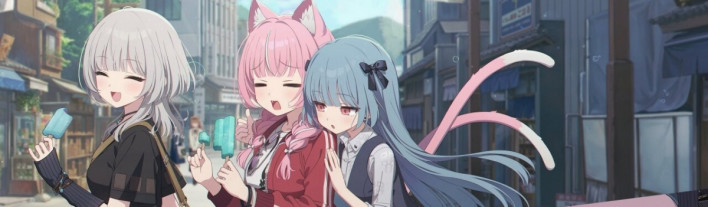
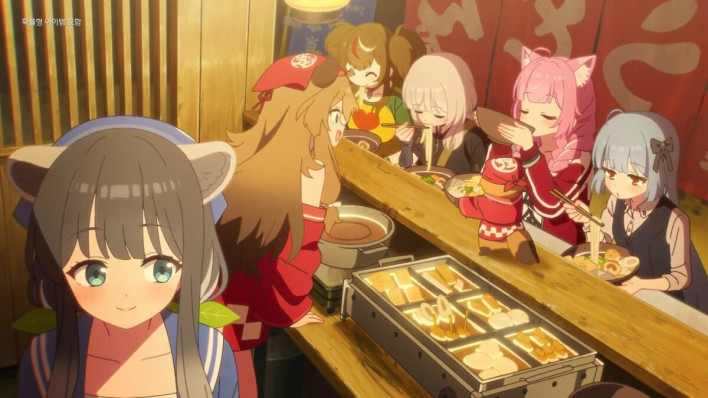
Anima City, revealed through trailers and hands-on demos, is certainly not a realistic world that directly mirrors our own. There are girls with cat or dog ears and tails, and the "Mates"—girls who look human but possess supernatural abilities—are unmistakably extraordinary beings.
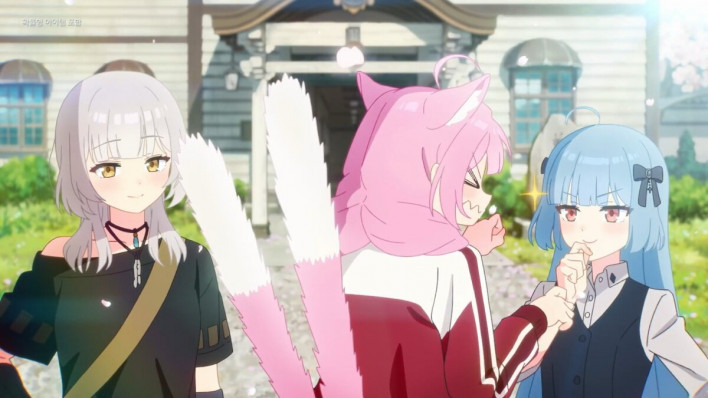
However, RX Studio did not define this isekai simply as a foreign setting. That is why the feeling of daily life is so strongly emphasized. To achieve this sense of cozy normalcy, a world that should feel alien is instead filled with familiar elements.
As mentioned, Anima City is an isekai. Taking things a step further, it is populated by Mates, who do not exist in the normal world. They will take center stage in combat content, and there will naturally be incidents that propel the narrative forward. The player's position as the Director of the Anima City Revitalization Center and administrator of its office, Tasogare-kan, will involve carrying out duties suited to such a world.
Yet the revealed videos highlight a remarkably cozy atmosphere. A town reminiscent of a quiet Japanese rural village features various characters living together peacefully, unbothered by their differences. They eat, play, talk, and spend quiet moments together. Tasogare-kan feels less like an office and more like a traditional Japanese home, complete with tatami rooms, a retro CRT television that younger generations might not even recognize, and an old electric fan. At the same time, modern technology coexists within this setting.
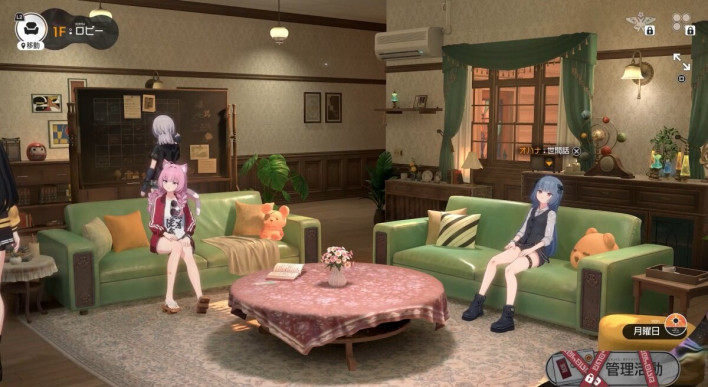
In terms of manga and anime tropes, the game adopts conventions carefully refined by the slice-of-life genre over many years. Even the characters, while impossible in real life, possess traits that fans have frequently seen across manga, anime, and anime-style games.
By expanding upon this sense of everyday life, the game shifts one of its core pillars of fun toward returning to a familiar place and deciding whom to spend time with.
The Uncanny Touching Everyday Life Contrasting Devices That Enhance Everyday Routine
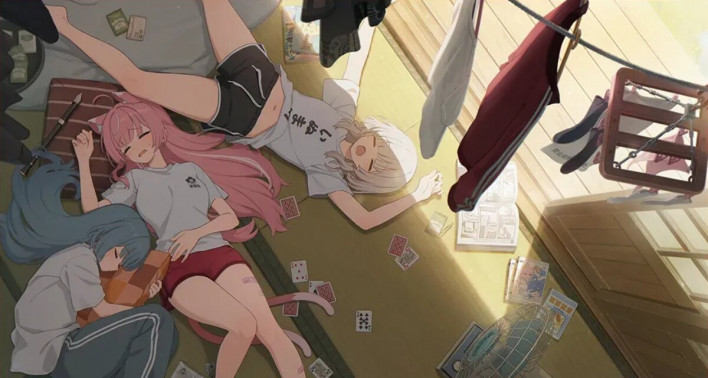
This shared daily life is also woven into gameplay features. Tasogare-kan is portrayed as a sanctuary where players spend everyday moments with various Mates. Right from the key visual released alongside the official title announcement, main characters Minie, Ohana, and Shami are shown falling asleep after playing cards. An electric fan with blue blades, comic books, playing cards, laundry drying on the line, and sunlight filtering onto the engawa (veranda)—the composition captures the classic lazy summer afternoon tropes of slice-of-life anime.
In-game, within the space of Tasogare-kan, the interactions between players and characters are designed around these ordinary, unextraordinary moments. This warmth is expressed through spatial design and nostalgic props. Furthermore, as Producer Cha Min-seo explained, a feature has been implemented to help players feel as though they are actually inside that space: a voice recognition system. When a player calls a character's name inside Tasogare-kan, the character hears it and transitions into a dialogue scene. Dialogue choices can also be selected directly via voice recognition.

While not an entirely unprecedented technology, it is a feature that effectively conveys the feeling of sharing a physical space with the characters. Rather than a mechanical interaction where an AI transcribes voice and generates replies, it offers a natural conversational feel within set dialogue sessions.
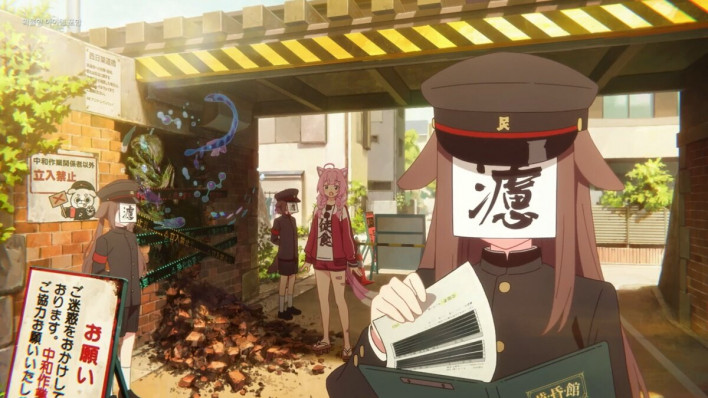
While Pareidolia highlights these peaceful moments, it also depicts a world where mysterious and uncanny phenomena manifest. In the recently released trailer, caution tape blocks off areas due to strange entities, and creatures marked with the character 濾 (filter) guard the vicinity. A massive deer god-like creature was spotted in earlier teaser images, and combat in the demo version showcases elements resembling urban fantasy or real-world paranormal anomalies.
These elements are certainly far removed from ordinary daily life. However, the game does not intend to make this strange un-ordinariness its primary focus. Instead, these non-ordinary elements serve as a contrast to the everyday life Pareidolia pursues, making the peaceful moments feel all the more immersive.
Thus, while occult horror mystery serves as a major motif in Pareidolia, it is treated as just one of several core elements. This aligns with Producer Cha's remark that, unlike Blue Archive which focuses on a school anime setting, Pareidolia cannot be defined simply as an occult game.
The Place You Return to After Battle Live Turn Battle and the Significance of Tasogare-kan
While Pareidolia emphasizes cozy interaction and daily life, it also implements a combat system that has evolved beyond Blue Archive. Its core framework is a command-input turn-based RPG where turn order is set for each character. Added to this are concepts of positioning and directional orientation during a character's turn. Titles like Marvel's Midnight Suns or the Trails in the Sky Remake help illustrate this direction.
By aiming in the right direction, players can deal area-of-effect damage to clustered enemies depending on the skill, while also adjusting character movement direction to prepare for the next turn. However, enemies do not remain stationary while the player prepares an attack. As enemies move around in real time, players often need to time their skill releases carefully. Furthermore, with turn time limits, waiting for all enemies to enter an attack area is no easy feat.


Instead, players can actively manage attack timing and skill usage through turn-advancing mechanics that bring forward a character's turn. This allows players to strategically steer battles that might otherwise slip out of control due to real-time enemy movement using tactical command inputs.
As the demo version covers only the foundational aspects of the combat system, anticipation is high for what additional mechanics will be introduced to create even more varied and strategic encounters.
Combat has become an essential component in character-centric anime-style games, naturally highlighting high-stakes tension. However, within the realm of anime girl games, the development team expressed a desire to make the world of Pareidolia evoke a sense of comfort and the feeling of returning home. This places emphasis on a distinct emotional tone in a market currently dominated by intense action, adventure, and grand exploration.

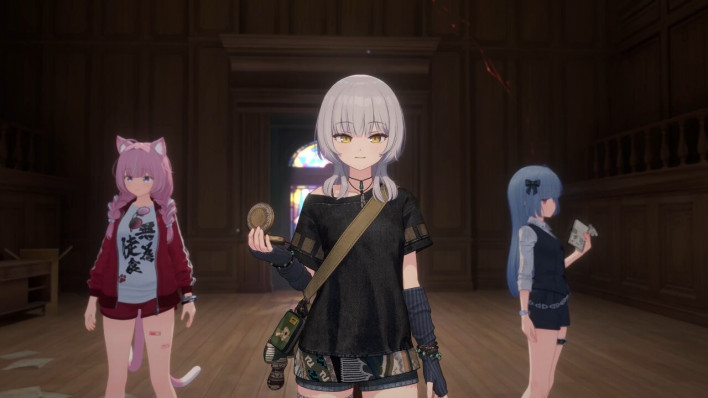
In the demo, combat begins when a shadow snake sealed on the second floor of Tasogare-kan escapes. However, Tasogare-kan is built not merely as an operational base for missions, but as a space where players connect with characters, serving as the end of the day and an emotional destination. That sense of ultimately returning home aligns with Japanese cultural sentiment, which clearly distinguishes inside (内) from outside (外) and treats the inside as a sanctuary of comfort. This is also why RX Studio views dungeons and fields as means to build relationships with characters living in an isekai and achieve a genuine sense of living.
With playable demos newly revealed to the public and comprehensive details emerging throughout TGS 2026, it is still too early to definitively predict the game's final direction or exact release state. However, given that development is progressing toward very clear design goals, 'Pareidolia' at TGS 2026 appears more than capable of building up fans' anticipation.