'007 First Light' is delivering strong results, having surpassed 4 million copies sold since launch. With IO Interactive's new James Bond story receiving praise from players worldwide, attention is now turning to what comes next for the game.
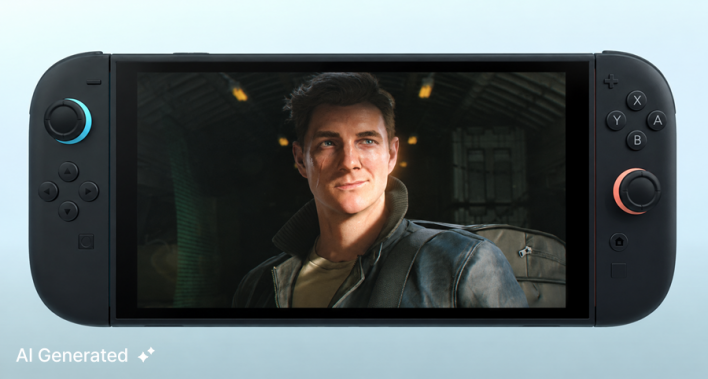
IO Interactive is currently preparing new content to be added to the game, alongside the Switch 2 version whose release has been delayed several times. Optimization is underway to provide an experience as identical as possible to other platforms while leveraging the hardware characteristics of Switch 2, and players will also get to experience new stories centered around in-game characters such as Isola and Pirate King Bawma.
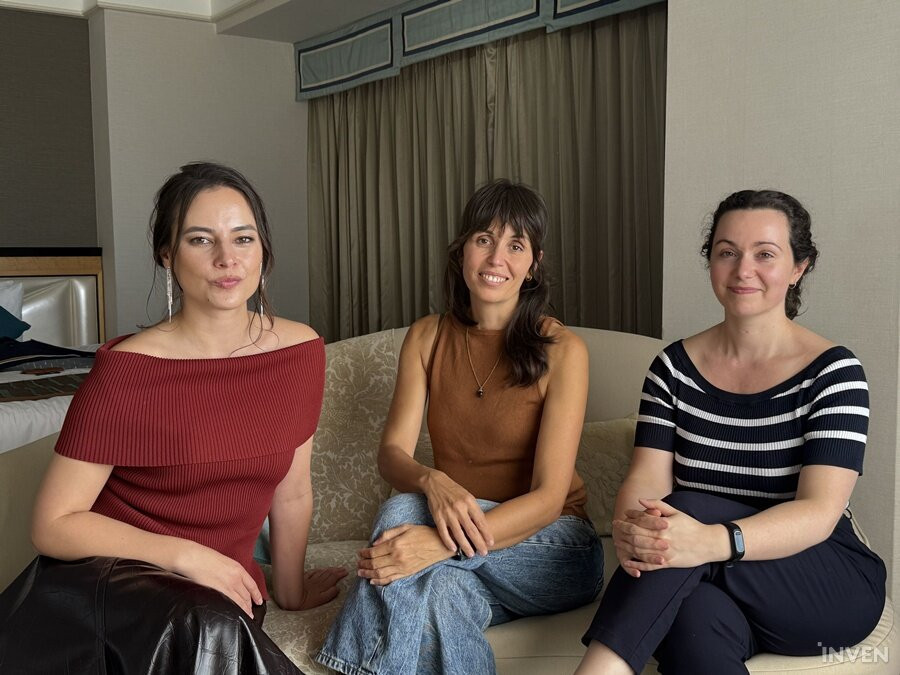
At Makuhari Messe, where TGS 2026 was held, we met with Noemie Nakai, Technical Producer Cristina Vega, and Global Brand Manager Laurine Deschamps to discuss the development status of the Switch 2 version, the character and performance process for Isola, and the future story of '007 First Light'.
Three Delays: A Choice for Perfection, Not Technical Issues
On the 15th, it was announced via social media that the Switch 2 version's release has been delayed to March 2027. This is already the third delay, to the point where fans worry it might be pushed back yet again. Did an unexpected problem occur?
“Not really. While being delayed for a third time is certainly disappointing news for fans, this decision was also made for their benefit. The development team had been pushing hard for a long time and needed a brief breather, and combined with requests from marketing and various other factors, we had no choice but to postpone the release date to March 2027 once again. Ultimately, we decided on another delay because we want fans to experience the game in its most polished form on Switch 2, so we ask for your understanding.
To reassure concerned fans, the Switch 2 porting work is actually going very well. While preparing for our presentation at Gamescom recently, we compared footage worked on back in March with the results from this summer, and the progress was immense.
We can't say we've reached the final stage just yet, but we are definitely getting close to the finishing steps, including performance tuning and fine-grained adjustments. We think it might even wrap up earlier, but since release is scheduled for March 2027, please wait just a little longer.
Recently, console games—including those on Switch 2—have been supporting Quality and Performance modes at high-resolution 30 fps and upscaled dynamic 60 fps, as well as a newer trend supporting 40 fps at lower (upscaled) resolutions. Can we expect 40 fps support in '007 First Light' as well?
“Unfortunately, the Switch 2 version is targeting a stable 30 fps. Meeting that standard is our highest priority right now.
Of course, that doesn't mean we didn't keep things like 60 fps in mind. When we first started working on it, we actually experimented with applying different frame rates depending on the resolution. We even tried to see if we could at least use a different frame rate for cinematics, but in the end, it didn't work out properly.
Ultimately, choosing between 30 fps and 60 fps comes down to console performance capabilities. Right now, our focus is squarely on securing a stable 30 fps.
Regarding optimization, did you apply any unusual or unique technology specific to Switch 2?
“When developing a game on PC, you use a single computer environment for most of the process. So during development, it isn't actually that difficult. But that's only during development. Naturally, users' PC specs are all different. One person might have a very powerful graphics card, while another uses an entry-level one. In the latter case, the engine might behave in unexpected ways. That's why it's standard practice to design PC versions with a certain amount of headroom to prevent these issues.
On the other hand, a console like Switch 2 has fixed performance. What components go inside are fixed, and the hardware is designed to work together as a cohesive system. At first glance, that might seem like a disadvantage, but from a developer's standpoint, it's actually an advantage. Things that require compromises or headroom on PC can be pushed to utilize 100% of the hardware's performance on a console like Switch 2 without compromise.
Ultimately, a developer needs to first identify the strengths of each platform—in a sense, its 'superpowers.' We do this consciously, usually before starting a port. Once we understand the platform's characteristics, we move full steam ahead with development tailored to it.
Memory is one example of such a strength. When the screen is smaller, you might not need to allocate as much memory to the renderer, which in another sense means you have more memory budget to spare elsewhere. In this way, we are working to maximize the hardware's performance without compromising the player experience.
Ultimately, our goal is to ensure players can fully experience '007 First Light' regardless of platform. Switch 2 is no exception.
In the case of Switch 2, many users play in handheld mode. However, handheld mode runs at lower performance compared to docked mode. Does handheld mode also target 30 fps?
“Naturally, handheld mode targets 30 fps as well. Being able to seamlessly transition between docked and handheld mode is the Switch's biggest strength, so we intend for players to enjoy '007 First Light' on Switch 2 however they choose to play.
Speaking of which, Switch 2 supports a mouse feature as well. Will '007 First Light' support it?
“Nintendo always puts a lot of interesting features like that into their consoles. But generally, games that can actually make practical use of those features are limited. '007 First Light' is the same. We haven't found a way to utilize the mouse feature in our game yet. From a gameplay perspective, we also don't think using that feature would add meaningful value.

Some games reduce NPC counts in their Switch 2 versions for optimization compared to PC or other consoles. What about '007 First Light'?
“We also fundamentally had to choose how to make trade-offs. Of course, that doesn't mean simply cutting down on NPCs. The key was ensuring that players don't notice a major difference and can enjoy an experience as close to PC as possible.
In fact, for the Switch 2 version specifically, we are using a new rendering technique called 'Meshlets.' It's a much more efficient approach, and applying this tech is actually one of the reasons development took a bit longer. We chose technical solutions over radical compromises.
Of course, since Switch 2 has limits in memory and other areas, some trade-offs were unavoidable. But we made those choices in areas that aren't critical to players. So even compared to other platforms, you won't feel a huge difference like having fewer NPCs. For example, object detail: distant objects maintain a certain level of quality on PC, whereas on Switch 2 they might appear at a lower quality.
We made many choices in those areas. On the other hand, when using ray tracing on PC, the hardware has to process that workload as well, whereas Switch 2 doesn't use ray tracing, which opened up various options for us.
To emphasize once more, our objective was that the overall experience must be the same. For instance, we might slightly lower the detail level of trees. However, the core elements players look at and the central aspects of gameplay remain identical. Reducing enemy counts, for example, was off the table. We didn't change the core gameplay itself, so you don't need to worry about reduced NPCs making the world feel empty.
Lastly, do you have any final words for players waiting for the Switch 2 version?
“The porting process is going exceptionally well. Comparing where we were a few months ago to where we are now, the progress is clear to see. For players who only own a Switch 2 at home, this title might be their first experience with the game. We hope those players will have a fantastic first impression.
We already revealed a playable demo at Gamescom, and the response was wonderful. So many players really enjoyed it. Please stay tuned as we continue working hard for you. It will be in your hands in March 2027. Please wait just a little longer.
Noemie Nakai

Isola Is the Ultimate Spy, Not a Femme Fatale — Discover Her Charm
Acting for a video game character seems quite different at first glance from playing a traditional role. Were there any challenges, and how did you bridge the differences in acting approaches?
“If I had to point out a difficulty, it would be having to wear all the motion-capture gear. I had facial capture dots placed all over my face and velcro attached all over the mocap suit. Honestly, the biggest challenge—and I'm not joking—was going to the bathroom.
Beyond the shoot environment itself, the acting was also quite challenging. Most of the actors primarily worked in film or television, and while some had theater experience, not many had extensive experience acting for video games. So it took some time to adjust our acting habits to suit a game.
For instance, I tend to put my hands in my pockets a lot while acting, but as you know, mocap suits don't have pockets. So my first thought was, 'Wait, what do I do with my hands?' It sounds trivial, but at first I spent a lot of time wondering what to do with my hands or hair.
And that wasn't all. On a film or TV set, you are surrounded by crew members and creators working alongside you, and you can see everything happening around you firsthand. You can see the locations, sets, costumes, and what everyone looks like, so there is very little you have to imagine. Everything is visible. You just go on set, trust the environment, and focus on acting in the moment.
In a previous interview with Andy Serkis, when asked what he considers most important when performing a character, he answered that it was finding the soul of that existence—truly immersing oneself in and understanding the character rather than just reciting lines. How do you view Isola as a character?
“I think she is an immensely fascinating character. I grew up in Japan, and while living there, I often felt as a woman that I was expected to adjust myself to match the men around me. There were even times when women were told not to be too outstanding, too ambitious, or too competent.
In that sense, when I first read the character description, there was something I truly loved: Isola is completely unapologetic. She embraces and acts on what she wants, what she aims to do, and whatever methods she uses to achieve it without hesitation.
That felt incredibly fresh and unique. It is quite rare to find a female character who is so confident yet at the same time not written as completely selfish or terrible.
She cares about James Bond and steps in to help him even in moments where she has no obligation to save him, and I really loved those aspects of her as well.
In that regard, I don't think she can be categorized simply as a villain, a hero, or a love interest. To James Bond, she is a rival, a partner, and at times someone who betrays him, showing many different sides, which I find captivating.
Looking at Isola's actions in the game, she comes across as very lonely. As a perfect spy, she seems unable to belong anywhere. Did you consciously keep this aspect in mind while acting?
“I think that question captures Isola's character perfectly. Isn't there a phrase 'lone wolf'? I think that expression fits Isola incredibly well.
As mentioned earlier, there are moments in the game where she reaches out and helps Bond when she really didn't need to. Seeing that, while Isola is certainly a lone wolf and a very solitary spy, I believe she is also someone with a warm heart inside.
At the same time, perhaps that's the most spy-like quality of all. If you have too many friends, it's hard to be a good spy. In that sense, pointing out that Isola seems lonely is a fantastic observation. I'm delighted because it feels so spot-on. This wasn't just my own interpretation—it was also what the writers intended, so I'm glad that message came across well.
When I say it like this, it might sound as though I'm taking credit since I played Isola, but in reality so much of Isola's depth was already written in the script. It was truly brilliant writing, creating a character that was already deeply multi-dimensional, complex, and nuanced. So I just had to step on set and perform. I didn't even need to overthink or over-prepare.
Speaking of which, I'm reminded of Isola's first introduction scene. Since the stage was Slovakia, I thought adopting a Slovak accent would fit, so I even hired a coach to prepare one. But when Game Director Martin Emborg saw that, he asked, 'Why are you using a Slovak accent?' I explained that since the setting was Slovakia and Isola is a spy, I thought it would help her blend in, but he told me there was no need. The writers had already crafted specific lore for her background.
Going through that experience, I ended up researching what real spies were like rather than prepping arbitrary quirks. That helped me convince myself that this character could exist in real life, making the performance feel much more believable.
Isola also exudes a sort of femme fatale charm. Was that intentional on your part?
“Actually, I didn't act with a femme fatale character in mind. On the contrary, I hoped she wouldn't feel like such a simple archetype. Both Director Martin and I consciously tried to steer clear of the concept of a femme fatale.
Early in the game, James Bond is a relative newcomer to the espionage world, whereas Isola has been in that world for a long time. In that sense, personally I feel she is several steps ahead of James Bond as a spy. Because of that, her playing tricks on Bond and staying ahead of him might come off as femme fatale elements manipulating a man. But I think that perception simply stems from Isola being a veteran senior spy compared to Bond.
I see that as another technique showcasing Isola's charm as a spy. She is someone highly skilled at using people, so I hope players view her moments of putting Bond in tough spots through that lens.
Do you have a message for Korean players?
“I want to express my sincere gratitude to all the fans in Korea. If there are people who haven't played the game yet, I really hope you give it a try.
I believe how much effort, dedication, and love I poured into this project doesn't matter unless it resonates with players—if it doesn't touch them, it means nothing. That's why seeing so many people enjoying and replaying the game is genuinely moving and fulfilling.
If you haven't played yet, please check it out and spread the word to others.
Laurine Deschamps, Global Brand Manager
'007 First Light' Story Is Far From Over
AI THEIA, which sits at the center of the game's events, feels like a warning directed at us today. Was that intentional?
“Even looking at the movies alone, the 007 franchise has always featured contemporary issues reflecting the times. For example, in the very first Bond film, nuclear warfare was a key theme. In that sense, AI is undoubtedly one of the biggest topics in our society today. So choosing AI was, in a way, a natural decision.
Indeed, looking at the current pace of AI advancement, even though we didn't specify the exact year the game takes place, it wouldn't feel strange if it were set two to three years from now, which likely makes it hit closer to home.
Having thoroughly enjoyed the game, I'm already eagerly awaiting a sequel. The ending left some room for continuation—can you give us any hints about a sequel?
“At present, we are thrilled that everyone is looking forward to a sequel. It shows how deeply people connected with the story.
However, right now our main focus remains '007 First Light' rather than a sequel. That's why we revealed a Year 1 roadmap shortly after launch and introduced upcoming content to be added to '007 First Light'.
At IO Interactive, we describe this as 'games as a service for single-player games.' A prime example is the 'Hitman' series. Even years after release, it continues to receive active live support, and we plan to apply that same approach to '007 First Light.'
As such, post-launch updates for '007 First Light' will continue. As for a sequel, please wait a bit longer. What I can say for sure is that right now, our focus remains on '007 First Light.'
What was the area you paid the most attention to when crafting the character of James Bond?
“The fact that he is the youngest James Bond in history was crucial. While challenging, because it had rarely been explored, it allowed us to shape James Bond in a fresh way.
Simply put, James Bond is an unpolished gem with top-tier potential. He possesses immense capability, but in the story he is still inexperienced as a spy with plenty of room to grow. That gave us more freedom to unleash our imagination.
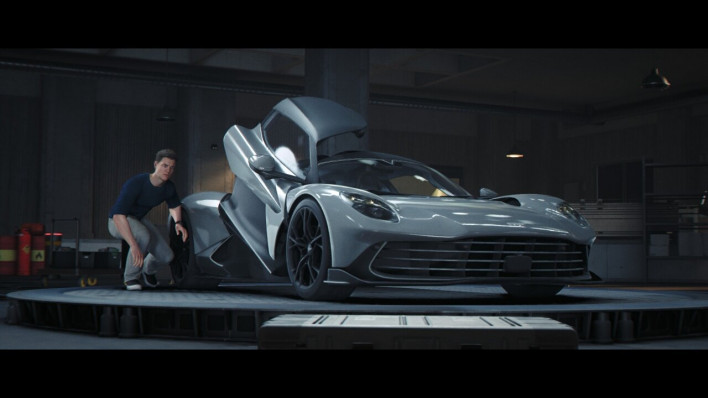
For instance, we wanted to show how he developed signature tastes associated with Bond, like his preference for a vodka martini (shaken, not stirred) or his affinity for Aston Martin. So while playing the game, I think you'll see moments of 'Ah, so that's why Bond formed this taste.' Everyone has a catalyst that shaped their preferences, and portraying the youngest Bond gave us the perfect opportunity to address that.
A new story mission revolving around Pirate King Bawma is set to be added. Why Bawma of all characters? What charm did he possess that made you choose him?
“We crafted Bawma as a deeply nuanced and complex character from the very beginning of '007 First Light.' In the main story, he served as a brief introduction, but we felt there was still much more story left to tell about him.
However, revealing details now would inevitably be a spoiler, so unfortunately I can't say more at this time. We will reveal further details once everything is ready.
“There is still a lot more story left to show in '007 First Light.' We hope you keep following along with great interest as the upcoming stories unfold.
This article was originally written in Korean and translated with the help of AI. It was then edited by a native English-speaking editor. All AI-assisted translations are reviewed and refined by our newsroom.
[Read Original]