'Astrae Oratio', a shin-denki RPG published by NC and developed by Dynamis One, makes its official debut at TGS 2026. While it has attracted significant attention for various internal and external reasons and is currently recruiting CBT testers, this marks the very first time its actual gameplay is being put to the test.
With so much attention focused on it within the subculture community, there were also lingering anxieties in some quarters. NC has historically had little connection with the subculture genre, and as if emphasizing 'shin-denki'—a term prominent from the early 90s to the late 2000s—the art style varies significantly between factions, drawing mixed reactions. Particularly in the 2020s, unlike the past subculture gaming industry that highlighted individual illustrators, the trend has shifted toward unifying art styles across each title, making this approach feel somewhat counter-current.
Navigating through these multiple uncertainties, Astrae Oratio made its presence felt at TGS 2026 as a game clearly built with sharp determination. Right from the demo stage, its ambition to weave a 'dream' based on what the developers love came through loud and clear—riding the nostalgic memory of that era alongside the evolution of turn-based combat that has developed since.
Don't Lower Your Guard: Fast-Paced Real-Time Turn-Based Combat with ATB, Combos, Parries, and Tagging
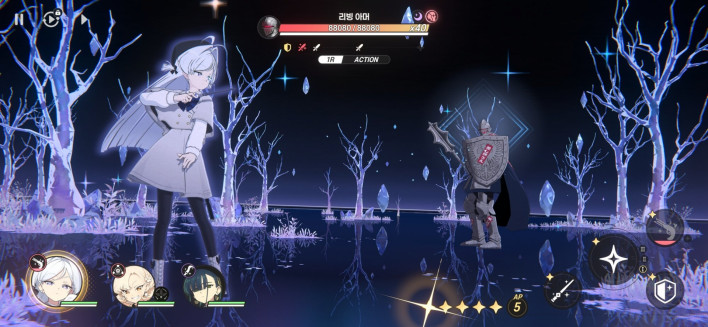
Since it was already revealed in the teaser PV to be a turn-based RPG, the first question on everyone's mind is likely how it sets itself apart from previous mobile turn-based RPGs. Modern mobile turn-based RPGs often move away from traditional back-and-forth turns to speed up the tempo, referencing earlier turn-based RPG trends, and Astrae Oratio follows a similar vein. However, rather than pulling in extra turns, it references an evolved style designed to feel much more like real-time combat.
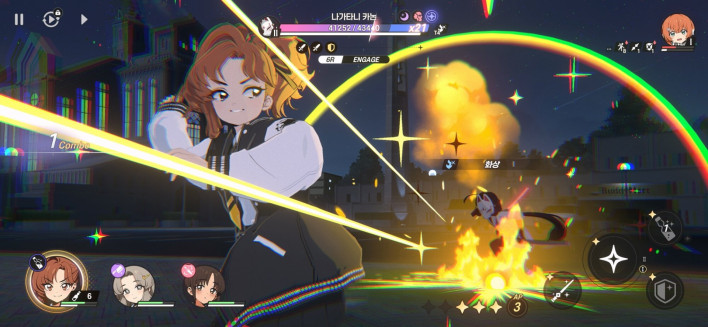
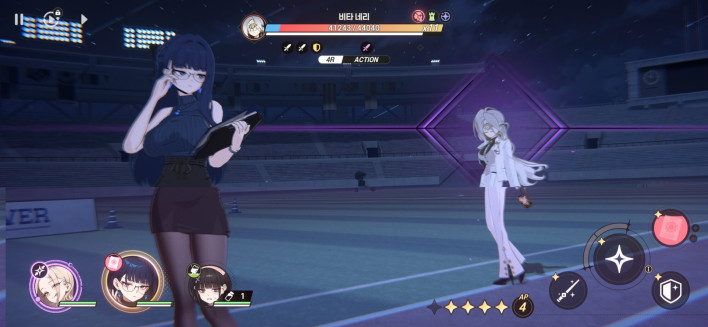
To explain using another game as an easy comparison, similar to Final Fantasy's ATB system, there is an action gauge under the enemy's health bar. Once that gauge fills up, the enemy acts immediately and seizes the initiative, even if it was your turn. Thus, you must quickly press skills to preemptively suppress the enemy. Going a step further, Astrae Oratio features a combo system that lets you unleash continuous attacks within a single action until AP is depleted, as well as a mechanics framework that encourages appropriate responses to enemy actions. Normal enemy attacks can be preempted and disrupted, while heavy attacks signaled by a shield icon can be parried with a timed counter to reclaim the turn. Unblockable red attacks cannot be counteracted, so players must swap in a tank or a healthier ally to absorb the blow.
Starting with the basics, like other mobile turn-based games, there are three types of moves: Basic Attacks, Combat Skills, and Ultimate Skills. Basic Attacks and Ultimate Skills consume AP—acting as skill points—while Combat Skills also have separate cooldowns assigned to them. In other words, you can unleash a barrage of Combat Skills until they go on cooldown, then switch to Basic Attacks to reduce Combat Skill cooldowns and prepare for the next assault. Ultimate Skills can only be activated once their gauge is full; they consume AP and do not advance turn order like in some other turn-based titles.
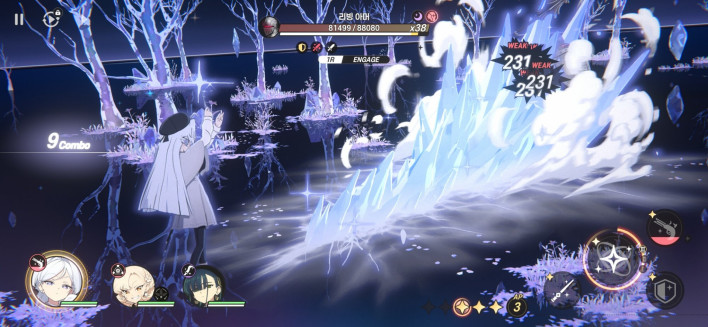
Another unique aspect is the 3-character tag battle system. On the battlefield, allies and enemies fight in a 1v1 format. On their turn, players can strategically tag in characters to extend combos or swap out heavily damaged allies. The special moves triggered upon tagging in carry different effects depending on the character or class, though due to the short demo session and rapid battle pace, observing detailed effects was difficult. Nevertheless, the demo build clearly showed mechanics that demand constant attention to the battle flow—such as enduring tough enemies through tag management, and area-of-effect skills dealing splash damage even to benched characters.
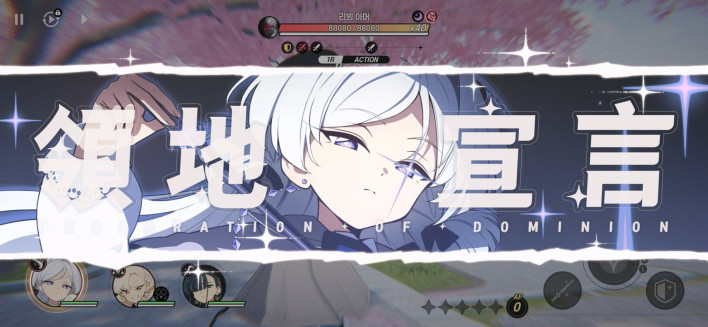
'Domain Declaration', highlighted ever since the PVs, acts as a fever time that refills AP and resets skill cooldowns. While activation conditions vary per character and role—making it hard to fully dissect in the demo—using Domain Declaration just as AP runs low to fully replenish the gauge and string together Basic Attacks, Combat Skills, and Ultimate follow-ups offered a satisfying thrill reminiscent of fighting games' Modern Control Scheme. Alongside exploiting enemy element weaknesses to fill break gauges faster for all-out assaults, tactical depth was clearly palpable despite the brief demo session.

Deep Retro Sensibility Infused with Visual Novel Flavor

As a subculture RPG, combat is essential, but how the story and characters are presented is paramount. Naturally, given the nature of a game show demo, showing the entire narrative context is difficult, and demos often provide only a snippet showing how narrative and cutscenes unfold.
The TGS 2026 demo featured a story segment framed as a combat tutorial, alongside Chapter 1 of the main story's opening arc, 'Magical Activities of Minato Girls'. The tutorial segment depicts Kyoto-born mage Yuria Kujo—who appeared like a mastermind at the end of the PV—crashing a helicopter into a barrier to intrude and battle the Minato girls. After Yuria Kujo breaks the barrier and crash-lands, the scene transitions directly into a battle introducing Astrae Oratio's basic mechanics, followed by the typical flow of dialogue scenes and cinematic presentation.
Described in broad strokes, it might sound standard, but diving into dialogue details reveals elements that may feel unfamiliar to some. Proper nouns like 'Domain Declaration' appear alongside terms like Shinsengumi or Mimawarigumi, which pop up without preamble and require some background in Japanese history or culture to grasp immediately. During actual demo plays, visitors less familiar with subculture genres expressed a degree of confusion. Due to time constraints and the event taking place in Japan, the demo build seemed to assume prior knowledge rather than explaining every detail, moving through narrative rapidly.
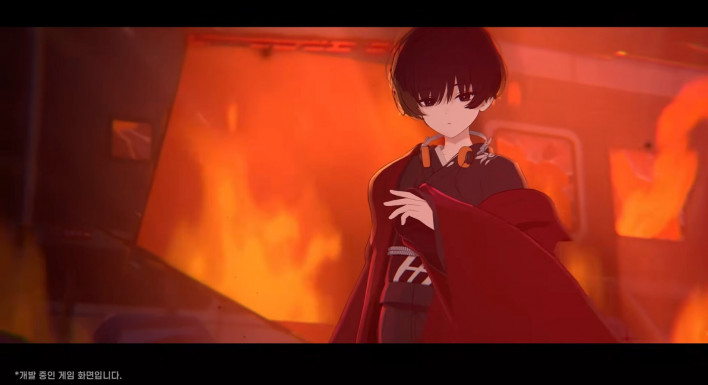
Still, because the combat tutorial follows the classic mobile gaming trope—facing a powerful early foe -> retreating -> transitioning to flashbacks or introducing key cast members—it was easy to grasp the bigger picture. More than anything, the developers' intent to evoke deep otaku nostalgia was unmistakable. The closing scene featuring developer and publisher logos alongside the iconic line "Goran no sponsa no teikyou de okurishimasu" (This program is brought to you by our sponsors) served as a unmistakable highlight.
The story mode following the combat tutorial continued this trend. The interface ditches the common mobile RPG text-box style in favor of a visual novel layout where text overlays directly onto background CGs. To be specific, it instantly calls to mind titles like Tsukihime and Fate/stay night. While the player's avatar 'Chief' exists, opening the narrative not from the Chief's perspective but with a monologue by Erin Tanaka—a key figure in 'Magical Activities of Minato Girls'—was quite memorable.
Typically, mobile hero-collector RPGs unfold their stories centered around the player's avatar. This allows the game to explain the world step-by-step from the perspective of a newcomer. However, 'shin-denki' works differently. Magic and occult forces exist, but ordinary people—including the protagonist—are initially unaware until incidents erupt, opening the floodgates to a deluge of lore and clues. Rather than explaining everything explicitly, readers or players piece things together through events and character interactions. Because the genre is grounded in realistic modern cities, it weaves together mythologies, legends, and occultism rather than purely fictional concepts. As such, explaining every motif directly would be dry and pedantic, so the conventional approach condenses lore into symbols, terms, and thematic connections.
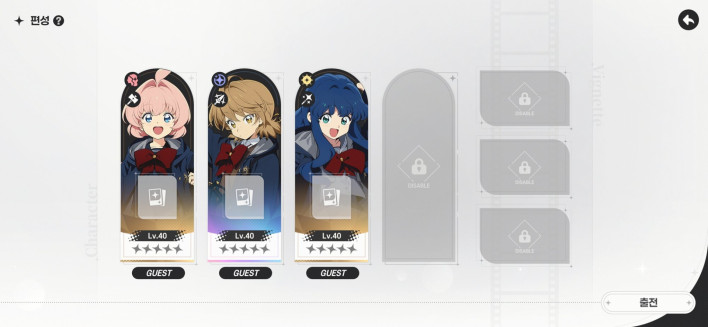
In other words, rather than spoon-feeding a complete blank slate, the genre focuses on someone swept into extraordinary circumstances who must uncover truths to overcome crisis. In a sense, it shares DNA with post-apocalyptic works inspired by late 20th-century fin-de-siècle themes, but shin-denki differs by coexisting with mundane daily life, offering the potential to pivot toward a brighter tone depending on how the story unfolds.
Astrae Oratio demonstrated this charm clearly even within its short demo build. From comic relief moments involving the villainous-seeming Yuria Kujo to the atmospheric contrast between combat tutorials and Chapter 0's understated portrayal of Erin Tanaka and the Minato girls' daily lives, the core elements of 'shin-denki' were firmly established. By combining standard mobile RPG progression with nostalgic anime tropes, visual novel story delivery, and an anime-opening-style conclusion to Chapter 1, the game left a powerful first impression imbued with retro flair.

Astrae Oratio Demonstrates Passion and Otaku Devotion, Refinement Remains Key
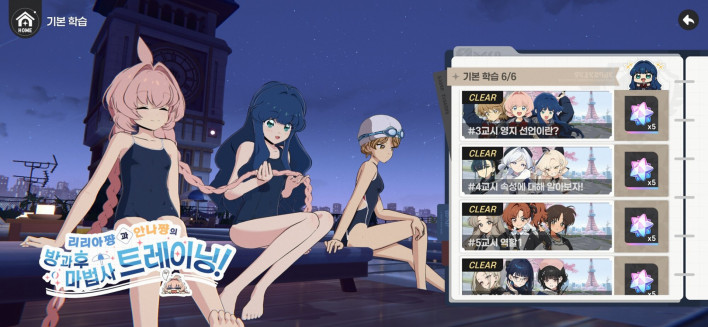
Thus, Astrae Oratio clearly shows painstaking efforts to rediscover elements from the 90s to late 2000s, refining them for mobile while evoking maximum nostalgia. That makes it welcoming, yet at the same time leaves a sense of uncertainty. To draw a food analogy, it is like sitting down to an old-school bowl of gukbap or rich tonkotsu ramen.
Still, hands-on play revealed a high degree of consistency in character modeling, and the CG visuals were soft enough compared to heavy-lined illustrations to blend in smoothly. Rather, the UI/UX left room for improvement, even considering this was a demo build. In prioritizing concept and atmosphere, text and UI elements felt overly small and easily obscured, while fast-paced combat gave little time to parse active buffs, debuffs, or specific skill effects. The game left many things unexplained under the assumption that experienced gamers would instinctively understand, making public reaction to these elements a crucial point to monitor.
In truth, this is a hurdle frequently encountered by developers running their first public test after relying solely on internal testing, as internal testers become accustomed to the UI/UX over time and overlook such details. Games adhering strictly to mainstream conventions suffer less trial and error, whereas Astrae Oratio bridges familiar classics into a new domain, making such friction understandable. Consequently, while players might feel occasionally bewildered, the moment a familiar flavor registers, it inspires a desire to savor every detail. With CBT recruitment ongoing through the end of TGS 2026, expectations are high for what glimpse of a 'dream' Astrae Oratio will deliver after refining its feedback.