Astrae Oratio, a Shindenki RPG published by NC and developed by Dynamis One, made its official debut at TGS 2026. While the title had already drawn significant attention for various internal and external reasons and is currently recruiting closed beta testers, this marks the first time players have been able to hands-on test and evaluate its actual gameplay.
With so much attention focused on it from the subculture community, some expressed lingering apprehension. NC previously had little connection to the subculture genre, and reactions were mixed regarding the noticeable variance in art style between factions—a choice emphasizing the "Shindenki" genre prominent from the early '90s to the late 2000s. In particular, whereas the subculture gaming landscape of the 2020s has shifted toward a unified art style across each title—unlike earlier eras that highlighted individual illustrators—this approach felt somewhat like swimming against the current.
Stepping up to TGS 2026 amid these uncertain factors, AsOra gave the unmistakable impression of a project meticulously honed for this moment. From the demo stage onward, the game clearly conveyed its ambition to tell a story about "dreams" grounded in what the developers truly loved, riding the nostalgia of that era while tracing the evolution of turn-based RPGs.
Stay Alert: A Real-Time Turn-Based Combat System Accelerated by ATB, Combos, Parries, and Tags
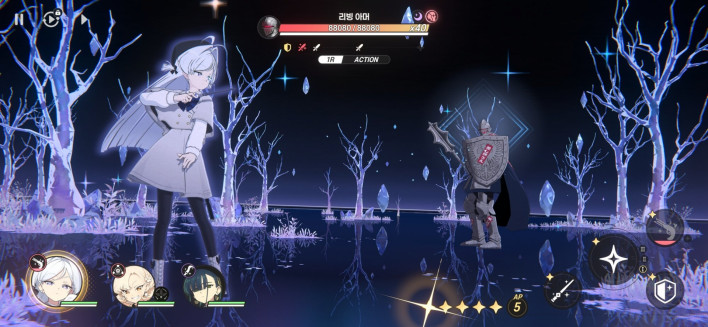
Since the teaser PV had already revealed that it is a turn-based RPG, many were curious about how it would set itself apart from existing mobile turn-based RPGs. Recent mobile turn-based RPGs often draw from past trends to break away from strictly turn-by-turn exchanges and raise the combat tempo, and AsOra follows a similar track. However, rather than incorporating mechanics that grant extra turns, it adopts systems designed to create the feel of real-time combat.
To use another game as a simple analogy, similar to Final Fantasy's Active Time Battle (ATB) system, an action gauge appears beneath the enemy's health bar. Once that gauge fills, the enemy immediately acts and takes the initiative, even if it was previously your turn. Players must therefore unleash skills quickly to preemptively neutralize enemies. Going further, AsOra builds on this with a combo system that allows players to continuously attack within a single action until AP is depleted, alongside mechanics that encourage dynamic responses to enemy actions. If an enemy initiates a normal attack, players can suppress it with a preemptive strike; powerful attacks marked by a shield icon can be parried with a timed counter to seize the turn. Unstoppable red attacks, however, cannot be countered, requiring players to tag in a Tank or a less damaged ally to absorb the blow.
Looking at the basics, combat features three core abilities similar to other mobile turn-based games: Basic Attack, Battle Skill, and Ultimate Skill. Among these, Basic Attacks and Ultimate Skills consume AP (the game's skill point equivalent), while Battle Skills also carry individual cooldowns. The flow involves pressing the offense with Battle Skills until they enter cooldown, then switching to Basic Attacks to reduce Battle Skill cooldowns while preparing for the next assault. Ultimate Skills can only be activated once their gauge is full; they consume AP and do not advance unit turn order like in certain other turn-based RPGs.
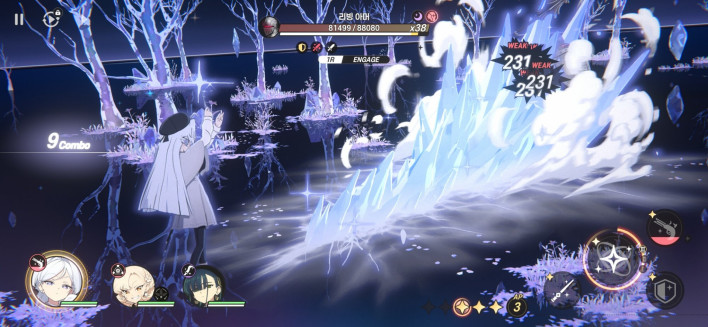
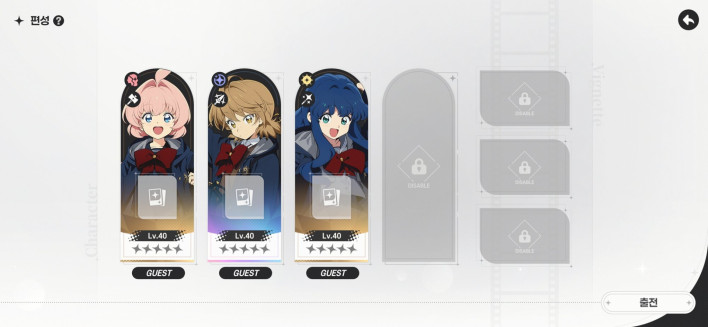
Another unique aspect is the 3-character tag battle system. On the battlefield, allies and enemies fight in 1v1 engagements. On their turn, players can tag in another character to extend combos or swap out a heavily damaged unit for strategic advantage. The special skills triggered upon tagging vary depending on the character or class, though the brief demo session and rapid combat pace made it difficult to examine all specific effects. Still, the demo build clearly demonstrated how tagging allows players to endure encounters against tough enemies, while AoE attacks can damage off-field bench units, constantly requiring players to keep a close eye on the flow of battle.
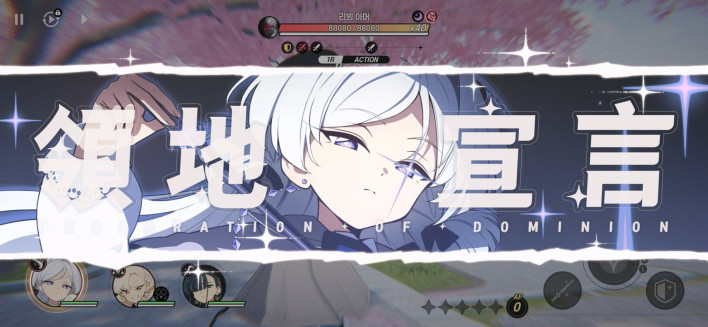
"Domain Declaration," a feature highlighted since the initial PV, acts as a fever time state that refills AP and resets cooldowns. Activation conditions vary by character and role, which was again difficult to parse fully in the limited demo. However, depleting AP, triggering Domain Declaration to fully replenish it, and chaining together Basic Attacks, Battle Skills, and Ultimate combos delivered a satisfying rush reminiscent of fighting games' Modern Control modes. Combined with targeting elemental weaknesses to fill the enemy's Break gauge faster and launch all-out attacks, the brief demo effectively highlighted the game's tactical depth.

A Rich Retro Vibe Enhanced with Visual Novel Flair

As a subculture RPG, combat is essential, but how the narrative and characters are presented is equally critical. Given the nature of game show demos, showing the full story context is difficult, and such builds often serve merely to offer a glimpse into the presentation style and narrative direction.
At the TGS 2026 demo, the showcase featured a story-integrated combat tutorial along with Chapter 1 of the main story's opening segment, "Magical Activities of the Minato Girls." The tutorial section depicts Yuria Kujo, a Kyoto mage teased as a shadowy mastermind at the end of the PV, crashing a helicopter through a barrier to intervene and fight the Minato girls. After Yuria Kujo's entrance following the barrier crash, the game transitions immediately into a tutorial battle teaching AsOra's core mechanics, followed by a standard progression of dialogue sequences and cutscenes.
While that overarching framework might sound conventional, the detailed dialogue contains elements that may feel unfamiliar depending on the audience. Beyond proper terms like "Domain Declaration," specialized references like Shinsengumi or Mimawarigumi crop up without preamble, requiring a degree of familiarity with Japanese history and culture. During the actual demo, visitors less versed in subculture tropes appeared somewhat puzzled. Considering time constraints and the show's location in Japan, the demo build moved briskly under the assumption that players were already familiar with these terms, rather than explaining every detail.
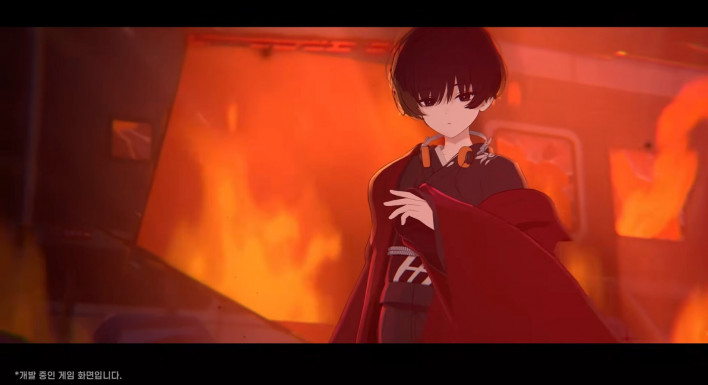
Nevertheless, the combat tutorial follows the classic mobile gaming template—confronting a powerful foe early on, retreating, and transitioning into flashbacks or character introductions—making the overall structure easy to grasp. More than anything, the developers' intent to evoke deep otaku nostalgia was unmistakable. The closing sequence, complete with the iconic line "Goran no sponsor no teikyou de okurishimasu" (Brought to you by the following sponsors) alongside developer and publisher logos, served as an unmistakable highlight.
The story mode following the combat tutorial maintained that same stylistic direction. Rather than using the dialogue boxes standard in mobile RPGs, the interface adopts a classic visual novel format with text rendered directly over background CGs—evoking classics like Tsukihime and Fate/stay night. Although the player's avatar, the "Chief," exists, starting the narrative not from the Chief's perspective but with a monologue by Erin Tanaka—one of the key figures in "Magical Activities of the Minato Girls"—was particularly memorable.
Typically, mobile hero-collector RPGs center their narratives around a player-surrogate protagonist to gradually introduce the world to newcomers. "Shindenki," however, operates differently. While magic and the occult exist, ordinary people—including the protagonist—are initially unaware, until unfolding incidents unleash a flood of world-building details and lore. Rather than spelling out every mechanic upfront, players piece the setting together through events and character interactions. Set against a realistic urban backdrop, the genre weaves together real-world mythology, folklore, and occultism rather than purely invented fantasy tropes. Explaining every motif explicitly would feel pedantic and dry; instead, standard practice in this genre is to condense those elements, letting terminology and symbolic motifs carry the lore.
In other words, the genre prioritizes a protagonist swept up in events who must uncover the truth to navigate crisis, rather than hand-holding a reader with zero context. While it shares common ground with post-apocalyptic works inspired by late-20th-century apocalyptic themes, Shindenki is unique in that mundane daily life coexists with the supernatural, allowing the narrative to pivot toward lighter tones depending on how it is framed.
AsOra vividly showcased this charm even within its brief demo build. From comic relief moments involving the seemingly ominous Yuria Kujo to the tonal contrast between intense combat tutorials and the tranquil daily life depicted in Chapter 0 with Erin Tanaka and the Minato girls, the core essence of Shindenki came through clearly. Blending standard mobile RPG elements with nostalgic classic anime tropes, visual novel narrative delivery, and an anime-style opening sequence at the end of Chapter 1, the game left a strong first impression steeped in the spirit of that era.

Astrae Oratio Shows Genuine Passion and Otaku Devotion—Refinement Will Be Key
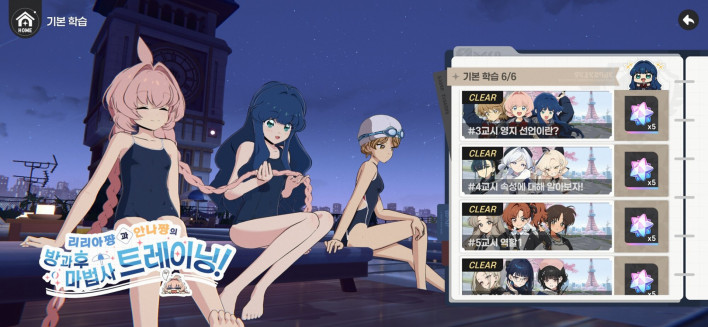
Throughout AsOra, it is evident how carefully the developers sought to rediscover elements of the '90s to late-2000s and adapt them for mobile while invoking deep nostalgia. For that reason, while the game feels warmly familiar, it also carries a hint of uneasiness—much like a traditional bowl of old-school pork soup or deep tonkotsu ramen that holds a distinct, uncompromised flavor.
In actual gameplay, character modeling offered a cohesive visual feel, and background CGs blended smoothly without clashing with the artwork. Rather, the primary drawback lay in the UI/UX, even accounting for its demo status. In prioritizing atmosphere and presentation, text and UI elements felt overly small and easily obscured, while fast-paced battles left little time to parse buffs, debuffs, or skill effects. The demo often assumed players would instinctively understand these mechanics based on general gaming experience, and how players respond to this design during testing will be crucial.
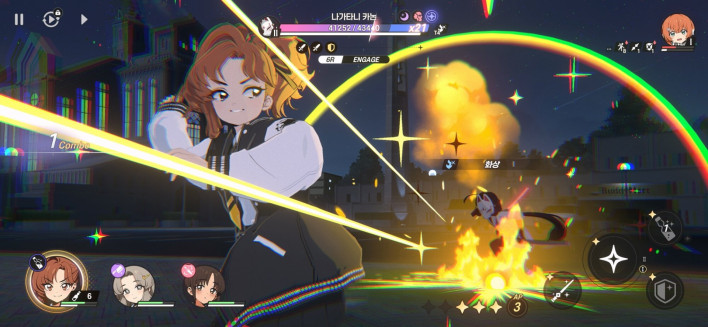
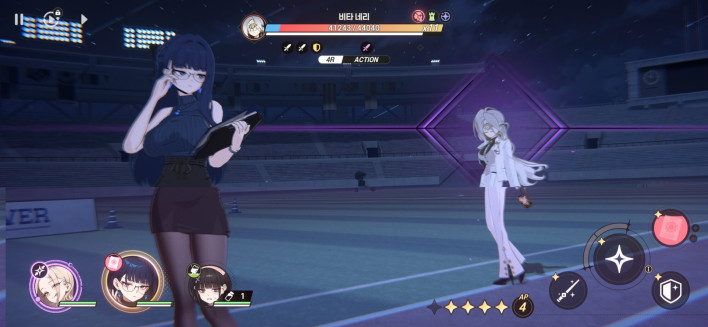
Such issues are common among studios transitioning from internal testing to their first public trial, as developers naturally grow accustomed to the UI/UX over time. While games adhering strictly to mainstream conventions encounter fewer of these growing pains, AsOra's attempt to build upon beloved classics toward something new likely contributed to these rough edges. Even if players occasionally feel disoriented, the moment that familiar flavor hits, it inspires a desire to sit back and savor it. With closed beta applications open until the end of TGS 2026, it will be exciting to see how player feedback shapes AsOra and what glimpses of its "dream" it will ultimately deliver.