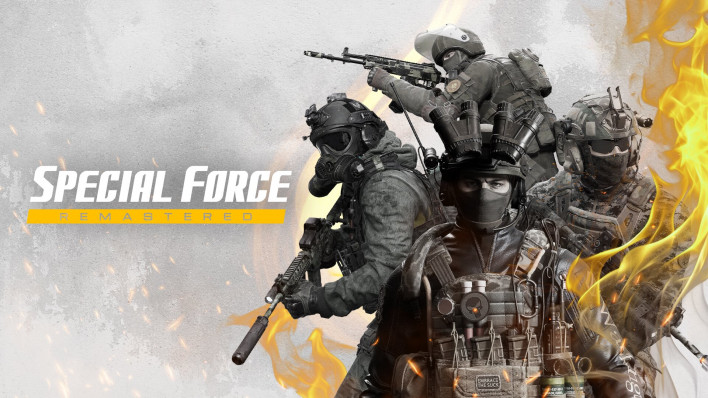
Dragonfly's FPS 'Special Force Remastered' will begin official service on Thursday, September 17. The game rebuilds character and battlefield graphics using Unreal Engine 5 while introducing weapon customization and GP-purchasable tactical gear. Additionally, features that add depth to gameplay have been added, allowing players to adjust operational characteristics by swapping weapon parts and choose between offensive, recovery, and reconnaissance equipment during combat.
Players reminiscing about memories of navigating corridors, windows, and openings will be able to look back on the past through maps featuring significantly improved visuals compared to the original, as well as mechanisms reminiscent of classic gunplay feel. Based on in-game footage and an interview conducted with the development team last August, we examined everything from battle preparation to combat, customization, and competitive systems.
Weapon Customization Added, Training Grounds Introduced
Battle preparation begins in the lobby by selecting a character and weapon. Characters consist of four units: DEVGRU, Spetsnaz, Sayeret Matkal, and White Tiger 07. In the equipment menu, players can check lists by weapon type and stats for each weapon. Dragonfly explained that they provided a diverse selection of default weapons to allow players to choose their preferred arms.
After choosing a weapon, players utilize the customization system to equip parts for individual sections, such as stocks and foregrips. The customization screen for the FN FAL displays attachment slots and part selection options. In the weapon growth menu, players can check their current weapon level, EXP, and parts unlocked at subsequent stages.
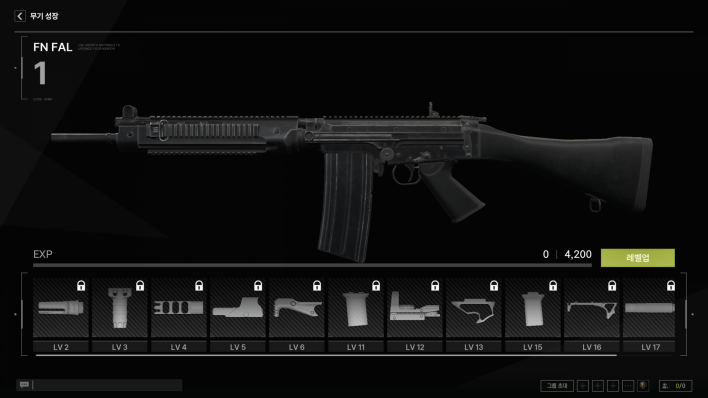
In an interview last August, Na Heung-sik, Manager of Business Strategy at Dragonfly, explained, "In the remaster, we wanted to introduce progression elements for players who use a specific weapon for a long time." He added, "Even with the same gun, some players want to boost mobility, while others might sacrifice mobility to increase accuracy for mid-to-long-range engagements."
When combining parts, the system is designed to balance pros and cons. Manager Na said, "If you increase accuracy, penalties follow—such as reduced mobility or changes in weapon swap speed. The goal is to let players tailor the same weapon to their personal playstyle."
Parts that meet the level requirements are unlocked without needing separate purchases. Regarding monetization tied to progression, Manager Na explained, "Weapon EXP can be earned through gameplay. We also sell EXP items for players who want to level up faster." He noted, "As a weapon levels up, step-by-step parts unlock, and part skins can only be equipped after unlocking the respective part first."

For target practice, map-specific training grounds are available. Players can select a desired map, enter, and practice aiming down sights or hip-firing at targets. On a hit, a human diagram displays the affected body part along with distance and damage numbers. Players can also purchase and use tactical gear using provided GP or practice grenade throwing.

Regarding movement and shooting, Dragonfly emphasized maintaining the original game's mechanics. In an interview last August, Oh Jin-won, Head of Business Strategy at Dragonfly, cited mechanics such as "diagonal movement that moves slightly faster, ghost stepping, and jump shooting." At the time, he explained, "Even if the numbers were mathematically identical, subtle differences could be felt during actual gameplay. We are continuously working to identify and narrow those gaps."
Bullet recoil patterns for each weapon were also adjusted during implementation. Taking the M4 as an example in the same interview, Manager Na explained, "When automatic fire starts and a direction is set, the recoil pattern drifts upward in that direction." He shared the development status at the time, adding, "It was not easy to recreate feelings implemented in an old engine 100% identically in Unreal Engine 5. We are still working on closing the gap with the original."
Diverse Modes and Tactical Gear Adding Depth to Combat
The battle selection screen features Team Match, Free-for-All, Team Deathmatch, and Sniper Match. Team Deathmatch is a mode where players eliminate enemies to reach the target score first. In the map description for Desert Camp, the offense's objective is to plant a bomb at designated points, while the defense must prevent infiltration or defuse the planted bomb.
There are seven maps available: Desert Camp, Nerve Gas, Satellite, Missile, Shanghai, Venezia, and Sniper Training Ground. Among these, Sniper Training Ground is exclusive to Sniper Match. Unlike the training mode where players can select their preferred map, standard battles assign maps randomly.

Regarding map creation, Manager Na explained that structures were recreated nearly 1:1 based on original map designs before applying selective changes. Head Oh revealed that they evaluated points that could impact tactics, such as adding windows or allowing access to previously unreachable locations.
Engaging in combat actions, such as eliminating enemies during firefights, accumulates GP. Players can use these points to purchase gear at the Tactical Weapon Depot. The purchase screen on the Missile map features HE grenades, flashbangs, and smoke grenades, along with the RPG-7V2, kamikaze drone, Healing Injector, and Recon Support equipment.
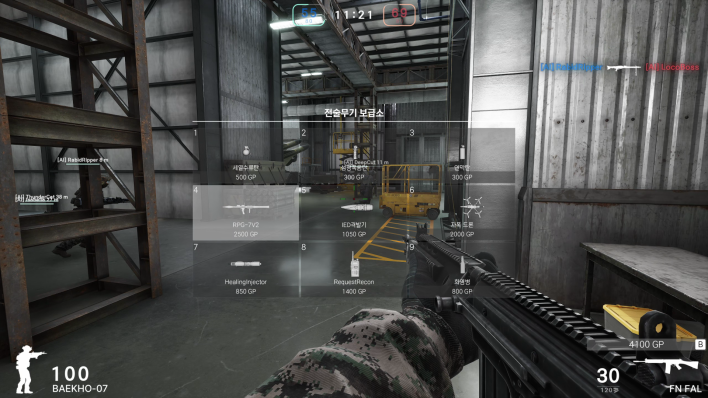
Each piece of equipment serves a different role. The RPG attacks enemies with projectile explosions, while the Healing Injector is introduced as gear that restores a portion of health. The Recon Support screen displays radio-shaped equipment alongside a map, marking enemy positions on it. The system forces players to choose how to spend the same pool of GP.
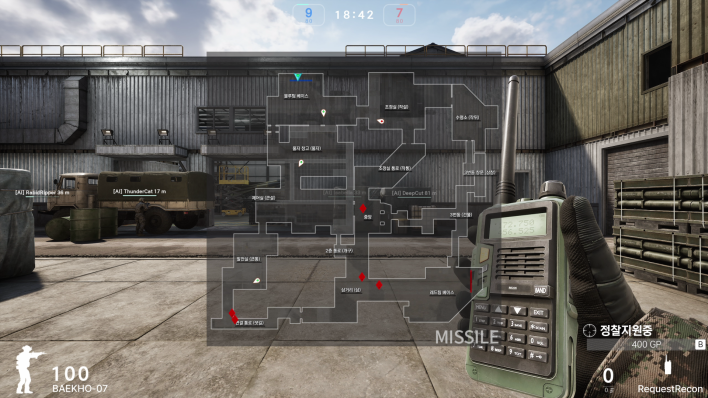
The development team designed these gadgets to influence round management in Team Match mode. Manager Na explained, "Tactical gear was designed both as a strategic element where choices are made within limited round resources and as a comeback mechanism for teams at a disadvantage."
The example he cited was a Team Match scenario where defenders hold inside their base. Manager Na stated, "You can eliminate multiple enemies at once using an RPG or attack from the air with an FPV drone." He added, "In Team Match, when defense teams camped inside their base, attack teams often struggled to breach. Gear like FPV drones, which attack from unconventional angles, can disrupt such defensive setups."
He also touched on findings from testing the tactical gear. "To gather diverse play patterns, we kept gear stats and point gain structures relatively open. While per-round resource management didn't play out exactly as intended, we confirmed new playstyles absent in the original—such as suppressing base defenders using drones," Manager Na explained regarding the testing phase.
Character Customization, Battle Pass, and First Season Competitive System
Beyond equipment for combat, elements for customizing character and weapon appearances are also available. Unit-specific character skins feature distinct military uniforms and tactical gear, including gas masks and ghillie suits. The lobby features a dark indoor backdrop showcasing the selected character, serving as a hub to check weapon loadouts along with Battle Pass and event progress.
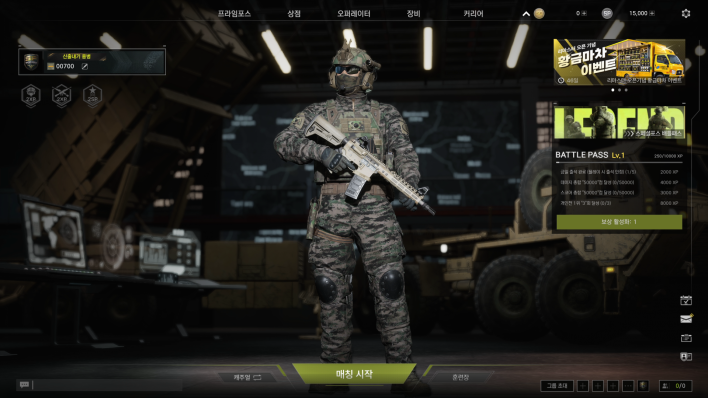
Customization options are also displayed in combat and match results screens. Manager Na explained, "Profile icons, name tags, and images shown in the kill feed can also be customized. This includes emotes where characters perform specific actions and victory animations shown by top players at the end of a match."
Rewards including weapon skins are laid out on the Battle Pass screen. Manager Na said, "The Battle Pass grants rewards based on tiers achieved by players. In line with our goal of eliminating P2W elements, we focused on character and weapon cosmetics."
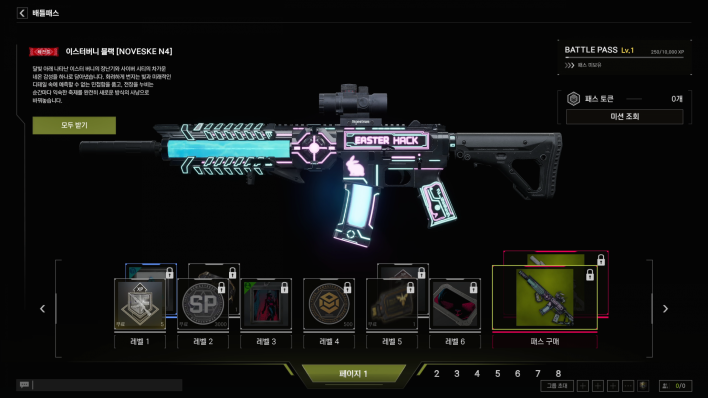
In the Prime Force menu, players can view weapon appearances featuring wing-shaped decorations, featured seasonal items, 'Open 1x' / 'Open 10x' options, and probability rate tables.
Seasonal Ranked Matches introduced at official launch are based on team combat. Regarding entry rules for the first season, Manager Na stated in the August interview, "We decided not to implement party matchmaking in Season 1. Instead, solo queue players will be gathered to form teams."
This policy reflects feedback gathered during Early Access. Concerns were raised that pre-made groups coordinating roles had a tactical advantage over solo entrants. The team stated that the Clan System will be added via a major update after prioritizing the ranked and seasonal systems.
Regarding ranked preparations, Manager Na noted, "Matchmaking structure, MMR, tier calculation values, and server environments must work in tandem." He explained that the system is designed to balance acceptable skill gaps between individual players in a match while aligning skill balance between friendly and opposing teams.
'Special Force Remastered' is set to reach players through various channels starting with its official launch on Thursday, September 17. Head Oh stated, "Early Access was conducted on Steam and the Epic Games Store. Starting with the official launch, Dragonfly will operate the service directly, and it will also be available on STOVE."