On the 8th, Kakao Games held an online showcase ahead of the release of World of Dokkaebi.
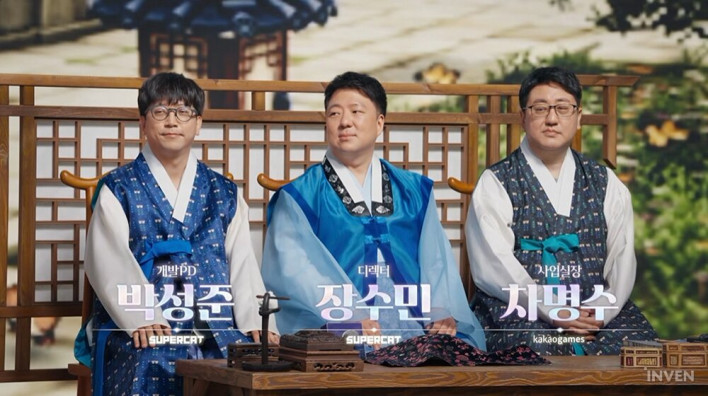
The showcase was broadcast via World of Dokkaebi's official YouTube channel, featuring actual gameplay footage of regions, skills, and combat scenes, as well as presentations on major systems and future service plans, followed by a Q&A session with influencers. Announcer Bae Hye-ji hosted the event, which was attended by Kakao Games CEO Lee Si-woo, Head of Business Division Cha Myung-soo, Supercat Producer Park Sung-jun, and Director Jang Su-min.
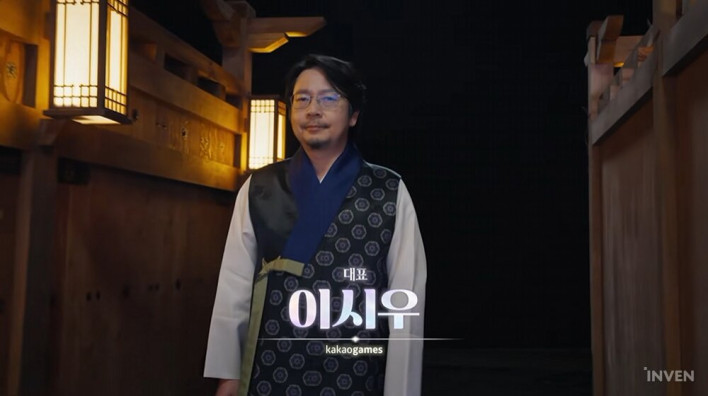
Kakao Games CEO Lee Si-woo introduced World of Dokkaebi—which has been prepared with Supercat over a long period—as a game created with the goal of providing long-lasting enjoyment through growth and cooperation. In particular, he shared that it was designed for players to feel both freshness and comfort in a space that blends a traditional Korean worldview with the retro sensibilities of pixel graphics.
CEO Lee Si-woo said, "We pondered deeply to infuse a unique color into World of Dokkaebi," adding, "Since the core of an MMORPG is not just its launch moment but the live service that follows, we will fulfill our responsibility to make it a world where players can stay and enjoy for a long time."
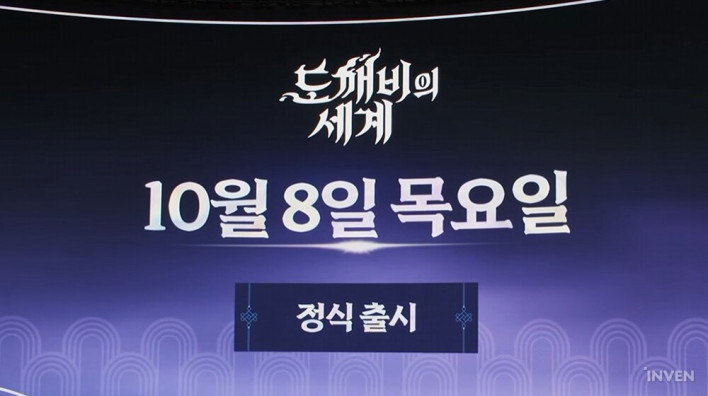
Kakao Games' new title developed by Supercat, World of Dokkaebi, will officially release on mobile on October 8.
Selecting Skills Instead of Classes Combat Crafted Through 12 Styles
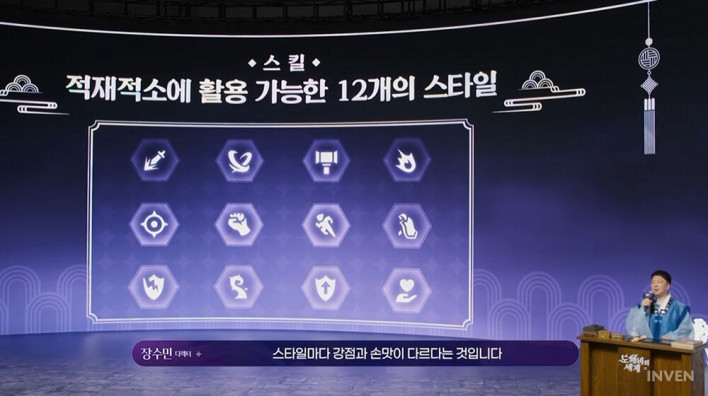
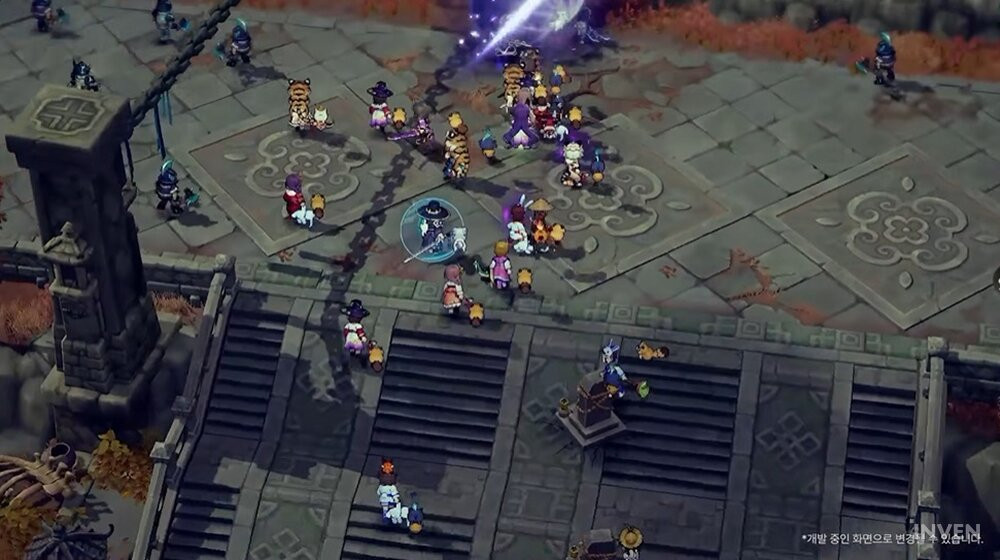
Combat is rooted in general field hunting, but skill selection, order, and timing play crucial roles. Its biggest feature is the absence of fixed classes. Instead of choosing a specific class, players can combine desired skills to create their own combat style. A total of 12 skill styles are available, each featuring distinct strengths and combat feels.
Skill styles are broadly divided into four categories. The first is a style focused on frontal firepower, utilizing single-target attacks, finishing skills, frontal push attacks against enemies, and skills that deal explosive wide-area damage.
The second is a style that controls distance and combat flow. Players can maintain distance while accumulating pressure, overwhelm enemies with relentless combo attacks, or utilize mechanisms that grow stronger as combat drags on. It is also possible to take the initiative in battle by quickly closing in on enemies or opening up space.
Next is a style focused on variables and crowd control. It can shift the flow of battle by gradually weakening opponents with continuous curses, or by confusing enemies and restricting their actions. Lastly, there is a style for protecting allies and frontlines, helping sustain combat by soaking up enemy attacks to hold the front or healing and supporting allies.
Equipping 3 skills belonging to the same style triggers the core system, 'Divine Form Awakening'. Rather than simply increasing attack power or stats, it is structured so that a separate combat mechanism suited to that style is activated. The most intuitive change is to the ultimate skill, but the effect of Divine Form varies across styles.
Some styles upgrade ultimate skills by one tier, while others alter the power or application method of all skills used. In certain styles, unique dedicated mechanisms are unlocked, creating distinct combat approaches.
Without class restrictions, skill builds can be adjusted freely according to content. For example, players can focus on AoE attacks and combat sustain for general hunting, while opting for a setup centered on buffs and single-target attacks for boss fights.
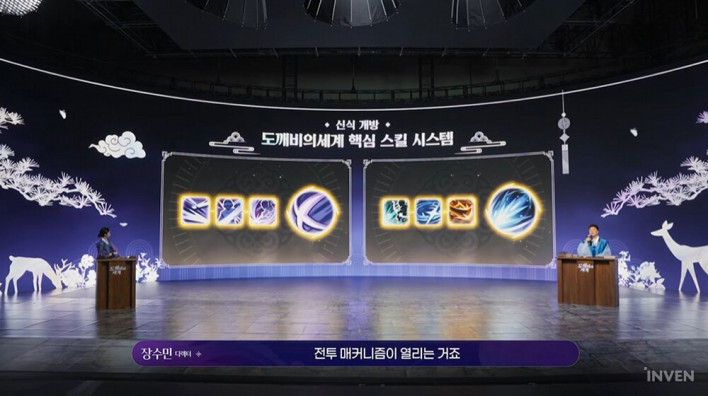
Roles become clearer in clan content. Someone can absorb enemy attacks at the front, while other players handle offense or support. However, these roles are not fixed to classes and can change at any time depending on chosen skills.
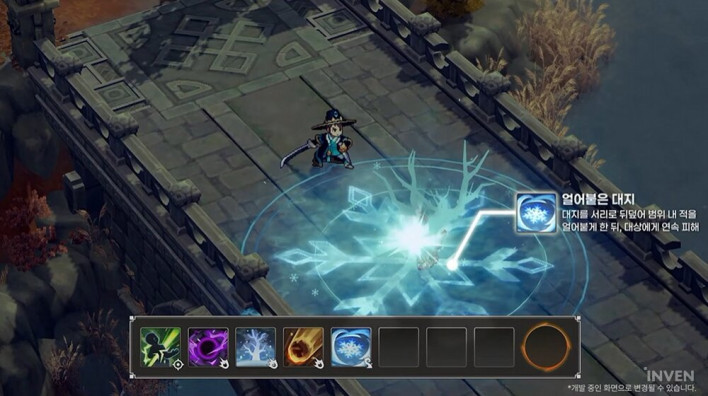
The skills themselves also grow. Even for the same skill, visual effects and usage change with progression. Players can focus on leveling up frequently used skills and build other abilities around them to finalize their own combat style.
In combat, skill order and timing are also crucial. Players can harass enemies with ranged attacks, open up distance when counterattacked, and strike again by targeting openings. They can unleash ultimate skills at opportune moments or immobilize fleeing foes with control skills to finish them off. Even with the same skills equipped, combat outcomes vary based on when and in what order they are used.
A Cooperation-Centered K-Fantasy World Competition as an Optional Choice
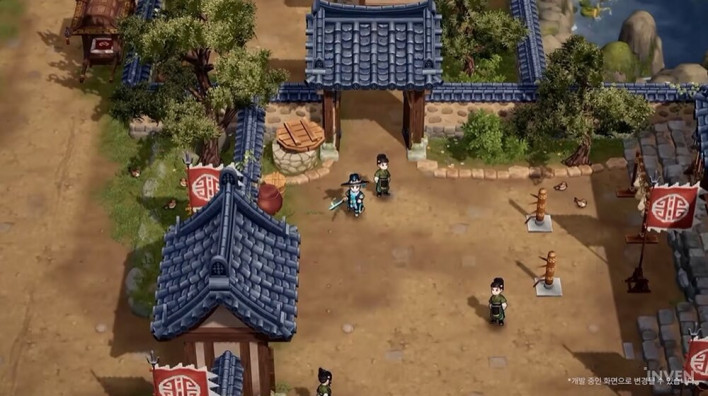
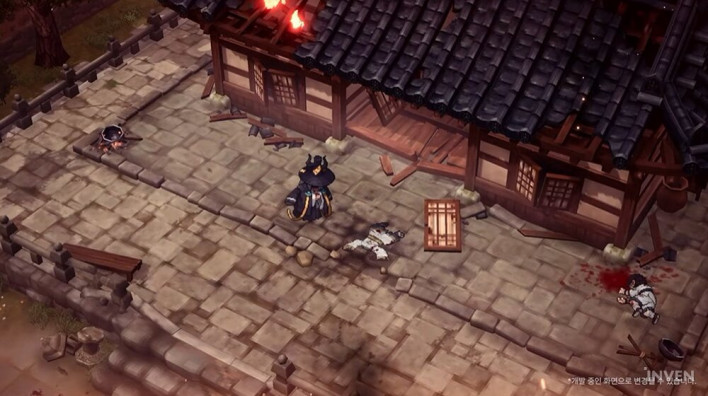
One of World of Dokkaebi's main hubs, 'Tabaro,' is a town reminiscent of ancient Eastern culture with houses, marketplaces, and taverns. Tile-roofed houses, marketplaces, riversides, mountain paths, and the flow of light and clouds are intricately detailed to bring out the spatial immersion of a K-fantasy world.
Visuals combine 2D and 3D elements. Characters are crafted in 2D pixel graphics, while towns and fields are rendered in 3D. Height variations and depth have been added to backgrounds, supporting 360-degree camera rotation to display different scenery depending on the viewing angle.
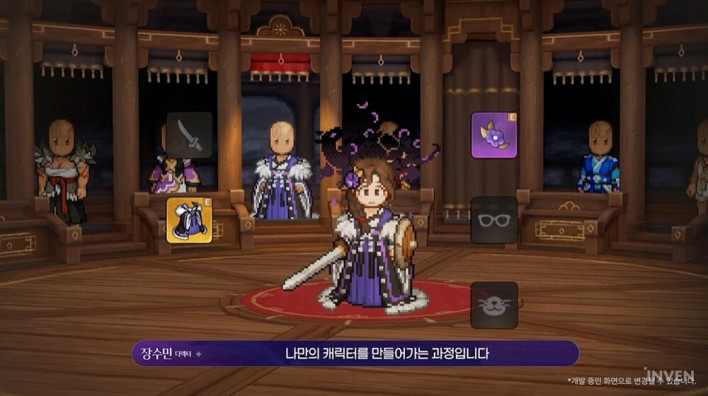
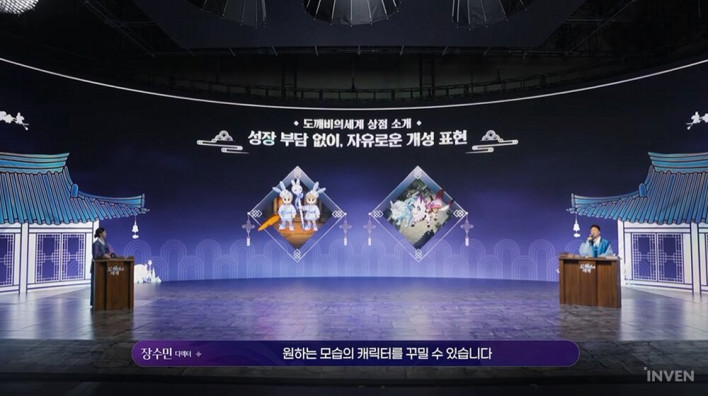
Various characters coexist in towns and fields. Players can customize their characters according to personal taste—exploring on mounts, changing hairstyles at salons, or wearing diverse outfits. The focus is placed on the process of forging a unique character beyond simple cosmetic changes.
Breaking away from the structure of conventional MMORPGs centered on fixed classes and mandatory competition, World of Dokkaebi focuses on choices and cooperation among Dosa. Players cannot directly attack other Dosa on normal server fields. Everyday server spaces are designed for players to focus on growing together and cooperative play rather than player-vs-player conflict.
Players can grow on open fields and prepare content with clan members to tackle bosses or event objectives. Representative cooperative content includes Server Bosses, where multiple clans join forces against massive foes, and Clan Co-op content, where clan members combine their combat styles to achieve targets.
An individually selected skill combination functions as a unique combat style during solo play, but translates into a defined role when playing alongside multiple players.
Optional content is also available for players seeking competition. Structured so that 3 servers are matched to compete for the name and honor of their clan and server, it remains open throughout the season for players to participate whenever they wish. Eliminating opponent Dosa or contributing to battlefield objectives earns points, which determine ranks. Ranks remain as a recorded honor accumulated throughout the season.
In-Game Economy System Key Currencies, Character Customization, and More
The economic system is also one of the main pillars. Players acquire currency while engaging in content such as hunting, bosses, secret realms, and battlefields, using it for growth and trading. The focus was placed on capturing the fun of economic activity typical of PC MMORPGs even within a cross-platform environment.
The three main currencies are Spirit Stones, Yeopjeon, and Gold. Spirit Stones are paid currency used for store items such as memberships and passes. Yeopjeon is a growth currency obtained through gameplay, usable for enhancements and other upgrades, but it is a personal currency that cannot be traded with other Dosa.
Gold serves as the central currency of the game economy. It can be earned through gameplay and traded between Dosa. Used for buying and selling items on the exchange, it can also be converted into Yeopjeon for character progression or spent to acquire outfits, mounts, and blessings.
Combat stats are excluded from cosmetic customization elements. Players can style their characters as desired through hair salons and outfits, with clothing and mounts focusing purely on self-expression. Equipping any cosmetic item causes no difference in combat power or progression.
The development team stated that monetization (BM) is also designed not to pose a burden on enjoying the game, aiming for an MMORPG where players can fully enjoy the core gameplay and stay for a long time.
Chatbot Myorong and Dokkaebi Assembly AI Chatbot 'Myorong' and 'Dokkaebi Assembly' to Gather Player Feedback Every Season
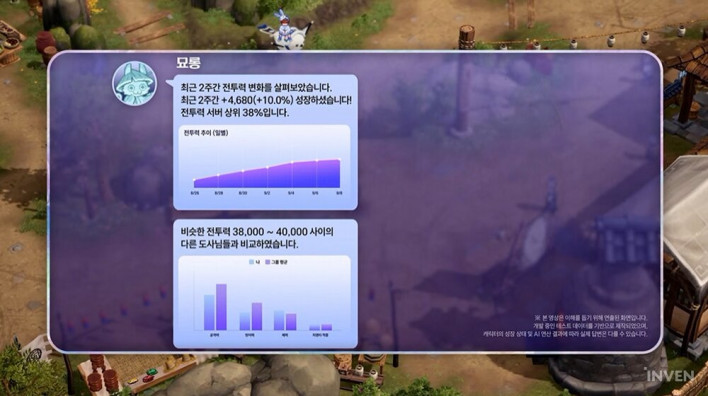
Following launch, the AI chatbot 'Myorong' will also be introduced to assist players. This feature is provided so players can look up necessary information directly within the game without needing to search externally while playing.
Myorong provides answers based on the player's play records and progression data. If it is difficult to determine which area to upgrade first while combat power steadily rises during character growth, asking Myorong will provide an organized summary of relative weaknesses and progression priorities for the current character.
Myorong can also be utilized for clan management. Running a clan requires managing various details such as content participation status, individual member roles, and reward distribution; Myorong supports displaying all this at a glance directly inside the game.
In existing MMORPGs, clan leaders or officers often had to organize relevant information externally in messengers or Excel spreadsheets, but the goal is to reduce this administrative burden through Myorong. Myorong will not stop at the features provided at launch; its functionality will continue to expand post-launch based on actual player patterns and feedback.
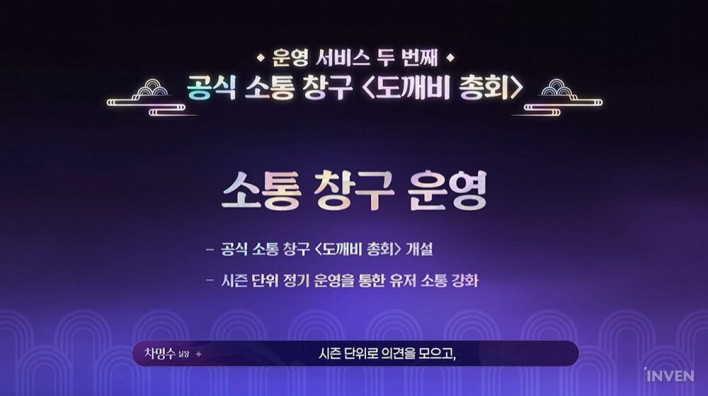
The 'Dokkaebi Assembly' will be operated as an official communication channel with players. Player feedback will be gathered on a seasonal basis, with answers and review directions for key topics shared publicly. The development team plans to broadly examine feedback across the entire game. Actionable items will be prioritized and applied to the live service, while reasons and future plans will be disclosed for suggestions that cannot be implemented immediately.
Operations policies will also be established to protect players' time and experience built within the game. While legitimate play and trading will be protected, measures against abnormal mass-currency generation, repeated abuse, battlefield reward exploitation, and illegal transactions will be taken based on clear standards and game logs.
Actions harmful to other players will also be handled according to operational policies. Considering the nature of MMORPGs where stories of characters, clans, and servers continually accumulate, the focus remains on protecting the value of time and effort invested by players in the game.
Key schedules prior to official launch were also revealed. Name and server reservation, which allows players to pre-select their character name and server, begins on September 22. Players can reserve their character name and choose the server to play on with others ahead of official release.
A 'Character Name Auction House' will also be operated post-launch for players who could not secure their desired name during the reservation period. Character names meeting certain conditions can be listed on the auction house, allowing other players to bid for and gain the usage rights to that name. Detailed information such as listing conditions and bidding methods will be announced separately after launch.
World of Dokkaebi Online Showcase Q&A
What is the relationship between the original work and the game?
"The game is set 300 years before the original web novel. We expanded the worldview through continuous discussions with the original author, structuring it so that experiencing the web novel, webtoon, and game together provides a more three-dimensional feel.
Why did you choose 2.5D pixel graphics?
"We felt that other recently released games are hard to tell apart from a distance. In contrast, World of Dokkaebi aimed for a visual style distinguishable even from afar. Since Supercat is a company with confidence in pixel graphics, we judged that we could make it sufficiently competitive even in 2.5D.
What have you prepared to attract a large player base?
"We set up the world so that enjoying the original web novel and webtoon together brings out a deeper perspective. The backstories of characters appearing in the original work were also prepared as fun elements. In terms of game systems, we prepared them so that many players can enjoy the game together, refining the systems with the philosophy of avoiding competitive structures where only a few survive while the majority leave.
What is World of Dokkaebi's key competitive strength?
"First is the absence of classes. By combining various skills, players can create their desired combat style, whether an assassin, tank, or healer. We also reduced stress from open-world PK on servers and the pressure of having to participate in specific content. Tier-based matchmaking is another strong suit; powerful players fight powerful players, while those who enjoy peaceful gameplay can play alongside similar players.
If competition isn't forced, where does the drive for progression come from?
"Half of the game is competition. To gain even a slight edge in competition, players will effortfully pursue growth through spending or playing harder. However, we wanted to move away from structures that gather all players in one place and demand they reach high rankings.
How are economic activities structured where players directly generate value?
"There is a system where players acquire Dan through field hunting and unseal them. Designed to ensure players never walk away empty-handed from playing, players generate value as they develop their characters and move to higher hunting grounds. Gold can be exchanged for Yeopjeon. Top-tier players can acquire necessary Yeopjeon through Gold during growth, while latecomers can earn Gold by playing content to trade for what they need.
How will communication with players be conducted post-launch?
"A single season lasts two weeks, and the Dokkaebi Assembly is held once every two seasons. We will set up dedicated spaces in-game to collect feedback and communicate regularly via live broadcasts. Post-launch, we plan to hold online broadcasts roughly every four weeks.
How do you connect the original work's strong narrative with the player-created character stories in an MMORPG?
"The game covers events set 300 years before the original work. Players forge the story of that era themselves, and because following the provided story is experienced individually by each player, we don't expect any conflict. We will also craft stories unique to the game.
Is there auto-hunting and open-field PK?
"Auto-hunting is supported. PK is disabled on normal servers, so players cannot stalk, kill, or harass other players.
If someone doesn't participate in PvP, will they fall significantly behind in rewards?
"In Nakhwa Battlefield, players can earn points by defeating monsters. Even in lower-tier zones, hunting monsters alone allows players to reach target points and claim rewards. While the pace may be slower than players engaging in PvP in higher-tier zones, rewards can be earned without participating in PvP.
Can rewards be earned even during short play sessions?
"We prepared Dan unsealing as a relevant feature. Without spending money, playing for just a short time lets players acquire Dan and unseal them. When obtaining Dan, there is also a chance to receive high-grade Dan.
Can a single powerful character overpower a large group of players?
"We believe growing stronger in proportion to invested time or money is necessary because it leads to a sense of accomplishment. However, we did not design the game for one person to take on hundreds. Strong opponents can be controlled to some extent through suppression or curses, and we avoid scenarios where a single player dominates an entire server.
To what extent can character appearance be customized?
"Costumes, hairstyles, and facial expressions can be customized, and skins can also be applied to skills and mounts. Outfits and hairstyles support dyeing, with clothing split into up to 3 sections for distinct dye colors. Direct RGB value input is not supported. Premium dye will be provided as core content rewards.
How will you address the issue of the same players consistently occupying top rankings?
"Matched servers are shuffled every 2 weeks. Since clan rankings are also set based on matched servers, a clan ranked first previously may drop in a different matchup, while a lower-ranked clan could rise higher.
If there aren't enough servers, won't the same servers be matched repeatedly?
"We developed technology capable of logically scaling servers within a single physical server. Using this, we will respond by scaling servers so that bottlenecks do not occur in matchmaking or content usage.
How do you plan to balance free skill combinations?
"Except for a few skills, all skills can be purchased in Tabaro using Yeopjeon, enabling players to experience a wide variety of abilities. Balance will be adjusted based on buffing underperforming skills to raise overall standards rather than nerfing strong skills. While no specific cycle has been set, we plan to monitor balance continuously.
Can skills purchased with Yeopjeon be traded? Do you support direct player-to-player trading?
"Skills purchased with Yeopjeon cannot be traded. Direct 1-on-1 trading is also not supported. An exchange market exists, and the auction house operates exclusively for character name auctions.
How are attack hit registration and evasion structured?
"Attacks are designed with back-end hit confirmation. This choice allows players to react to combat and action mechanics. Evasion is also supported, enabling players to dodge attacks using rolls or fast-movement skills.
How reliable are the answers provided by AI chatbot Myorong?
"The feature originated with the intent of processing player logs and data held by the company to feed back to players. Because the AI processes and answers based on player logs and data, we expect it to deliver highly trustworthy responses. As live service continues and players utilize the feature, answers will gradually improve.
How can Gold be obtained?
"Gold is set as a key reward across individual, party, clan, and server-level content. Rather than relying on a single specific activity, it is earned by playing across various game content.