Naked Rain Studio's 'ANANTA' has long been considered one of the most anticipated anime-style games (often referred to as subculture games) with an urban fantasy setting. NetEase confirmed the game's official release date as January 15 next year through Gamescom's Opening Night Live.
As the game will be available in Korea alongside its global service, media from various countries gathered at Gamescom in Germany, lining up at the business hall booth to play the game early.
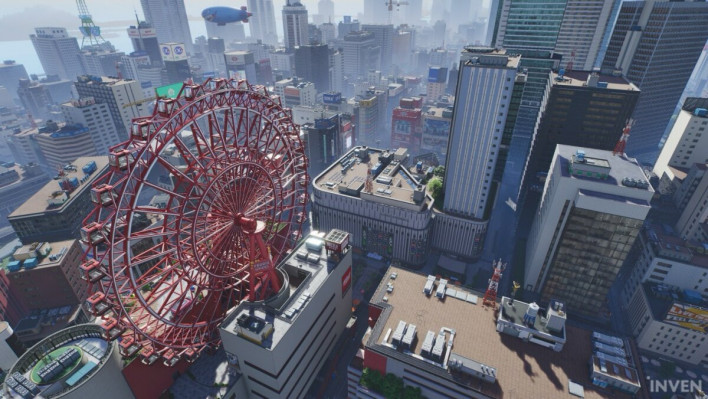
The hands-on demo on this day featured Nova City, the region previously available in prior demos. Nova City closely fits the image of a global metropolis filled with skyscrapers and has served as the central location for ANANTA's gameplay showcases and marketing.
However, because the playable segment itself was identical to the previously showcased section, the hands-on session was relatively short at around 15 minutes.
Nova City Demo Car Chases Unfolding Among Skyscrapers

First, the TGS demo section—that is, Nova City, whose gameplay experience had already been shared—was structured to allow players to enjoy story and exploration separately. In the story mode, players controlled the protagonist, Captain, to experience simple combat, with car chases and button-prompt actions commonly known as QTEs continuing throughout.
As detailed information was shared in previous articles, Captain's combat style is freeflow combat using tentacles extending from the body for unspecified reasons. Players can easily perform flashy attacks using just the light attack, heavy attack, guard, and dodge buttons, and enemy attacks are color-coded into blockable attacks and dodge-only attacks, making combat relatively easy to enjoy.
In addition, skills can be triggered with buttons, and basic skills have a cooldown of around 5 seconds, making them relatively casual to use. The smooth combat style characteristic of freeflow combat is enhanced by skill usage to create flashy battles. There are also quite a few instant-kill environmental moves using surrounding objects and terrain; actions such as slamming enemies into walls or grabbing manhole covers with tentacles to throw at enemies were also confirmed.
Following the brief combat demo, a car chase scene takes place. Captain is capable of not only melee action but also firearm gameplay. A new character, Lyca, drives while Captain attacks enemies from the passenger seat. The shooting mechanics feature light auto-aiming when playing on a controller, making it smooth and hassle-free to play.
In addition, event scenes actively incorporated various button-input actions, making segments that might otherwise get tedious feel more immersive. In fact, if a button prompt failed, a natural reaction animation was seamlessly executed—such as getting caught on a wall during a section where the vehicle was supposed to narrowly dodge.

The event scenes in the chase sequence were directed not just for visual flair, but to expand the gameplay experience. Initially, with Lyca driving, the vehicle comes close to flipping over; after somehow regaining a seat, the protagonist ends up in the driver's seat. From there, the protagonist takes direct control of the vehicle, serving as a natural way to help players understand driving controls.
Another impressive detail was a segment during the demo where the vehicle jumped high into the air over a ramp and landed trapped among construction materials, leaving nowhere to go. When it became completely stuck, a respawn button (R) was activated, and in a fashion commonly seen in arcade racing games, the car reappeared in the middle of the road. This proved that the chase sequence wasn't implemented through rigid scripting that removed control and tension from unexpected situations, but was a true physics-driven, playable environment.
The exploration mode following the story mode consisted of open-world content where players explore a vast map, as is widely known. It is a space where players can scale buildings dozens of stories high, zip across locations quickly using tentacles like web-swinging, and experience combat and exploration content. However, due to the limited demo time, the session moved on to the Chongxiao hands-on.
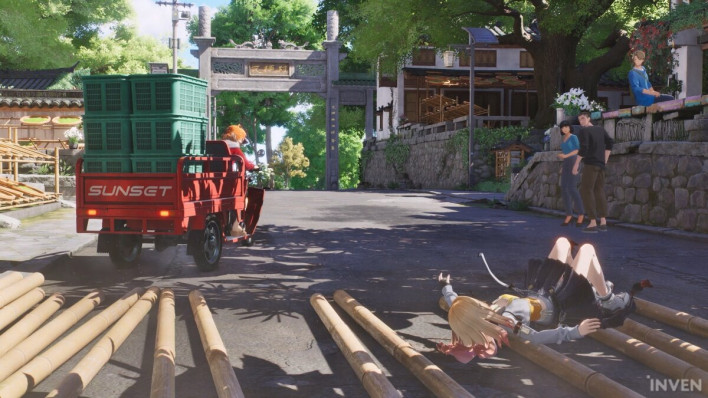
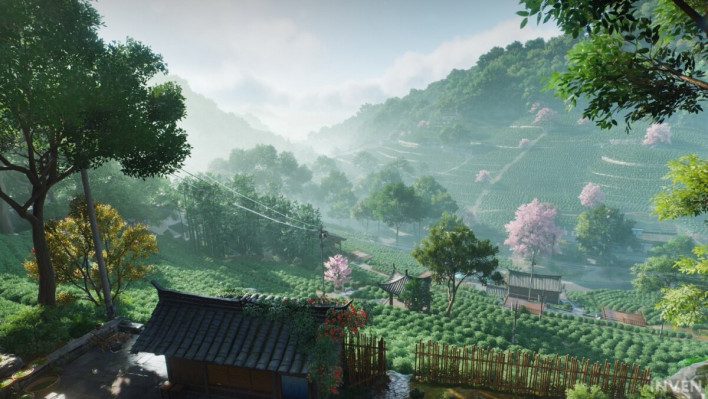
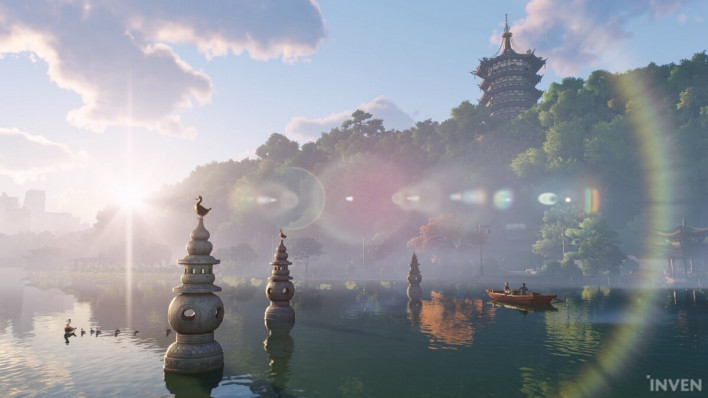
On the other hand, Chongxiao—a city partially revealed through footage during Gamescom—is an eco-friendly city featuring bamboo forests and tea plantations spread throughout. The revealed content showcased a more welcoming backdrop and atmosphere compared to Nova City, creating a distinct vibe.
Overall, the graphics of ANANTA can be described as bringing lighting and textures to life quite well. As anime-style character presentation becomes more emphasized, it is naturally difficult to render realistic skin textures on the characters themselves. As a result, the game appears to elevate visual polish through smooth outlines and color shifts that respond to lighting effects. Overlaying overly realistic textures on top of this can create an awkward mismatch with the characters. However, the ANANTA build experienced this time maintained atmospheric lighting and scenery textures while processing them in a manner suited to the character aesthetics. It managed to deliver both a sense of "great visuals" and a comfortable, cohesive viewing experience.
Nova City, experienced on this day, and the new city Chongxiao, confirmed through footage, demonstrate that ANANTA is capable of capturing a wider variety of sights and worlds. Expectations are high for how much more content and detail will be packed into the game ahead of its launch on January 15 next year.