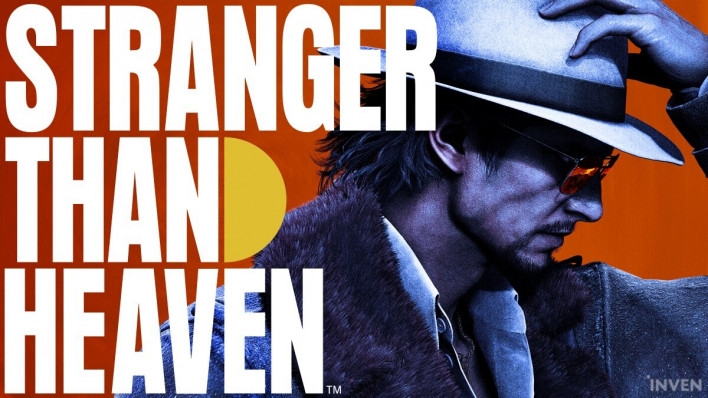
Ryu Ga Gotoku Studio is best known, as its name suggests, for the Like a Dragon series. However, it continues to expand its repertoire by developing diverse titles such as Super Monkey Ball, Virtua Fighter, and the Judgment series. This trajectory of growth and new IP development leads directly to its upcoming title, 'STRANGER THAN HEAVEN'.
STRANGER THAN HEAVEN follows the turbulent life of protagonist Makoto Daito, born to an American father and a Japanese mother, as he navigates Japan. The game spans five distinct eras and five decades—starting in Kokura in 1915, followed by Kure in 1929, Minami in 1943, Atami in 1951, and Kamurocho in 1965—raising much anticipation for how this saga will unfold.
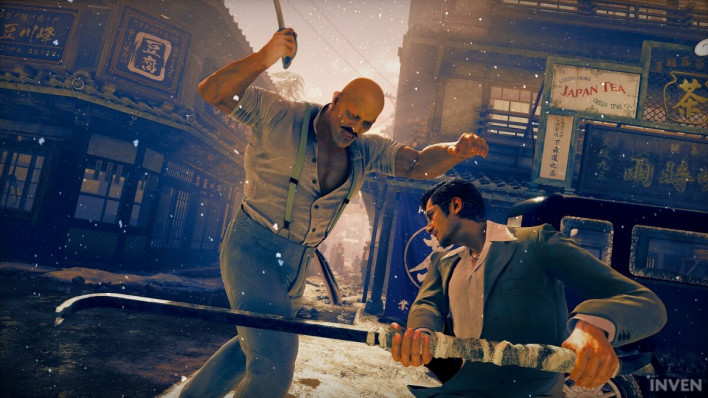
Furthermore, the project generated significant buzz with its star-studded cast—ranging from Snoop Dogg and Ado to the face model implementation of Tupac Shakur—alongside its nature as a new IP set in a universe connected to the Like a Dragon franchise. In particular, its combat system, which assigns attacks independently to the left and right sides of the body, promised a fresh experience distinct from previous RGG Studio action games, offering a high skill ceiling that rewards player proficiency with stylish combat, as showcased during its Summer Game Fest demo.
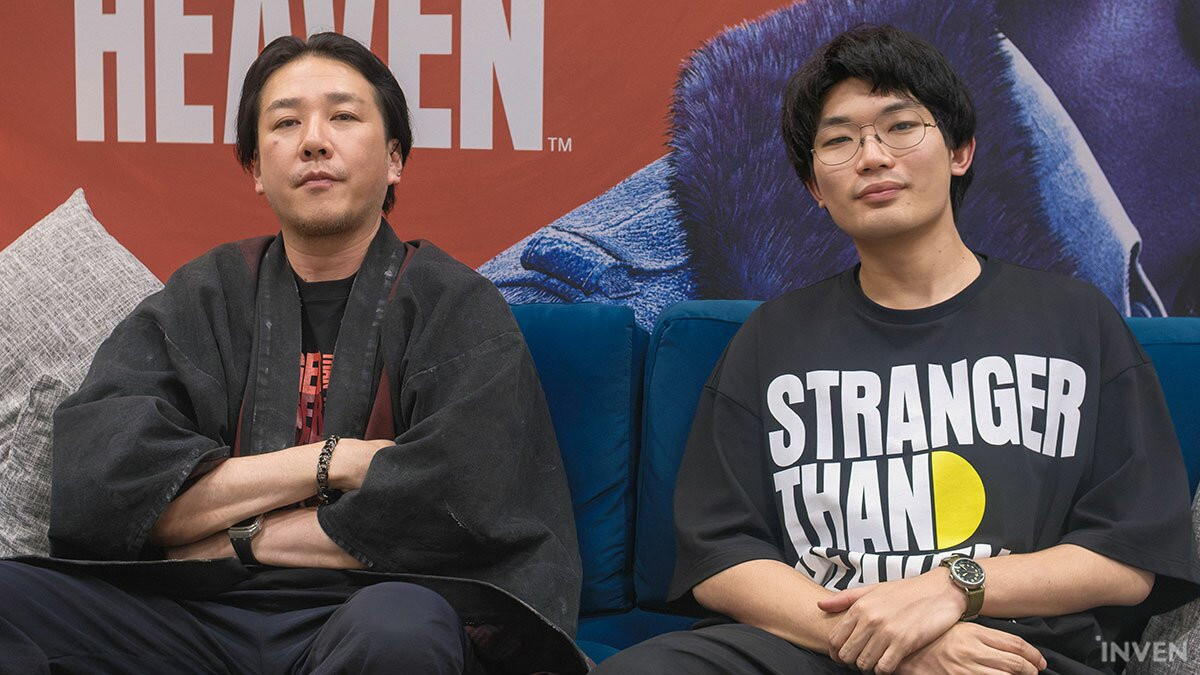
Story, combat, and casting—STRANGER THAN HEAVEN leaves little room for easy predictions, raising expectations on every front. At Gamescom 2026, we sat down with Producer Hiroyuki Sakamoto and Director Mikinobu Abe to take a closer look at what the game has in store.
Q. This title is a completely new IP set in an original world, rather than being strictly grounded in historical fact. Yet, it also serves as a prequel-like setting taking place much further in the past than the existing Like a Dragon series. What was the reason for retaining a connection between the two?
Producer Hiroyuki Sakamoto: If you watch the trailers, a few familiar keywords do pop up. However, the story itself begins much earlier than any previous game in the series. So from our perspective, we really hope players approach and enjoy it as a standalone experience distinct from our existing IP. We've been asked, "Then why are so many characters appearing?" but in truth, the narrative is driven by characters who have almost no connection to the previous games.
Therefore, it would be best to simply view and enjoy this title as a completely fresh, brand-new IP narrative game.
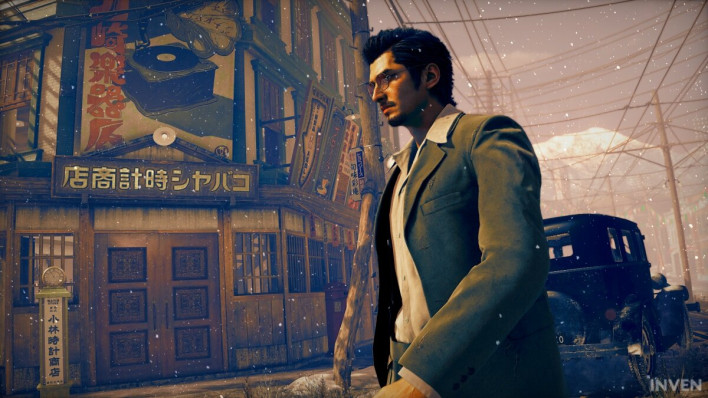
Q. We heard that over 10 types of weapons will appear in addition to the ones available in the demo. Are these weapons distributed differently across each era to serve as symbols of their respective periods?
Producer Sakamoto: There are 12 weapon types in total. For example, with knives, different eras will feature knives with distinct stats and performance. Some weapons change their appearance as eras progress, and naturally, weapons obtained from defeating bosses vary by era as well. That said, we've designed the game so players can fully customize, upgrade, and stick with their favorite weapon throughout their playthrough if they wish. We've ensured a wide range of choices, so players can feel free to pick and enjoy whatever suits their playstyle.

Q. Controlling both hands separately felt quite challenging, yet in key moments, it allowed for unexpectedly intuitive and skilled combat. What was the intended design direction for this combat system?
Producer Sakamoto: First and foremost, we wanted to make a game where highly skilled players could truly showcase impressive gameplay. Previous titles in our series had a strong reputation for accessible controls that allowed anyone to finish the game. This time, however, we wanted to create depth—a system where the deeper you dive into the action, the more varied and stylish the movement becomes in the hands of an experienced player.
On top of that, we wanted to return to our roots, in a sense, by focusing on raw, unrefined brawl action. When the game starts, the protagonist leads a very modest life. If he fought with refined, martial-artist-like movements right from the beginning, it would hinder player immersion. We wanted to emphasize that raw feeling again—grappling around and clashing with pure brute force. From the pacing of motion speed to how attacks hit and land, we placed great importance on delivering that raw sensation.

Q. The protagonist, Makoto, is an outsider who doesn't fully belong to any country, true to the title. Playing the game, with its unfamiliar eras, unfamiliar controls, and unfamiliar combat feel, made players feel as though they were in a similar position. Was this sense of unfamiliarity—and the process of gradually getting accustomed to it—intentionally designed to align with Makoto's emotional journey?
Producer Sakamoto: Exactly. In a narrative game, how deeply a player can empathize with the character at the start is the most critical element—it dictates how well they synchronize with the protagonist over a long play duration.
We revamped several game systems for this title, but ultimately, that was all meant to deliver the protagonist's experience directly to the player. That was our intention.
Q. Combat in previous series entries gave the impression of flashy victories right from the start. In this title, however, it initially feels heavy and somewhat clumsy before eventually settling into a comfortable, satisfying rhythm. It feels like an intentional design rather than a coincidence. How did you design the threshold where players transition from awkwardness to mastery?
Producer Sakamoto: We believe that heavy things should genuinely feel heavy. Bringing that aspect to life was immensely important to the development team because it directly connects to that raw feeling.
For instance, when swinging a long weapon like a bar, relying solely on hit feedback can make the action feel jarring or disconnected rather than authentic. So whether using fists, knives, or a bar, we paid careful attention to ensure players feel immediate, tangible feedback and realism from the very beginning. From there, as the character grows and levels up, the variety of available techniques gradually expands.
Q. RGG Studio has a history of casting real-life figures using facial capture, and many prominent figures appear in this title as well. What criteria did you use for casting? Could you introduce a few representative cast members? Also, were there any challenges during the casting process?
Producer Sakamoto: Before casting, we complete the main story entirely. While writing, we often envision specific performers, thinking, "If this person plays this character, the drama will unfold exactly as intended." It's essentially a tailored writing approach—writing the character and dialogue specifically with a certain actor or voice actor in mind.
Because this story expands beyond Japan onto a global stage, the development team initially drafted a blueprint without any guarantees, thinking, "If this person joins us, it will truly bring the atmosphere to life and be deeply moving." After that, we earnestly approached each person one by one, pitching the project sincerely. Thanks to various connections coming together, our dream cast became a reality, which even the dev team feels was quite miraculous.
If I were to point out a difficulty, it was the physical distance when working with overseas cast members. We scheduled multiple meetings with partners in the US and constantly coordinated during voice recording sessions to verify details in real time. We realized that scheduling needed to be much more generous compared to working strictly domestically as we had in the past.
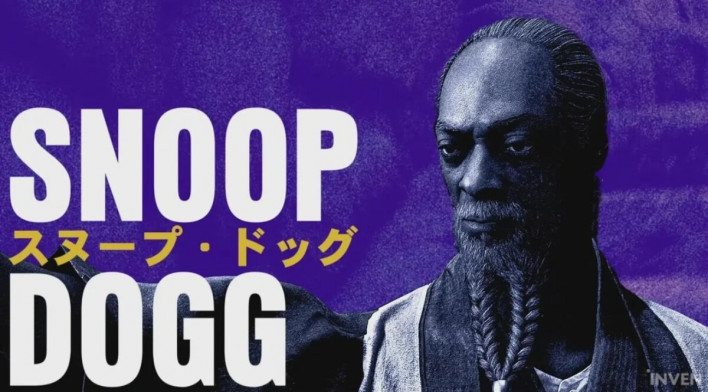
Q. With such a stellar cast, attention naturally gravitates toward them. Personally, I believe the game is polished enough to generate buzz on its own through its grand 50-year narrative and completely novel combat feel. Is there anything you are doing to ensure the core appeal of the game isn't overshadowed by the cast, and what specific aspects would you like players to focus on?
Director Mikinobu Abe: It's true that the cast provided incredible support in delivering the story. However, we hope players look forward to the game itself as well. As a completely new IP, everything from its intuitive combat system to how players experience its cities differs significantly from our studio's previous works. We want to give everyone a chance to experience these charms firsthand through future announcements and fan events.
Producer Sakamoto: The game systems themselves have undergone massive updates. Players can simply look forward to a whole new layer of fun in a narrative game.
Q. We heard that in this title, the protagonist can collect various sounds and use them for arranging or composing music. It gives the impression that music isn't merely background audio, but serves as a language through which Makoto Daito communicates with the world. How did you design and tie this feature into the overall story structure?
Director Abe: As a mixed-race protagonist of American and Japanese heritage coming to Japan, Makoto initially faces discrimination everywhere and struggles to fit into society. Then, sparked by a certain encounter, he realizes that the worlds of music and show business offer a stage where he can compete on equal footing for the first time. As he contemplates how to survive, he finds himself through show business—a process directly realized in-game through our show business systems.
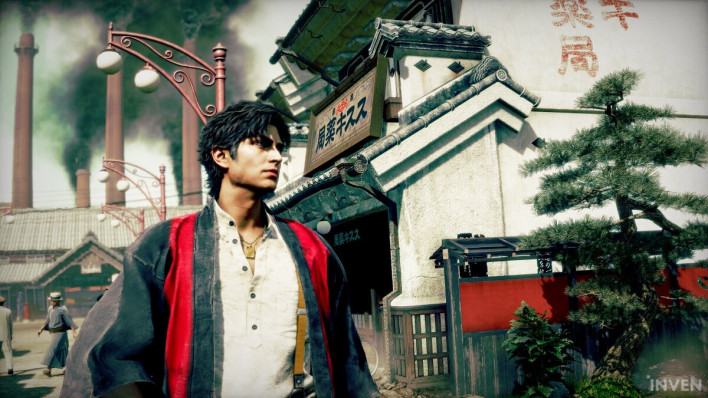
Q. Because the story unfolds across different eras, there is a strong sense of a grounded, serious tone set against these historical backdrops. Were there any scenes the development team crafted with particular affection, or any fun elements, mechanics, or details that were only possible because of those specific eras?
Director Abe: All five cities presented their own challenges. Most of our previous titles focused on modern settings, but this time we had to depict streets from over a century ago that no living person truly remembers. Researching and gathering information about towns we had never seen actually provided a great deal of inspiration.
At this point, it feels as though the dev team created a virtual town of its own. During our research, we uncovered many lifestyles and cultural details from that era that even our team didn't know about. Our main focus was finding natural ways to weave those fascinating discoveries into the game—which was also the hardest part of the process.
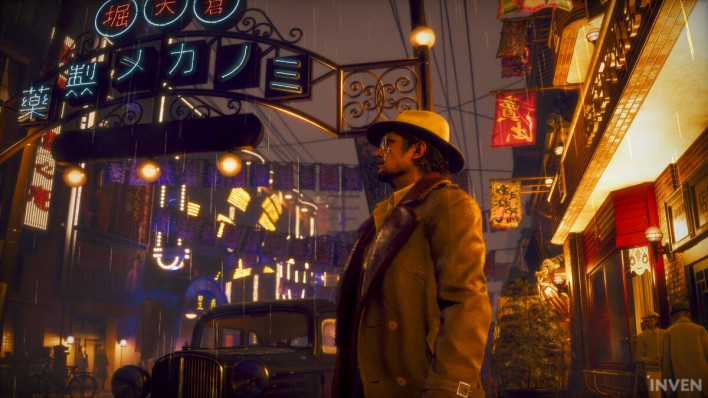
Q. Because the game spans five eras and moves across five different cities, there was a risk it might feel like an episodic omnibus. Yet, it feels as though there is a connecting thread intentionally woven between eras so players can naturally follow a single man's life. How did you build that sense of continuity?
Producer Sakamoto: Simply put, the story begins in Kokura, the town where he first arrives and settles in Japan. From there, as the protagonist moves between towns according to his goals, he ages over time. The journey progresses eastward from Kokura in line with the storyline. We selected each setting by identifying the moments within those 50 years where the narrative and scenario reach their emotional peaks.
Q. The demo focused primarily on combat. How are substories and city exploration structured in the full game? How much emphasis is placed on exploring the streets, and could you share more specific details about city exploration elements?
Producer Sakamoto: Even though there are five cities, I can confidently say that the level design density for each individual location is the most detailed we've ever created. There are numerous enterable buildings, and players can step directly inside various shops.
The volume of exploration content is the largest we've ever produced. As for adventure elements, substories are naturally included, alongside several minigames that let players experience authentic entertainment culture from those eras. We crafted everything with great care so players can thoroughly explore and savor the feel of each era while engaging with the core gameplay.
Q. During development, were there any cut ideas that you really wanted to include but had to drop because they didn't fit the vision?
Director Abe: Hmm... There wasn't anything like that, really. From early development, our goal was to "depict one man's life tailored to his age at each period," and I think we stuck to that faithfully throughout. While there were fine adjustments along the way, the overarching direction we initially envisioned survived intact without anything major being discarded.
Q. If you could choose one of the five cities and eras in the game to live in, which would you pick?
Director Abe: While researching various historical records, many things left a deep impression on me. We uncovered so many lifestyles that were completely unknown to us, including things I didn't even know existed. Personally, I'd love to experience something like that firsthand.
Producer Sakamoto: For me, I'd like to live in the oldest era of the game, like Kokura. I'm curious about what would be enjoyable and what would be inconvenient living there in real life. If I had to pick another, it would be Atami. Atami still exists today as a hot spring resort, and some of the locations featured in the game remain to this day. We even did some location shooting there with local cooperation. Though the time period is different, among the places that remain today, Atami feels like the location that brings you closest to the world of STRANGER THAN HEAVEN.
Q. Do you have a message for Korean fans eagerly awaiting the game's release?
Director Abe: The entire studio is pouring its full effort into making STRANGER THAN HEAVEN an engaging and exciting game. We hope that long-time fans of our studio's work, as well as those whose interest is piqued by this project, will pick it up and enjoy it. There is still some time left until release, so we would be grateful if you look forward to it with anticipation.
Producer Sakamoto: I believe this title will mark the start of a great new IP for both players and our studio. Long-time series fans and newcomers alike can dive in with an open mind, thinking, "They've made something new again." Even players who have been away from our games for a while can jump straight in without any prior knowledge, so if you're interested, we hope you give it a try.