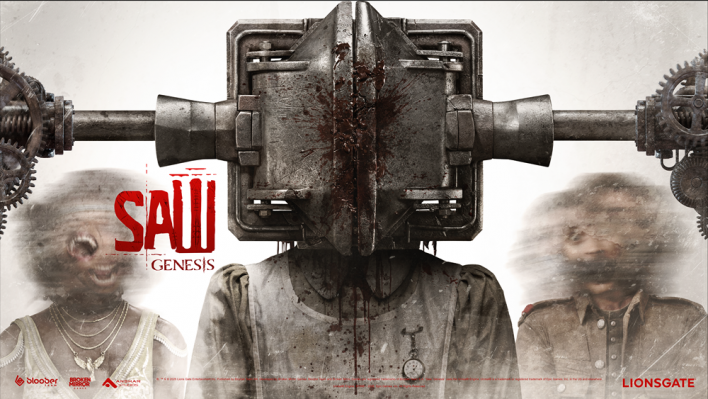
At Gamescom 2026, SAW: Genesis, a new asymmetrical multiplayer horror game based on the SAW film franchise, was unveiled. Published by Bloober Team and co-developed by Anshar Studios and Broken Mirror Games, the title is heading toward an Early Access launch on PC (Steam) this coming fall.
SAW: Genesis is a game where three Accused and one Judge engage in escape-room-style survival competition involving lethal traps and moral dilemmas within procedurally generated maps. Having already successfully completed its first alpha test with over 4,000 players, the game hosted playable demos and various themed interactive experiences at its Gamescom booth.
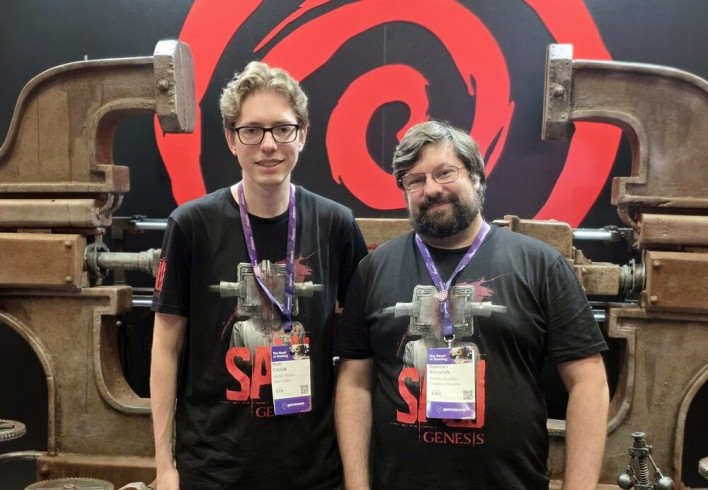
At the venue, we met key developers from Anshar Studios: Team Lead Piotr Cieślak and Creative Director Damian Kacurek. Playing through the on-site demo build together and having a brief chat, we learned about their design philosophy for translating the original film's horror into a game, as well as behind-the-scenes details on SAW: Genesis.
1920s Britain: "Twisted Redemption" Born from Brutal War Trauma
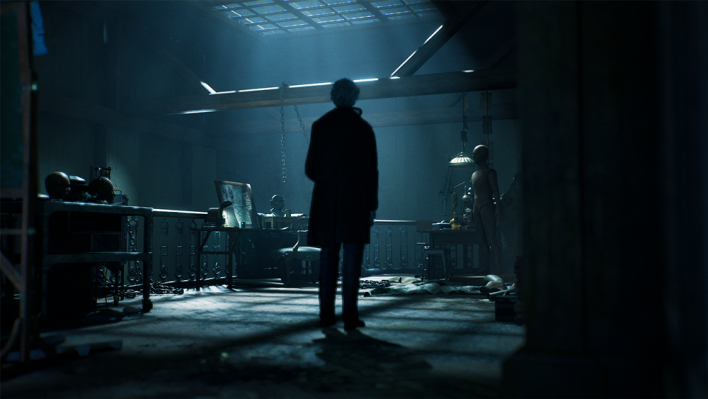
SAW: Genesis is a prequel set in 1920s Britain, roughly 100 years before the events of the original movies. Set in the immediate aftermath of World War I, the core framework of the game is built around the harrowing war trauma and psychological scars hidden behind the joy of victory. In other words, Jigsaw does not exist in this game.
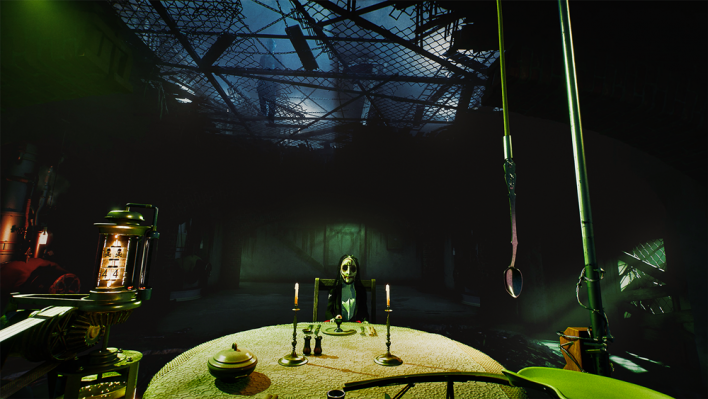
The central narrative stems from individuals who witnessed horrific sights in field hospitals and on battlefields, leading them to form a distorted view of "redemption and healing"—paradoxically inflicting even greater harm under the guise of alleviating pain. Notably, the Judge featured in the current build, known as "The Doctor," is not a mere killer, but shares the same philosophy as Jigsaw in the original work: trying to "rehabilitate" flawed human beings.
In this regard, Anshar Studios Team Lead Piotr Cieślak explained, "What we wanted to protect most was the philosophy of 'rehabilitation' that fans love. The Judge is not just a simple killer; they exist to rehabilitate people. If the Accused fail to cooperate and splinter, they fall into rehabilitation traps and are forced to make immense sacrifices."
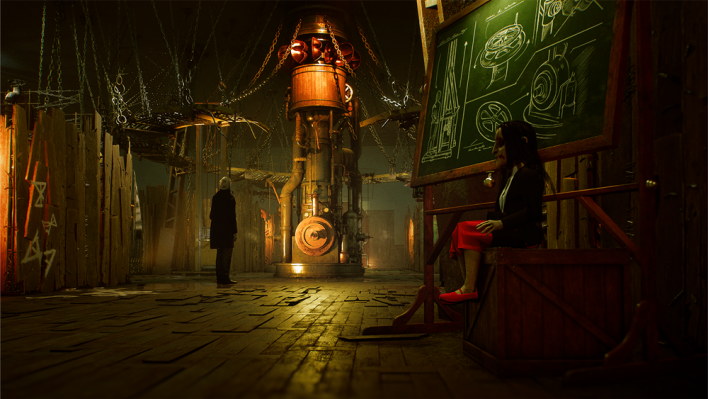
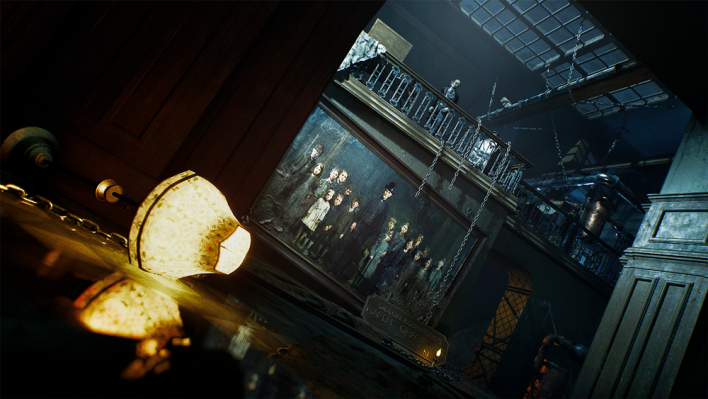
The map design, incorporating traditional British architecture such as orphanages, along with an audio design that maximizes an oppressive horror atmosphere, perfectly captures the gloomy, dark era of the 1920s.
Permanent Injuries and the Dilemma of Horrific Choices
Eschewing simple, light gore where blood just splatters from slash attacks, the game brilliantly implements traps that evoke the movie franchise's signature terror—where players must inflict pain on themselves. The reason the unique terror of the SAW movies lands so effectively is that this pain is relatable to the audience. Team Lead Piotr Cieślak expressed a clear philosophy on this point.
"It is hard to imagine the pain of someone severing your hand in a single strike with a katana. But anyone can imagine the horror of having to push your own hand into a box full of blades. The fact that you are the one inflicting the pain and that the process is by no means fast—that is the core driving force behind trap design that makes players feel the deepest terror."
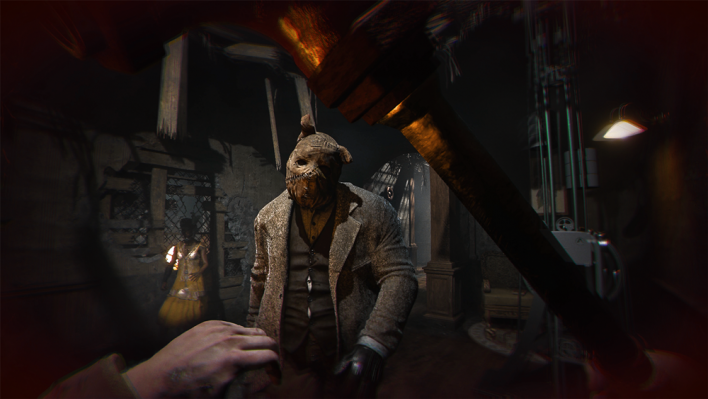
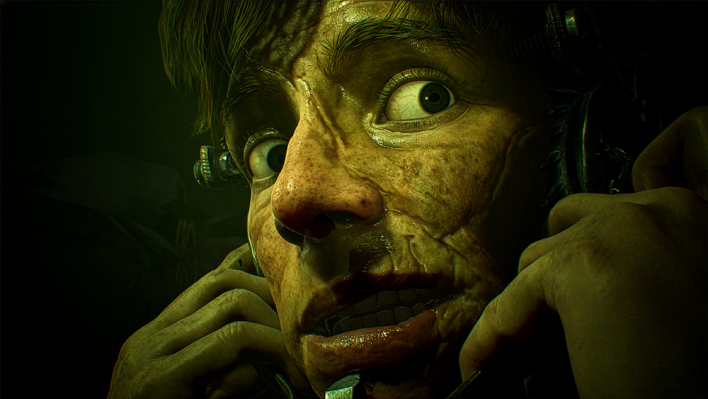
Throughout the game, players are forced to make brutal choices for survival, and those decisions come back as long-term penalties in the form of permanent injuries. For instance, if you lose a finger or damage a hand, your character experiences flashes of debilitating pain whenever performing actions that require using that hand. If you lose an eye, you lose access to the minimap and suffer pain whenever you try to open the main map.
Conversely, players can trade health for time; putting a hand into a razor blade box buys immediate time, but permanently reduces maximum health. Consequently, players must constantly deliberate and make choices at every moment about which factors to prioritize in their strategy.
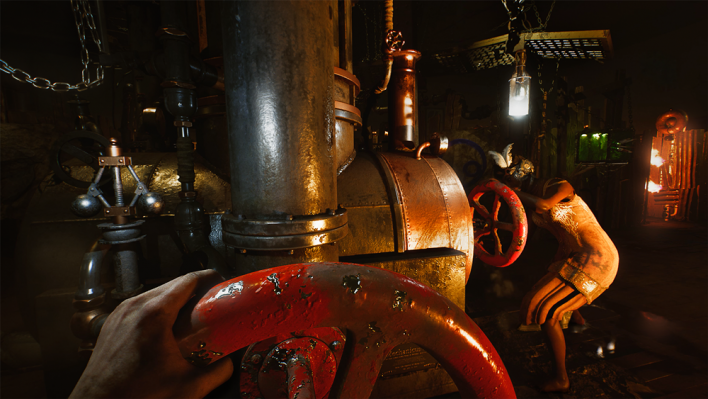
Amid such moral dilemmas, the greatest weapon the three survivors (the Accused) possess is none other than numbers and teamwork. They face a strategic dilemma every time they move. Splitting up allows them to clear objectives quickly, but increases the risk of someone being abducted. Conversely, sticking together slows down movement speed, but makes it much harder for the Judge to separate the survivors.
Hallucinogens and Paralytic Toxins... A Judge Setting Intricate Traps
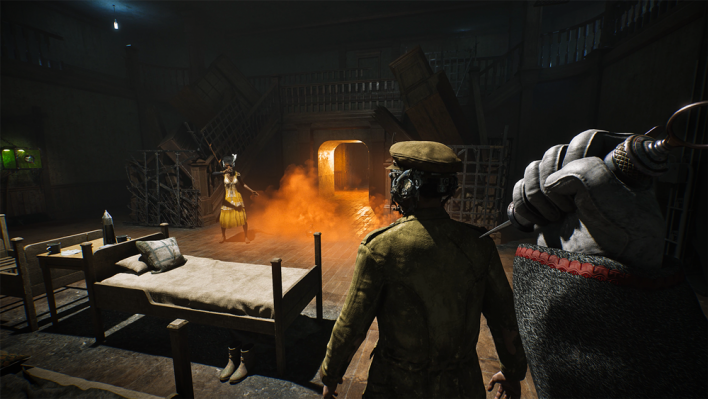
On the other hand, the Judge—playing the role of the killer—stands apart from those in other asymmetrical games. Rather than chasing survivors with overwhelming brute force, the Judge specializes in setting traps and manipulating psychology.
"Our Judge is like a spider meticulously weaving a web and waiting for the perfect timing. Unlike killers in other asymmetrical games, the killer in this game is fragile, old, and sickly. In contrast, the Accused are physically stronger, so if the Judge makes a mistake and gets isolated among the Accused, they can actually be killed in turn."
To overcome this physical vulnerability, the Judge utilizes a variety of tactical tools. They can summon an "Accomplice" to drag survivors to rehabilitation traps, and use Judge-exclusive secret passages, noise-detection maps, hallucination bombs, and paralytic toxins to obscure the survivors' vision and engage in intense psychological warfare.
Procedural Map Generation and Hidden Narrative
While maps follow a procedurally generated approach, they are not 100% random. Intricate layouts designed directly by the dev team—such as challenge rooms connecting to main halls—form the underlying framework. As these fixed and random elements interact organically, an unpredictable maze emerges, changing the layout of rooms and corridors with every match.
Given that the SAW franchise is an IP where storytelling is paramount, narrative elements are scattered throughout the game. While exploring the map, players can discover narrative fragments containing the backstories and prejudices of characters or the Judge, piecing them together like a puzzle to uncover a larger truth.
Early Access Coming This Fall: "If There Is Strong Demand, We Will Consider Korean Support"
The development team, which has been working on the game for over two years, explained that they chose a 3v1 asymmetrical structure to satisfy both major preferences among fans of the original franchise.
Anshar Studios Creative Director Damian Kacurek noted, "The SAW franchise community is largely divided into two groups: fans who want to see how characters survive or meet their demise in traps, and fans who dig into the philosophy and psychological games of characters like Jigsaw and Hoffman. We selected the asymmetrical format to fulfill both fantasies—overcoming traps as a survivor and controlling people's minds as the Judge."
In line with the Early Access launch scheduled for this fall, the game plans to introduce four Accused and two Judge characters initially. However, the developers indicated their design direction: while evoking nostalgia that fans will love, they will not simply recycle the traps directly from the movies.
"The community consists of passionate fans who have watched the SAW movies countless times. Naturally, we want to infuse elements they love into the game. For example, the 'razor blade box' evokes a sentiment similar to the trap in SAW II. However, rather than copying traps straight from the films, we aim to satisfy fans by offering 'new traps' that perfectly preserve the feeling of the original work."
They also expressed a positive stance regarding plans for Korean subtitle support. Currently, the Steam page indicates that Korean is unsupported, meaning there are no immediate localization plans, but they showed an open attitude toward the possibility of adding Korean subtitle support in the future. They shared that if requests from the Korean community grow through upcoming open playtests, they actively plan to add the language.