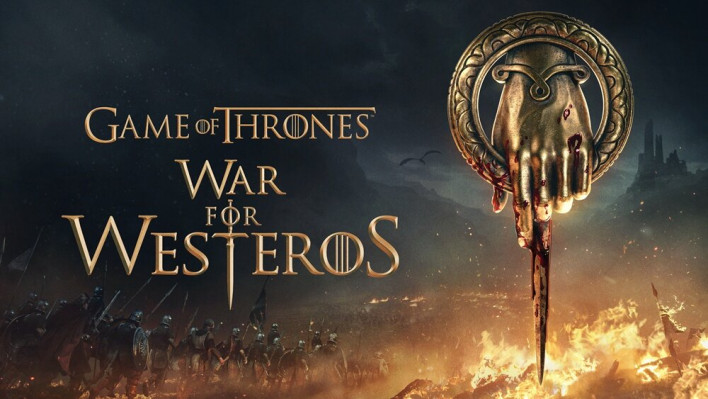
Based on George R. R. Martin's fantasy novel series 'A Song of Ice and Fire', HBO's drama series 'Game of Thrones' gained worldwide popularity depicting the war, politics, and betrayal among various houses surrounding the Iron Throne of the continent of Westeros. Along with the conflicts between factions including Stark, Lannister, and Targaryen, unpredictable developments where even major characters could die at any moment became a hallmark of the series.
'Game of Thrones: War for Westeros' is a new real-time strategy title that brings this world to life. The basic framework involves directly commanding House Stark, House Lannister, House Targaryen, and the Army of the Dead to gather forces, conquer territory, and aim for the Iron Throne. Rather than recreating specific timeline points of the show, it highlights bringing characters and forces from different eras together, allowing players to forge a history of Westeros different from the original work.
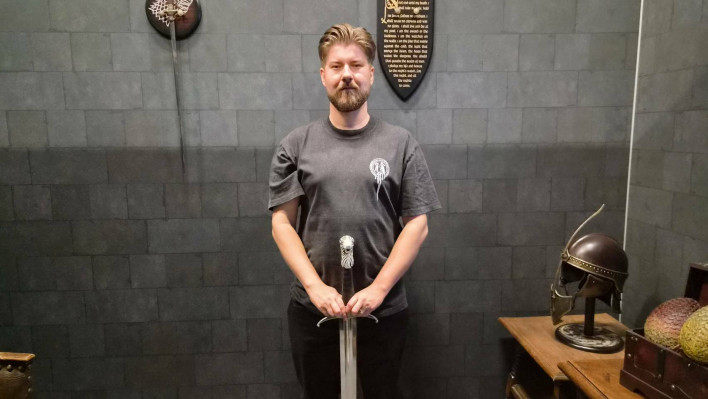
At Gamescom 2026, an opportunity was provided to take a closer look at 'War for Westeros'. The session took place in a private interview room set up at Gamescom's Australia Pavilion, where various props reminiscent of 'Game of Thrones' were placed throughout to enhance the atmosphere.
At the event, Ryan McMahon, Game Director at PlaySide Studios, personally introduced the game. The roughly 30-minute session began with a presentation explaining the core structure of the game and the characteristics of each faction, followed by an interview covering development direction, campaigns, faction design, and battle scale. We spoke with him about the considerations involved in adapting the 'Game of Thrones' IP into an RTS, and what kind of Westeros players will encounter.
War for the Iron Throne: 'Game of Thrones' as a Classic RTS
'Game of Thrones: War for Westeros' is a classic real-time strategy game where players raise armies, conquer territories, and wage war to ultimately claim the Iron Throne. At launch, four factions will be playable: House Stark, House Lannister, House Targaryen, and the Army of the Dead led by the Night King.
What the developers prioritized was enabling players to experience in-game the battles they imagined while watching the show. They aimed to realize moments expected from 'Game of Thrones' in RTS form, such as large-scale clashes, iconic characters personally stepping onto the battlefield, and mounting defensive battles against overwhelming forces.
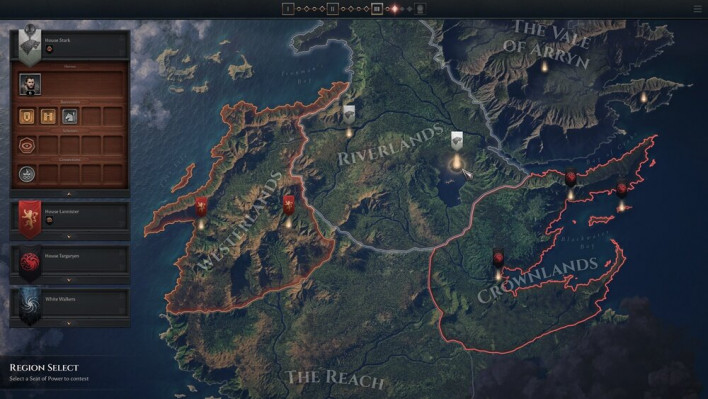
At the same time, rather than reproducing events from the original story verbatim, the focus was placed on giving players choices to alter the fate of Westeros. The campaign does not strictly follow a specific point in the show's timeline; instead, it brings heroes, units, and factions from various seasons together into one game. Set across all of Westeros, players select their preferred faction, conquer territory, and craft their own war for the Iron Throne.
Additionally, the developers emphasized building depth as a traditional RTS rather than relying solely on the 'Game of Thrones' IP. Their goal is to maintain the complexity and mastery that existing RTS players expect while keeping the game accessible to 'Game of Thrones' fans who haven't played an RTS in a long time or are new to the genre.
Translating Each House's Identity into RTS Mechanics
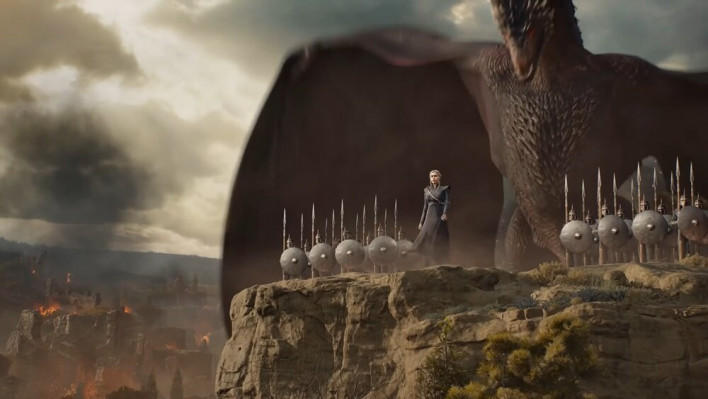
The four factions are designed with an asymmetric structure where playstyles themselves differ, not just the units used. When creating each faction, the development team first outlined the defining elements of each house from the original work and translated them into actual gameplay systems.
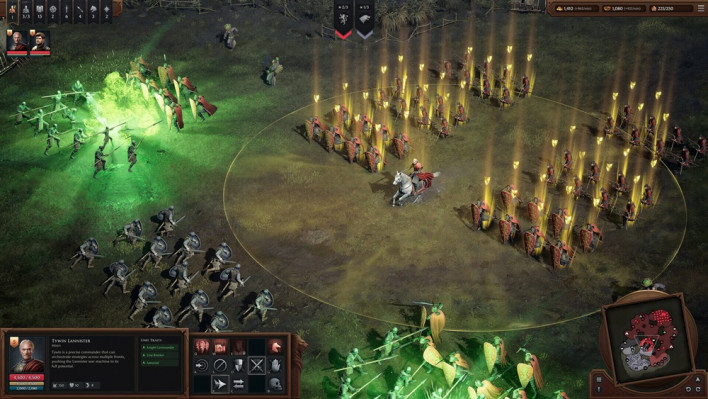
During the presentation, House Lannister was highlighted as a representative example. The core keywords chosen by the developers for Lannister were 'gold, wealth, and power'. The game features two primary resources: Gold and Influence. Influence is a relatively scarce resource required for recruiting heroes, researching tech, and acquiring late-game units.
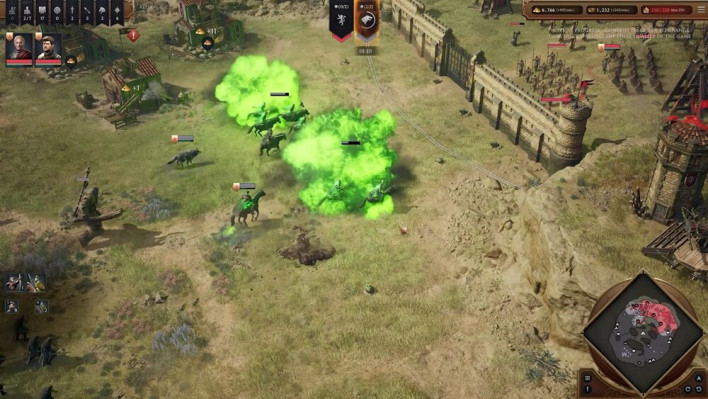
Possessing immense wealth, the Lannisters can incur debt by spending beyond their current Gold reserves and can directly convert Gold into Influence. In the late game, they can also unleash powerful Wildfire. It is a high-risk, high-reward weapon that reflects House Lannister's willingness to take risks to gain power directly in the game rules.
Translating the personalities and traits shown by each faction in the original work into distinct playstyles is the most crucial aspect of 'War for Westeros' asymmetric faction design.
Arya Stark Steals Faces, 'The Mountain' Tramples the Battlefield
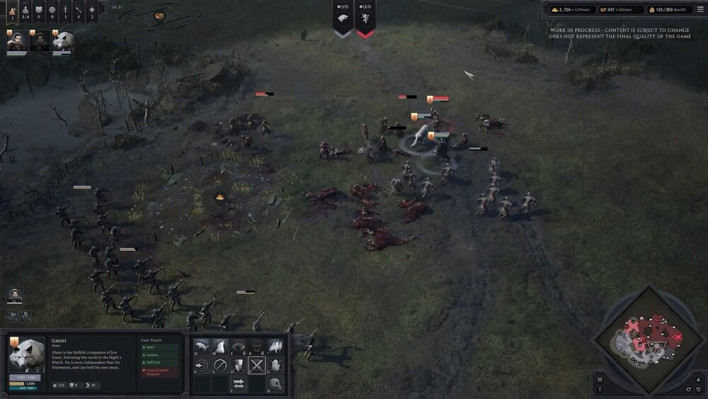
Major characters from the source material appear directly on the battlefield as hero units. During Gamescom, Arya Stark and Gregor 'The Mountain' Clegane were revealed as new heroes.
The Mountain is a heavily armored hero belonging to Lannister who pressures enemy lines with high survivability and attack power. Conversely, Arya is an assassin hero who leverages her lore of being trained by the Faceless Men. She specializes in eliminating enemy heroes, with the ability to steal an enemy's face, transform into that hero, and use their abilities for a set duration.
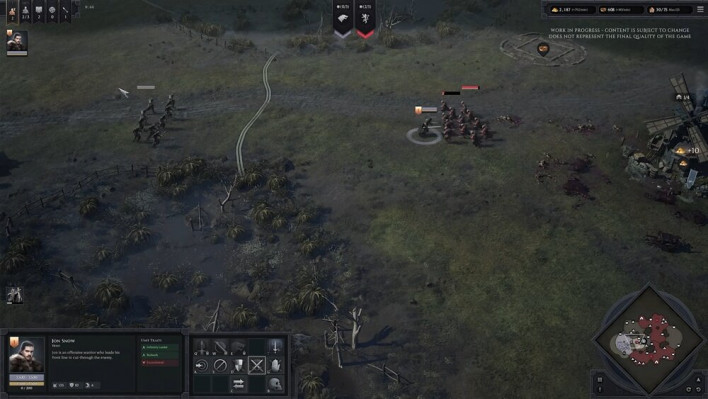
To date, heroes such as Jon Snow, Robb Stark, Ghost (direwolf), Grey Wind (also a direwolf), Tywin Lannister, Jaime Lannister, Daenerys Targaryen, and the Night King have been revealed, with The Mountain and Arya now added to the roster. The development team plans to unveil additional heroes as the release approaches.
In the recent preview, House Stark and House Lannister were playable, with two 1v1 maps provided: Ashemark and The Neck. Both matches against AI and player-versus-player multiplayer were supported.
Game Director Ryan McMahon Q&A
Does the game's campaign follow a specific point or timeline from 'Game of Thrones'?
Ryan McMahon: The game is not set during a specific point in time. We gathered heroes, units, and factions that appeared across various seasons into one place. This allows players to progress through the game as they see fit and experience the various facets of each faction across different eras of the show.
The campaign doesn't start at a specific point, either. It is a sandbox-style campaign where players travel across Westeros and the Seven Kingdoms to forge their own journey.
Four factions have been revealed so far. Is there a possibility that other major houses, such as Baratheon, Greyjoy, or Tyrell, will appear as standalone factions in the future?
Ryan McMahon: There is always a possibility of adding new factions in the future. However, right now we are focused on preparing for launch. As release approaches, we plan to talk more about our post-launch plans.
Dragons and Giants are overwhelmingly powerful compared to regular soldiers. How are you balancing the RTS mechanics while maintaining the immense power of such entities?
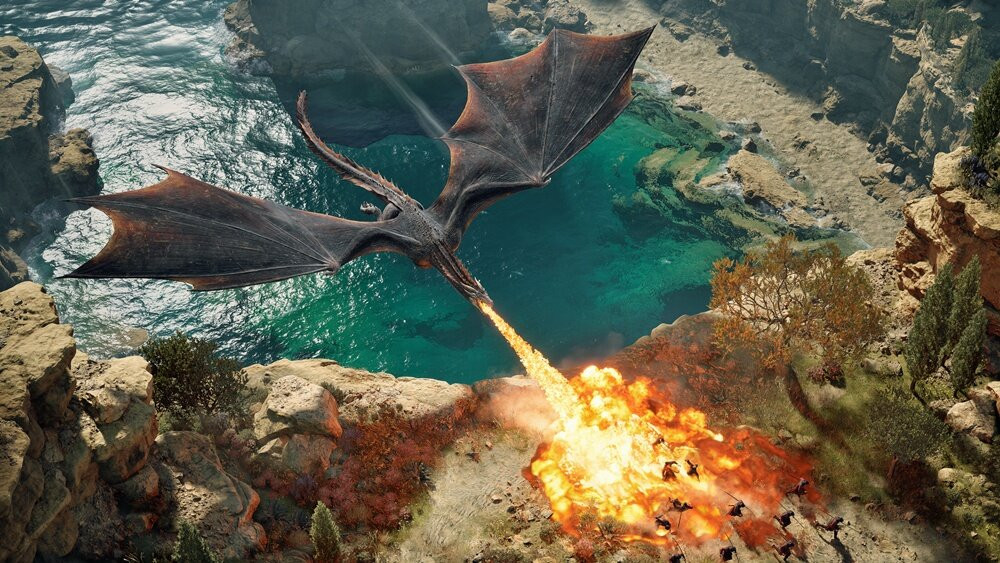
Ryan McMahon: In truth, balance isn't our absolute top priority. It's fine if Dragons or Giants are powerful. They are late-game units and are meant to be powerful in the first place.
What's more important to us is creating fun and memorable moments. Wouldn't a player expect a Dragon to be able to burn down swaths of troops? If so, it should actually be able to do that.
Of course, we must provide opponents with ways to counter them. However, we don't want to dilute the power or appeal of such entities simply out of concern for balance.
Heroes grow and gain new abilities through combat. Does this progression take place only within a single battle, or does it carry over throughout the campaign?
Ryan McMahon: We aren't sharing detailed specifics regarding the campaign at this stage. We plan to reveal more information about the campaign in the future.
Lannister features a unique economic system based on 'debt'. Do Targaryen or the Army of the Dead also possess unique systems that fundamentally alter their playstyle?
Ryan McMahon: As mentioned earlier, all factions feature strong asymmetry and possess unique systems that transform the gameplay itself. We will share more about Targaryen and the White Walkers going forward.
Instead, we can use Stark as an example. Stark's tech tree incorporates a concept of sub-factions. The Free Folk and the Night's Watch are primary examples. As you advance your technology in skirmish mode, you have to choose between the two. If you align with the Free Folk, you cannot recruit the Night's Watch, and vice versa.
However, once you complete the 'Northern Alliance' research in the late game, you can unite the factions of the North as one. From then on, you can recruit forces not only from Stark, but also from both the Free Folk and the Night's Watch. The Night's Watch side has upgrades that enhance the Free Folk, while the Free Folk side has upgrades that enhance the Night's Watch.
If Lannister's keywords are gold, wealth, and power, one of the words that defines Stark is 'unity'. We represented the process of uniting the distinct forces of the North for Northern independence through actual gameplay.
In that case, are Giants a Free Folk unit?
Ryan McMahon: Yes. Giants belong to the Free Folk side. On the other hand, the Night's Watch gains access to catapults, fire pots, and similar siege weaponry.
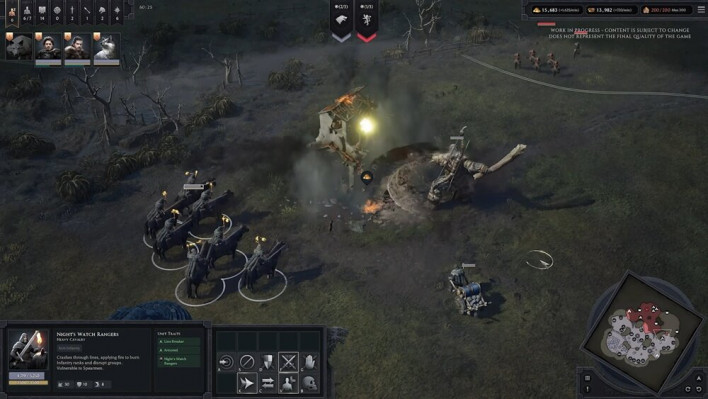
In the videos, a single unit appears to consist of a squad of about 10 soldiers. If both sides clash at full capacity, what is the total scale of troops present in a single battle?
Ryan McMahon: Currently, a single squad consists of roughly 5 to 15 units. The supply cap in the current demo build is 250. However, it's not a simple calculation of multiplying by 15. Including both sides, we estimate that around 600 to 700 units can be on the battlefield at once.
Keep in mind that this can vary depending on the game mode, and since we are continuously tuning balance, these are not final numbers.
'Game of Thrones' features iconic battles like the Battle of the Blackwater, the Battle of the Bastards, and the Battle of Castle Black. How faithfully will the campaign recreate these battles, and to what extent can players alter their outcomes?
Ryan McMahon: Those battles won't necessarily occur in the exact same manner as in the original show. The events in the campaign follow the narrative forged by the player. However, if various conditions align, it is entirely possible to recreate situations identical to the original work.
Ultimately, players can alter every outcome. They decide who lives and who dies, which faction survives to the end and which perishes, and which faction claims the Iron Throne. Furthermore, they can choose which specific hero from that faction ultimately sits on the Iron Throne.
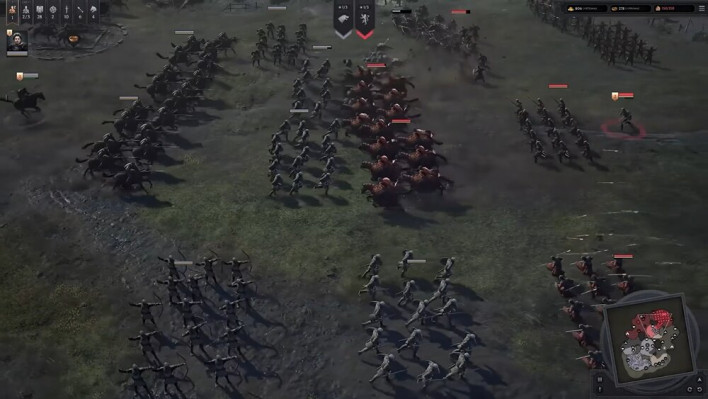
The game is based on the HBO drama, but there are several lore differences between the original novels and the show. When lore diverges between the two, which serves as your benchmark?
Ryan McMahon: Our license is based on the HBO TV series. Therefore, whenever the narratives diverge, we always adhere to the lore of the HBO show.
Of course, we draw a lot of inspiration from the books as well, and we try to weave that into the game wherever possible. However, core events are fundamentally based on the TV series, as our license is tied directly to the show and we do not hold the rights to the novels.
In the initial reveal trailer, Jon Snow was shown dying to the Night King and being resurrected as a wight. Is that kind of shift possible in the actual game?
Ryan McMahon: Yes. The Night King possesses the ability to raise the dead, and he can reanimate a wide variety of targets. Resurrecting fallen heroes, as shown in the reveal trailer, is one such ability.
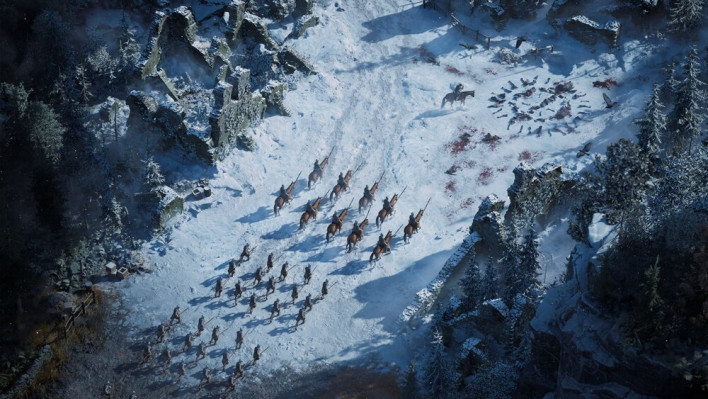
It is still hard to picture the overall campaign structure. Is there a grand strategy map outside of battles, similar to 'Total War'?
Ryan McMahon: You could say it's similar to a degree, but it isn't identical. In the campaign, there is a map of Westeros where you command your faction and wage war. When a conflict occurs, you transition into an RTS skirmish map to resolve the battle directly.
How do you plan to support and update the game post-launch?
Ryan McMahon: We have various plans to support the game post-launch. However, regarding what specific commitments we can make, we intend to share those closer to release.
Which RTS games influenced 'War for Westeros' the most during development?
Ryan McMahon: We drew inspiration from many titles, but one I can clearly point to is 'The Lord of the Rings: The Battle for Middle-earth II'. I think it's a stellar example of combining a legendary IP with the RTS genre. It was also brilliant at presenting large-scale battles within a manageable scope for players. The physical sensation of clashing swords and armies crashing into each other is something we also want to achieve in 'War for Westeros'.
Beyond that, we took a lot of inspiration from the 'Company of Heroes' series, 'Age of Empires', 'StarCraft', and the original 'Dawn of War'. We wanted to take various elements from each game and blend them in a way that suits the 'Game of Thrones' IP.
Ultimately, what defines our game most is how we express the identity of each faction in 'Game of Thrones'. Faction asymmetry, squad-based combat, base building, territorial expansion, and a campaign where players can rewrite the fate of Westeros all come together.
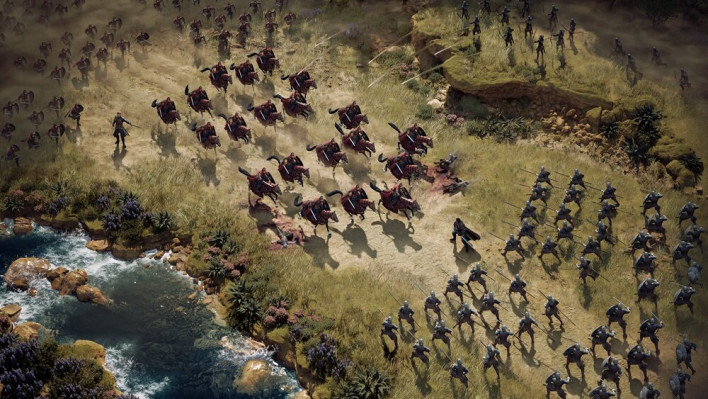
What is the ultimate goal of the campaign? Also, how long does it take to complete a single playthrough?
Ryan McMahon: We aren't disclosing specific details regarding play time just yet. However, the ultimate conclusion of the game is for a single hero to claim the Iron Throne.
We place high value on replayability in the campaign. Our goal is to make players want to return and play differently even after completing it once. Players choose a house and utilize the heroes belonging to that house. Each house's campaign can unfold in a vastly different manner.
Do the Dothraki also appear as part of Targaryen's forces?
Ryan McMahon: Yes. The Dothraki appear as part of the Targaryen faction. We will reveal more details regarding Targaryen's heroes in the future.
In 'Game of Thrones', alliances and betrayals are just as vital as war. Is forming alliances or betraying other factions possible in the campaign or multiplayer?
Ryan McMahon: Multiplayer supports 1v1, 2v2, and 4-player free-for-all. These take the form of skirmish modes and can be played against AI or other players.
In 2v2, teammates naturally act as allies. In 4-player free-for-all, a balance of power will naturally form among the four players as everyone competes to emerge as the ultimate victor.
In the campaign, players will experience alliances and betrayals alongside the high stakes familiar from 'Game of Thrones'.
New RTS titles are rarer today compared to the past. In this environment, why did you decide to make a traditional RTS again, and what role do you think the 'Game of Thrones' IP can play for the genre?
Ryan McMahon: It's true that RTS games are rarer these days than they used to be. Personally, I think it's because building an RTS is extremely difficult. What players expect from an RTS is immensely diverse, and not many developers can fulfill all those expectations.
Games like 'Age of Empires' and 'StarCraft' excel in both single-player and multiplayer. We are also trying to bring back many of the elements that people have loved in RTS games over the past 25 years.
At the same time, for the RTS genre to grow again, it needs something to attract people who don't usually play RTS games or have been away from the genre for a long time. A familiar and compelling IP can play that role.
For us, that IP is 'Game of Thrones'. We believe 'War for Westeros' can serve as a gateway into the RTS genre for players who love 'Game of Thrones' and are intrigued by the concept of strategy and commanding armies. At the same time, our goal is to provide plenty of elements that veteran RTS fans are familiar with, allowing both types of players to enjoy the game together.