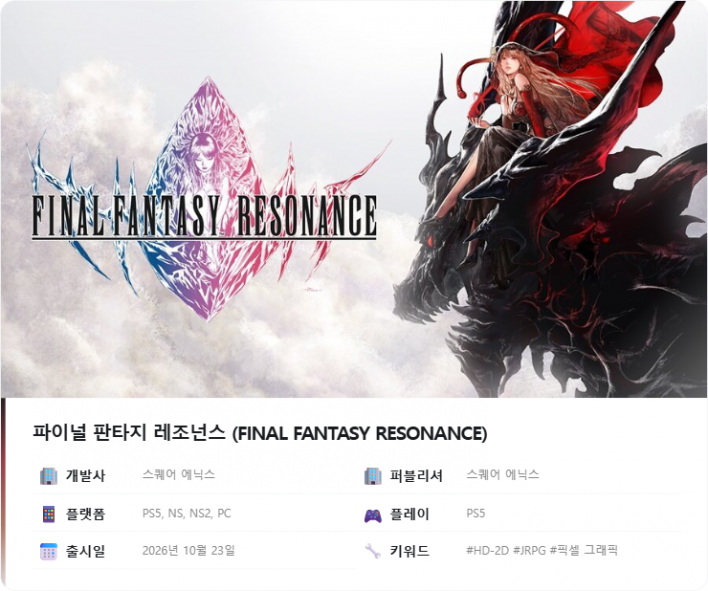
The first HD-2D title in the Final Fantasy franchise, Final Fantasy Resonance (hereafter FF Resonance), which immediately caught the attention of series fans upon its announcement, is slated for release on October 23.
The first thing to draw attention was undeniably the visuals. As the first Final Fantasy game to adopt HD-2D, it sparked immediate interest among gamers nostalgic for classic FF titles. The fact that it remakes the Season 1 story of the defunct mobile game Final Fantasy Brave Exvius (hereafter FFBE) is equally intriguing. While reviving games from decades past is hardly uncommon, choosing a defunct mobile title as the source material was more than enough to pique curiosity.
Naturally, there were concerns as well. Games chosen for remakes typically defined an era or left a prominent legacy that people still discuss years later. FFBE, however, is a somewhat different case. Given its mobile game roots and the fact that its service had ended, the game needed to prove new value through this remake—meaning it had to do more than simply retell a past story; it needed to deliver something that transcends the original.
The resulting FF Resonance delivers a satisfying experience on many fronts. It stays faithful to its duty as a remake by reconstructing the original's story and world, while also embodying the inherent limits of a "classic" turn-based RPG.
A Classic Story Centered Around Crystals A Traditional JRPG Flavor Almost Anyone Can Enjoy
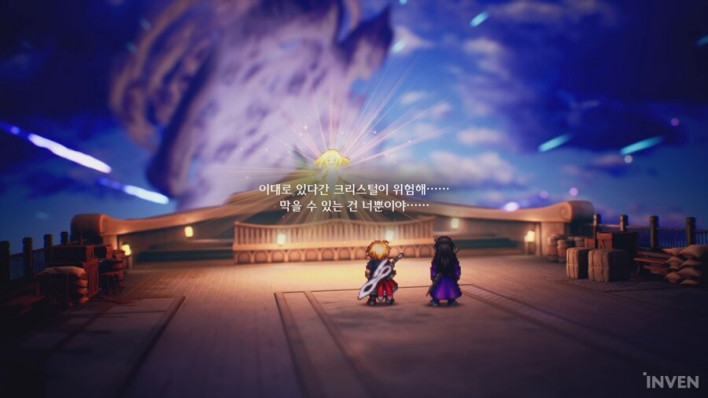
As for the story, I will avoid major spoilers as much as possible. Since this remake brings over FFBE's setting, lore, and characters nearly verbatim, it is hard to expect a completely fresh narrative. Nevertheless, discovering the story firsthand remains one of the core pleasures of playing.
Before diving into specific elements, looking at the overall narrative, FF Resonance's story can be summed up as textbook classic fantasy. Set in a fantasy world centered around crystals—a staple theme of the Final Fantasy series—it follows the journey of the main party striving to stop forces bent on destroying the crystals that sustain the world.
These classic conventions are not limited to the worldbuilding. To put it charitably, the characters are archetypal; to be a bit more critical, they feel like tropey figures you have seen somewhere before.
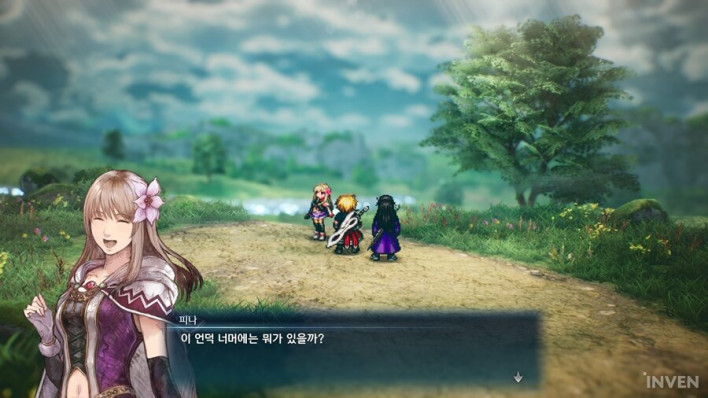
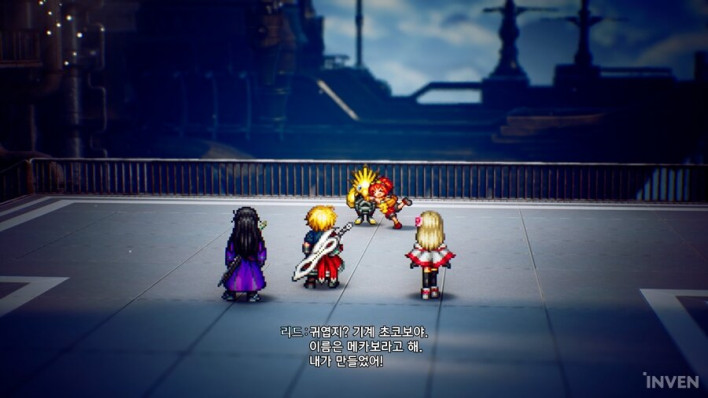
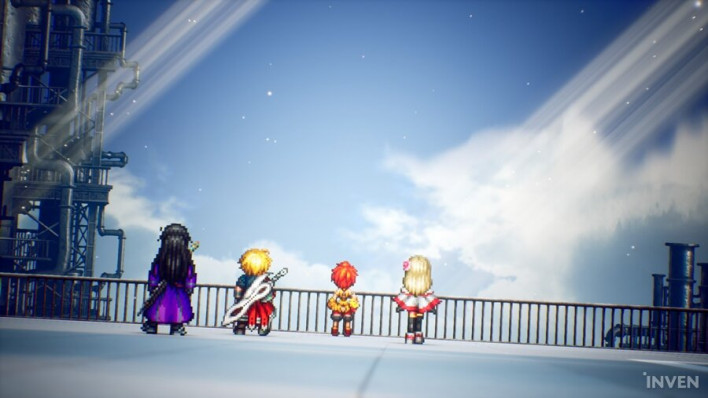
The protagonist, Rain, is an optimistic, cheerful guy who never gives up and is kind to everyone. Lasswell, who appears cool on the surface, is deeply caring toward his companions. Fina is the mysterious amnesiac heroine, while Lid is portrayed as a spunky, energetic mechanic. This familiar character ensemble has an undeniable appeal in that it rarely alienates anyone. Because the narrative unfolds using conventional settings and archetypes, even players unfamiliar with the Final Fantasy series can easily settle in and get immersed.
However, this is a double-edged sword. Conventional tropes have been recycled for a long time. In practice, while FF Resonance's familiar cast, world, and lore make it easy to get hooked regardless of whether you know the original game, it can leave the impression that the narrative lacks depth. Though there are plot twists along the way, anyone familiar with similar story tropes will likely see them coming. Ultimately, while the traditional formula lowers the barrier to entry, it leaves something to be desired in terms of freshness and depth.
Pixel Action That Goes Beyond Cute Spectacular Presentation Powered by Refined HD-2D
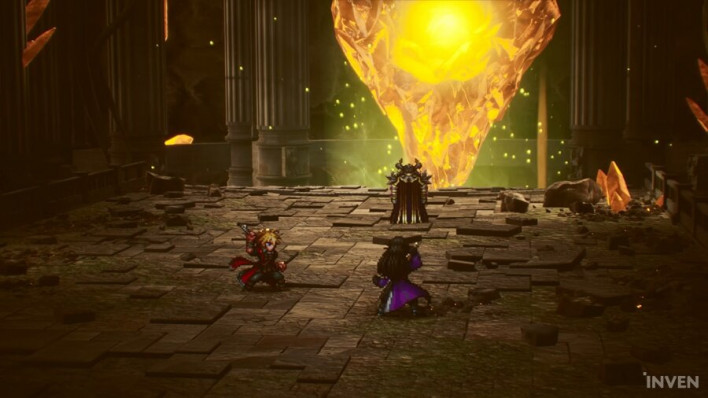
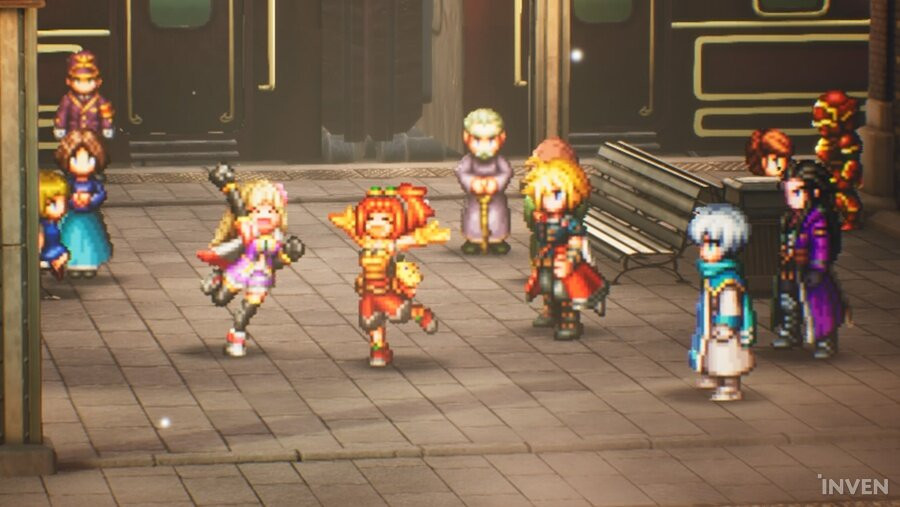
When HD-2D debuted with Octopath Traveler in 2018, it truly represented a milestone innovation for pixel graphics. By blending retro-style pixel art with modern 3D tech, it reawakened gamers accustomed to photorealistic graphics and flashy presentations to the charm of pixel art. Following its stellar debut, HD-2D became Square Enix's signature visual style and has since been utilized across various titles.
Ironically, Square Enix's flagship Final Fantasy series was long left out of the HD-2D treatment. Even as Dragon Quest received HD-2D remakes, news regarding an HD-2D Final Fantasy was nowhere to be found. Needless to say, fans were eagerly anticipating a Final Fantasy game built in HD-2D. Against this backdrop, it was only natural for the fanbase to turn its eyes toward FF Resonance upon its announcement.
Thankfully, FF Resonance manages to meet expectations on many fronts. To be honest, expectations were not sky-high initially. Eight years have passed since HD-2D made its debut. Though the technology has steadily evolved, I assumed that, being rooted in pixel art, there would be inherent limits to what it could express. I prematurely assumed that simply adding subtle 3D effects to pixel art would struggle to deliver cinematic moments beyond its charmingly retro vibe.
However, actually playing the game changed my mind. What stood out most was the evolved presentation. Previously, Square Enix's HD-2D titles often felt visually similar to one another—not necessarily due to a limitation of HD-2D itself, but because they naturally inherited the pixel graphics and aesthetic design of classic JRPGs.
This was considered a key strength of HD-2D in that it revived retro sensibilities using modern tech. Yet, it also posed a limitation: relying on chibi-style character sprites meant there were constraints when trying to pull off the flashy, high-scale spectacle found in modern releases. To be sure, games like the original FFBE tried to overcome this by introducing 3D cutscenes, but that in itself highlighted how difficult it was to achieve such impact with pixel graphics alone.
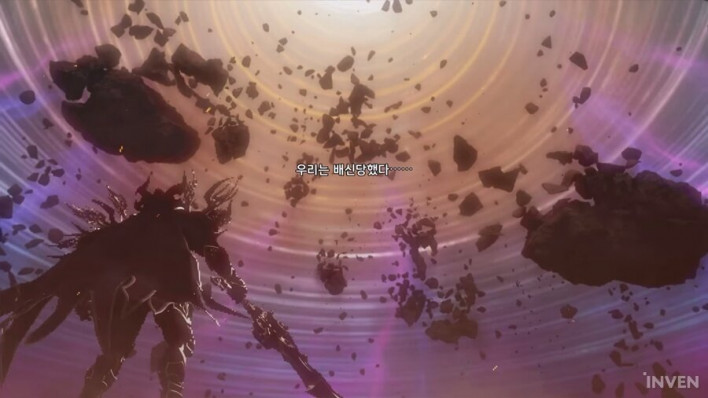
FF Resonance overcomes these limitations with enhanced pixel graphics and directional flair. From individual skills and ultimate attacks (Limit Bursts) to story cutscenes, it makes active, clever use of pixel art to elevate immersion.
The newly introduced "Cinematic Pixel" technology is also worth noting. Put simply, it renders 3D graphics in a pixelated style. While conventional 3D cutscenes help compensate for limited cinematic punch, they inevitably create a visual disconnect with standard pixel art. Cinematic Pixel bridges this gap. In key cutscenes, its application creates a striking impact that standard pixel graphics alone could never achieve.
In short, if you were worried that pixel graphics would yield subpar cinematics compared to modern games, you can set those concerns aside. FF Resonance impresses on both visual and cinematic levels.
'Break' System Adds Flair to Classic Turn-Based Battles Diverse Builds Created Through Vision Synergies
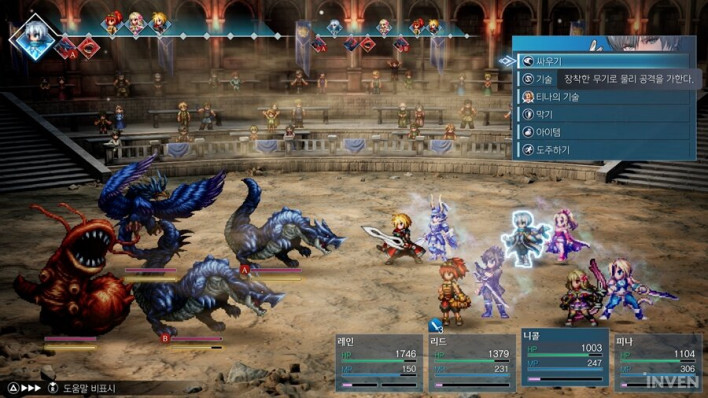
Just as I described the story as traditional, the combat system follows suit. FF Resonance features classic turn-based combat reminiscent of vintage Final Fantasy games. One notable difference is that it omits the Active Time Battle (ATB) system, a hallmark of turn-based Final Fantasy entries. Since the original FFBE didn't use ATB either, this can be seen as another inherited element from the source material.
However, outside of omitting ATB, combat differs substantially from the original mobile game. Because FFBE employed a system tailored for mobile platforms, FF Resonance required a distinct combat design suitable for a standalone title.
Enter the Break Gauge. Enemies have a Break Gauge separate from their HP pool, which players deplete using various attacks. While basic attacks reduce the gauge, striking elemental weaknesses depletes it far faster. Additionally, certain skills deal lower damage in exchange for higher Break depletion.
There are three main reasons to actively pursue Breaks. First, it cancels special boss mechanics. During battle, a red aura may surround a boss as it charges power to signal an upcoming heavy attack. Breaking the boss's gauge before its next turn interrupts and cancels this pattern.
Second, it creates opportunities for burst damage. A broken enemy loses its action until its next turn and takes increased damage. Certain skills deal extra damage specifically against broken targets. On top of that, the character who inflicts Break gains an extra turn via "Extra Phase." Interrupting boss patterns while securing additional turns allows players to chunk huge amounts of a boss's HP through strategic timing and character selection.
Finally, it speeds up combat pacing. Traditional turn-based encounters can feel drawn out, but the Break system counteracts this fatigue. Adding even more momentum is "Full Break." Triggered when all enemies are broken simultaneously, Full Break grants Extra Phase to the entire party rather than just a single character. With every party member gaining an extra action, you can unleash an all-out assault on the enemy.
Resonance Skills—the ultimate moves of Vision characters—are the perfect grand finale for a Full Break window. Delivering high damage alongside utility effects and unique cutscenes for each Vision character, they serve as ideal finishers for your all-out offensive.
That said, mindlessly pursuing Breaks isn't always the answer. Certain bosses feature counter-mechanics, such as unleashing devastating attacks immediately after recovering from Break. Missing the timing while trying to cancel a boss's skill can leave you exposed. Strategic decision-making—knowing when to hold or trigger Break rather than breaking as fast as possible—adds welcome tactical depth to the classic turn-based combat.
While the Break system distinguishes combat, character building centers on the Vision system. According to the lore, Vision Crystals are crystallized memories of legendary Final Fantasy heroes who fought to save the world in eras past. As players collect and equip Vision Crystals throughout the adventure, the party channels the power of iconic franchise heroes in battle.
Lore aside, mechanically speaking, Visions function much like equipment pieces. Each Vision carries unique active skills and passive abilities, allowing for diverse party builds depending on how you mix and match them.
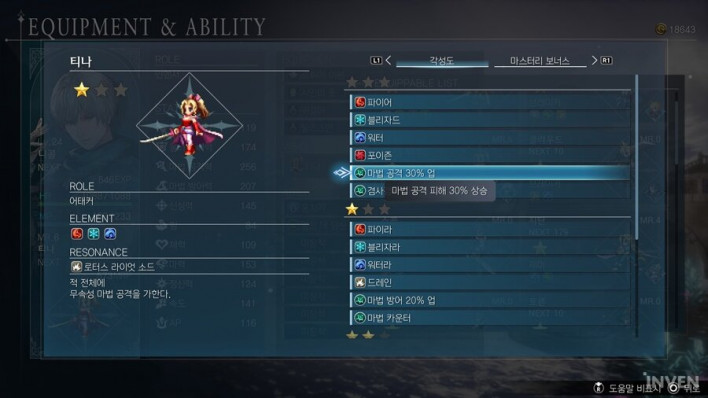
Visions impact character builds in three main ways. First, unique skills expand party composition flexibility. In a four-person party, bringing Fina for healing is often standard for stability, which can make her a permanent slot fixture. However, equipping a Vision that grants healing spells to another character changes the equation. With another member taking on healing duties, team building options open up significantly.
Fina herself can branch out beyond her base role using Visions. While invaluable in boss fights, healer Fina can feel less efficient in regular encounters where area-of-effect damage dealers shine. Equipping Fina with a Vision granting AOE skills lets her clear mobs quickly while retaining her primary support capability.
Second, Abilities boost baseline stats. Functioning like passive traits, Abilities provide percentage buffs to physical attack, magic attack, or other stats depending on the Vision. Thus, choosing a Vision requires evaluating whether its passive Abilities align with a character's archetype. For instance, physical attackers like Rain and Lasswell gain little synergy from Terra's Vision, which boosts magic attack.
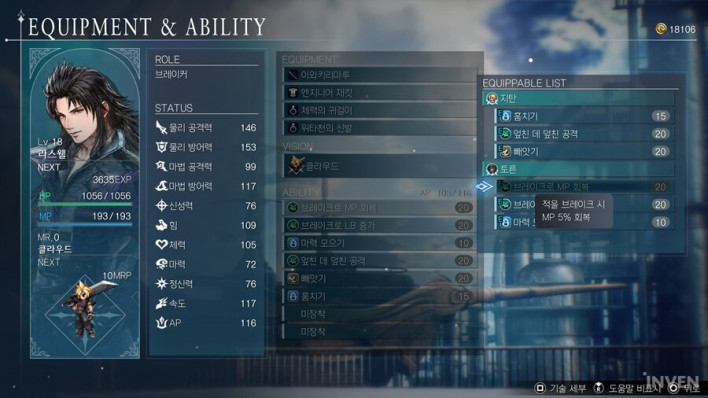
That doesn't make Terra's Vision entirely useless for Rain or Lasswell, however. Even if a Vision doesn't fit immediately, levelling a wide roster of Visions pays off thanks to the third feature: Mastery Bonuses. Each Vision possesses a Mastery Rank, and raising its level unlocks Mastery Bonuses one by one. Once unlocked, these Mastery Bonus Abilities can be equipped on characters even when swapping to a different Vision, subject to AP (Ability Point) limits.
Although Mastery Bonus Abilities offer lower raw values than innate Vision passives, levelling multiple Visions allows players to cherry-pick specific bonuses. This enables tailored character builds—such as specialized Break gauge slayers or magic-heavy burst attackers—for adapting to versatile scenarios. Raising diverse Visions and combining their bonuses forms the core loop of character progression.
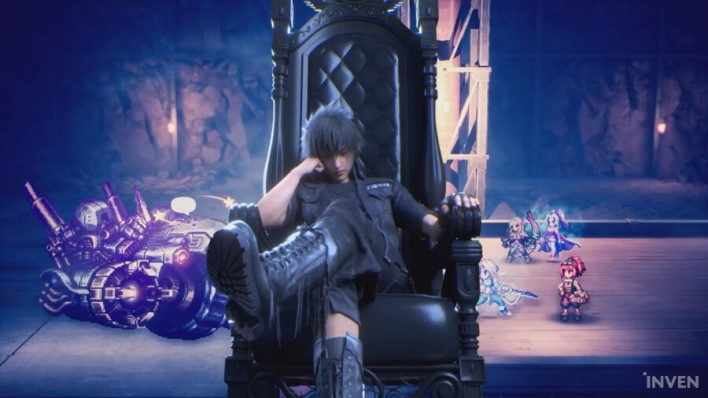
The Strengths and Limitations of a Classic JRPG Might Disappoint Those Seeking Something Revolutionary
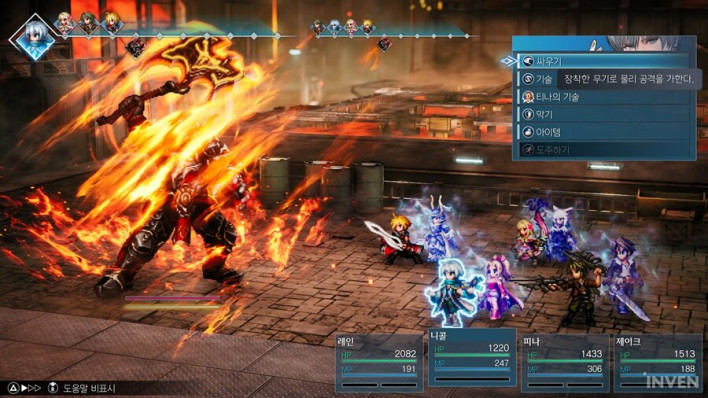
To conclude, FF Resonance is a game where distinct strengths and limitations coexist. As a classic turn-based RPG, it is remarkably faithful. While the Break and Vision systems inject flair, they represent polish within a familiar formula rather than a radical overhaul. For players craving a traditional turn-based JRPG, it offers plenty to enjoy, even if you are unfamiliar with Final Fantasy or the original FFBE.
On the other hand, if you are expecting something revolutionary that departs from genre tropes, it may fall short. While individual narrative beats differ, the overarching structure and character personalities feel deeply familiar—which, critically speaking, can come across as predictable.
FF Resonance won't satisfy every type of player. But for fans who appreciate classic story tropes, charming cast dynamics, and solid, familiar turn-based combat in JRPGs, it hits the mark. Even if it lacks bold innovation, FF Resonance delivers fully on the classic JRPG charm it sets out to achieve.
- HD-2D visuals at their absolute peak
- An impressive remake of its mobile predecessor
- Combat system filled with classic nostalgia
- Deep endgame content offering dozens of hours
- No haptic feedback—rumble isn't a relic of the past
- Familiar, straightforward story lacking major twists
Review Platform: PS5 (Pre-release Review Build)