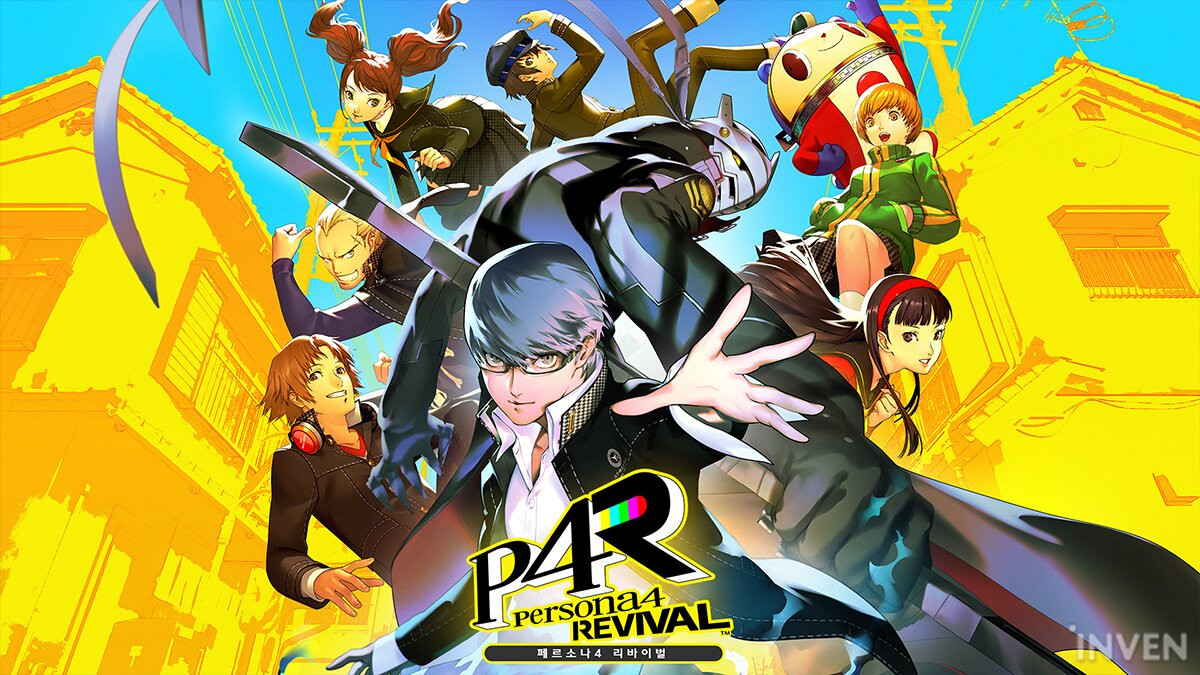
While Persona 3 is the popular entry that laid the foundation for today's Persona series, Persona 4 is usually cited as the most enduring and beloved title across the entire franchise. As such, many fans eagerly anticipated a remake following Persona 3 Reload, and that wait has now materialized into an official announcement.
Moving a step further from the initial teaser, which merely showed the protagonist walking through Inaba, development has now progressed to a playable build featuring active combat and character interactions. And this year's Gamescom offered a hands-on opportunity to play that build directly.
Persona 4 and its expanded version, Persona 4 Golden. Reencountering the game roughly 14 years later as Persona 4 Revival, it was still unmistakably Persona 4, yet simultaneously an entirely different experience.
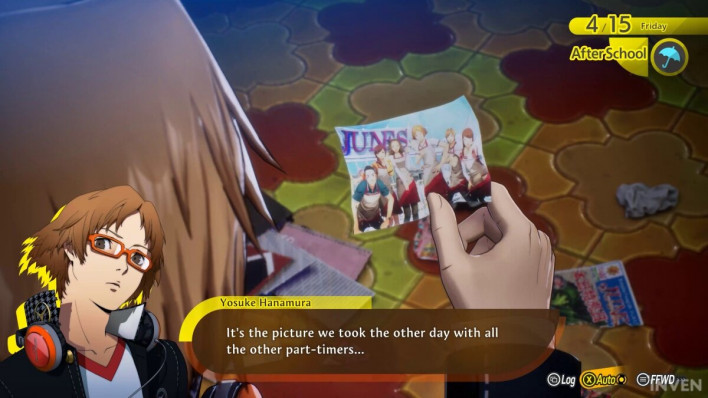
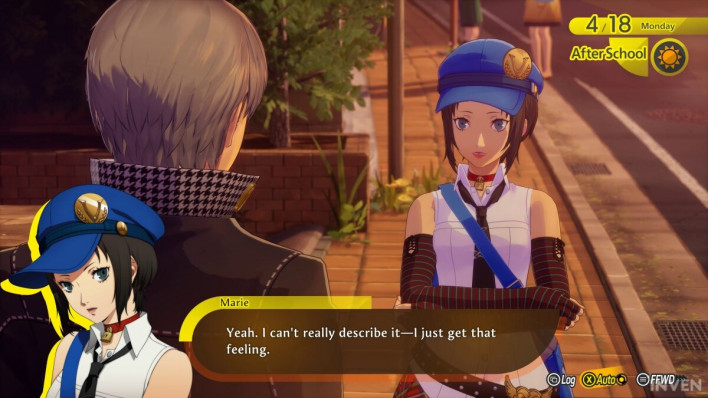
The hands-on demo for Persona 4 Revival was split into two main sections: story and dungeon. The story section begins with the early episode where the protagonist meets Yosuke and Teddie for the first time and takes his initial steps into the TV World.
This segment covers the iconic event where the protagonist encounters Shadows for the first time, hears a mysterious voice, shatters a card, and awakens his Persona, Izanagi. As one of the most iconic scenes in the original game, reimagining it in the remake provides the clearest showcase of the differences from the original. Players can witness firsthand how much added gravity and nuance the remake brings to this moment.
At the same time, Persona 4's signature bitterness remains intact. The townsfolk's gossip reverberates in a distorted form within the TV World, and Saki's true feelings revealed inside—combined with her disdainful comments toward Yosuke—fully capture the gloom and eerie realism of human nature. This demonstrates that despite being a ground-up remake, the game faithfully carries forward the narrative density and core characteristics of the original.
As suggested by the emphasis on narrative continuity, significant changes have been made elsewhere. The most noticeable shift lies in the visual presentation, particularly the departure from the original's super-deformed (SD) character models. Upgrading to full-proportion character models—similar to the anime cutscenes scattered throughout the game—enables emotional depictions that were previously impossible. It is not merely improved proportions; every facial expression and subtle movement is now rendered with realistic fidelity.
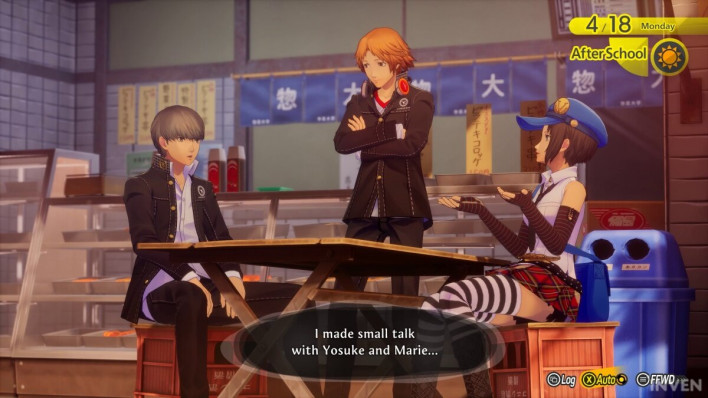
Both the illustrations and 3D models have been newly created from scratch. While full-proportion models were previously featured in Persona 4: Dancing All Night, the difference in genre and artistic technique makes this rendition far more refined. Meanwhile, the 2D illustrations have been refined to preserve the characters' essential traits despite subtle updates.
In the original game, Shadow Yosuke's rampage—triggered by Yosuke's refusal to accept his true self—relied mostly on fading eye gleams and text dialogue to convey emotion, prioritizing text over dynamic character movement. In the remake, however, with fully proportioned and animated 3D models, the visuals on screen work alongside the dialogue to directly convey emotions and context. The 2D illustrations also show minor adjustments, polished to a degree where you notice a difference, but might struggle to pinpoint the exact changes.
Animated sequences are also featured throughout. In the initial event where the protagonist first encounters Shadows, the mouth-only Shadow that appears to devour another Shadow is depicted in a way that instills a genuine fear of death, avoiding what could have otherwise looked absurd.

Guided by a voice ringing in his head, the protagonist shouts "Persona!" leading into the thrilling arrival of Izanagi. As showcased in this awakening sequence, anime cutscenes have long been Atlus's strength. However, in Persona 4 Revival, the evolution of the 3D models allows for such effective emotional expression that relying solely on 3D cutscenes would have felt equally compelling.
Furthermore, moving away from a fixed camera perspective to allow free camera rotation lets players explore every corner of Inaba and the TV World, significantly enhancing immersion.
The dungeon demo covers the April 15 storyline where the protagonist, Yosuke, Teddie, and Chie head into Yukiko's Castle, and Chie becomes separated from the group. Although it culminates in an encounter with Shadow Chie—representing the self Chie refuses to accept—the segment focuses on letting players experience combat mechanics and system changes along the way. One of those key changes is the Guard mechanic.
While the existing Advantage system—striking enemies from behind before entering turn-based combat—remains intact, blocking Shadow attacks can now create additional Advantage opportunities beforehand. In this demo, Guarding functions less like a precise frame-perfect parry and more as holding a guard to automatically deflect attacks and grant Advantage. This might be because the demo featured weaker early-game Shadows, but regardless, giving players more action elements allows for a more active engagement with enemies.

The actual turn-based combat retains the core combat system that originated in Shin Megami Tensei and has evolved over time. The flow remains identical: identify enemy weaknesses with various attacks, exploit those weaknesses to gain extra turns (1 MORE), and finish off with an All-Out Attack to inflict massive damage. However, Persona 4 Revival adds Baton Pass, allowing players to pass the turn gained from targeting a weakness—along with its combat advantages—to the next party member.
Monsters encountered in the field can usually be defeated quickly by hitting their weaknesses once or twice. However, when fighting a group of enemies with different weaknesses, giving extra turns only to the character who landed the weak hit previously prevented weakness chaining. Now, if facing an enemy group weak to Zio and Garu, the protagonist can first use Zio to down a monster and gain a 1 MORE, then use Baton Pass to transfer the turn to Yosuke, who can then use Garu to sweep the remaining monsters. Even if their HP isn't fully depleted, downing every enemy enables an All-Out Attack.

While the core combat system remains faithful, the cut-ins and menu screens immediately stand out. From the Persona series to the new IP Metaphor: ReFantazio, Atlus titles consistently amaze fans with stylish and charming menu designs, continually raising the bar just when it seems impossible to improve any further.
Persona 4 Revival continues this tradition: the cut-ins triggered when striking weaknesses in battle and character animations integrated into various menus are mesmerizing to watch. Details such as the protagonist taking off his glasses when navigating options on the main menu screen, or the reflection in the water shifting to match the selected character in the skill menu, reflect meticulous craftsmanship in every frame. Additionally, visual transitions resembling old CRT TV screens during battle entry demonstrate a clear respect for the original game's core theme.
Naturally, a short time-limited demo cannot reveal every refinement made to the original foundation. However, the game's undeniable charm and core strengths shone through clearly in this preview, making next year's release feel all the more distant.
Persona 4 Revival will be released on February 18, 2027, for PC, PS5, and XSX.