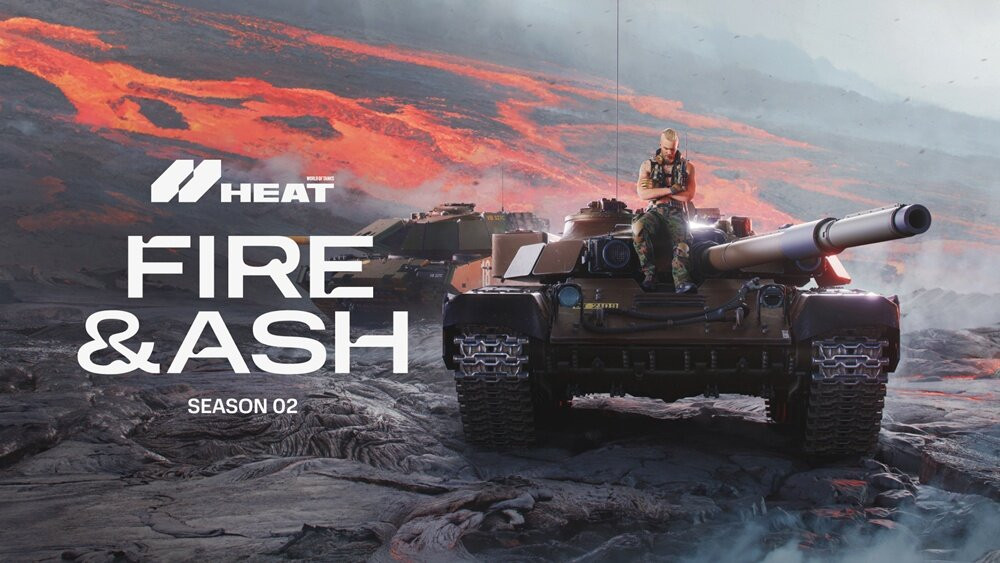
World of Tanks: HEAT is kicking off full-fledged seasonal operations with its second season, Fire and Ash. Featuring a new Agent, new tanks, a new map, and 20v20 large-scale battles, Season 2 serves as the initial template for future seasons, which are scheduled to run on roughly three-month cycles.
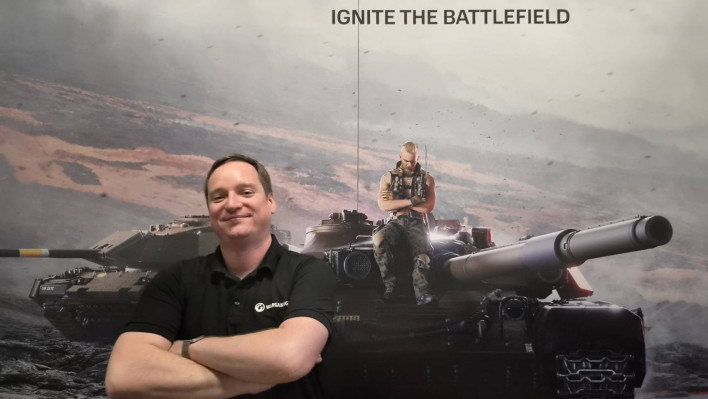
At Gamescom 2026, we met with Luke Nicholls, Head of Community for World of Tanks: HEAT, to hear directly about Season 2. Nicholls presented the key content for Season 2 and demonstrated the new tanks and 20v20 battles through a live gameplay demo.
Season 2, Fire and Ash, launches on September 2. While Season 0 was closer to a five-week thank-you event and Season 1 was a somewhat experimental, condensed format, Season 2 marks the implementation of the development team's planned regular three-month seasonal structure.
The approach of tying an entire season together under a single theme is also fully taking shape. Beyond just the season title, new maps, Agents, and cosmetics will all be interconnected around one narrative theme, accompanied by dedicated lore. The developers noted they are still exploring effective ways to deliver this lore in-game, and they plan to release related videos alongside the season launch.
Season 2 introduces a new Agent, new tanks, a new map, and a 20v20 game mode. Additional updates and quality-of-life improvements will continue throughout the season, with the developers also mentioning content in the works for Halloween.
New Agent Gambit and Season 2's New Tanks
Season 2's new Agent, Gambit, is a Defender Agent. Rather than simply absorbing hits with high durability, he is designed to inflict disadvantages on opponents who attack him.
Gambit's passive trait, Feedback Loop, jams attackers in proportion to the damage he receives. Firing once or twice poses little issue, but sustained attacks against Gambit increasingly disrupt the opponent's ability usage, naturally aligning with the Defender role of drawing and tanking enemy fire.
His Ultimate, Iron Curtain, deploys a swarm of small drones that grant temporary health to Gambit while repairing his tank. This effect also applies to nearby allies, making it a valuable support ability for boosting team survivability when multiple tanks push the frontline together.
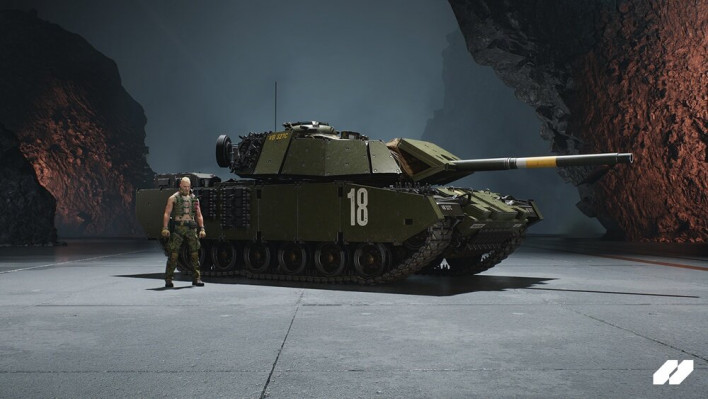
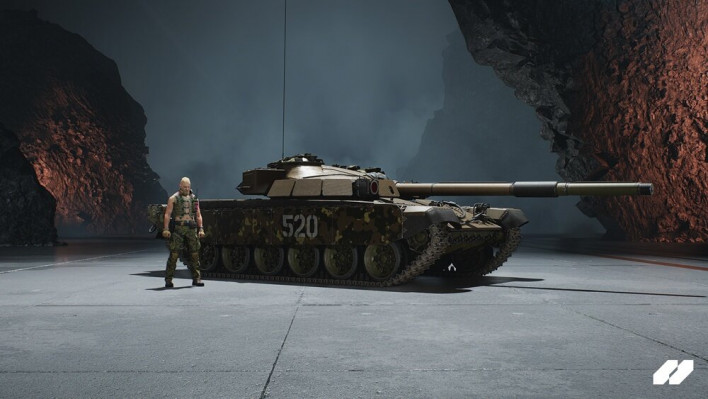
Gambit comes equipped with two tanks featuring distinct characteristics. The T-72SH offers relative mobility and focuses on disrupting enemies. It utilizes a device that target-jams opponents and Tesla Discs that hover in the air for a duration to deal damage while applying a jamming effect. Jammed enemies are unable to use abilities, making this tank highly effective for area control and denying skill usage.
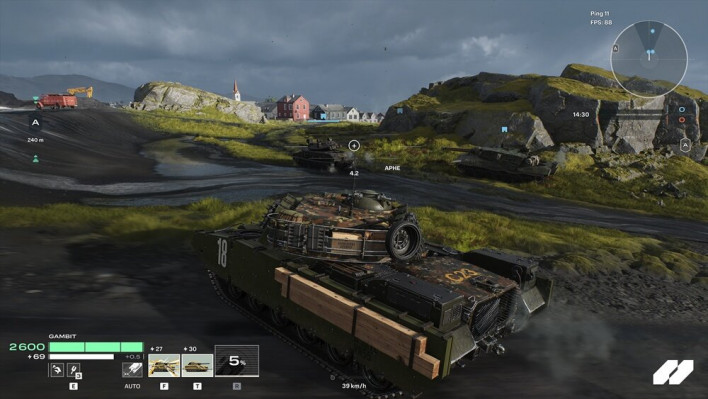
On the other hand, the M60A3 series tank is specialized in directly absorbing attacks. It can temporarily render its side armor plates invulnerable to withstand incoming fire like HE shells, or detonate explosive charges beneath the plates to launch them sideways as an attack. However, charging this attack for too long inflicts damage on one's own tank, making precise timing crucial.
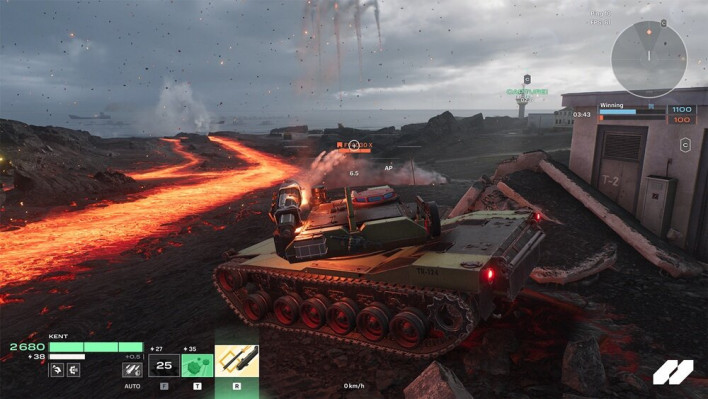
Existing Agent Ember also receives a new vehicle, the M1150 Breacher. Its defining feature is that it equips a flamethrower instead of a standard main gun. Players can spray oil on the ground and ignite it to create traps or block off access to specific areas, or directly blast flames to deal damage over time to enemies.
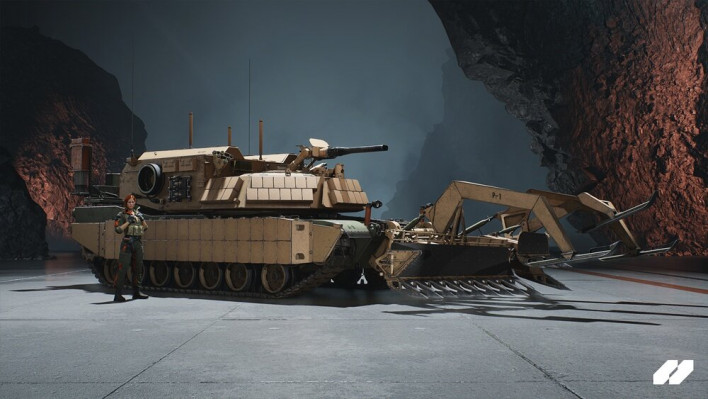
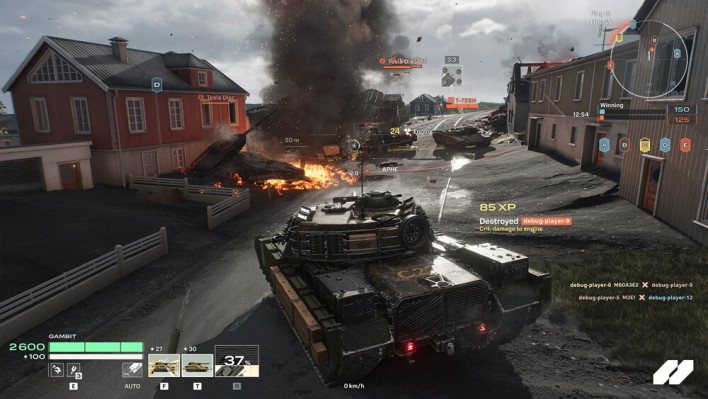
The unique mechanics of the M1150 Breacher were clearly demonstrated during the live presentation. Instead of consuming ammunition, the flamethrower operates on an overheat mechanic, locking out usage temporarily if fired continuously. Furthermore, ground cannot be ignited on water. While enemy tanks themselves can still be set on fire, tactical fire traps cannot be left on watery terrain to deny entry. Nicholls explained that the effectiveness of the same vehicle can vary depending on the combat environment.
The M1150 Breacher also excels at obstacle removal. It can destroy landmines, tank traps, and barricades deployed by other tanks, and enable combos such as tracking an enemy tank to lock it inside flames.
Switching tanks according to the situation will also become increasingly important. In HEAT, players can swap to another tank owned by the same Agent upon respawning. During the demo, Nicholls explained that if pushing a point where fire attacks are ineffective, players can switch vehicles and later re-select the M1150 Breacher depending on how the battlefield evolves.
New Map 'Inferno One' and 20v20 Conquest
Season 2's new map, Inferno One, is set in an alternate-history Iceland. The lore centers on an accident at a secret research facility beneath a volcano that triggered an eruption, making it the map that most directly embodies the season's "Fire and Ash" theme.
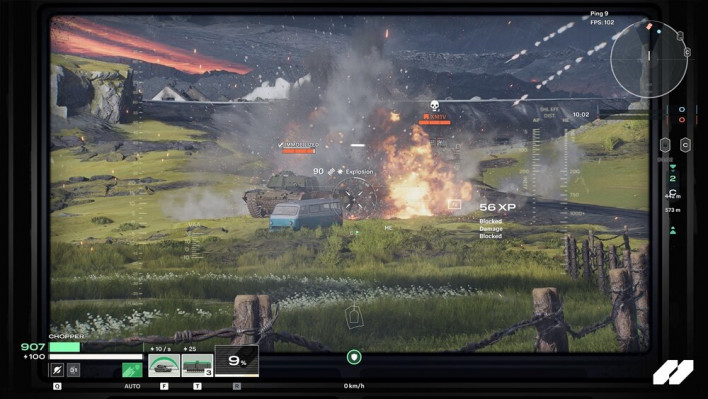
A key feature is that lava is not merely background scenery, but actively affects gameplay. At Capture Point C, lava initially located outside the point gradually flows in over time, altering the terrain. Some of the original access routes become blocked by lava, and while players can forcefully cross it, doing so inflicts damage and sets their tank on fire.
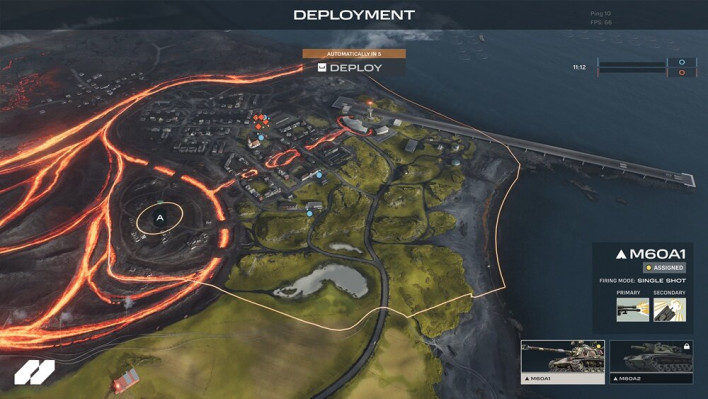
During the demo, Nicholls explained that access routes to Point C that were fully open early in the match become blocked by lava over time. Consequently, even when fighting over the same capture point, entry routes and tactics must adapt as the match progresses. Inferno One is the development team's first attempt at a dynamic map, and depending on player feedback, they are considering implementing similar dynamic elements in future maps.
Another major addition is 20v20 Conquest. Double the size of the existing 10v10 Conquest, 40 players clash on a single battlefield. However, the goal was not simply to inflate numbers for chaotic brawls. To preserve a tactical combat feel, 20v20 will only be offered on select maps large enough to accommodate the scale.
20v20 will not immediately become a permanent core game mode. Just as Season 1 featured Plant & Defuse on select weekends to gauge player reaction, 20v20 will be available via a separate queue on specific weekends during Season 2. The developers plan to gather play rates, player feedback, and combat data before deciding how to evolve the mode. For now, it is an experimental phase tested alongside players rather than a permanent core mode.
The impact of large-scale combat was evident during the live demo. According to the developers, while the fundamental balance structure does not drastically change from standard Conquest, firefights erupt simultaneously across large maps, and when both teams concentrate forces on a single capture point, massive engagements take place. It is designed to elevate combat density and scale while retaining standard Conquest rules.
There are also changes to how seasonal operations function. Starting in Season 2, Battle Passes will no longer expire when a season ends; instead, they will be preserved in an "Archive." Players can continue spending Intel on any Battle Pass they choose, and those who purchased a premium Battle Pass will retain its perks. It will also be possible to purchase premium Battle Passes from past seasons later on.
Tanks included in Battle Passes can also be earned down the road. The development team explained that the motivation behind this system is to relieve pressure on players who feel rushed to complete remaining tiers before a season ends, while allowing newcomers to access past content.
Season 2 is not merely a single major update dropping on September 2. Follow-up updates, including quality-of-life improvements, will roll out continuously after launch. Having defined Season 0 and Season 1 as experimental phases and committing to a regular three-month seasonal format starting with Season 2, Fire and Ash serves as the first full-fledged season demonstrating how World of Tanks: HEAT will structure and run its future seasons.
Following the introduction of the new season, a brief Q&A session took place with Luke Nicholls.
What led to selecting the T-72SH and M60A3 series as Gambit's tanks? What were the criteria for choosing these two?
Luke Nicholls: I'd need to confirm with the dev team for the exact reasons behind choosing these two specific tanks. However, both are main battle tanks that share heavy armor as a common trait, which I think fits Gambit's persona well.
In HEAT, we aim to take real historical tanks and add somewhat exaggerated elements to make the gameplay engaging. While no tank in real history ever launched its own armor plates as an attack, you can do that in the game.
Both tanks also fit nicely into our alternate-history time setting. Another key principle for us is not forcing a specific Agent into a specific nation. The M60 is an American tank and the T-72 is Russian, but that doesn't tie Gambit to either the US or Russia. This is part of our overall approach to building the universe of HEAT.
You previously mentioned that some Defender Agents weren't fully fulfilling their intended roles. Did experience from managing existing Defender Agents influence Gambit's design?
Luke Nicholls: One thing we wanted when creating Gambit was a Defender Agent with more support capabilities. When he uses his Ultimate, he can heal and shield allies to a degree alongside himself.
For example, the M1 Abrams also has a curtain ability that can protect allies, but in practice, it's not easy to utilize effectively. Tanks are large, and the coverage area of the curtain is limited.
So we wanted to design Gambit as an Agent who can firmly anchor the frontline while actively assisting allies in pushing forward. Ultimately, a Defender's role is absorbing enemy fire while protecting teammates, and Gambit's ability to punish attackers aligns well with that mandate.
Going forward, I hope we can try more designs that emphasize supportive utility like this. Ember's new vehicle is another interesting case—it focuses on damage over time and area control rather than high burst damage. Blindly charging into a zone covered in flames is rarely a wise move, so enemies must carefully weigh positioning and timing. I think this kind of positional gameplay represents a fun direction for Defender Agents.
Through Season 0 and Season 1, you adjusted the balance of various tanks and abilities. What is the biggest lesson you learned from balancing HEAT compared to the original World of Tanks?
Luke Nicholls: HEAT features a wide variety of abilities that counter one another, making balancing a bit trickier. Tanks in the original World of Tanks are relatively straightforward—they have armor, mobility, and gun stats like damage, rate of fire, and penetration.
In HEAT, several layers are added on top because abilities from different Agents interact with each other. For example, Ember can spray oil on the ground, and another Agent can ignite it to combo their effects.
The biggest lesson learned is that nothing replaces having a large player base actually play the game. We need feedback on what players like and dislike, while simultaneously collecting actual internal gameplay data.
I don't think the balance is perfect right now; there are notable examples we still need to look into. Rakta's Ultimate is a good case in point. It grants temporary invulnerability, which can feel overly powerful in certain game modes. Yet at the same time, that ability is central to Rakta's identity as an Agent. So rather than simply nerfing it, we have to consider how to tweak it while preserving that core identity.
Landmines were a similar situation. In the past, they were difficult to avoid and dealt excessively high damage. But we didn't want to just lower landmine damage, because mines should naturally be a lethal threat. So instead, we reduced the distance required for full damage while expanding the blast radius, maintaining their identity as a lethal weapon while allowing opponents to spot and react to them.
Some issues can be resolved quickly with simple numerical tweaks. However, when gameplay identity needs to be preserved, we have to rethink how the ability itself ought to function.
Offering the Battle Pass for free is an advantage, but free players might feel the reward value is somewhat low. How do you view the Battle Pass reward structure?
Luke Nicholls: We provide a generous amount of time for the Battle Pass, and finding the right balance here is tough. While some hold that view, highly active players have already finished their Battle Pass and ask, "We have leftover Intel, give us somewhere to spend it."
Ultimately, we need to strike a balance where casual players can earn sufficient rewards while heavy players still have goals to pursue.
Of course, we appreciate it when players purchase the premium Battle Pass, which offers benefits like letting you choose the unlock order. However, we didn't design it so that players feel forced to unlock desired rewards before the season ends. Even when a season concludes, those rewards remain, allowing players to claim them later when they earn Intel.
For tanks, there are alternative avenues. Vehicles previously included in Battle Passes can be purchased in the shop with regular Credits. We wanted to offer flexibility so players aren't rushed by season deadlines. That said, since a premium Battle Pass exists, we must preserve its value as well, making balancing both sides essential.
Moving forward, are you leaning toward adding new Agents continuously or expanding the roster of tanks available to existing Agents?
Luke Nicholls: Currently, we have no plans to give a single Agent more than two tanks. However, we consider it a potential option for the future.
While I think our tank lineup is in a solid place, there are still unfilled niches within the current three roles. Long-term, there is certainly a possibility of introducing new Agent roles altogether—for instance, a role dedicated entirely to support. Of course, that's not a firm promise right here.
Our current plan is to add at least one new Agent and two accompanying tanks every season. We'd love to deliver even more if possible, but each Agent and tank involves a complex development process—from modeling to balance tuning and unique mechanics—which takes time.
We know players want more tanks and Agents. We will keep adding them—it just requires time.
Different Agents and tanks excel in different game modes. Is there a specific game mode that serves as the baseline for balancing?
Luke Nicholls: We don't balance around a single specific game mode. By nature, certain Agents are bound to perform stronger in certain modes.
For example, in Kill Confirmed, Rakta holds an advantage thanks to high mobility and ultimate usage, allowing fast movement to retrieve dog tags after kills. Conversely, other tanks might perform relatively poorly under the same conditions.
Because of this, balancing around a single game mode could break others. We have to look at the big picture. If a specific tank or Agent overperforms drastically in one mode, we naturally inspect it, but our overall goal is holistic balance independent of any single game mode.
20v20 is ultimately Conquest at its core, so fundamentally not much changes from a balance standpoint. The main difference lies in larger maps where more firefights erupt simultaneously across multiple capture points, and engagements scale significantly when both teams converge in one spot.
In Inferno One, lava shifts during the match, altering entry routes. What impact do you expect these dynamic changes to have on actual gameplay?
Luke Nicholls: Currently, where these dynamic changes occur is limited to specific areas of the map, with Capture Point C being a primary example. It's wide open early in the match, but lava slowly creeps in over time to block certain access routes.
Players can still cross those paths afterward, but they must accept the disadvantage of taking damage and having their tank set on fire. In particular, tactical approaches surrounding that capture point evolve.
I think it's a very interesting experiment. I'm eager to see how players respond and how it plays out in live matches. Personally, I hope to see these elements expand to more maps. When map-altering events reshape battlefield geometry and flow mid-combat, players can adopt different tactical approaches for the same objective depending on the phase of the match.
In 20v20, an individual player's impact on the overall battle might be diminished compared to smaller modes. How do you view this aspect?
Luke Nicholls: That's true. That is precisely why we need to test it firsthand and see how players respond.
While we've validated it through internal testing and select playtesters, gathering proper feedback and data ultimately requires a large player base playing it directly.
Therefore, we plan to adopt an approach similar to Plant & Defuse in Season 1. We'll open 20v20 as a separate playlist queue on specific weekends during Season 2. We'll let interested players dive in while we gather combat data, tracking how many choose the mode and how engaging they find it.
20v20 remains an experimental mode for now. We intend to keep testing it alongside our player base as we evaluate which direction to take it.
Season 2 brings a massive amount of content including a new Agent, new tanks, a new map, and 20v20. What do you consider the most crucial factor in determining HEAT's future direction?
Luke Nicholls: What we're delivering first at the launch of Season 2 is content. However, we will continuously add new features throughout the season as well. Several quality-of-life improvements will also arrive right at launch.
For example, the first update will introduce a proper Friends List, and as far as I know, Discord integration will be included as well. I believe fleshing out the core game experience by adding features players have consistently requested is crucial.
I work on the community team, and one of our key roles is properly prioritizing player feedback. Personally, I consider this to be the most vital task.
Continuously adding new content and tanks is great, of course. However, most players haven't even unlocked everything currently in the game yet. That's why I believe continually improving the core game experience itself is far more important than simply expanding the volume of content.