In defining its genre, Krafton's upcoming 'Project ZETA' pointed out what it is not before what it is. Developer NIRVANANA stated that 'Project ZETA' is not a MOBA, not a battle royale, and not a hero shooter. NIRVANANA's core critical insight was that the MOBA genre has seen no notable gameplay innovation over the past decade.
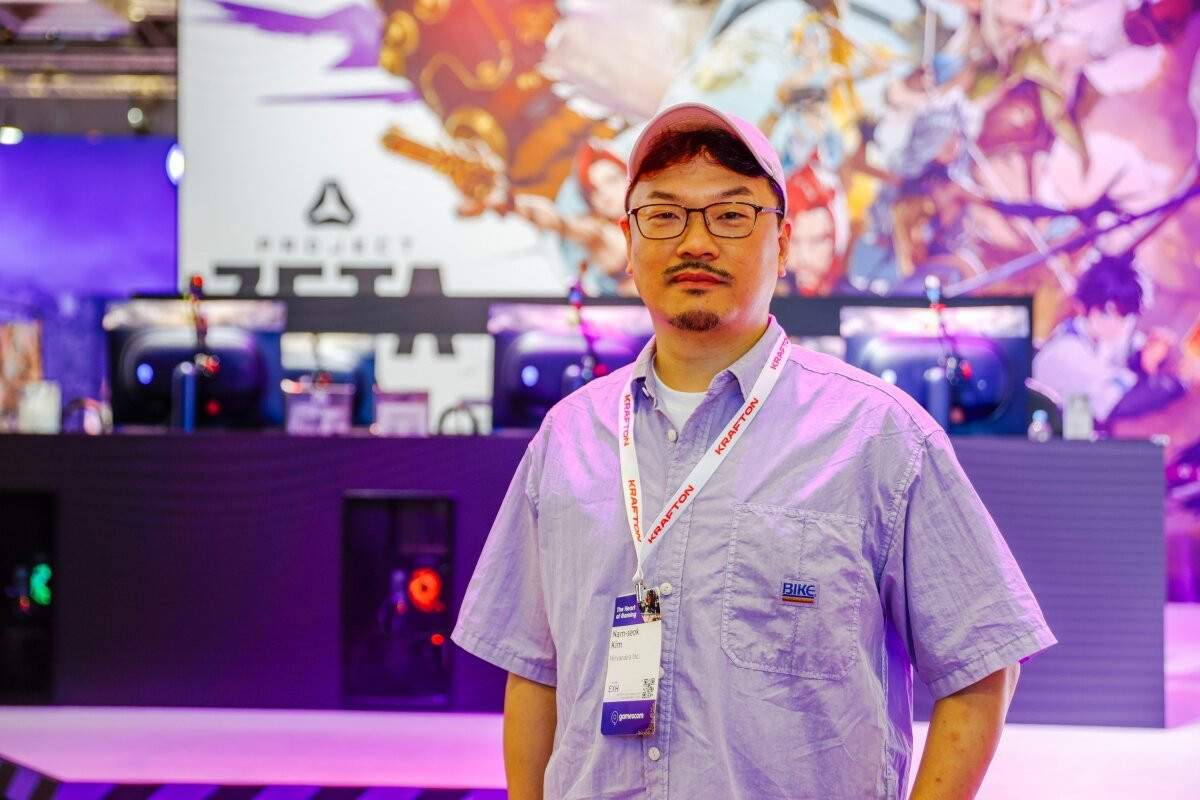
'Project ZETA' is a third-person multiplayer game where four teams of three compete over a core resource called the 'Prism' on the 'Aran Plateau.' Teams earn 1 point by depositing a Prism into the 'Stabilizer' at the center of the map, and the first team to reach 5 points takes 1st place. Namseok Kim, CEO of NIRVANANA, likened this to basketball, explaining that the Prism is the ball and the Stabilizer is the hoop. Matches last around 20 minutes.
Believing the game could not be defined by existing conventional genre labels, NIRVANANA created a new term: 'Multi-team Tactical Arena' (MTA).
A Genre Explained by Process of Elimination
First off, as CEO Namseok Kim explained, 'Project ZETA' is not a MOBA. There is no laning phase, no base, and no Nexus. Instead, all players act like junglers, taking strategic routes from the start of the game to gain positional advantage, entering objective-focused teamfights as early as 2 to 3 minutes in.
"The core fun of MOBAs ultimately comes from growing cleverly and winning teamfights," Kim explained. "We preserved that core while designing the game so four teams compete in real time, increasing both the frequency and density of teamfights." The company added that thanks to the four-team structure, players can go beyond traditional MOBA pentakills to achieve 10 or more kills, earning a 'Decakill.'
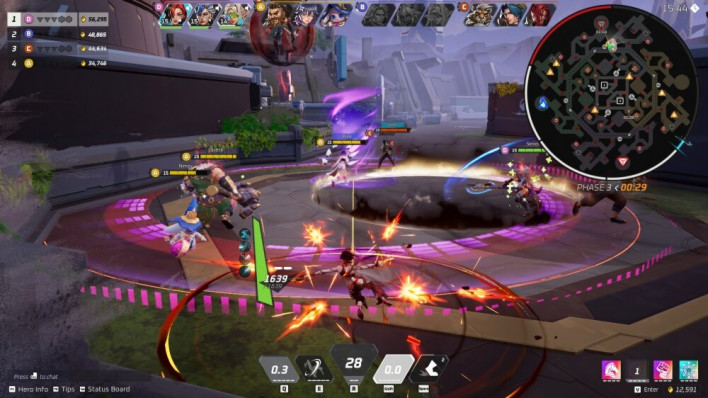
It is not a battle royale either. While it features real-time multi-team PvP, it does not adopt a limited-lives survival format. On this point, Kim cited lessons learned from their previous title. "Before Project ZETA, we made a battle royale MOBA, but combining limited lives with hero progression naturally, structurally, and inevitably caused players to play passively," he said. "That became our motivation to build ZETA."
In other words, despite having more participants per match, there was a paradox where multikills and teamfight frequency actually decreased. ZETA abandoned battle royale mechanics in favor of a score racing format. As a result, the game secured infinite respawns and a short time-to-kill (TTK), encouraging bold and assertive plays.
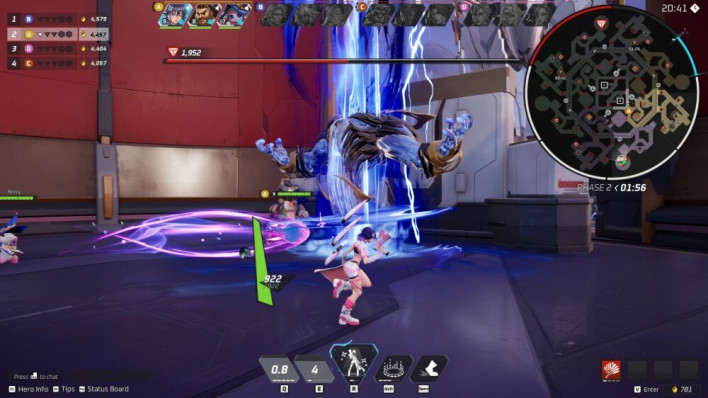
It also draws a clear line against hero shooters. There is no reticle, camera direction and character direction are decoupled, and basic attacks hit automatically. The design is intended to let players focus on reading the battle situation, positioning, teamwork, and skill usage, rather than expending energy on manual aiming.
"Rather than a shooter, it is closer to a 3D fighting game—a battle of timing and psychological warfare based on predicting, moving, and attacking," Kim said. "We aim for a combat experience with back-and-forth offensive and defensive turns where you steal the opponent's turn and execute your attack during yours." The slogan is 'Predict, Dash, Dominate.'
Boldness Created by 'Fighting Spirit'
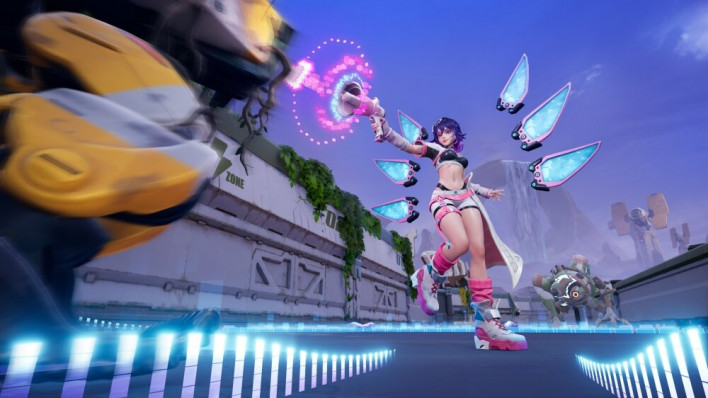
At the center of this design lies the 'Fighting Spirit' system. When a team eliminates all three members of an opposing team, dead teammates are instantly revived on the spot, and all surviving members have their skill cooldowns and health 100% restored.
Creative Director Junseong Kwon pointed to structural challenges in multi-team matches as the reason for introducing the system. "In multi-team battles, players tend to hesitate, avoid engagements as much as possible, and wait to third-party," he said. "Led by short TTK and the Fighting Spirit system, we are seeing cases where teams boldly take down an enemy first and then immediately defeat follow-up teams." He explained that this mechanic was designed to ensure intuitive and stylish play is rewarded.
Most of the player clip examples CEO Kim shared during the first Global Community Test (GCT1) were about Fighting Spirit. Highlights included triggering Fighting Spirit by eliminating two teams in succession, or winning a fight near the Stabilizer to resurrect the entire squad. Kim shared that an overseas streamer commented positively on how, unlike battle royales where dying means sitting out, this game lets players continuously revive and keep fighting.
Data backing up these claims was also released. In GCT1 held in late June, among matches without surrenders or leaves, the highest multikill was 11 kills, and matches with 10 or more kills accounted for 1.1% of the total. The average number of multikills per match was 4.4—meaning that in traditional MOBA terms, a quadrakill or even higher, like a hexakill (6 kills), occurred almost every game. The average number of teamfights per match was 18.3 (with a maximum of 34), and Fighting Spirit was triggered an average of 16.5 times. Kim calculated this to be roughly 0.85 teamfights per minute.
"After nearly four years of development, this was the first global test where we could verify data like this," he said, emphasizing its significance.
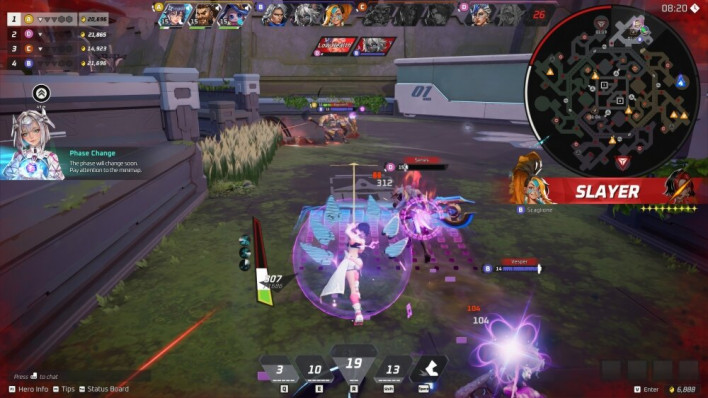
The test also left homework behind. Early departure—where one team reaches 5 points first and exits the game early—occurred in about 50% of matches. "It was a test with severe matchmaking imbalances," Kim diagnosed. "Early departure should ideally happen in a closely contested match as the leading team pushes for victory, but that wasn't the case here."
The root issue was that many early departures occurred without two or three teams fiercely competing for the finish line. He summarized, "A closely fought match changes the entire meaning of an early departure."
Creative Director Kwon stated that when playtested internally with balanced teams, early departure occurred in less than one out of ten games, noting that a low frequency is their goal. Nevertheless, if an early departure does occur, they will acknowledge it as a match with broken team balance and are reviewing mechanics to end the game early, such as compressing remaining phases or concluding via a vote.
This same issue was where player dissatisfaction was concentrated during GCT1—the experience of early gaps in skill or progression snowballing into the late game. CEO Kim revealed several of the dozens of solutions being prepared. They plan to separate solo queue and duo queue as much as possible, match players by skill bracket, and introduce an early 'safe placement' buffer to help players adapt.
To give trailing teams opportunities when leading teams make mistakes, the enhanced Prism stage—which requires eliminating enemies to create—will be moved forward from 4 points to 3 points, with increased supply. Adjustments will also ensure that the leading team's Prisms decay faster when carried. Additionally, in PvP matches transitioning to normal matches, ranking points will be awarded to 1st and 2nd place while deducting points from 3rd and 4th place, adding actual value to finishing 2nd.
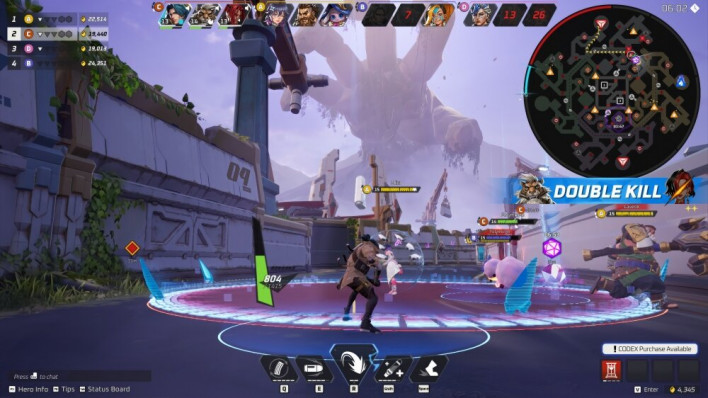
The map has already undergone a full overhaul once. Following a small-scale Korean test early this year, the total number of participating teams was reduced from 5 to 4, leading to a complete revamp of the map. Kim stated this change was aimed at optimizing teamfight density, speed, and predictable routing, firmly asserting, "We will not go back to 5 teams."
Regarding whether a strategy of sniping carrier teams without carrying Prisms oneself is viable, Kwon admitted that while theoretically possible and partially valid, balance mechanics are in place. Securing Prisms or taking down major objectives grants powerful buffs and growth resources to the last-hitting team; thus, continuously relying solely on sniping causes a team to fall behind in combat power due to objective reward disparities.
Furthermore, while 2 out of the 5 required points can be scored normally, the remaining 3 points must be scored using enhanced Prisms obtained by eliminating opponents. Without securing advantages in earlier objective fights, scoring becomes increasingly difficult later on. Kim summarized, "Ultimately, it means it is possible, but you have to execute it extremely well to get the outcome you want."
Regarding hero balancing, Kwon emphasized composition characteristics. Compositions are designed with distinct advantages depending on early-, mid-, or late-game timing, strength in objective fights, or strengths in Prism transport and Stabilizer control. "In a 1v1 team format, a dominant composition could be hard to counter, but because there are four teams, they will end up countering each other," he noted, explaining that the multi-team structure itself serves as a balancing tool.
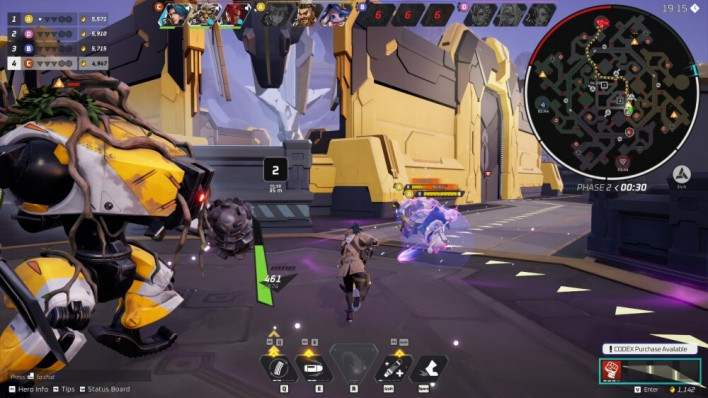
In response to feedback that the game's progression could be confusing for newcomers, real-time navigation was presented as the solution. Kwon explained, "We provide a navigation guide for generally solid strategies based on various in-game situations, even if it's not the absolute optimal play." By following it, players can make strategically meaningful moves, learn hero progression and combat along the way, and adapt faster. This vision will later be complemented by top-tier replay viewing features and community guides.
CEO Kim offered a slightly different perspective. "I believe the best tutorial is the experience of fighting intensely over a Prism boss in Phase 2 or Phase 3, whether you win or lose by a hair," he said.
The issue of conflicting strategies among teammates was also raised. Kim acknowledged there is no single right answer, but noted that placing two major objectives per phase to pinpoint strategic goals and displaying floor pathfinding guides after the early Korean test dramatically reduced instances of players wandering aimlessly. Improvements to communication tool UI/UX, such as pings and voice chat, are also planned.
Kwon added an element of information warfare to this. Mentioning he drew inspiration from board games, he explained, "Strategies are formed based on public, hidden, and indirect information. If used effectively, you can get a clear picture of other teams' positions and statuses, sometimes pinpointing the locations of all three competing teams." Even if allies disagree, mechanics like long-range ally revives allow players to act on their individual calls before regrouping. However, he admitted, "If opinions split to a truly extreme degree, there's no complete fix."
ZETA's Answer to Spectator Appeal
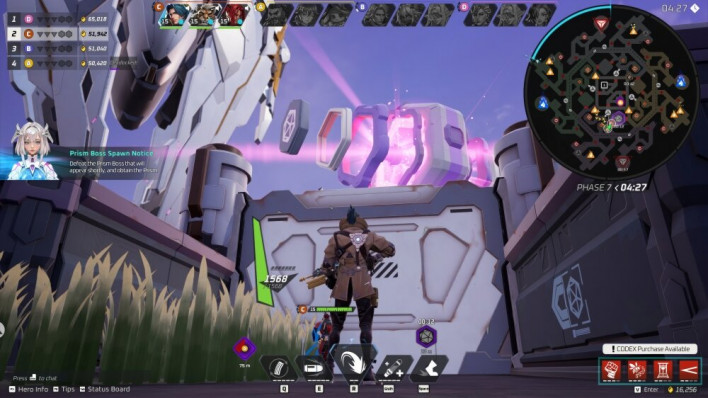
During GCT1, feedback suggested that being third-person while having long dash cooldowns and slow movement speed compromised spectator appeal. However, Kim stated they would not change their core direction. "We don't view this as a game that must be hyper-fast simply because it's third-person," he said. Citing Overwatch esports as an example, he added, "A player's super play ultimately hinges on aim, but when zoomed in via camera, viewers don't have time to process it."
He compared it to how Valorant initially struggled for popularity in Korea when compared to Overwatch. His logic is that if the combat situation changes too fast, viewers cannot read the flow. For a third-person game to succeed as an esport, spectators must clearly see who used what skill, how crowd control landed, who followed up, and who dodged.
Creative Director Kwon categorized spectator appeal into two types. One is stylish, fast-paced thrill; the other is narrative and super plays that viewers can clearly appreciate. ZETA focuses heavily on the latter.
Feedback that basic attacks felt sluggish was accepted. Kim noted, "When we analyzed it, the basic attack animation structures and hit timings in a third-person back-view game were built using MOBA grammar," announcing a complete overhaul. Dash cooldowns will also be reduced so players can dash roughly twice during prolonged skirmishes. However, he emphasized, "Shifting the game's core style toward a hyper-fast hero shooter would destroy ZETA's identity, so we won't do that."
Concerns were also raised that the third-person back-view with a freely moving camera could pose a barrier to entry for casual players. CEO Kim answered that this is standard grammar in action games. "If the camera and character directions are locked together, you have to turn the camera away when kiting while fighting, losing sight of your opponent. Then you have to realign the camera to attack again," he said. "I disliked that." Keeping the camera on the battlefield while moving only the character allows players to evade while maintaining focus on enemy attacks. He added that most action games decouple camera and character movement to keep focus on the opponent.
Creative Director Kwon saw this as raising the ceiling for super plays. Plays like feigning retreat by running backward while monitoring the field with the camera, knocking back an incoming assassin, maintaining distance, and targeting another enemy first are difficult to pull off with traditional FPS or TPS camera mechanics. "While difficulty rises slightly, we believed the payoff would be much higher," he said. "We attempted this to spark a virtuous cycle where high skill-ceiling super plays go viral, build momentum, and feed back into the matchmaking pool."
"Rapid Hero Additions, Variations on the Map"
The hero roster was tested with 14 heroes during GCT1. For the second Global Community Test (GCT2), two new heroes will be added—righteous, hot-blooded mecha warrior 'Nova Crash' and cold-blooded assassin 'Azrael'—bringing the total to 16. The launch roster is expected to be around 17 heroes, though this is not finalized. Kim pledged to significantly accelerate the hero update cadence, pointing to his personal frustration when games he loved added heroes too slowly and his team's previous experience releasing new characters every two weeks.
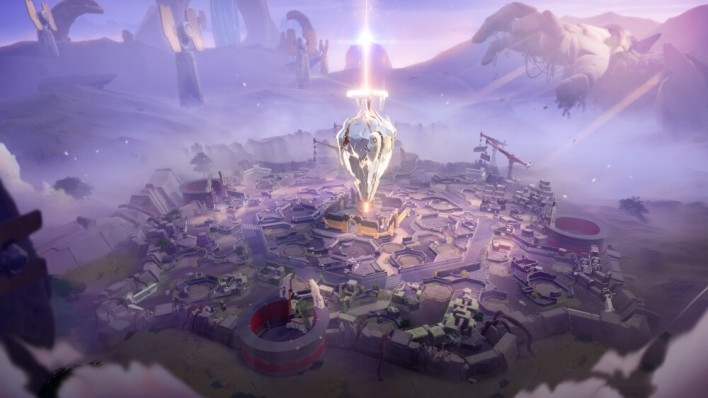
The game will maintain a single map. Rather than adding multiple maps and rulesets, Kim explained that they prefer introducing variations to one map. "We want a map that delivers strong late-game strategic and operational fun rather than just tactical skirmishing," he said. Instead of changing the entire map, they plan to adjust major teamfight zones or boss patterns to rotate the meta, allowing players to figure out which heroes excel in a given season.
New modes remain in the idea phase. While 1v1 team battles or solo drop-in warm-up modes are under consideration, Kim emphasized that polishing the main battlefield remains the top priority.
Controller support is another core pillar of the game. CEO Kim revealed that from day one of development, combat, controls, and UI/UX were designed simultaneously for both keyboard/mouse and controllers. The goal is gameplay where controller players do not have to accept disadvantages compared to keyboard/mouse players as inevitable.
Creative Director Kwon cited the game's reliance on movement rather than aim and headshots to counter enemy skills as support for this approach. While keyboards rely on directional keys, gamepads use analog sticks for 360-degree movement, making gamepads arguably more comfortable for moving. Conversely, keyboard and mouse offer faster camera control. On top of this, rather than auto-aiming skill hits, an aim assist system aligns the reticle with the opponent's initial position; while usable on keyboard and mouse, it particularly enhances controller accessibility.
Currently available only on Steam, controller usage accounts for less than 10% of players. Kim noted, "Some players responded that ZETA is the first hero skill-fight game where controllers can perform at this level. I even believe controllers hold a significant advantage over keyboard and mouse for melee characters."
'Project ZETA' is the confirmed official title. Kim explained that the name originates from a project launched by 'Callipolis,' the shadow organization within the game's lore. The lore dictates that assembling heroes from around the world to close the dimensional storm hovering over the Aran Plateau is the project's primary mission.
NIRVANANA is a studio founded in 2022, and 'Project ZETA' is its debut title. In March 2023, it entered into a global publishing partnership with Krafton—marking Krafton's first global publishing deal with an external developer. At the time, Krafton targeted a 2025 release, but the official launch date is currently unannounced. The development team consists of around 70 personnel, who have dedicated nearly four years to this project.
When asked about the chances of establishing themselves in the market, Kim was not overly optimistic. "Almost every game that challenged the MOBA genre has failed," he acknowledged, while adding, "If League of Legends has held the top spot for 15 years, isn't it about time for something new to emerge?" His diagnosis was that the moment battle royale elements are introduced, passive play creeps in, veering away from the genre's core appeal. He added, "A game that lets players experience the core fun of the genre more frequently and densely in a shorter time will eventually emerge as a new MOBA alternative, even if it's not us."
He acknowledged that success also requires luck. Kim concluded that "the core is holding out until it works," emphasizing that rather than keeping the game hidden before launch, adopting an open development approach—continuously sharing the game with players despite its shortcomings and listening to their feedback—is key to boosting their odds of success, even by 1%.