
'007 First Light' has received strong praise since its release last May. IO Interactive, creator of the 'Hitman' series, reinterpreted the massive 007 IP in its own distinct way, earning acclaim for stealth and action gameplay alongside its execution of a new 'James Bond.'
Particularly striking was the character of James Bond himself. Bond in '007 First Light' is neither Sean Connery, Pierce Brosnan, nor Daniel Craig. Featuring actor Patrick Gibson as his new face, he is far younger and less experienced than the fully formed 007 we know so well. Even so, watching the game's protagonist naturally makes you think, "That's James Bond."
So where does that "Bond-ness"—shaped through novels and films over more than 70 years—come from? How could a young man who isn't even 007 yet, without replicating the face of a specific actor, be made to feel like James Bond?
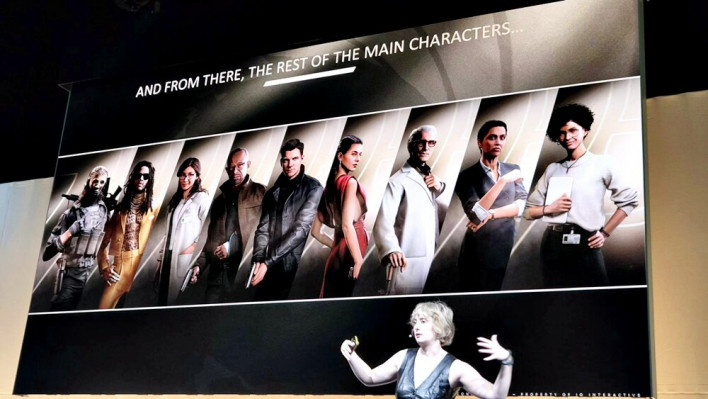
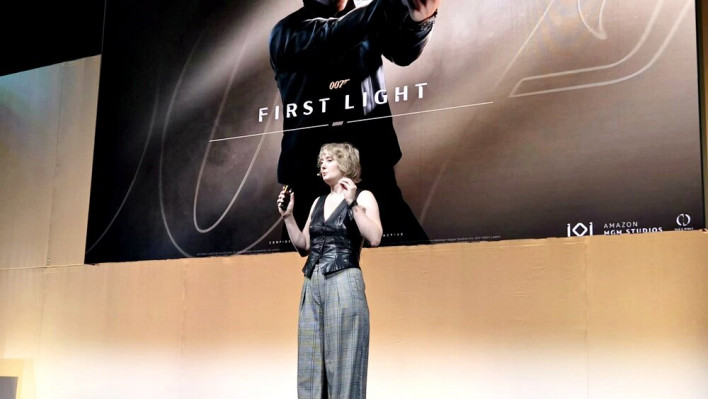
At gamescom dev in Cologne, Germany on August 24, IO Interactive Lead Character Artist Beatrice Harty took the stage to share the story. Leading the character design for '007 First Light,' she detailed the process behind bringing James Bond and other key characters to life.
Studying 70 Years of History to Create 'Our Bond,' Unlike Any Other
When Harty joined IO Interactive about four years ago, she was not someone who knew everything about James Bond either. Knowing the character only through a few movies, her first task was to study the IP itself. Digging into specialized books on how movie costumes were made, she immersed herself in over 70 years of James Bond history.
Originating in Ian Fleming's 1953 novel 'Casino Royale,' James Bond spanned countless books and films, with various actors portraying Bond in their own distinct ways. As eras changed, Bond's image evolved continuously. Creating a new Bond was therefore not as simple as picking one past portrayal and porting it directly into a game.
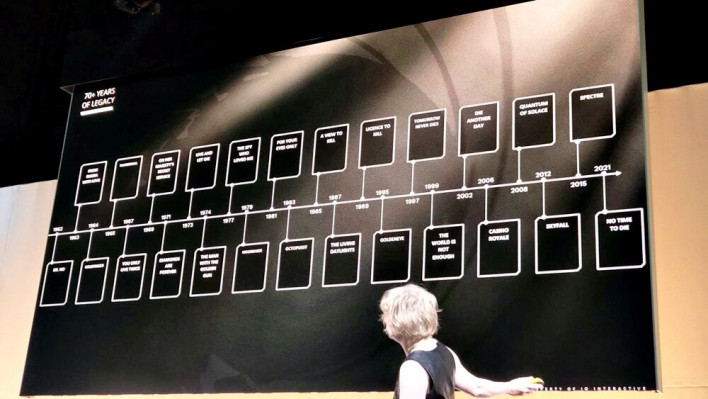
Indeed, replicating an existing Bond was not what IO Interactive wanted either. '007 First Light' does not base itself on a specific film, but explores a James Bond in a new universe, where familiar characters like Q and Moneypenny are reimagined through IO Interactive's own interpretation.
"We wanted to build something new in this world. We had no intention of making a direct film adaptation. It's not Sean Connery's Bond, nor is it Daniel Craig's Bond. We wanted to create our Bond, and our own interpretation of the characters that populate Bond's world."
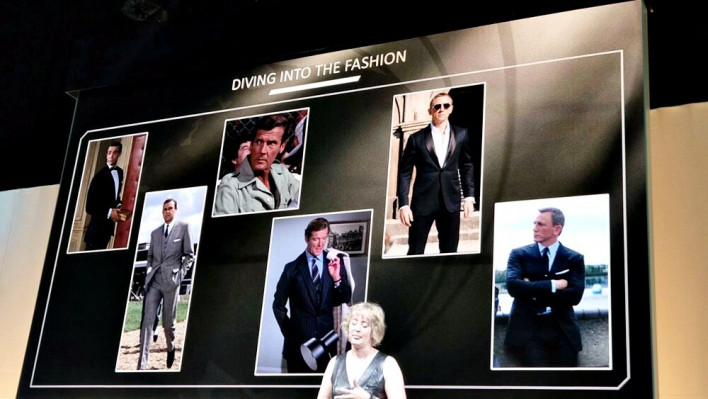
Yet creating something new did not mean discarding the image 007 had built up over decades. What Harty emphasized in particular was "fashion." A world slightly more glamorous and sophisticated than reality—sharp suits and gowns, Aston Martins and Omega watches, high-end resorts and VIP parties difficult to visit ordinarily—forms a crucial part of the 007 IP.
She described this as a form of "escapism." Visiting locations one could normally never go to and navigating exclusive spaces with supreme confidence is the very fantasy James Bond has delivered for so long. Even when creating a new Bond, the sense that players step into that world and naturally belong there had to be maintained.
The Man Before the Suit: James Bond Prior to Becoming '007'
The challenge was that '007 First Light' does not begin with that familiar James Bond. Rather than depicting a cynical, veteran 007, the game tells an origin story of a much younger James Bond experiencing events that transform him into the figure we know. Harty described him as "the man before the suit and tuxedo." He still holds an optimistic worldview and is neither as cynical nor as cold as the Bond he will become.
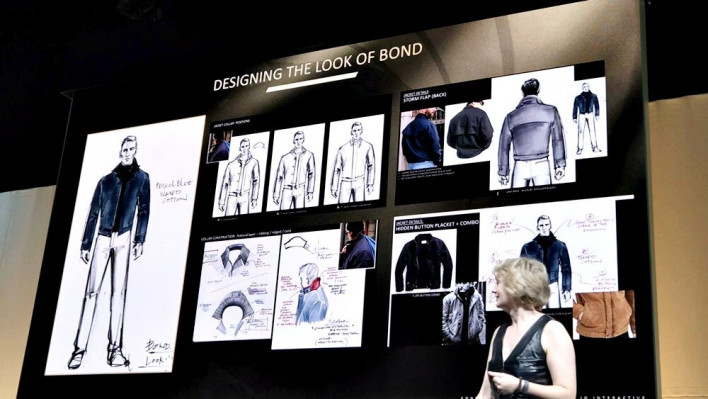
To visually convey this growth, the development team made a bold choice. They chose not to put him in a suit from the very beginning—one of the first images that comes to mind with the name James Bond.
"Many players likely expected to play in a suit right from the start. But if you do that, there's nowhere left to go. Because from the start, he would already be a 007 agent with all that confidence intact."
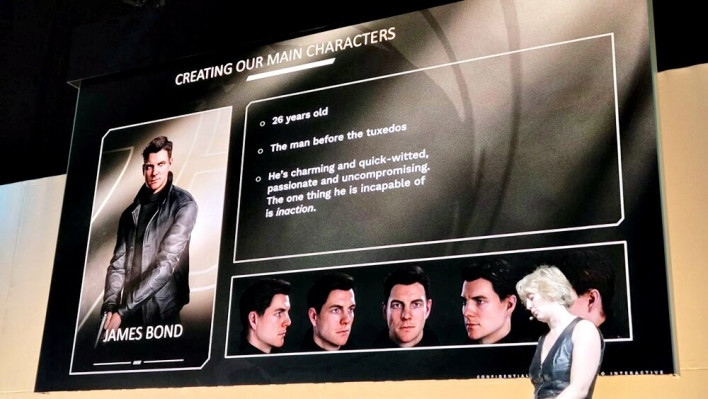
Instead, they continually evolved Bond's appearance throughout the game. Early in development, they designed around 15–20 unique outfits just for Bond, creating variations where the same garment could be opened or closed depending on the situation. Changes such as clothes getting wet or dirty based on in-game events were also factored in. At the end of this entire journey was finally the 'suit-wearing James Bond' we know.
Only after surviving countless trials does Bond earn the confidence to wear the suit. Thus, the familiar suit is not merely character attire, but the culmination of his growth. Rather than presenting a completed 007 from the outset, the design guides players to reach that milestone themselves.
Character transformation extends beyond attire. A wound on Bond's cheek early in the game gradually heals as the story unfolds, and his hair grows, changing his hairstyle. Notably, the facial scar stems from a detail even older than the films. In Ian Fleming's original novels, Bond had a scar on his cheek; while rarely featured in the movies, IO Interactive integrated this detail into their new Bond.
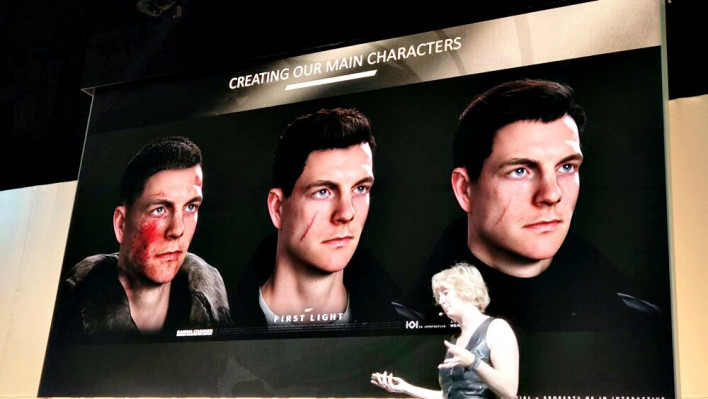
Harty explained that it is fine if players do not consciously notice every single change. What matters is that these subtle details accumulate to create the sense that the character is truly passing through time and experiencing events.
This process also benefited from the expertise of a professional who created Bond's actual film wardrobe: Suttirat Anne Larlarb, costume designer for 'No Time to Die.' She participated in designing key characters for the game, collaborating to ensure the new looks still felt authentically "Bond." Her experience designing Bond for the big screen carried over directly to the game's new protagonist.
Reflecting Character Personality At First Sight
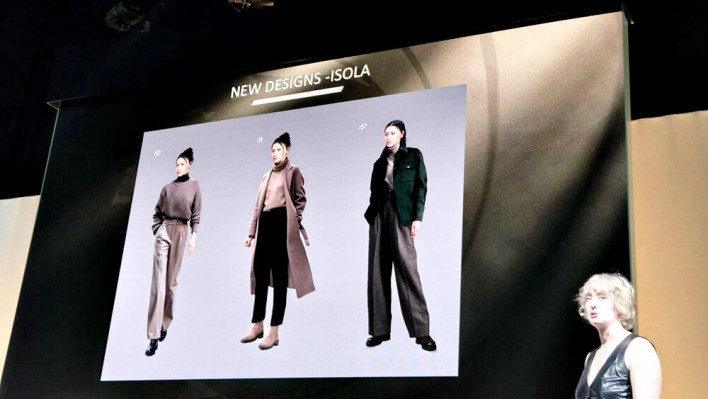
This design philosophy was not applied to Bond alone. IO Interactive first grouped and designed Bond alongside Isola, who stands at the narrative's core with Bond, and Greenway, who serves as Bond's mentor. While the three do not always act together, they form the emotional core of the story; establishing them as visual touchstones made it easier to expand other characters into figures belonging to the same world.
Isola assists Bond, but she pursues her own agenda, leaving it unclear early on whether she is an ally or an enemy. This instability is reflected in her physical silhouette. Her attire actively utilizes straight lines and sharp angles; Harty explained that while triangles and sharp forms convey a relatively uneasy impression, rounded, soft shapes and materials lend a more trustworthy feel. It is a method of conveying character traits through silhouettes and outfits before any dialogue explains who they are.
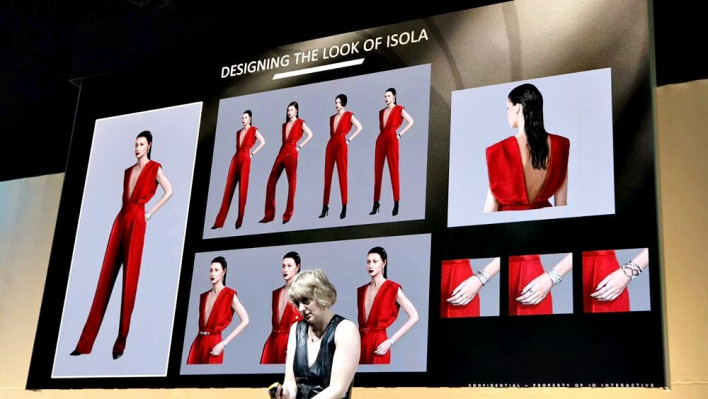
The final red outfit designed for Isola follows the same principle. It combines sharp, rigid elements with soft, draped fabrics, blending tuxedo-inspired details with a feminine silhouette. The waist design also incorporates an element reminiscent of a Japanese kimono's obi. This was a subtle touch embedding Isola's mixed Japanese and French heritage into her clothing without needing explicit narrative explanation.
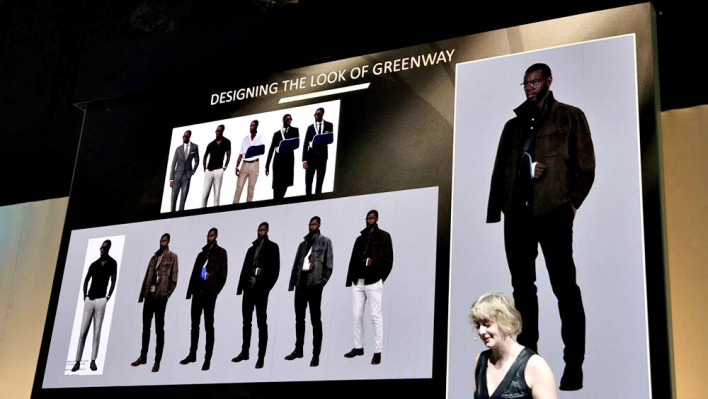
Greenway started from the opposite direction. A former field agent who has worked behind a desk for years, he is a traditional, cynical figure who clashes with the young, optimistic Bond. Initially, his personality is revealed through fully buttoned shirts, safe colors, and rigid, conservative clothing.
However, as his relationship with Bond evolves, Greenway's appearance changes as well. Influenced by Bond's optimism, his color palette brightens and his clothing materials and silhouette soften. Harty explained that this serves to reflect the Greenway from 10 or 20 years ago, when he viewed the world with more optimism. Character relationships and shifts in personality are communicated not just through dialogue, but through the clothes they wear.
More Important Than Looking Cool: Clothes That Make Sense In-Game
Character art does not end with creating cool concept images. In the latter half of her presentation, Harty cited the creation of Bond and Isola's attire for an Antarctica mission as an example, explaining that in real game development, designs constantly evolve according to gameplay and production constraints.
In that mission, the two infiltrate underwater in wetsuits before crossing sub-zero snowy terrain into a facility. Initially, the team designed outfits that could be worn under wetsuits or stored in small bags while still resisting the cold. Even in a game where some suspension of disbelief is allowed, a baseline of logic that players can buy into was necessary.
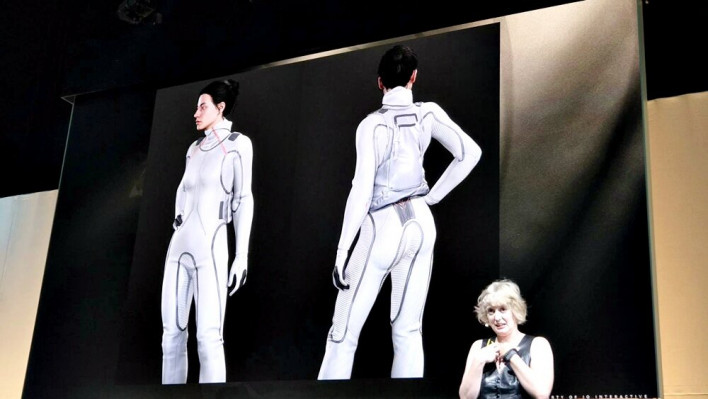
However, as mission development progressed, circumstances shifted. The indoor segment turned out much longer than originally planned, and having two characters in heavy outdoor gear wandering among office staff looked awkward. Nor could they force players to backtrack and change outfits whenever moving between indoors and outdoors. Ultimately, they had to revisit the design to find attire that looked natural both indoors and outdoors while ensuring proper character movement.
For Isola, another problem arose. By focusing heavily on practical attire, her signature sharp shapes and fashion sense vanished, making her look like a completely different character. After multiple iterations, they landed on a relatively simple solution—tying her vest around her waist—yielding a design that worked indoors and outdoors while preserving Isola's distinct silhouette.
The fact that it is a third-person game also impacted character design. Harty joked that while she loves shoes herself, players rarely look closely at a character's footwear in-game. The most critical areas are the face and upper body, where emotion and performance are expressed; given limited production time, more work naturally must be funneled where player attention is focused.
Still, not every situation can be anticipated in advance. An element thought unimportant might get a cinematic close-up later, or new gameplay features added during development might allow players to examine previously unseen details. Harty noted that because game development is an inherently iterative process, predicting every situation from the start is virtually impossible.
"Unexpected situations will always arise. Game development is such an iterative process that predicting every situation in advance is nearly impossible. The best approach is to secure enough time to fix problems when they occur or seize opportunities for improvement when you discover them."
Because He Wasn't the 007 We Knew, He Had to Be Even More 'Bond'
Character design for '007 First Light' ultimately began with a paradoxical challenge. IO Interactive did not want to create the James Bond we already knew. They did not replicate the appearance of a specific actor, nor did they start the story with a fully formed 007. Yet they could not simply create an entirely new spy who wasn't James Bond.
Therefore, the developers had to identify the core essence embedded in 70 years of 007 imagery. They retained the fashion, elegance, and fantasy of navigating a world seldom accessible in real life, while casting aside the likeness of any specific actor. Instead of dressing him in a tailored suit from day one, they crafted a process of earning the right to wear that suit, while integrating classic details—such as the novel's scar, rarely used in films—into their new Bond.
In the end, '007 First Light' demonstrated a method for reinventing a familiar character: not by simply replicating past portrayals, but by identifying and reassembling the core elements that truly make the character who he is.
In doing so, IO Interactive crafted a new 007 who resembles no prior James Bond directly, yet undeniably feels like James Bond.