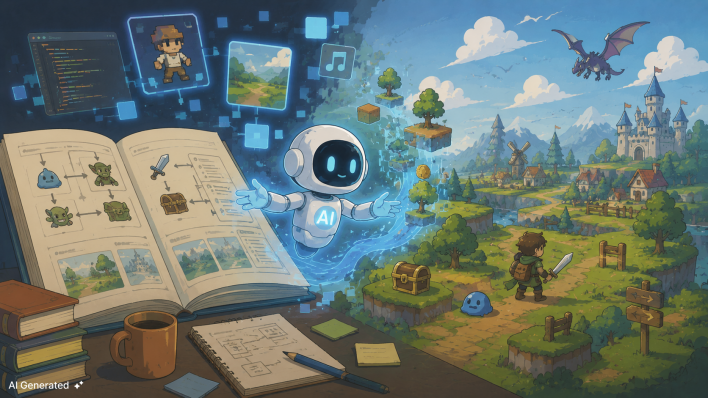
Generative AI has become the most common buzzword in the gaming industry. The predictions of tech-based prophets—that a time would come when anyone could easily create a game—have become reality. Having actually tried making a game, I found that a simple one took less than a day.
An hour was enough to set the genre and rules, and another hour to design the concept and gameplay logic. Even when my instructions were vague, the AI understood them perfectly, and after a few trials and errors, it took only half a day. The result wasn't complex, but it was of a quality worth releasing as a casual mobile game.
However, in retrospect, it felt a bit ambiguous to say the AI 'made' the game. While it is true that the AI handled all the coding, the game would not have functioned if I hadn't designed the specific values and logic. Conversely, if I had manually built the parts the AI handled, the game would have eventually been completed—it just would have taken longer.
This means the scope of the term 'AI game' has become blurred. Games containing art created by generative AI, or projects that used Claude or Codex during development, are all lumped together as AI games. But just because a developer used Claude to write code, it doesn't mean the result is a new form of game. It’s like not calling something a 'Photoshop game' just because you used Photoshop to create the graphics.
The recently published paper, 'AI-Native Games: A Survey and Roadmap,' introduces the concept of 'AI-native games' to clear up this confusion. The researchers analyzed 53 released games and prototypes, distinguishing between works that simply use generative AI and those where the core gameplay would not exist without it.
The criteria are relatively clear: if you remove the real-time generative AI or replace it with a traditional system, does the core gameplay collapse or fundamentally change? To explain AI-native games more simply.
An AI-native game is not a game that uses AI, but a game that would not function as a game if the AI were removed.
There is a difference between AI creating content and AI becoming the rules
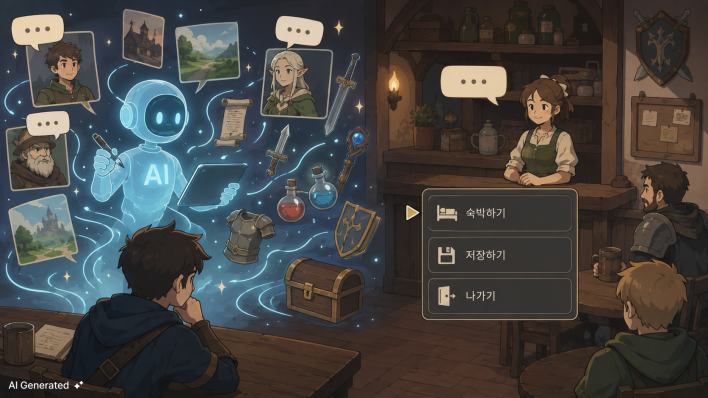
The easiest way to incorporate generative AI into a game is to have it produce content. You can write countless NPC lines, create variations of backgrounds and items, and expand on repetitive quest text. It is also effective for reducing time and labor during development.
However, changing the way content is created does not change the way the game is played. Even if a RPG innkeeper generates different dialogue every time instead of using a fixed greeting, the rules of the game remain the same if the only things a player can do at the inn are sleep and save. If armor made by AI and armor made by a human both provide 20 Defense, that is merely a change in the production process.
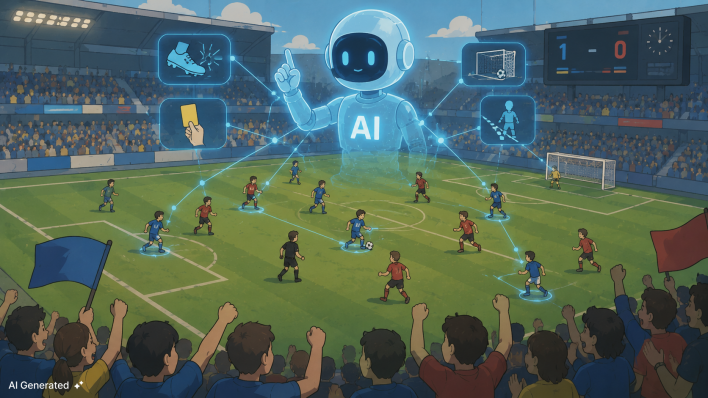
To use a soccer analogy, even if AI creates the scoreboard graphics, player introductions, and real-time commentary, the goal of the game is still to put the ball in the opponent's net. AI enriches the match, but it doesn't change the rules of soccer. Conversely, if AI interprets a player's spontaneous actions and judges whether it's a foul or a goal, the AI becomes less of a commentator and more of a referee. It is no longer just enriching the content of the match, but becoming an entity that determines how the match itself proceeds.
The same boundary exists in games. There is a difference between the stage where AI makes NPC expressions diverse and the stage where it expands the range of actions a player can take. The former enriches pre-existing choices; the latter allows the game to accept actions that the developer did not explicitly create as options.
Therefore, the claim that "you can say anything to a NPC" is insufficient. If the conversation has no impact on quests, relationships, the economy, or the state of the world, it may be an excellent chatbot, but it is not a new game rule. The question for an AI-native game is not what the AI created, but what the player is now able to do that they couldn't before because of the AI.
From multiple-choice to subjective: Experimental games on the boundary
Traditional games are like massive multiple-choice tests. Even games that seem free, like open-world titles, have actions that fall within a range predefined by the developer. You press 'Open' in front of a door and select prepared dialogue in front of a NPC. Even if there are thousands of choices, you cannot perform an action that hasn't been implemented.
For example, in a situation where you need to get past a guard, you might have the options to offer a bribe, show a fake ID, or start a fight. However, a plan like "trick the guard into leaving their post by claiming the stables are on fire, then sneak in by hiding in a barrel" cannot be executed if that option doesn't exist.
AI-native games aim to change this multiple-choice structure into a subjective one. When a player presents their plan in a sentence, the AI interprets the meaning and determines the result based on the game's situation and rules. Instead of finding a pre-prepared answer, the player creates the answer themselves.
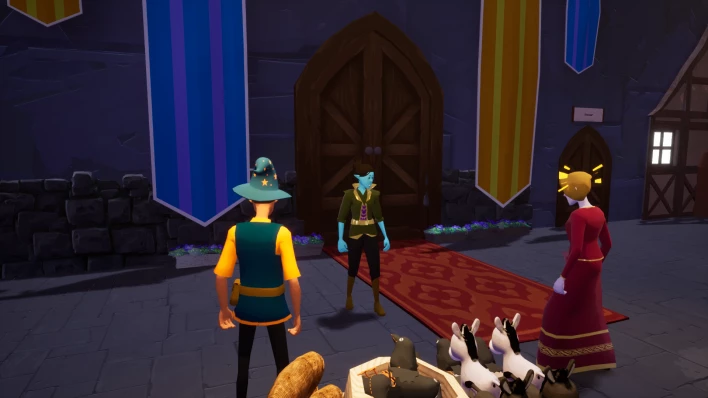
In 'Retail Mage,' the player becomes a magic shop employee and solves customer requests. Instead of just selecting fixed interactions, players can try actions they think of, such as tearing a page from a book to make a note or drawing a new picture on the back of an existing one. The AI understands what the player is trying to do and connects the result to the game.
In 'Infinite Craft,' you combine elements like water and fire to create new concepts. The key isn't that the AI generates many item names; it's that the AI determines what is created when you combine two concepts not found in the existing combination table.
'Succubus Up!' is a game where the player becomes a vampire and persuades people to let them into their homes. Instead of picking pre-written lines, you talk to them directly, and the jokes or lies you choose become your strategy for success. The AI handles not only the opponent's dialogue but also the interactions linked to whether the persuasion succeeds.
In Korea, Lullaby Games' 'Uncover the Smoking Gun' showed similar potential. Instead of selecting prepared questions for a robot suspect, the player inputs sentences directly. While the case, evidence, and truth are designed by the developer, the player is free to decide which contradictions to pursue and how. The AI accepts these free-form questions as interrogations within the game.

These works did not leave all content and rules to the AI. Rather, within a structure built by humans, the AI interprets actions that existing games could not represent as choices. The potential of AI-native games lies not just in generating infinite stories, but in enabling players to present answers that the developer did not write in advance.
AI-native games from today's perspective
However, current AI-native games are not a clear blue ocean that one should jump into right now. From a structural perspective, the biggest challenge in creating an AI-native game is not making the AI free; it is binding an overly free AI within the game's structure.
Generative AI can give different answers to the same question, forget settings, or invent facts that don't exist. If this uncertainty is not controlled in a game, the player cannot learn the rules of the world. If an action that worked yesterday fails today for no reason, or if all problems can be solved just by talking well, strategy and progression lose their meaning.
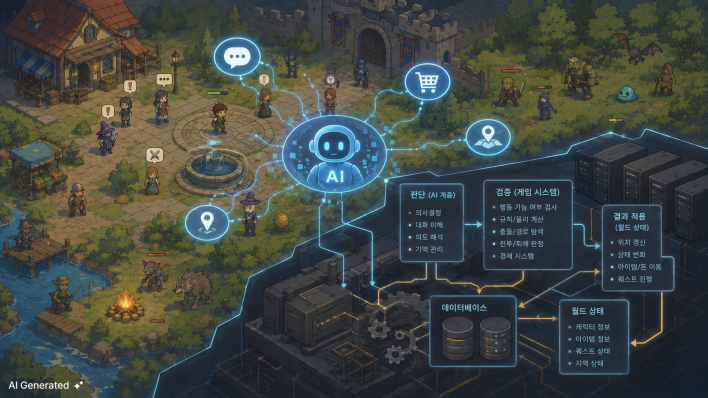
For this reason, realistic AI-native games do not give the AI full authority. When the AI understands the player's sentence and suggests the meaning of an action, the game server checks if it is actually possible.
Suppose a player inputs, "I will roll a barrel to lure the guard, then break in through the window." The AI might interpret this as actions of creating noise, luring the guard, and entering through a window. However, whether there is a barrel nearby, whether the window is open, and whether the guard can hear the noise are calculated by the existing game engine. There is a reason why such a complex structure is inevitable.
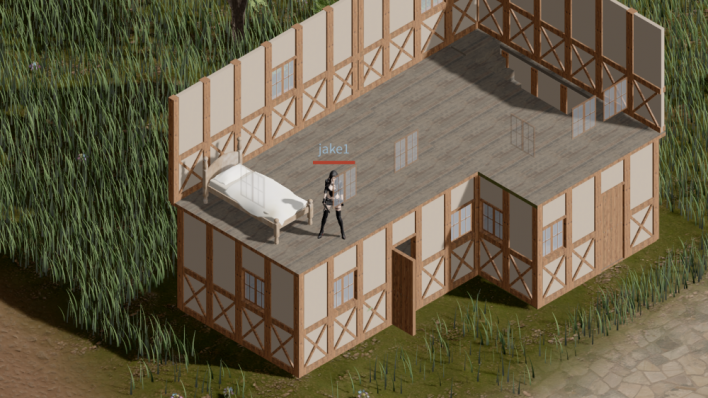
'OpenMMO,' recently unveiled by developer Jake Song, is a prototype created to experiment with the potential of an AI-centric MMORPG. Introduced as a project where most of the development process was conducted using generative AI, it is also a case study showing what structure an AI-native game must have in reality.
And in the post-mortem of this process, we can see that developing an MMORPG using AI is intertwined with realistic 'inference economics.' If an AI NPC continues to think even when no one is watching, the call costs increase rapidly. OpenMMO does not call the AI when there are no people around or when NPCs are asleep, and repetitive attacks are handled by standard programs. It aggregates similar events to deliver them at once and limits the number of AIs operating simultaneously.
Creating a vast world and making thousands of people within it think constantly are two completely different problems. The former is the cost of creating content, while the latter is the operating cost of the AI needing to infer continuously. Thanks to procedural generation and AI development tools, the cost of creating worlds is decreasing, but the cost of having thousands of NPCs maintain long-term memory and continue to infer increases as the number of players grows.
In OpenMMO, AI characters connect to the same world as human players, walking, fighting, trading, and acting according to the situation. High-level judgments—such as who to talk to, where to move, and whether to fight or flee—are handled by the AI.
On the other hand, actual movement paths, collisions, attack success, damage, and the transfer of money and items are handled by the game server. An AI can decide to "attack that monster," but it cannot delete the monster instantly. A merchant can suggest a discount, but cannot hand over an item beyond the range allowed by the server. If everything were to operate solely through AI without 'fixed facts,' the cost of those inferences would be unsustainable.
Of course, as open models and local computation advance, the burden may decrease. However, even if a model is released for free, the costs of GPUs, electricity, and server operations do not disappear. Ultimately, the realistic answer for the time being, like OpenMMO, lies in a hybrid structure where the AI does not calculate the entire world, but rather the existing game system supports the world while the AI handles interpretation and judgment at critical moments.
A proposal toward a new grammar for games
This is why most AI-native games that have appeared so far are small in scale. They test the AI's freedom within limited spaces, a small number of characters, and relatively clear goals. Worlds like large-scale online games, where numerous AI characters remember and act over long periods, have yet to solve the problems of cost, latency, consistency, and safety.
Therefore, it is difficult to view current AI-native games as a completed future. We have not yet reached the stage where AI accurately understands every player's intent, applies the world's rules consistently, and operates for long periods at a cost that commercial games can afford.
The researchers also do not define 'AI-native' as a new genre like FPS or RPG. Rather than referring to a specific genre, AI-native is closer to a new design paradigm that describes how a game accepts player actions. It means that RPGs, strategy games, and puzzle games can all become AI-native.
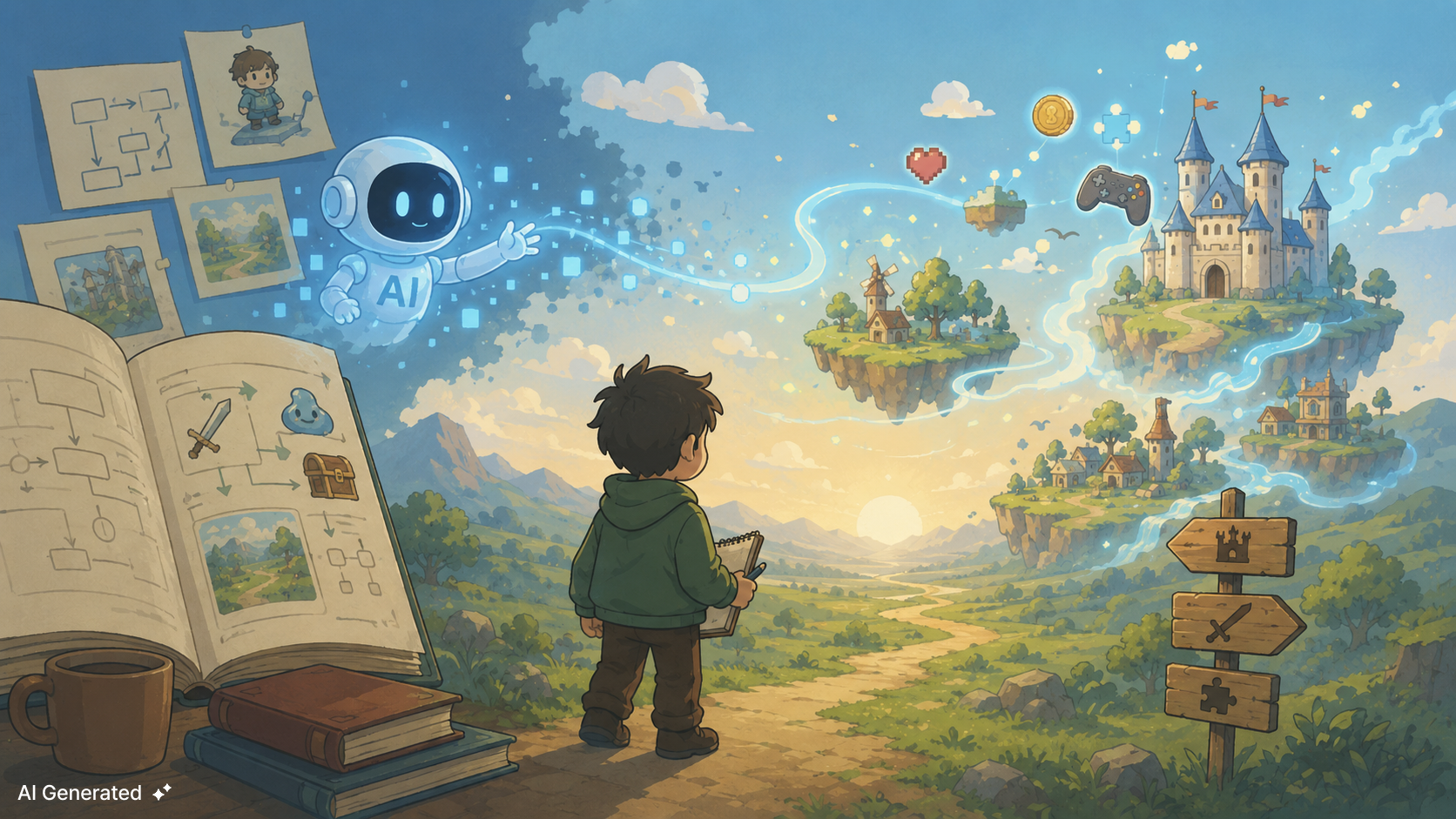
New genres and grammars usually do not appear in a finished form. They become a movement only when multiple developers experiment with similar possibilities in their own ways and a common language emerges to describe those attempts. AI-native is not yet a finished genre, but rather a new design method that asks how much games can change.
If traditional games were 'multiple-choice,' where you pick one of the answers prepared by the developer, AI-native games are closer to 'subjective,' where the player writes the answer themselves and the game reads it. The technology to grade those answers accurately and stably is not yet complete. Nevertheless, in that we have begun to view AI not as a tool to create more content, but as a rule that turns a player's imagination into in-game actions, AI-native games can be an important starting point for the future of game design.