When hearing the genre name MMORPG, the first words that come to mind are likely time investment, monetization, and player killing (PK). Even when trying to start a game, players often hesitate, asking themselves how much time they need to dedicate or how much money they must spend to avoid falling behind.
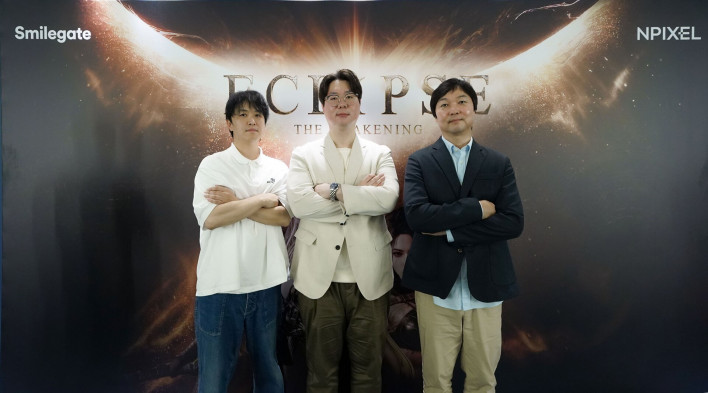
Amid these concerns, 'Eclipse: The Awakening', published by Smilegate and developed by NPIXEL, focuses on stripping away a layer of hardcore friction from the MMORPG genre. The developers explain that the title aims for 'MMOLite,' lowering the burden of play while fully preserving the genre's depth. Here is a preview of 'Eclipse: The Awakening', a game dreaming of a lighter MMORPG, as revealed during its media showcase held on the 22nd.
Choosing an original story over a myth-based narrative
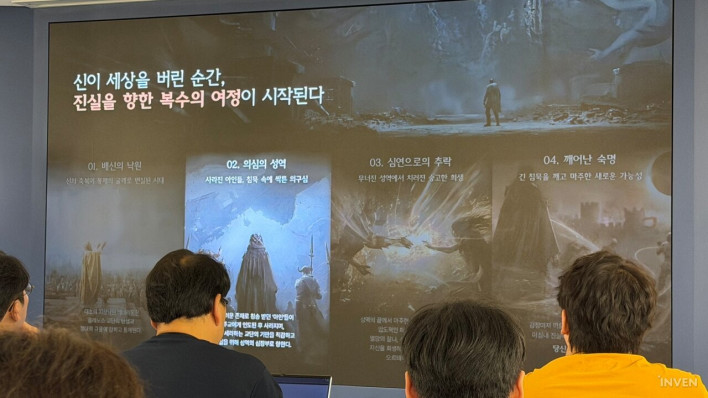
Executive Producer Sang-moon Lee opened the presentation by explaining that Eclipse: The Awakening adopted an original story rather than relying on traditional mythologies like existing MMORPGs on the market. He shared that players will embark on a vengeful journey toward the truth through a narrative arc spanning the Paradise of Betrayal, Sanctuary of Doubt, Fall into the Abyss, and Awakened Destiny.
Art Director Dong-hyuk Kim added regarding this decision, "Traditional mythology-based storytelling has clear limitations because character frameworks and story events are already predetermined. We wanted to interpret the phenomenon of Eclipse through our own original narrative and details. To make it as familiar as possible for players, we designed the experience so they can naturally immerse themselves in the narrative—not just through simple cutscenes, but by utilizing every in-game element, including the Sanctuary."
Set in Ederion, a world that seemed complete under divine blessing, the game unfolds its narrative around Seraha, a priestess of the Order. Seraha's journey—facing the truth of the world through her own choices rather than divine will—serves as the central thread traversing the game's lore.
Toward MMOLite
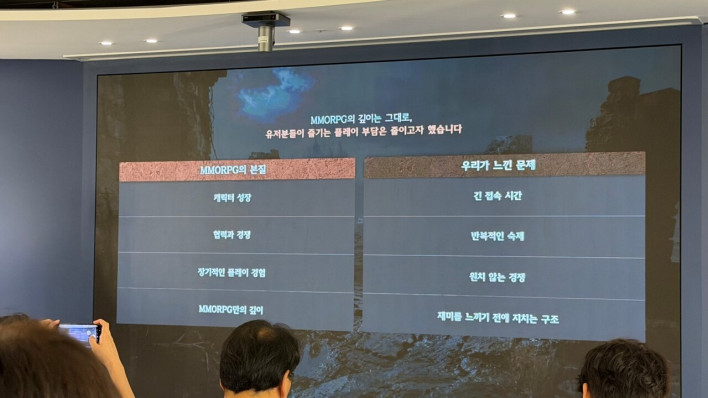
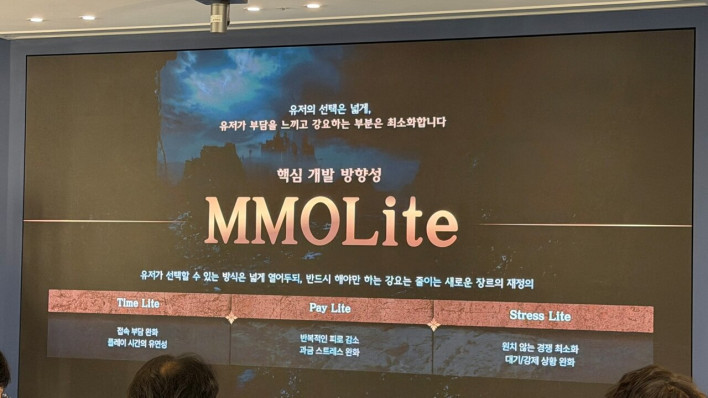
The core concept touted by Eclipse: The Awakening is 'MMOLite'. Executive Producer Lee elaborated on this, describing it as "a genre redefinition that widely opens choices for players while reducing mandatory obligations".
Contrasting the essence of MMORPGs with the accompanying issues identified by the development team, he explained that character growth is plagued by long playtimes, cooperation and competition by repetitive chores, long-term gameplay experiences by unwanted competition, and genre depth by a structure that exhausts players before they can enjoy the fun.
He emphasized that Eclipse will highlight Time Lite, Pay Lite, and Stress Lite. Time Lite lightens time commitments through the in-game Sanctuary system, providing growth resources to players even if they cannot log in every day for long hours. He also revealed that a 24-hour AI mode will allow character progression to continue while offline.
Pay Lite focuses on mitigating monetization fatigue by reducing spending uncertainty. Additionally, the Sanctuary allows free-to-play and low-spending players to consistently earn summon tickets and rewards, ensuring ongoing summon opportunities. Furthermore, Producer Lee explained that unlike traditional Hot Times, the game's unique 'Eclipse Time' lets players toggle bonus periods on and off to match their own lifestyles.
Regarding Stress Lite, he noted that forced competition is minimized as much as possible: safe zones without PK pressure are separated from PK zones where players can opt into PvP. The game features the Highriver Battlefield—a 20-player, 10-minute battleground with a fast respawn system that keeps the pace uninterrupted—and server competition content where players who dislike PvP can still contribute to their guild and server through daily play and weekly guild missions to enjoy lighthearted competition.
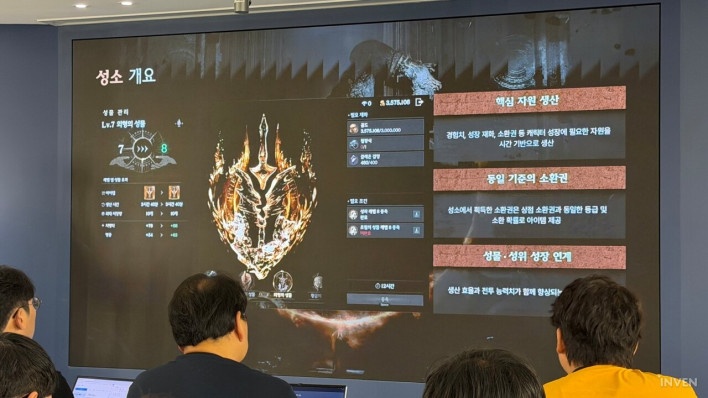
Diversified classes and combat styles: Battles tailored to player preferences
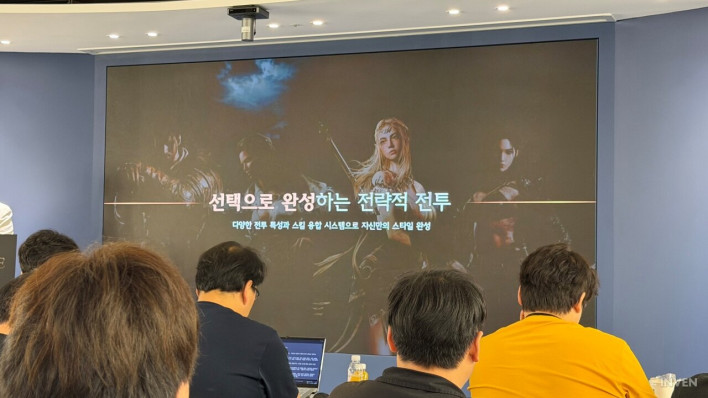
Producer Lee also noted that Eclipse enables players to engage in combat according to their personal styles through various combat traits and the Skill Fusion system. While fatigue from progression, spending, and PK is reduced, combat depth remains as rich as traditional MMORPGs.
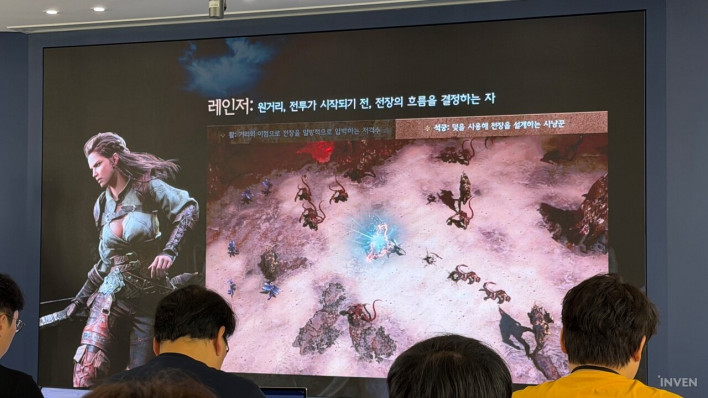
At launch, a total of four classes will be available: Fighter, Ranger, Sorceress, and Assassin. Each class can choose between two weapon types to define its combat style. Furthermore, players can pursue combat diversity through Skill Fusion and Power combinations.
Skill Fusion creates a new skill by combining two existing ones, altering not only stat scaling but also attack range, combo flow, and status effects. For example, combining the Assassin skills Ankle Cut and Blade Toss creates the fused skill Corrupted Bind, which restricts enemy movement and interrupts their momentum. Powers is a system where earned Stigmata and Relics are equipped into skill slots to complete customized, detailed battle builds.
Eclipse: The Awakening Q&A
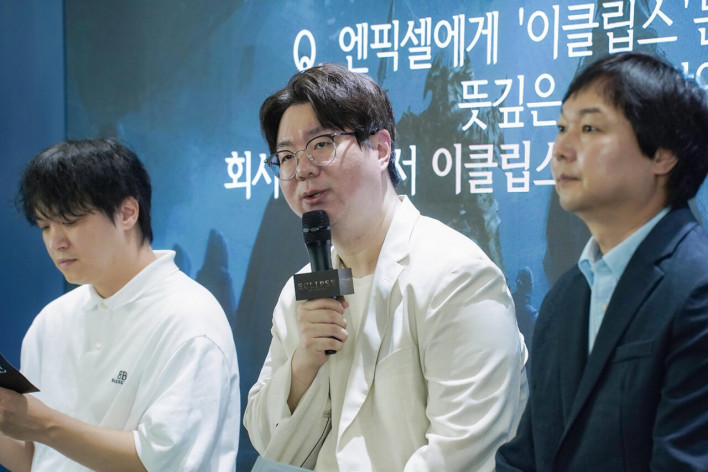
Q. Compared to existing MMORPGs, what sets Eclipse apart?
Executive Producer Sang-moon Lee: Rather than trying to stand out from a specific game, Eclipse started with the question of how to reduce the burdens that players have long felt while playing MMORPGs. Nowadays, we live in an era where games compete for player time alongside videos, short-form media, and various other content. In such an environment, we believed MMORPGs need to evolve away from constantly tying down players' time, moving toward coexisting with players' daily lives while still delivering the genre's deep core fun.
That is why we defined our direction as 'MMOLite'. The core principle is maintaining the fundamental joy of growth and combat in MMORPGs while lowering the burdens associated with logging in, spending money, and competing.
Most notably, through the Sanctuary, the flow of progression continues even when offline, naturally smoothing out progression hurdles. Additionally, the 24-hour AI mode reduces the grind of repetitive play, allowing players to enjoy the MMORPG according to their own life schedules, which I consider our biggest differentiator.
Q. Won't the game eventually become heavy like other MMORPGs as live service continues, with the current light approach being just an initial entry buffer?
Lee: First, I would like to clarify that our goal is not simply making the game "light," but rather reducing the stress and friction players experience while enjoying an MMORPG. Continuously adding content to enhance gameplay is natural given the nature of the MMORPG genre. However, I do not believe that having more content automatically equates to increasing player burden.
We will continue to introduce new content in the future, but rather than designing it to become another chore or force long play sessions, the core philosophy of MMOLite is maintaining an experience where players can log in anytime and enjoy growth and combat at their own pace.
Expanding the inherent depth of MMORPG growth and combat while ensuring that player burdens do not grow alongside it is the direction we want to uphold throughout the game's entire live service.
Q. What was the technical know-how behind implementing terrain-utilizing gameplay seamlessly across PC and mobile cross-platforms?
Lee: Since there are hardware performance differences between high-end PCs and mobile devices, we conducted platform-specific optimizations based on Unreal Engine 5. Through this, we minimized graphic quality disparities across devices while ensuring the core experience of combat and content feels consistent regardless of the platform.
As for the Sanctuary, it operates on the concept of providing so-called idle rewards, designed so both mobile and PC players can easily access it.
Q. The development timeline was extended from the original 2025 release target. What was the main reason, and what areas needed refinement?
Lee: The biggest reason was polish. We felt that the direction of MMOLite shouldn't remain just a marketing tagline; players had to clearly feel it in actual gameplay.
To achieve this, we conducted multiple tests during development to analyze play data. Based on player feedback, we continuously refined the growth structure, combat, and live operations experience, focusing on building a level of completion where players could truly feel the value of MMOLite.
Additionally, in line with recent trends, we improved quality-of-life features so players wouldn't feel a downgrade in convenience, and tried to add fresh ideas across various systems rather than simply repeating existing conventions.
Q. What was the most difficult element to implement during development? How did the process of resolving it shape the final product?
Lee: The hardest part was 'reducing player burden while preserving genuine MMORPG fun.' Our dilemma was not about cutting back content, but finding ways to ease the pressure players feel when enjoying an MMORPG. The biggest challenge was creating a structure that maintains core genre fun like progression, combat, and cooperation, while alleviating pressure regarding logins and growth.
Above all, it was crucial that the team's intended vision reached the players intact. Therefore, we repeatedly validated and improved systems throughout development, introducing features like Eclipse Time so players can enjoy content according to their personal gaming rhythm.
Constantly testing and refining to ensure MMOLite is felt in actual gameplay rather than staying a simple concept was our greatest challenge.
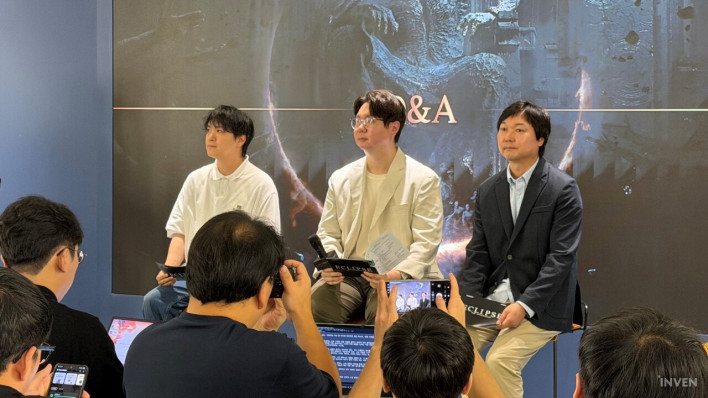
Q. Compared to the initial planning stages, what has changed the most in the current game? Were there any features scrapped or rebuilt from scratch?
Lee: Rather than outright scrapping certain content, we redefined its role. Combat utilizing terrain was refocused onto strategic content like the Highriver Battlefield, while the overarching core experience of the game was reorganized around the Sanctuary to make the direction of MMOLite clearer.
Q. Beyond playtime, MMORPGs create pressure through growth materials and gear enhancement. How does Eclipse's growth structure differ from existing games?
Lee: Rather than simply making growth materials trivial to obtain, we focused on reducing the burden of having to repeatedly invest time to farm them. Most notably, the Sanctuary is designed to continuously accumulate growth materials, EXP, and summon tickets even during offline hours. As a result, the flow of progression continues naturally without requiring long daily login sessions or grinding the same content.
Q. How is the 24-hour AI mode implemented technically? How will server load and balance be managed?
Lee: AI mode is a system that supports continuous hunting and progression for characters even after logging off. When players configure AI mode according to their usual playstyle, their characters operate stably in the in-game environment regardless of login status. Server load and progression balance that may arise during operation will also be continuously managed according to the service environment.
We believed it was essential to deliver an experience where the game naturally adapts to players' daily routines, rather than forcing players to bend their lives around a gaming schedule.
Q. Unlike recent major MMORPG trends, Eclipse chose an original story. What narrative elements appeal to fans?
Lee: Of course, there are countless well-crafted, highly polished stories that already exist. However, we wanted to gift players a novel experience through a narrative unique to Eclipse.
While typical creation myths begin with the premise that "In the beginning there was God, and as good and evil split, the world was formed," we questioned that very premise. "Why were the gods born in the world of Eclipse, and for what purpose do they exist?" "What is the true message we want to convey through our story?"
As we gradually answered these fundamental questions to build the framework of the world, our ambition as developers grew to create a completely new world of our own.
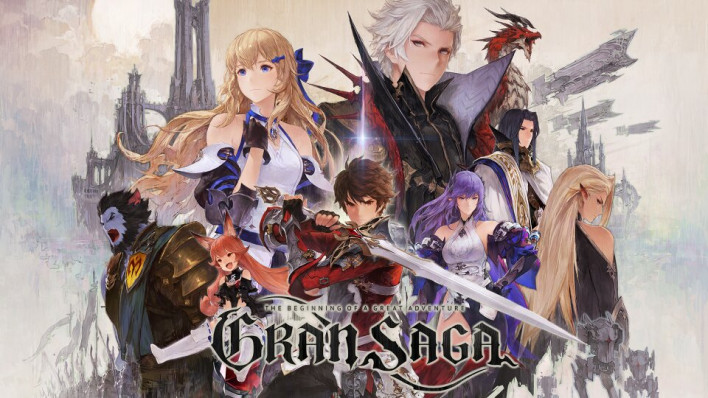
Q. For NPIXEL, Eclipse is a meaningful comeback title following Gran Saga. What does the company expect from Eclipse?
Lee: I consider Eclipse a title that expresses NPIXEL's accumulated development experience in a new direction. Our most important goal is to combine Smilegate's live service expertise with NPIXEL's development capabilities to create an MMORPG that will be beloved for a long time.
Q. What is the main target age demographic for Eclipse?
Lee: Rather than targeting a specific age group, we hope a wide spectrum of players who enjoy MMORPGs can appreciate it.
Q. How have you balanced rewards given regardless of play status against rewards earned through active play, and what measures are in place regarding the economic impact of increased currency supply?
Lee: Rewards continuously gained from the Sanctuary are designed primarily to assist personal growth rather than player-to-player trade, so they are not structured to significantly impact the overall economy. However, it is hard to say there is zero gap between actively playing users and offline users; we believe players who invest more effort and immersion should receive corresponding advantages. Nevertheless, relieving the psychological stress of "falling behind due to missed log-ins" is the main purpose of introducing idle rewards.
Q. What merits exist for hardcore players who invest significant time and money?
Lee: There are clear areas, such as boss raids and high-tier dungeons, where hardcore players gain advantages. We have distinctly separated advantages between casual and hardcore players. Rather than making the gap unbridgeable, our focus is creating an environment where casual players can steadily keep up with lower friction than in other games.
Q. What will be the frequency of updates and communication, such as developer notes and live broadcasts, after launch?
Lee: It is difficult to specify exact dates right now, but we are preparing much more communication than before and working on various ways to engage with players more frequently and closely.
Jae-ik Shin, Head of Business: To add to that, starting from the showcase, we will broadcast live and establish direct communication channels with players. In future updates and content development, we plan to actively reflect player feedback and expand opportunities for direct engagement beyond what other games offer.
Q. Why did you design weapon-swapping customization instead of separating classes? Also, how much resource is required to swap weapons and gear, and can it be covered by resources from the Sanctuary?
Lee: Adding more classes is one way, but since that is already a familiar experience in many games, we wanted to attempt something more unique and distinctive. Allowing players to customize diverse combat styles even within the same class offers fresh enjoyment. While it is hard to quantify the exact amount of growth materials provided through the Sanctuary, it is designed so resources can be gained steadily without hard caps based on spending tiers.
Q. What computing resources and technical architecture are used to implement the 24-hour AI mode?
Lee: We prepared convenience features like traditional AI and support modes by adapting them to our game's style, focusing on lowering player burden. We will discuss providing quantitative metrics through future communication opportunities with the dev team. Technical specifics can be shared more accurately through the technical development team.
Q. Do you plan to create dedicated communication channels for sharing tips given the high freedom in the progression system?
Lee: We expect communication to naturally form among players. Revealing the "optimal answer" upfront is something we must approach cautiously, as it could act as a spoiler. While preserving the joy of players discovering strategies themselves, we will separately prepare and share essential information as needed.
Q. Are there specific metrics supporting the increase in player burden behind introducing MMOLite, and how does it differ from idle games?
Lee: While it is difficult to share specific metrics here, as a gamer myself, I personally felt this fatigue and referenced player opinions and trends across various user segments. Seeing player feedback across media, we prepared 'MMOLite' to address these demands for burden reduction. It shares a starting point with the convenience felt by idle game players, but the difference lies in applying idle reward mechanics to an MMORPG to reduce friction.
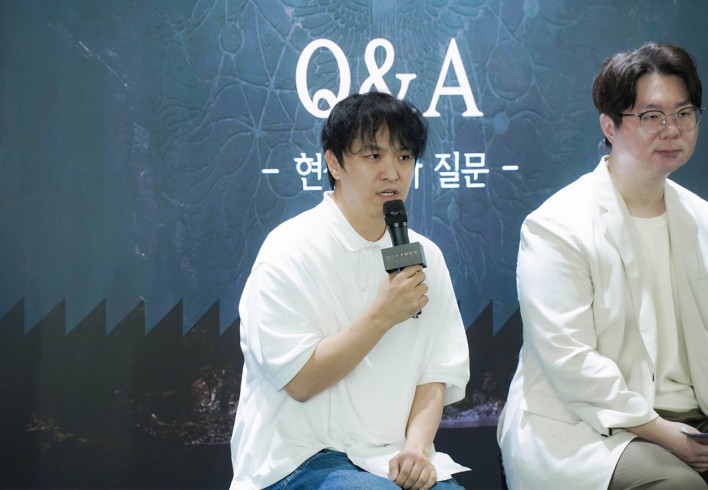
Q. What scenes, cutscenes, or art direction should players pay special attention to, and where was the most effort placed?
Dong-hyuk Kim, Head of Art: In building an original universe, aside from the alter-world, the key location we put the most effort into is the Sanctuary. We aimed to express an unfamiliar, mysterious space—a "third realm" existing on a completely different plane rather than something built from human perspectives or common sense. Visually capturing this mood through cameras, lighting, and atmosphere in line with Eclipse's tone was by no means an easy process.
Because this space was crafted through endless contemplation and trial and error by the art team, we sincerely hope the worldview and concept we envisioned resonate deeply with the Saviors.
Q. The direction of 'MMOLite' seems somewhat mismatched with the dark visual atmosphere of the worldview. Why did you choose this look?
Kim: Early on, the visual code was darker and more hardcore than now, but we refined it toward a lighter direction. While realistic in style, it differs from the hyper-realism pursued by other games. By taking advantage of quarter-view characteristics with tailored tones and colors, we aimed to lighten the visual weight while keeping the narrative deep and heavy.
Rather than competing on graphical horsepower, we focused on visual codes that narratively connect classes, characters, and the Eclipse IP. You can think of 'MMOLite' as defining the overall play burden, while dark fantasy defines the narrative tone and atmosphere.
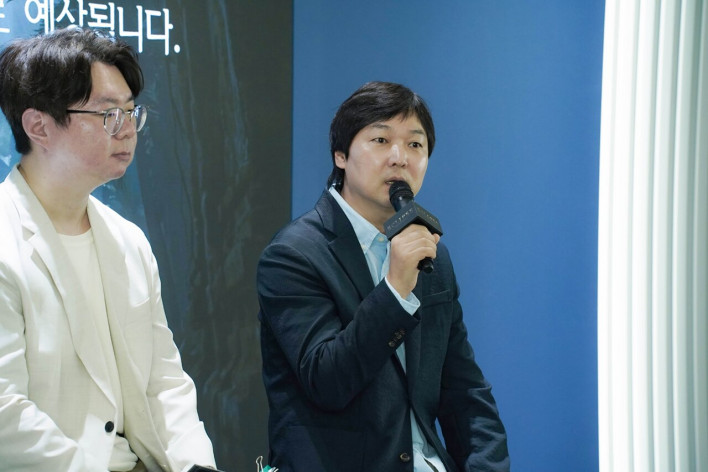
Q. It seems difficult to generate revenue without gacha/probability-based items. What are the practical measures behind easing the monetization burden?
Shin: Eclipse does include probability-based items. However, what we prioritized was delivering an experience where players can fully feel value and satisfaction upon purchase, rather than whether randomized items exist or not. Thus, we designed the business model to reduce fatigue and uncertainty from repeated purchases for a desired result, ensuring players feel worth and satisfaction proportional to their spend. Monetization should not be a requirement for growth, but a choice aligned with individual playstyles.