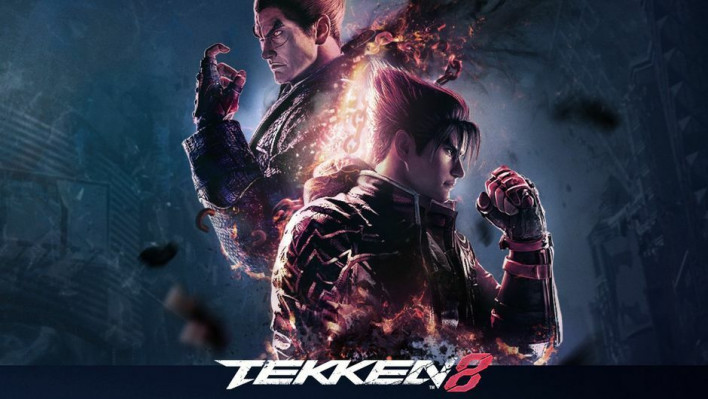
It was only two years ago. On its first day, 'Tekken 8' drew 50k concurrent players on Steam and went on to win Fighting Game of the Year at both The Game Awards and the D.I.C.E. Awards that year. By all accounts, it was the pinnacle of a 30-year-old series.
That position is now hollow. Concurrent player counts have plummeted to 6k–7k—one-eighth of its launch-day peak—and recent Steam reviews remain 'Mostly Negative.' Two key developers who steered the series for three decades have left the company in the span of just six months. The flagship title that once stood at the summit is crumbling faster than ever.
What brought 'Tekken' to this point? A string of departures, deteriorating gameplay and management over successive seasons, and losing its commercial edge to a rival. While Bandai Namco Entertainment hopes to turn the tide with new Season 3 characters, concerns about the future of 'Tekken' show no signs of fading.
| 📒 | - Following the departure of General Producer Harada (end of 2025) and Director Ikeda (June 1), the team shifts to a solo leadership structure under Murray - Concurrent player count drops to one-eighth of launch levels and is overtaken by rival 'Street Fighter 6,' falling to one-fifth of its player base - Season 3's 'Kunimitsu' and the final character 'Yujiro Hanma' aim for a turnaround, but recovery remains uncertain |
Two key pillars lost in half a year
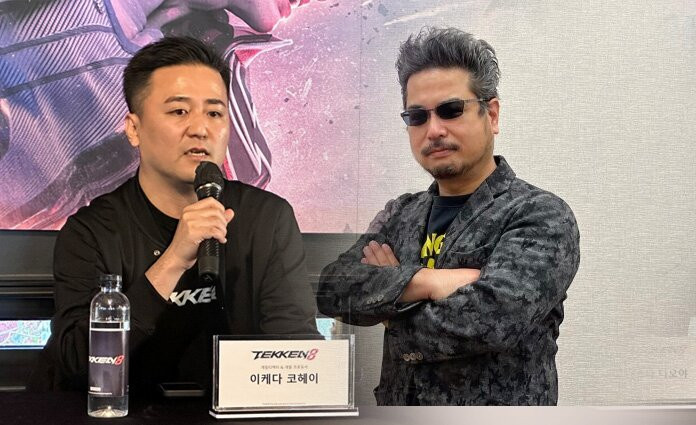
The first thing to collapse was the human element. On December 8, 2025, Katsuhiro Harada, the Bandai Namco Entertainment General Producer known as the 'Father of Tekken,' posted a message on his official X (formerly Twitter) account. He announced he would be leaving the company at the end of 2025. Having overseen the series' development and production since the 1990s, he brought his own tenure to a close. Harada stated, "The Tekken series, which I have been a part of for so long, has reached the major milestone of its 30th anniversary, and I felt this was the most appropriate time to tie up loose ends."
The remaining team immediately moved to stabilize the situation. The following day, December 9, the Tekken team promised, "We will inherit the 'spirit of dialogue with the community' that Harada valued so highly, and we will continue to listen to your voices without change," adding, "We will create a Tekken that is loved by users around the world." It was a pledge to fill the void left by the departing veteran.
That pledge didn't even last half a year. On June 1, 2026, Director Kohei Ikeda, who had been leading the development of Season 3, announced his resignation via social media. He entered the industry with 'SoulCalibur IV' in 2008, joined the series starting with 'Tekken Tag Tournament 2,' and served as director from 'Tekken 7' onward, forming a core trio with Harada and producer Michael Murray. In his farewell post, Ikeda reflected that even the harsh criticism from users, such as "fix the balance," was a force that pushed the game forward, and he passed the baton to his team members.
The consecutive departures of these two are not merely a personnel issue. Harada was the face of the series, responsible for its world-building, story, and external communication for 30 years, while Ikeda was the field lead who designed the actual combat. The brain that set the direction and the hands that crafted it into a game were both removed within six months. It is common in the industry for a series to lose its way after veterans depart. Moreover, because producer Murray, who has now taken on the project alone, was at the center of balance controversies since launch, user anxiety is particularly acute.
Management and Gameplay Eroding Trust
There is a reason why the leadership vacuum is especially painful: 'Tekken 8' had already lost significant user trust in both gameplay and management.
It wasn't always this way. Released on January 26, 2024, 'Tekken 8' debuted with a Metacritic score in the 90s and went on to win Best Fighting Game at both The Game Awards 2024 and the D.I.C.E. Awards. The cracks began to show with the 'Heat System,' which heavily incentivizes aggression. As defensive options narrowed, players began self-deprecatingly calling it a game where you 'spend 15 seconds backing away only to lose,' with many pointing out that the new system and extended combos only served to raise the barrier to entry.
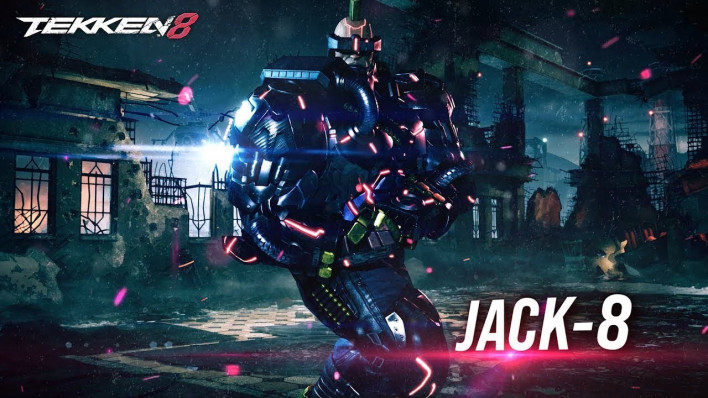
Frustration boiled over in Season 2. Fatal bugs—such as the so-called 'Healthy Clap' for 'Jack'—combined with excessive combo damage caused Steam's recent reviews to drop to 'Overwhelmingly Negative.' This is a rating usually reserved for protest campaigns against blatant pay-to-win mechanics or corporate scandals; it is rare for a game to receive such a rating purely due to gameplay issues. Even Season 3, which promised to 'Back to Basics,' was hampered from day one by new bug-like techniques dubbed 'Healthy Stomp' and 'Healthy Head-bonk.'
Fatigue toward management has also reached a breaking point. Key issues include the difficulty of fundamentally addressing performance problems due to outsourcing the netcode—the core of multiplayer—as well as high hardware requirements for optimization and quality controversies surrounding the 'Tekken Shop' microtransactions. As of April 1, 2026, while the Metacritic score holds at 90, the overall Steam rating is 'Mixed,' and recent reviews are 'Mostly Negative.' The gap between critic scores and user sentiment has widened significantly.
Concurrent Players Cut to One-Eighth, Overtaken by Rival
Commercial performance reflects all these concerns in numbers. On its first day, 'Tekken 8' hit approximately 50k concurrent players on Steam, more than doubling the all-time peak of 'Tekken 7' (approx. 18966). It announced 2 million units sold worldwide just one month after launch on February 26, 2024, and surpassed 3 million on February 25, 2025. Looking only at the start, it was an impeccable hit.
The problem was what followed. By February 2026, with the product lifecycle entering its mid-stage, the daily peak concurrent players on Steam had fallen to the 6k–7k range—about one-eighth of its launch peak. Compared to rival 'Street Fighter 6,' which maintained 30k–32k players during the same period, it is only one-fifth the size. The dynamic where the previous generation 'Tekken 7' significantly outperformed 'Street Fighter 5' has been completely reversed. The fallout from Season 2 has even led to a decline in tournament participation and viewership compared to the older title.
Will the 'Kunimitsu' and 'Yujiro Hanma' Turnaround Succeed?
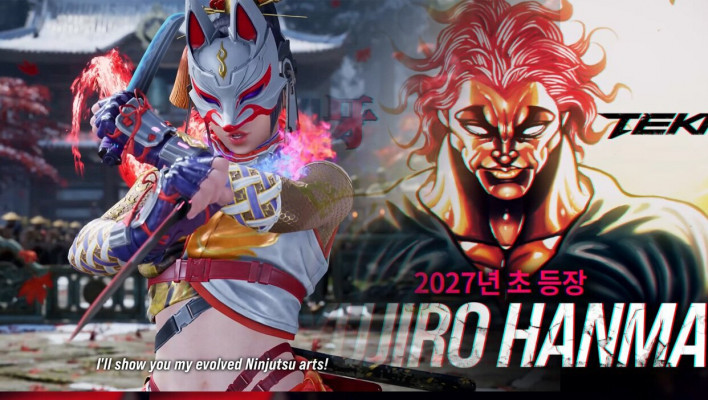
That doesn't mean they are sitting idly by. The Tekken team has brought out new characters for Season 3. The first runner is the Kunoichi 'Kunimitsu,' who commanded a large fan base in 'Tekken 7.'
In an interview regarding Kunimitsu's release, producer Michael Murray said he was directly aware of balance concerns. Murray explained, "It's true there were concerns that because Kunimitsu was a strong character in 'Tekken 7,' she might become even stronger when combined with the Heat System in 8," adding, "I told the balance team to release her at a reasonable level rather than boosting her performance from the start." He emphasized that recent DLC characters, while fun to play, are not top-tier, suggesting that the balance team is finding its footing after the trial and error of Season 2.
The final card is even heavier: Yujiro Hanma, the 'Strongest Creature on Earth' from the 'Baki' series. A teaser trailer was released on May 25, 2026, with his arrival set for early 2027. 'Tekken 8' has previously faced criticism that collaboration characters like Clive Rosfield from Final Fantasy XVI felt disconnected from the system. As Yujiro Hanma is a character who fights with his bare hands without weapons, expectations are high for both his faithful recreation and his integration into the game.
There are also signs of recovery in terms of balance. The deflationary patch (v3.02), released shortly after the harsh criticism at the start of Season 3, was well-received as a 'true return to basics' for reducing excessive rewards, and the subsequent v3.01.01 patch was also praised for curbing the excessive advantages of the Heat System. The overhaul of the matchmaking system has also been a rare bright spot in Season 3.
'Tekken 8' under Murray's solo leadership faces the dual challenge of filling the void left by two veterans while simultaneously lifting its bottomed-out reputation and commercial performance. 'Tekken' has been the flagship representing fighting games for 30 years. It is clear that this flagship is currently experiencing both a leadership transition and a slump in popularity. Whether the new characters and phased patches will become the spark for a turnaround, or if the remainder of Season 3 will be the crossroads that determines the future of the series, remains to be seen.