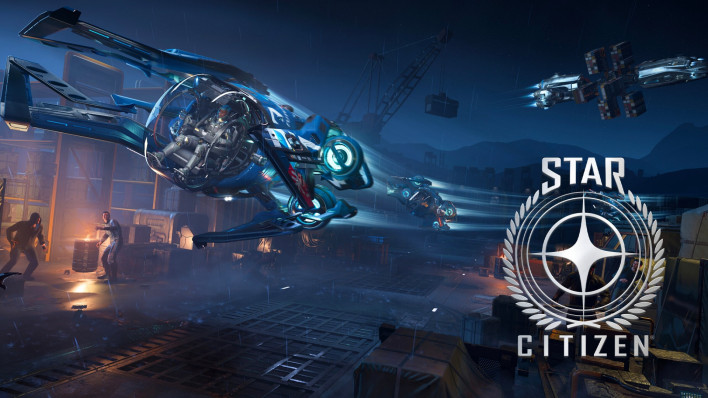
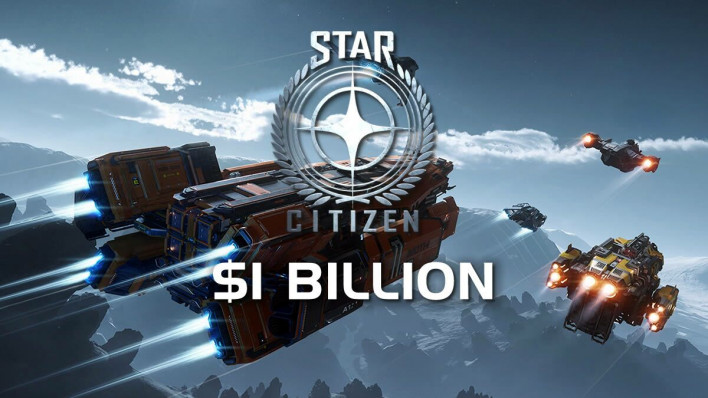
On May 24, 2026, the game 'Star Citizen' officially surpassed $1 billion (approximately ₩1.4 trillion) in cumulative crowdfunding. This milestone comes 14 years after the developer, Cloud Imperium Games (CIG), launched its Kickstarter campaign in 2012. It is an unprecedented sum in gaming history, raised entirely through fan support without the backing of publishers or external investors.
Even more surprising is the fact that the game has yet to be officially released. Major international outlets like PC Gamer, Variety, and Destructoid have covered the news extensively, and industry experts agree that "there has never been a case like this, and there likely never will be again." While the name 'Star Citizen' is still relatively unfamiliar in Korea, it has been the subject of heated debate among international PC gamers for over a decade—a tug-of-war between those who see it as a miracle chasing a grand dream and those who view it as a sophisticated business model exploiting fan passion.
So, what exactly is 'Star Citizen'?
'Star Citizen' is a PC-based massive online space simulation game. It is set in a vast universe where players pilot their own ships to travel between planets, explore alien surfaces, engage in combat, and trade with other players. The project aims to implement "life in space itself" as a game. The developer's goal is to create a living cosmic ecosystem where hundreds of star systems and cities coexist with thousands of players simultaneously.
The project is led by Chris Roberts, a developer who created the legendary 1990s PC game series 'Wing Commander.' In 2012, he co-founded CIG with his wife, Sandi Roberts, and reached out directly to fans instead of seeking traditional publisher investment.
When the Kickstarter campaign was unveiled, the site crashed due to a surge in traffic, and it raised $6.2 million (approximately ₩8.7 billion) in a short period, marking a spectacular start. It drew even more attention because there had been no prior proof that a game of this scale could be developed solely through crowdfunding. However, 14 years later, the project has taken a path entirely different from what was initially promised, making its story all the more intriguing.
The Most Expensive Game in History Has Been Born
The ₩1.4 trillion raised by 'Star Citizen' through crowdfunding is 3.8 times the total production cost of GTA V (₩370 billion). While 'GTA6,' set for release in November 2026, is rumored to have cost even more, that figure has not been officially confirmed. In other words, based on officially verified data, 'Star Citizen' is (as of now) the most expensive game ever made.
Even more noteworthy is the recent pace of fundraising. According to data from outlets like PC Gamer, $152 million (approximately ₩210 billion) was raised in 2025 alone. This is an all-time annual high, representing a more than 35% increase over the previous year's record. Despite the game not being released for 14 years, fans are opening their wallets faster than ever.
The most bizarre and interesting phenomenon of this project is that interest, which should have cooled over time, is instead heating up. The developer claims this trend is a sign that the game is nearing completion, and fans are opening their wallets with that same belief. However, no one knows whether that belief will become reality or if it will ultimately end as the most expensive dream in gaming history.
The Secret to Raising ₩1.4 Trillion: Selling Spaceships
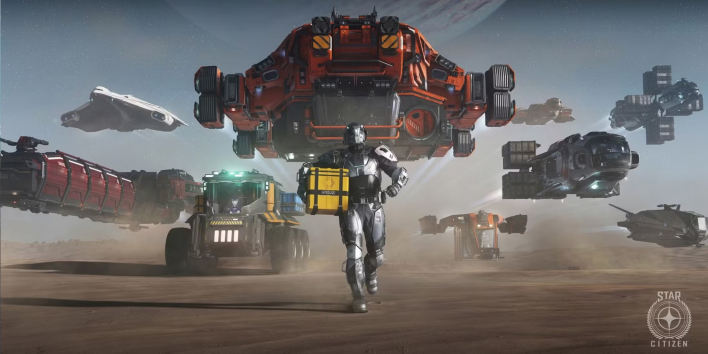
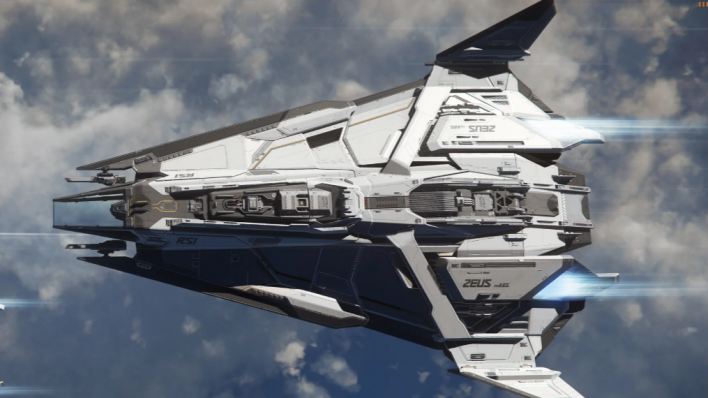
Understanding 'Star Citizen's' revenue structure explains how these numbers were possible. Its core business model is the sale of in-game spacecraft. Players can purchase ships with real money—ranging from small shuttles costing tens of thousands of won to massive warships worth millions. These are not mere items; each ship is sold like a collectible, complete with intricate blueprints and detailed specifications. It is common for limited-edition high-end ships to be resold at a premium in player-to-player markets after official sales end.
When the $1 billion milestone was reached, the developer was selling a new warship, the 'Anvil Odin,' for $5k (approximately ₩7 million). This ship is still in the 'concept stage' and cannot even be piloted in the game yet. In essence, buyers are paying ₩7 million for a promise of a ship that will be built someday. Absurdly, these 'concept ships' consistently sell out rapidly upon release.
Timing also played a crucial role in this record-breaking achievement. The developer held an event to coincide with the $1 billion milestone, allowing free access to the game until May 27. This led to a massive influx of new and returning users, which naturally translated into ship purchases. It is said that a pattern emerged where players who entered the game through the free trial ended up purchasing ships worth hundreds of thousands of won just days later. That is how the developer raised ₩1.4 trillion.
Yet, the Release Date Remains Undecided
'Star Citizen' is a long-term project rarely seen in the gaming industry. When first announced in 2012, the developer targeted a 2014 release. What seemed like a two-year project has been delayed year after year, and 12 more years have passed. However, the game has not been dormant. Since releasing an alpha version in 2016, the team has provided continuous updates; in 2025 alone, they added nearly 100 new locations, 24 new ships, and 11 major updates. The developer also maintains communication with fans through weekly live streams and blog posts.
The question is when it will be 'finished.' While the single-player campaign 'Squadron 42' has been targeted for a 2026 release, the developer itself has been cautious and has not provided firm guarantees. The main multiplayer project is loosely discussed as being completed by 2028, but there is no official, confirmed date. 'Star Citizen' is a 'living alpha' played by hundreds of thousands of people worldwide at this very moment, but no one knows when it will truly be complete.
The game that promised a "release in two years" has been opening fans' wallets for 14 years without a clear completion goal. Yet, the fans do not leave; if anything, they are gathering in greater numbers. For this reason, 'Star Citizen' is often called a social phenomenon that transcends a mere game project.
A Scam or a Miracle? The Community Keeps Opening Its Wallets
Perspectives on 'Star Citizen' remain sharply divided. Critics label it a "dream-selling scam," pointing to a developer that charges ₩7 million for ships that cannot even be flown and has failed to meet a single release date in 14 years. They argue that the structure of continuously raising massive funds without a guarantee of completion is fundamentally flawed. This is why cynical comments like "Star Citizen is not a game, it's a religion" appear in international communities.
On the other hand, hundreds of thousands of passionate fans willingly invest hundreds of billions of won every year, maintaining a firm belief that "it will be finished someday." To them, 'Star Citizen' is not just a game, but a universe they are helping to build—a cultural movement of people sharing the same dream. The experience of receiving new content weekly, communicating with the developer in real-time, and being part of a community with a shared vision is already sufficient value for them. CIG consistently maintains that all funds raised are "invested directly into game development," and they keep the community active through continuous updates and large-scale live events, even in its alpha state.
Scam or miracle, one thing is certain: the fact that a game that has not even officially launched has raised ₩1.4 trillion through voluntary fan support is an unprecedented record that will be hard to repeat, not just in gaming history, but in the entire entertainment industry. Even at this moment, the 'Star Citizen' official funding page (robertsspaceindustries.com) is updating its numbers in real-time. And so, a game with uncertain completion and no release date continues to collect money.